Table of Contents
AI App Monetization Strategies That Actually Work
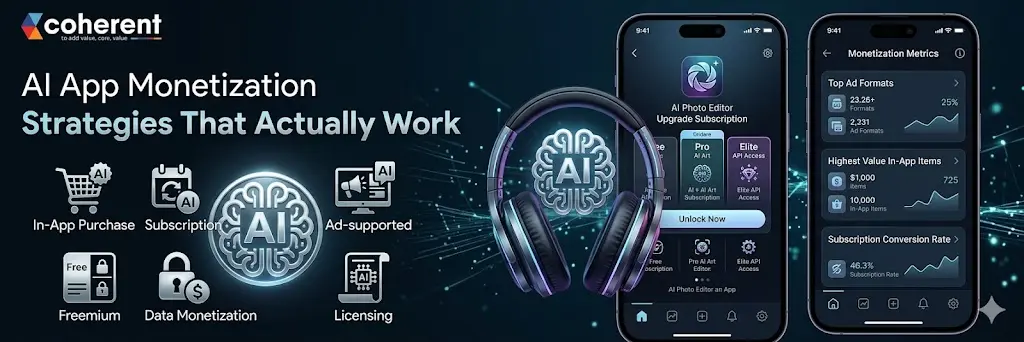
Artificial Intelligence is transforming how apps are built, used, and monetized. But building a powerful AI app is only half the battle—monetizing it effectively is what turns your idea into a profitable business. AI apps require continuous investment in data, infrastructure, and model improvements. That’s why choosing the right monetization strategy is critical for long-term success. Whether you’re launching a chatbot, AI SaaS tool, or automation platform, this guide covers proven AI app monetization strategies that actually work in 2026.
What is AI App Monetization?
AI App Monetization is the process of generating revenue from an application built using AI app development technologies. It involves implementing strategies that turn user engagement, data insights, and AI-powered features into consistent income. From subscriptions to in-app purchases, businesses leverage smart monetization models to maximize ROI. In modern AI app development, monetization is not just about profit—it’s about delivering value while scaling sustainably in a competitive digital market.
- Subscription-based pricing
- Freemium model strategy
- In-app purchases
- AI-driven ads targeting
- Data monetization insights
- API monetization
- Premium feature unlocks
- Usage-based pricing
Why Monetization Strategy Matters for AI Startups
A strong monetization strategy is essential for AI startups to turn innovation into sustainable revenue. In mobile app development, it ensures that AI features deliver both user value and business growth. Without clear monetization, even powerful AI apps may fail to scale. The right approach helps optimize pricing, improve user retention, and maximize ROI, enabling startups to compete effectively while continuously investing in better AI-driven experiences.
- Recover development and infrastructure costs.
- Build sustainable revenue streams.
- Scale your AI product efficiently
- Attract investors and stakeholders
Top AI App Monetization Models (Proven & Profitable)
Top AI app monetization models help businesses generate consistent revenue while aligning with evolving trends in AI app development. Popular approaches include subscriptions, freemium plans, in-app purchases, and usage-based pricing, each designed to match user needs and behavior. These models allow startups to scale efficiently, improve customer retention, and maximize profitability. By following current AI app development trends, companies can choose the right strategy to stay competitive and future-ready.
1. Subscription-Based Model (SaaS AI Apps)
This is the most popular and reliable monetization strategy for AI apps. Users pay monthly or yearly fr access to your AI tool.
Best for:
- AI writing tools
- Chatbots
- Automation software
- Productivity apps
Key benefits:
- Predictable recurring revenue
- High customer lifetime value (LTV)
- Easier scaling
2. Freemium Model for Rapid Growth
In this model, users get basic features for free and pay for advanced capabilities.
How it works:
- Free plan → attracts users
- Paid plan → unlocks premium features
Best for:
- AI apps targeting mass users
- Consumer-focused apps
Conversion strategies:
- Limit usage (e.g., AI credits)
- Add premium-only features
- Use upgrade prompts smartly
3. Pay-Per-Use (Usage-Based Pricing)
Users pay based on how much they use the AI.
Examples:
- API calls
- Tokens/credits
- Processing time
Best for:
- AI APIs
- Data processing tools
- Automation platforms
Why it works:
- Fair pricing model
- Scales with user growth
- Ideal for developers and businesses
4. In-App Purchases & Feature Unlocks
Users can buy specific features, content, or upgrades inside the app.
Examples:
- AI-generated images/videos
- Premium templates
- Advanced analytics
Benefits:
- Flexible revenue model
- Works well with freemium apps
- Encourages microtransactions
5. Ad-Based Monetization
If your AI app has high traffic, ads can generate a steady income.
Types of ads:
- Display ads
- Native ads
- Rewarded ads
Best for:
- Free AI apps
- Tools with large user bases
Tip: Avoid overloading ads—it can hurt user experience.
Advanced Monetization Strategies for AI Apps
Advanced monetization strategies for AI apps go beyond basic models by leveraging personalization, dynamic pricing, and AI-driven insights. Businesses use data analytics to optimize user journeys, increase conversions, and boost lifetime value. Strategies like predictive upselling, API licensing, and enterprise solutions help maximize revenue while delivering tailored experiences, ensuring long-term growth and a competitive edge in the evolving AI market.
1. White-Label AI Solutions
Offer your AI product to businesses so they can rebrand it as their own.
Benefits:
- High-ticket revenue
- B2B scalability
- Strong demand in enterprises
2. Licensing AI Models & Data
If you’ve built a powerful AI model, you can license it.
Opportunities:
- Sell trained models
- Offer API access
- License datasets
3. Affiliate & Partnership Revenue
Promote other tools or integrate services and earn commissions.
Examples:
- SaaS partnerships
- AI tool integrations
4. Marketplace Monetization
Create a platform where users can buy/sell AI tools, plugins, or services.
Revenue streams:
- Commission fees
- Listing fees
Best AI App Monetization Examples (Case Studies)
Leading AI apps showcase effective monetization through diverse models. ChatGPT uses a freemium and subscription approach, while Grammarly combines free access with premium features. Spotify leverages AI-driven recommendations alongside ads and subscriptions. These case studies highlight how blending user value with smart pricing strategies drives consistent revenue and scalable growth.
1. AI SaaS Tools
- Subscription + freemium combo
- High recurring revenue
2. AI Chatbots
- Pay-per-use + subscription
- API monetization
3. AI Image & Video Apps
- Credit-based systems
- In-app purchases
Conclusion:
In 2026, successful AI app monetization is no longer about choosing a single model—it’s about combining the right strategies based on user behavior, value delivery, and evolving market trends. From subscriptions and freemium models to AI-driven personalization and usage-based pricing, the most effective approaches focus on long-term engagement and scalability. By aligning your monetization plan with innovation and user needs, you can build a sustainable, profitable AI app that stands out in a competitive digital landscape. If you're planning to build and monetize a powerful AI app, we’re here to help turn your vision into a successful business. Our team specializes in custom AI app development tailored to your goals, with scalable monetization strategies designed for long-term growth. We use the latest AI technologies to ensure high performance and innovation, while providing end-to-end support from idea to launch. With a focus on fast delivery and quality, we help you bring your AI idea to market and make it profitable. Get in touch!
Frequently Asked Questions (FAQ)
Q1. What is the best monetization strategy for AI apps?
Ans. The best monetization strategy for AI apps depends on your target audience and app type. Subscription models work best for SaaS AI tools, while usage-based pricing suits APIs and automation platforms. Freemium models help attract users quickly and convert them into paying customers. Many successful AI apps combine multiple strategies, such as subscription-based models with in-app purchases, to maximize revenue and user retention.
Q2. How do AI apps make money in 2026?
Ans. AI apps make money through various methods, including subscriptions, pay-per-use pricing, in-app purchases, ads, and enterprise licensing. Many apps also generate revenue by offering API access or white-label solutions to businesses. In 2026, hybrid monetization models are trending, with apps combining freemium access with premium upgrades to balance user growth and profitability.
Q3. Is the freemium model good for AI apps?
Ans. Yes, the freemium model is highly effective for AI apps, especially those targeting a large audience. It allows users to experience the product before committing to a paid plan. By offering limited free features and charging for advanced tools or higher usage, apps can convert free users into paying customers. However, the key is maintaining a balance between free value and premium benefits.
Q4. What is usage-based pricing in AI applications?
Ans. Usage-based pricing, also known as pay-as-you-go, charges users based on usage of the AI service. This can include API calls, data processing, or token consumption. It is widely used in AI platforms and developer tools because it provides flexibility and fairness. Users only pay for what they use, making it attractive for businesses with varying workloads.
Q5. How should I price my AI app?
Ans. Pricing an AI app should be based on the value it delivers to users rather than just development costs. Start by analyzing competitors, understanding your target audience, and testing different pricing tiers. Offering multiple plans like basic, pro, and enterprise can help cater to different users. Regularly optimize pricing based on user feedback, usage data, and market demand to maximize conversions.
Q6. Can small startups successfully monetize AI apps?
Ans. Yes, small startups can successfully monetize AI apps by choosing the right niche and strategy. Starting with a freemium or subscription model helps build an initial user base. Focusing on solving a specific problem and delivering clear value increases chances of success. Startups can also scale revenue through partnerships, API monetization, and enterprise solutions as they grow.
Q7. What are common mistakes in AI app monetization?
Ans. Common mistakes include overpricing early, offering too many free features, ignoring user experience, and lacking a clear value proposition. Many developers also fail to test pricing models or to adapt to user behavior. Poor onboarding and unclear upgrade benefits can reduce conversions. To succeed, focus on user needs, continuously optimize your pricing strategy, and ensure your app delivers consistent value.

 +91 774-202-1725
 +1 (945) 3387904
 business@coherentlab.com
 +49 15223341304
 UK
UK