Table of Contents
How AI Is Transforming Web3 Game Development in 2026
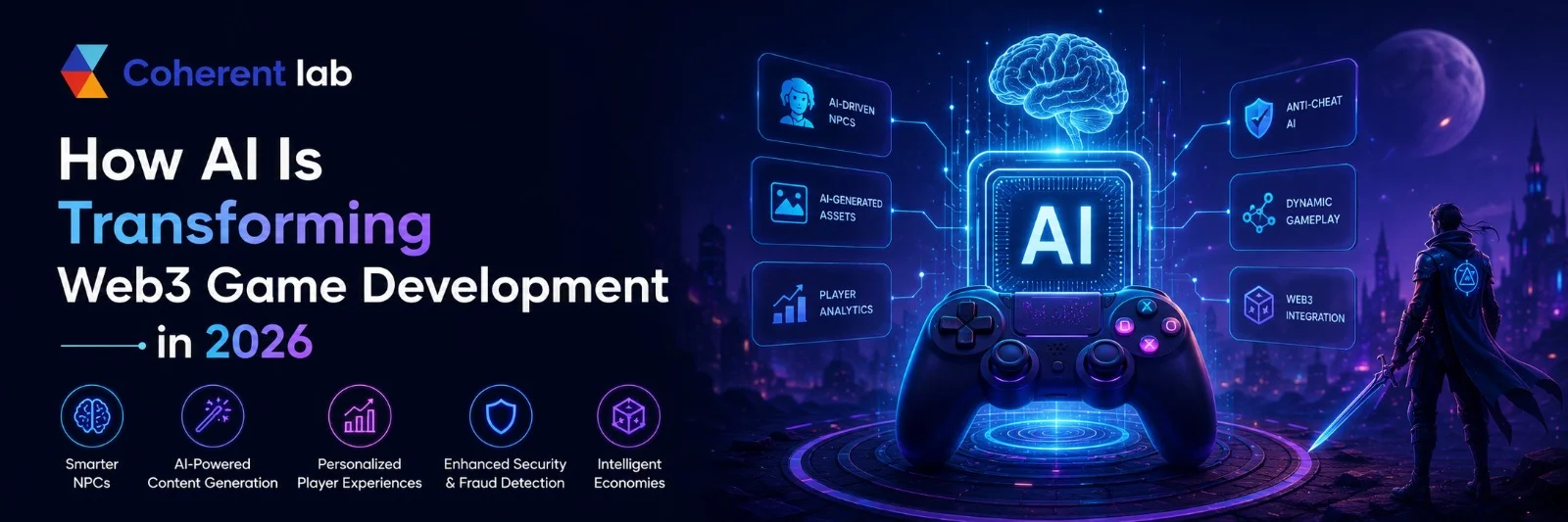
The gaming industry is undergoing a massive transformation as Artificial Intelligence (AI) and Web3 technologies converge to create more immersive, intelligent, and decentralized gaming experiences. Traditional games rely heavily on centralized systems and predefined gameplay mechanics, while Web3 gaming introduces blockchain-powered ownership, decentralized economies, NFTs, and player-driven ecosystems.
In 2026, AI is becoming a key driver behind the next generation of Web3 games. From generating dynamic game worlds and intelligent NPCs to optimizing token economies and enhancing security, AI is helping developers build smarter, more engaging, and scalable gaming platforms.
This article explores how AI is revolutionizing Web3 game development, the benefits it brings to players and developers, emerging trends, and why businesses are investing heavily in AI-powered blockchain gaming solutions.
What Is AI-Powered Web3 Game Development?
AI-powered Web3 game development combines blockchain technology, decentralized ecosystems, and artificial intelligence to create smarter, more immersive gaming experiences. AI enhances gameplay through intelligent NPCs, personalized user experiences, adaptive environments, and automated content generation, while Web3 enables true digital asset ownership, NFT integration, play-to-earn models, and secure transactions. Together, they empower developers to build innovative, engaging, and decentralized games that offer players greater control, transparency, and long-term value.
Understanding Web3 Gaming
- True ownership of in-game assets
- NFT-based collectibles
- Decentralized game economies
- Play-to-Earn (P2E) opportunities
- Blockchain-powered transparency
Role of AI in Web3 Games
- Intelligent NPC behavior
- Dynamic storytelling
- Personalized gameplay
- Automated content generation
- Real-time player analytics
Why AI and Web3 Are Transforming the Gaming Industry
Artificial Intelligence (AI) and Web3 are revolutionizing the gaming industry by creating smarter, more immersive, and player-driven experiences. AI enhances gameplay through intelligent NPCs, personalized content, and advanced game development tools, while Web3 enables true digital ownership, decentralized economies, and secure in-game transactions. Together, these technologies are transforming how games are developed, played, and monetized, empowering players with greater control, transparency, and opportunities to earn rewards in the evolving digital gaming ecosystem.
Enhanced Player Experiences
- Personalized quests
- Adaptive difficulty levels
- Customized rewards
- Tailored recommendations
Decentralized Intelligence
- Make transparent decisions
- Verify game actions
- Reduce manipulation risks
- Improve trust among players
Better Scalability
- Reduce costs
- Launch faster
- Manage larger player bases
- Create more content efficiently
Top AI Technologies Revolutionizing Web3 Game Development
Artificial Intelligence is transforming Web3 game development by enabling smarter gameplay, intelligent NPCs, personalized user experiences, advanced security, and automated content creation. From machine learning and generative AI to predictive analytics and AI-powered blockchain integration, these technologies help developers build immersive, scalable, and engaging decentralized gaming ecosystems. As Web3 gaming evolves in 2026, AI-driven innovations are becoming essential for creating next-generation metaverse and blockchain-based gaming experiences.
Generative AI for Game Creation
- AI-generated maps
- Character design
- Storyline creation
- Quest generation
- Environment development
Machine Learning for Smart Gameplay
Machine learning algorithms continuously improve game mechanics.
- Player behavior analysis
- Predictive engagement models
- Smart reward distribution
- Dynamic balancing systems
Natural Language Processing (NLP)
NLP enables more realistic player interactions.
- Conversational NPCs
- Voice-controlled gameplay
- Real-time translations
- Interactive storytelling
Computer Vision Technology
Computer vision enhances immersion through:
- Gesture recognition
- Facial tracking
- Motion-based controls
- Virtual reality interactions
AI-Powered NFT Innovation in Web3 Games
AI-powered NFT innovation is transforming Web3 gaming by creating smarter, more interactive, and highly personalized digital assets. Through artificial intelligence, NFTs can evolve based on player actions, adapt to gameplay, and unlock unique in-game experiences. This innovation enhances player engagement, strengthens digital ownership, and opens new opportunities for developers to build immersive, dynamic, and sustainable gaming ecosystems in the decentralized Web3 landscape.
Dynamic NFTs
- Player achievements
- Game progress
- Community engagement
- In-game activities
Automated Asset Generation
- Unique weapons
- Rare collectibles
- Character skins
- Virtual real estate
NFT Marketplace Optimization
- Asset valuation
- Trend forecasting
- Demand prediction
- Fraud detection
How AI Strengthens Blockchain Game Security
Artificial Intelligence (AI) is transforming blockchain gaming by adding advanced security layers that protect players, digital assets, and transactions. AI-powered systems can detect suspicious activities, identify fraud attempts, prevent cheating, and monitor network vulnerabilities in real time. By analyzing large volumes of blockchain data, AI helps game developers strengthen smart contract security, reduce cyber threats, and ensure fair gameplay. The combination of AI and blockchain creates a safer, more transparent, and more reliable gaming ecosystem, enhancing player trust and supporting the growth of next-generation Web3 and blockchain-based games.
Fraud Detection
- Suspicious transactions
- Fake accounts
- Bot activity
- Marketplace manipulation
Smart Contract Monitoring
- Vulnerabilities
- Coding errors
- Security risks
- Potential exploits
Anti-Cheat Systems
Modern AI-powered anti-cheat solutions help maintain fair gameplay by detecting abnormal player behavior in real time.
AI in Metaverse Game Development
AI in Metaverse Game Development is transforming virtual gaming experiences by creating intelligent, adaptive, and immersive digital worlds. Artificial intelligence enhances NPC behavior, personalizes gameplay, improves virtual economies, and enables realistic interactions within metaverse environments. By combining AI with AR, VR, blockchain, and cloud technologies, developers can build engaging, scalable, and interactive metaverse games that deliver unique experiences for players while driving innovation and long-term growth in the gaming industry.
Intelligent Virtual Worlds
- Landscapes
- Cities
- Interactive environments
- Dynamic weather systems
AI-Powered Avatars
- Personalized digital identities
- AI companions
- Intelligent assistants
- Realistic interactions
Enhanced Social Experiences
- Smart matchmaking
- Community recommendations
- Content moderation
- Virtual event management
Benefits of AI in Web3 Game Development
AI in Web3 game development enhances gameplay, automation, and player experience by enabling intelligent NPCs, adaptive environments, and predictive analytics. It helps developers create decentralized gaming ecosystems with smarter decision-making systems, improved security, and real-time personalization for users. AI also reduces development time, optimizes in-game economies, and supports scalable blockchain integration, making Web3 games more immersive, efficient, and profitable for modern gaming studios worldwide today.
|
|
|
|
|
|
|
|
|
|
|
|
|
|
|
How Businesses Can Leverage AI Web3 Game Development
Artificial Intelligence (AI) and Web3 game development are transforming the gaming industry by creating immersive, decentralized, and intelligent gaming experiences. Businesses can leverage AI-powered Web3 games to enhance player engagement, automate in-game interactions, personalize gameplay, and improve digital asset management. By combining blockchain technology, NFTs, smart contracts, and AI-driven features, companies can build innovative gaming ecosystems, generate new revenue streams, strengthen user retention, and gain a competitive advantage in the rapidly growing GameFi and metaverse markets.
Selecting the Right Technology Stack
- Blockchain platforms
- Smart contracts
- AI frameworks
- NFT infrastructure
Building Sustainable Token Economies
- Balanced tokenomics
- Utility-driven rewards
- Long-term sustainability
Prioritizing User Experience
- AI personalization
- Seamless onboarding
- Mobile compatibility
- Secure gameplay
Conclusion
AI is rapidly transforming Web3 game development in 2026 by making blockchain games smarter, more engaging, and highly scalable. From intelligent NPCs and dynamic NFT assets to advanced security systems and autonomous game economies, AI is redefining how games are built and experienced.
As Web3 adoption continues to grow, businesses that invest in AI-powered game development will gain a significant competitive advantage. Combining artificial intelligence, blockchain technology, NFTs, and metaverse capabilities creates exciting opportunities for innovation, player engagement, and revenue generation.
If you're planning to build a next-generation Web3 gaming platform, now is the ideal time to leverage AI-powered Web3 game development solutions and stay ahead in the rapidly evolving digital gaming landscape.
Frequently Asked Questions
Q1. How is AI improving Web3 game development in 2026?
Ans. AI is transforming Web3 game development in 2026 by streamlining the entire production process. It helps developers automate coding tasks, generate high-quality game assets, create realistic environments, and accelerate testing. AI-powered tools can analyze player behavior and provide insights that improve gameplay mechanics and user engagement. In blockchain-based games, AI simplifies smart contract development, enhances NFT functionality, and optimizes token economies. Developers can build scalable and immersive gaming experiences with fewer resources and shorter development cycles. This results in faster launches, lower costs, better performance, and more innovative Web3 games that attract and retain players effectively.
Q2. What role does AI play in blockchain-based games?
Ans. AI plays a crucial role in blockchain-based games by improving security, automation, and operational efficiency. It helps manage and monitor smart contracts, identify vulnerabilities, and detect fraudulent activities before they impact players. AI can analyze transaction data to ensure fair gameplay and maintain trust within decentralized ecosystems. It also assists in optimizing token economies by monitoring supply, demand, and player engagement patterns. Additionally, AI enables intelligent decision-making for game systems, allowing developers to create adaptive and scalable gaming environments. By combining blockchain transparency with AI-driven intelligence, Web3 games become more secure, efficient, engaging, and sustainable over the long term.
Q3. How does AI enhance player experience in Web3 games?
Ans. AI significantly enhances player experiences in Web3 games by creating personalized and dynamic gameplay environments. It analyzes player preferences, behaviors, and performance to deliver customized challenges, rewards, and content. AI-powered NPCs can interact more naturally, making game worlds feel realistic and engaging. Adaptive difficulty systems ensure players remain challenged without becoming frustrated. In Web3 ecosystems, AI can improve NFT interactions by offering unique in-game experiences based on owned assets. It also helps create evolving virtual worlds that respond to player actions in real time. These capabilities increase immersion, player satisfaction, retention rates, and overall gaming enjoyment.
Q4. Can AI reduce development costs in Web3 gaming?
Ans. Yes, AI can significantly reduce development costs in Web3 gaming by automating many time-consuming tasks. It assists with coding, asset generation, quality assurance testing, bug detection, and content creation. Developers can use AI tools to create game characters, environments, animations, and storylines faster than traditional methods. This reduces dependence on large teams and shortens production timelines. AI also improves project efficiency by identifying issues early and optimizing workflows. In blockchain gaming, AI simplifies smart contract development and integration processes. As a result, studios can save money, improve productivity, accelerate launches, and maintain high-quality gaming experiences.
Q5. How does AI support NFT integration in games?
Ans. AI supports NFT integration in Web3 games by enhancing the creation, management, and utility of digital assets. It can generate unique NFT designs, manage rarity levels, and ensure balanced asset distribution across the gaming ecosystem. AI also enables dynamic NFTs that evolve based on player achievements, gameplay activities, or specific milestones. By analyzing market trends and user behavior, AI helps optimize NFT value and engagement. Additionally, it improves marketplace security by detecting suspicious transactions and fraudulent activities. These capabilities make NFTs more interactive, valuable, and meaningful while increasing player participation and strengthening the overall Web3 gaming economy.
Q6. What is the impact of AI on game security in Web3?
Ans. AI has a major impact on Web3 game security by providing advanced threat detection and real-time monitoring. It continuously analyzes blockchain transactions, player activities, and wallet interactions to identify suspicious behavior. AI systems can detect cheating, hacking attempts, bot usage, and fraudulent transactions before they cause significant damage. It also helps developers identify vulnerabilities in smart contracts and strengthen decentralized security protocols. By automating security management, AI reduces risks associated with digital asset theft and marketplace manipulation. This creates a safer gaming environment where players can confidently interact, trade NFTs, and participate in blockchain-based ecosystems without concerns.
Q7. How does AI help in game economy balancing?
Ans. AI helps maintain balanced and sustainable game economies by analyzing large volumes of player and transaction data. It monitors token circulation, reward distribution, NFT trading activity, and player spending habits to identify economic trends. Based on these insights, AI can automatically adjust reward systems, item scarcity, token supply, and pricing structures. This prevents inflation, exploitation, and resource imbalances that can harm gameplay. In Web3 games, balanced economies are essential for long-term success and player trust. AI-driven optimization ensures fair opportunities for all participants while supporting healthy ecosystem growth, increased engagement, and stronger economic stability.
Q8. What is the future of AI in Web3 gaming?
Ans. The future of AI in Web3 gaming is expected to bring highly intelligent, immersive, and autonomous gaming experiences. AI will power advanced NPCs capable of realistic interactions and decision-making. It will enable adaptive game worlds that evolve continuously based on player actions and community behavior. AI-driven economic systems will optimize token distribution, NFT utility, and marketplace activity in real time. Combined with blockchain technology, AI will support transparent, secure, and scalable gaming ecosystems. It will also play a major role in metaverse development, creating personalized experiences that increase engagement, ownership, and long-term value for both players and developers.

 +91 774-202-1725
 +1 (945) 3387904
 business@coherentlab.com
 +49 15223341304
 UK
UK