Table of Contents
Blockchain Development Process: Step-by-Step Guide 2026
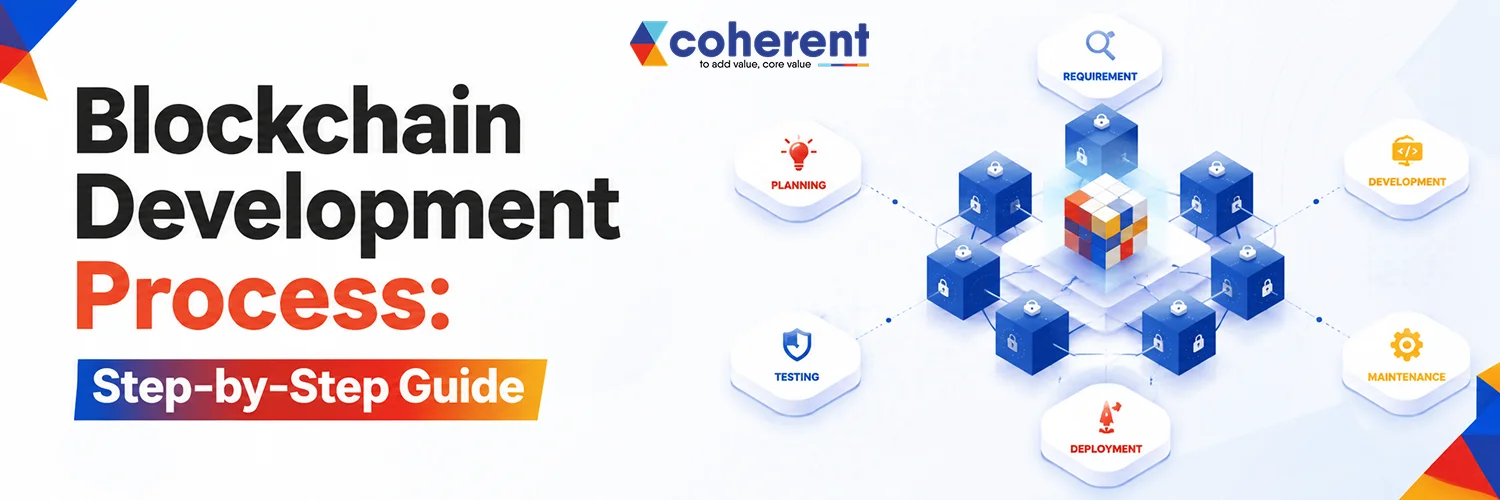
Blockchain technology has transformed the way businesses store data, process transactions, and establish trust in the digital world. From financial services and healthcare to supply chain management and real estate, organizations are adopting blockchain solutions to improve transparency, security, and operational efficiency. Understanding the blockchain development process is essential for creating reliable decentralized applications, smart contracts, and enterprise-grade blockchain platforms.
Every successful blockchain project follows a structured workflow that includes business analysis, architecture planning, platform selection, development, testing, deployment, and ongoing maintenance. By following a proven development strategy, businesses can reduce risks, ensure compliance, and build scalable solutions that support long-term growth. This guide explains every stage of blockchain development, helping startups, enterprises, and developers understand how to create secure, high-performance blockchain applications that deliver measurable business value.
What Is the Blockchain Development Process?
The blockchain development process is a structured approach to designing, developing, testing, and deploying secure blockchain solutions. At Coherent Lab LLP, the process begins with understanding business requirements and selecting the right blockchain platform. It then progresses through architecture planning, smart contract development, application integration, security testing, deployment, and ongoing maintenance, ensuring scalable, transparent, cost-effective, and high-performance blockchain applications.
Key Components of the Blockchain Development Process
- Analyze business goals and identify blockchain use cases.
- Design a secure and scalable blockchain architecture.
- Develop smart contracts and decentralized applications (dApps).
- Test, deploy, monitor, and continuously improve the blockchain solution.
Why Businesses Need Blockchain Development
Modern businesses require secure, transparent, and efficient digital systems to stay competitive. Blockchain development helps organizations eliminate intermediaries, improve transaction security, reduce operational costs, and automate processes through smart contracts. Whether managing financial transactions, supply chains, digital identities, or healthcare records, blockchain technology increases trust while enhancing operational efficiency and data integrity across multiple industries.
Business Advantages of Blockchain Technology
- Improves data security through advanced cryptographic encryption.
- Increases transparency with immutable transaction records.
- Reduces operational costs by automating business processes.
- Enhances trust between organizations, customers, and partners.
Blockchain Development vs Traditional Software Development
| Feature | Blockchain Development | Traditional Software Development |
|---|---|---|
| Data Storage | Distributed Ledger | Centralized Database |
| Security | Cryptography & Consensus | Standard Authentication |
| Transparency | High | Limited |
| Data Modification | Immutable Records | Editable Records |
| Trust Model | Decentralized | Centralized Authority |
| Smart Contracts | Supported | Not Available |
| Transaction Verification | Consensus Mechanism | Central Server |
| Scalability | Depends on Blockchain | Generally Faster |
| Best For | Web3, DeFi, Supply Chain, Finance | Websites, ERP, CRM, Mobile Apps |
Why a Structured Blockchain Development Process Matters
A well-planned blockchain development process minimizes project risks, improves security, and ensures compliance with industry standards. It helps businesses choose the right technology stack, optimize development costs, and create scalable applications capable of handling future growth. A structured methodology also improves collaboration between developers, designers, security experts, and stakeholders, leading to faster deployment and better long-term performance.
Best Practices for Successful Blockchain Projects
- Define project objectives before development begins.
- Select the most suitable blockchain platform for your use case.
- Prioritize smart contract security and rigorous testing.
- Plan for ongoing maintenance, upgrades, and scalability.
Step-by-Step Blockchain Development Process
Building a successful blockchain solution requires a systematic blockchain development technology approach that aligns business objectives with technical architecture, security, and scalability. A well-planned blockchain development process ensures every stage, from requirement analysis and network design to smart contract creation, testing, deployment, and maintenance, is executed efficiently. Each phase contributes to building a reliable decentralized application (dApp), enterprise blockchain platform, or secure digital ecosystem. Following a structured blockchain development lifecycle minimizes risks, enhances performance, strengthens security, and supports long-term scalability, helping businesses maximize the value of their blockchain investment while staying competitive in a rapidly evolving digital landscape.
Step 1: Business Requirement Analysis
Every blockchain project begins with understanding the organization's objectives and determining whether blockchain is the right solution. This phase involves identifying pain points, defining project goals, analyzing stakeholders, estimating budgets, and evaluating technical feasibility. Proper planning ensures the final solution aligns with business needs and delivers measurable value.
- Identify business challenges and expected outcomes.
- Conduct market research and competitor analysis.
- Define project scope, budget, and timeline.
- Prepare technical and functional requirements.
Step 2: Choose the Right Blockchain Platform
Selecting the appropriate blockchain platform is one of the most important decisions in the development process. The choice depends on factors such as scalability, transaction speed, security, governance, smart contract capabilities, and development costs. Businesses should evaluate multiple platforms before making a decision.
- Ethereum for smart contracts and decentralized applications.
- Hyperledger Fabric for enterprise blockchain solutions.
- Polygon and Solana for scalable, low-cost applications.
- Binance Smart Chain and Avalanche for DeFi and Web3 projects.
Step 3: Design Blockchain Architecture
Blockchain architecture defines how the entire system functions. It includes node configuration, consensus mechanisms, network structure, data storage, APIs, and security protocols. A well-designed architecture ensures high performance, interoperability, and future scalability while maintaining data integrity.
- Network topology and node infrastructure.
- Consensus mechanism and governance model.
- Data storage and transaction management.
- Security policies and encryption standards.
Step 4: Smart Contract Development
Smart contracts are self-executing programs that automate transactions without intermediaries. They reduce manual effort, eliminate errors, and improve transparency. Developers typically write smart contracts using Solidity, Rust, or other blockchain programming languages depending on the selected platform.
- Develop secure contract logic.
- Optimize code for lower transaction fees.
- Conduct security reviews before deployment.
- Ensure compliance with blockchain standards.
Step 5: UI/UX Design
A blockchain application's success depends on delivering a simple and intuitive user experience. The interface should make complex blockchain interactions easy for users while maintaining security and accessibility across devices.
- Design responsive and user-friendly interfaces.
- Simplify wallet connection and authentication.
- Create intuitive dashboards and navigation.
- Improve accessibility across desktop and mobile devices.
Step 6: Backend Development and API Integration
The backend manages business logic, user authentication, APIs, databases, and communication between the blockchain network and external systems. Efficient backend development ensures smooth performance, data synchronization, and secure transactions.
- Develop secure APIs and middleware.
- Integrate blockchain nodes and databases.
- Enable wallet and payment gateway connections.
- Optimize server performance and scalability.
Step 7: dApp Development
Decentralized applications (dApps) combine blockchain technology with user-friendly interfaces to deliver transparent and secure digital services. They interact directly with smart contracts and blockchain networks while offering users complete control over their assets and data.
- Build interactive frontend applications.
- Connect wallets using Web3 libraries.
- Integrate smart contracts into the interface.
- Manage blockchain transactions efficiently.
Step 8: Blockchain Testing
Testing is critical to ensuring that blockchain applications function securely and reliably. Developers test every component, including smart contracts, APIs, wallets, and user interfaces, before deployment to prevent vulnerabilities and performance issues.
- Unit testing for individual components.
- Functional and integration testing.
- Smart contract security audits.
- Performance and load testing.
Step 9: Deployment
Once testing is complete, the blockchain application is deployed to the production environment or mainnet. Developers configure servers, blockchain nodes, monitoring tools, and security settings to ensure smooth operation after launch.
- Deploy smart contracts to the blockchain.
- Configure nodes and cloud infrastructure.
- Verify network connectivity and APIs.
- Monitor application performance after launch.
Step 10: Maintenance and Continuous Improvement
Blockchain applications require ongoing maintenance to remain secure, scalable, and compliant with evolving industry standards. Regular updates improve performance, fix vulnerabilities, and introduce new features based on user feedback.
- Monitor system health and security.
- Upgrade smart contracts when required.
- Improve scalability and transaction speed.
- Release new features and performance enhancements.
Popular Blockchain Platforms Comparison
| Blockchain Platform | Best For | Smart Contracts | Transaction Speed | Ideal Use Cases |
|---|---|---|---|---|
| Ethereum | Public dApps | Yes | Moderate | DeFi, NFTs, Web3 |
| Hyperledger Fabric | Enterprise | Yes | High | Supply Chain, Healthcare |
| Polygon | Scalable dApps | Yes | Very High | Gaming, Payments |
| Solana | High Performance | Yes | Very High | DeFi, Web3 Applications |
| Binance Smart Chain | Low-Cost Applications | Yes | High | Token Development |
| Avalanche | Enterprise & DeFi | Yes | High | Financial Services |
Benefits of Blockchain Development
Blockchain technology has become a powerful solution for organizations seeking secure, transparent, and efficient digital systems. Unlike traditional centralized databases, blockchain provides a decentralized environment where transactions are verified through consensus mechanisms and stored in immutable ledgers. This reduces fraud, improves operational efficiency, and builds trust among stakeholders. Whether implemented in finance, healthcare, logistics, or government services, blockchain development helps businesses streamline operations while preparing for future digital transformation.
Major Benefits of Blockchain Development
- Improves security through advanced cryptography and decentralized validation.
- Enhances transparency with tamper-proof and immutable transaction records.
- Reduces operational costs by eliminating intermediaries and manual processes.
- Increases business efficiency through automation using smart contracts.
Also Read :- Everything You Need to Know About Blockchain App Development in 2026
Key Features of Blockchain Solutions
Modern blockchain solutions combine multiple technologies to create secure and scalable digital ecosystems. These features allow businesses to manage digital assets, automate workflows, and ensure data integrity while reducing operational risks. Understanding these core characteristics helps organizations choose the right blockchain solution for their business requirements.
Core Features
- Decentralized architecture that removes single points of failure.
- Immutable ledger ensuring records cannot be altered once confirmed.
- Smart contract automation for secure and transparent transactions.
- High-level encryption protecting sensitive business and customer data.
Estimated Blockchain Development Cost
| Project Type | Estimated Timeline | Estimated Cost (USD) | Best For |
|---|---|---|---|
| MVP Blockchain Application | 1–3 Months | $10,000–$30,000 | Startups |
| Smart Contract Development | 2–6 Weeks | $5,000–$20,000 | Token Projects |
| dApp Development | 3–6 Months | $30,000–$80,000 | Web3 Applications |
| Enterprise Blockchain Solution | 6–12 Months | $100,000–$500,000+ | Large Enterprises |
| NFT Marketplace | 3–5 Months | $40,000–$100,000 | Digital Asset Platforms |
| Cryptocurrency Exchange | 6–12 Months | $150,000–$500,000+ | FinTech Companies |
Why Invest in Blockchain Development?
Businesses investing in blockchain gain a competitive advantage through increased transparency, stronger cybersecurity, faster operations, and reduced transaction costs. As Web3 adoption grows, blockchain technology is becoming a strategic investment for organizations aiming to improve efficiency, build customer trust, and create innovative digital products. Companies that embrace blockchain today are better positioned to adapt to future technological advancements and evolving market demands.
Investment Advantages
- Builds long-term digital trust.
- Supports business scalability.
- Enables automation through smart contracts.
- Creates new revenue opportunities with Web3 innovation.
How to Choose a Blockchain Development Company
Selecting the right blockchain and mobile app development company is one of the most important decisions for a successful project. An experienced team can build secure, scalable, and high-performance blockchain applications while delivering seamless mobile app solutions that enhance user experience and business growth. Before hiring a company, evaluate its technical expertise, industry experience, security practices, development methodology, and post-launch support. A reliable development partner ensures your blockchain and mobile applications align with business goals, comply with industry standards, and remain secure, scalable, and future-ready in an evolving digital landscape.
Factors to Consider
- Review the company's portfolio, case studies, and blockchain expertise.
- Verify experience in smart contracts, dApps, Web3, and enterprise blockchain.
- Assess security practices, testing procedures, and code quality standards.
- Confirm long-term maintenance, upgrades, and technical support services.
Future Trends in Blockchain Development
Blockchain technology continues to evolve rapidly with innovations that improve scalability, security, and interoperability. Emerging technologies such as Artificial Intelligence (AI), Web3, decentralized identity, tokenization, and Layer-2 scaling solutions are shaping the future of blockchain. Businesses adopting these trends can build innovative products, improve operational efficiency, and remain competitive in the digital economy.
Emerging Blockchain Trends
- AI-powered blockchain applications and intelligent smart contracts.
- Web3 ecosystems and decentralized internet platforms.
- Tokenization of real-world assets and digital ownership.
- Cross-chain interoperability and Layer-2 scaling technologies.
Best Practices for Successful Blockchain Projects
Successful blockchain projects begin with clear business objectives, careful platform selection, and a well-defined development strategy. Prioritize security, scalability, regulatory compliance, and smart contract audits throughout the development lifecycle. Engage stakeholders early, adopt agile development practices, and conduct comprehensive testing before deployment. Continuous monitoring, regular updates, and user feedback help optimize performance, improve reliability, and ensure your blockchain solution delivers long-term value and sustainable business growth.
Recommended Practices
- Define clear business objectives before development begins.
- Conduct comprehensive smart contract security audits.
- Choose scalable blockchain infrastructure for future growth.
- Monitor performance and release regular security updates.
Also Read :- Top Enterprise Blockchain Development Company
Why Blockchain Is the Future of Digital Transformation
Blockchain is redefining how businesses manage transactions, data sharing, and digital trust. Its decentralized architecture enables secure collaboration between organizations while reducing dependency on intermediaries. As industries increasingly adopt Web3 technologies, blockchain will play a vital role in improving transparency, automation, cybersecurity, and operational efficiency. Organizations that invest in blockchain today are well-positioned to lead the next generation of digital innovation.
Long-Term Business Value
- Strengthens customer trust and transparency.
- Enhances operational efficiency through automation.
- Supports secure digital transformation initiatives.
- Enables scalable and future-ready business ecosystems.
Conclusion
The blockchain development process is much more than writing smart contracts or launching a decentralized application. It is a strategic journey that begins with business analysis and continues through architecture design, development, testing, deployment, and continuous improvement. By following a structured development lifecycle, organizations can build secure, transparent, and scalable blockchain solutions that deliver long-term value. Whether you are a startup or a global enterprise, investing in blockchain technology today helps improve operational efficiency, strengthen security, reduce costs, and prepare your business for the rapidly growing Web3 ecosystem. Contact us today to discover how our blockchain development experts can help transform your business with reliable, future-ready solutions.
Frequently Asked Questions
Q1. What is the blockchain development process?
Ans. The blockchain development process is a structured methodology used to build blockchain-based applications. It includes business requirement analysis, selecting a blockchain platform, designing the architecture, developing smart contracts, creating decentralized applications (dApps), testing the solution, deploying it to the blockchain network, and providing ongoing maintenance. Following this process ensures security, scalability, transparency, and long-term reliability.
Q2. How long does blockchain development take?
Ans. The development timeline depends on the project's complexity, required features, integrations, and security requirements. A simple blockchain application may take one to three months, while enterprise blockchain platforms, cryptocurrency exchanges, or large decentralized applications can require six to twelve months or more. Proper planning and experienced developers help reduce delays and improve project quality.
Q3. Which blockchain platform is best for development?
Ans. The ideal blockchain platform depends on your business goals and technical requirements. Ethereum is widely used for smart contracts and decentralized applications, Hyperledger Fabric is suitable for enterprise solutions, Polygon offers fast and affordable transactions, while Solana provides high-speed performance. Businesses should evaluate scalability, security, community support, and transaction costs before selecting a platform.
Q4. What are smart contracts?
Ans. Smart contracts are self-executing digital agreements stored on a blockchain. They automatically execute predefined actions when specified conditions are met, eliminating the need for intermediaries. Smart contracts improve transaction speed, reduce operational costs, increase transparency, and minimize human errors. They are commonly used in decentralized finance (DeFi), NFT marketplaces, supply chain management, and enterprise automation.
Q5. How much does blockchain development cost?
Ans. Blockchain development costs vary based on project scope, platform selection, application complexity, smart contract requirements, integrations, and security testing. A basic blockchain solution may cost between $10,000 and $30,000, while enterprise-grade platforms or cryptocurrency exchanges can exceed $100,000. Ongoing maintenance, infrastructure, and feature updates should also be included in the overall budget.
Q6. Which programming languages are used in blockchain development?
Ans. Blockchain developers use several programming languages depending on the selected platform. Solidity is the most popular language for Ethereum smart contracts, while Rust is commonly used for Solana. Other widely used languages include Go, JavaScript, TypeScript, Python, Java, and C++. These languages support blockchain infrastructure, APIs, decentralized applications, and backend services.
Q7. Is blockchain technology secure?
Ans. Yes. Blockchain is considered highly secure because it uses cryptographic encryption, decentralized consensus mechanisms, and immutable ledgers. Every transaction is verified by network participants before being permanently recorded. However, application security also depends on secure smart contract development, regular audits, proper access controls, and continuous monitoring to protect against vulnerabilities and cyber threats.
Q8. What industries benefit from blockchain technology?
Ans. Blockchain technology benefits numerous industries, including banking, financial services, healthcare, supply chain management, logistics, retail, manufacturing, insurance, education, government, energy, gaming, and real estate. Organizations use blockchain to improve transparency, secure digital records, automate workflows, reduce fraud, enhance customer trust, and optimize business operations through decentralized and tamper-resistant systems.

 +91 774-202-1725
 +1 (945) 3387904
 business@coherentlab.com
 +49 15223341304
 UK
UK