Table of Contents
How Blockchain-Powered Fintech Apps Are Reshaping UAE Businesses
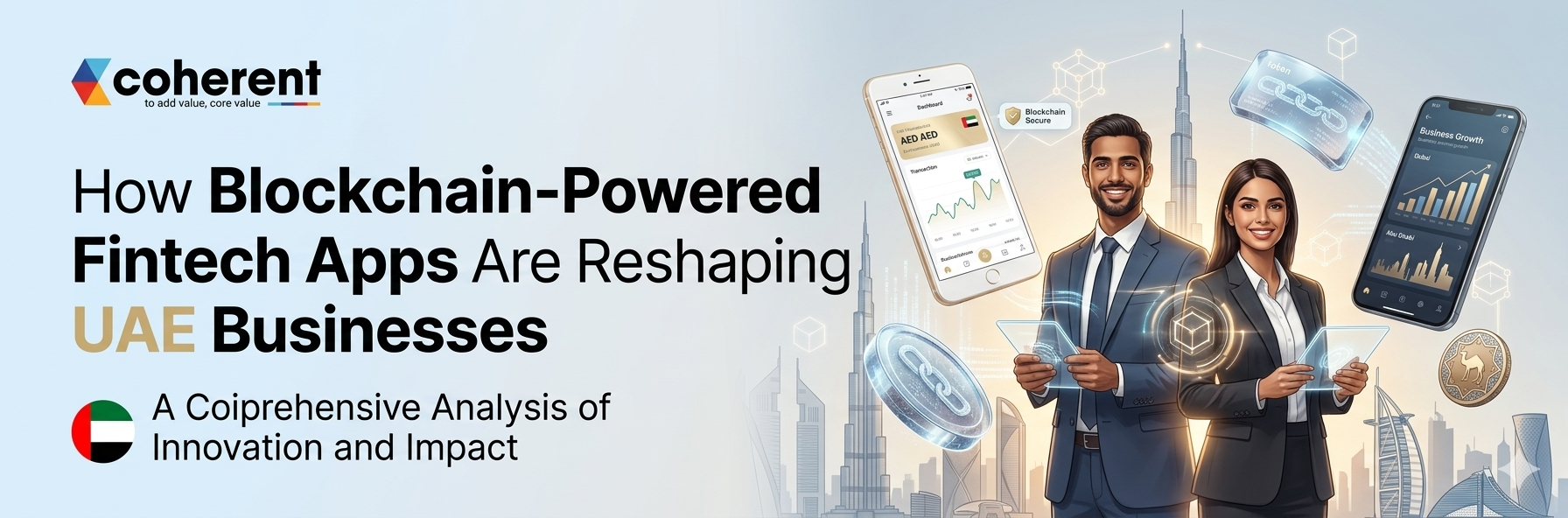
In recent years, blockchain-powered fintech apps in the UAE have emerged as a game-changer for businesses seeking speed, transparency, and security in financial operations. From streamlining payments to enhancing cross-border transactions, these innovative applications leverage blockchain technology to reduce fraud, lower transaction costs, and provide real-time verification. UAE businesses, ranging from startups to large enterprises, are increasingly adopting these solutions to stay competitive in a fast-evolving digital economy. By integrating blockchain into fintech platforms, companies can ensure secure data management, smart contract automation, and improved customer trust, key factors driving operational efficiency and scalability.
The rise of fintech apps in the UAE, powered by blockchain, is transforming traditional financial processes and unlocking new growth opportunities. Businesses are now able to offer faster payments, enhanced financial transparency, and innovative digital solutions tailored to client needs. As blockchain adoption grows, UAE enterprises are poised to achieve higher productivity, regulatory compliance, and global market readiness, reshaping the future of finance in the region.
Key Benefits of Blockchain-Powered Fintech Apps
Key Benefits of Blockchain-Powered Fintech Apps lie in their ability to transform financial operations with blockchain app development. These apps offer enhanced security, real-time transaction verification, and reduced fraud risks, ensuring trustworthy financial interactions. They streamline cross-border payments, automate smart contracts, and cut operational costs. By adopting blockchain-powered fintech solutions, businesses achieve greater transparency, efficiency, and scalability, making blockchain app development a critical strategy for modern UAE enterprises.
| Benefit | Description | Relevance to Blockchain App Development |
|---|---|---|
| Enhanced Security | Protects sensitive financial data using encryption and decentralized networks. | Core advantage achieved through blockchain app development, ensuring secure transactions. |
| Transparency & Trust | Every transaction is recorded on an immutable ledger, improving accountability. | Enables businesses to build trust with clients via blockchain apps. |
| Real-Time Verification | Transactions are verified instantly without intermediaries. | Developed through blockchain app development, reducing delays and errors. |
| Reduced Fraud & Risk | Decentralized validation minimizes fraudulent activities and operational risks. | Blockchain-based solutions enhance security in financial processes. |
| Lower Operational Costs | Automates processes and reduces reliance on third-party services. | Achieved by integrating efficient blockchain app development strategies. |
| Smart Contract Automation | Automates agreements, payments, and compliance checks. | Core feature of modern blockchain fintech apps. |
| Global Accessibility | Facilitates cross-border payments and financial services. | Built through a robust blockchain app, expanding business reach. |
Challenges of Implementing Blockchain Fintech Apps
Implementing blockchain fintech apps comes with several challenges that businesses must navigate carefully. From ensuring robust security and regulatory compliance to managing high development costs, these hurdles can slow down adoption. Effective mobile app development strategies are crucial to overcome issues like scalability, user experience, and integration with existing financial systems. By leveraging experienced blockchain developers and adopting best practices in mobile app development, companies can create secure, efficient, and user-friendly fintech solutions that drive growth and trust in the digital financial ecosystem.
| Challenge | Description | Impact on Fintech Apps | Suggested Solution |
|---|---|---|---|
| Regulatory Compliance | Navigating complex financial regulations across countries | Delays app launch and increases legal risks | Stay updated on local and international regulations; hire legal and compliance experts |
| Scalability Issues | Blockchain networks can struggle with high transaction volumes | Slower transaction processing, poor user experience | Implement Layer 2 solutions or hybrid blockchain models |
| Security Concerns | Vulnerabilities in smart contracts and data storage | Risk of hacks, fraud, and financial losses | Conduct regular security audits and adopt advanced encryption |
| Integration Complexity | Difficulty integrating blockchain with legacy systems | Disrupted workflows and increased development costs | Use APIs and middleware for smoother integration |
| High Development Costs | Blockchain app development requires specialized skills | Increases project budget significantly | Optimize resource allocation and consider blockchain-as-a-service platforms |
| User Adoption | Users may find blockchain apps complex to use | Low adoption and retention rates | Provide intuitive UI/UX and user education |
| Interoperability | Different blockchain networks may not communicate easily | Limits cross-chain transactions and partnerships | Develop cross-chain solutions and standardized protocols |
| Energy Consumption | Some blockchain networks (like PoW) consume excessive energy | Environmental concerns and high operational costs | Opt for energy-efficient consensus mechanisms like PoS |
Future Trends in UAE Blockchain Fintech
The UAE is rapidly emerging as a hub for innovative financial technologies, with Blockchain Fintech leading the way. Future trends indicate increased adoption of secure, transparent, and efficient digital transactions, smart contracts, and decentralized finance solutions. Businesses are investing heavily in Finance App Development to deliver seamless user experiences, enhance security, and comply with regulatory standards. From AI-driven analytics to cross-border payment solutions, UAE’s fintech ecosystem is set to transform the financial landscape, making blockchain-powered apps indispensable for modern enterprises.
| Trend | Description | Blockchain / FinTech Impact in UAE |
|---|---|---|
| Blockchain‑Enabled Finance | Blockchain used for secure, transparent transactions and decentralized systems. | Adoption in cross‑border payments, trade finance, asset tokenization, and smart contracts to reduce cost and improve efficiency. (AW Connect) |
| Decentralized Finance (DeFi) | Financial services delivered without traditional banks or intermediaries. | Growing DeFi activities offering lending, borrowing, and investment protocols; regulatory sandboxes support safe experimentation. (AW Connect) |
| Digital Assets & Crypto Adoption | Rise of cryptocurrencies, digital tokens, and exchange platforms. | UAE fintech ecosystem supporting digital assets, boosting crypto adoption, and expanding virtual asset services. (Khaleej Times) |
| Central Bank Digital Currency (CBDC) | State‑backed digital currencies built on blockchain. | Projects like the Digital Dirham will aim to enhance financial inclusion and streamline payments. |
| AI & Machine Learning Integration | AI used for risk detection, automation, personalized services. | AI enhances fraud detection, compliance, customer personalization, and scalable smart systems. |
| Embedded Finance | Financial services integrated into non‑financial platforms (e.g., e‑commerce, apps). | APIs enable seamless payments, lending, wallets, and credit products embedded in other services. |
| Open Banking & API Ecosystems | Secure data sharing between banks and third‑party providers. | Encourages innovation and new service models while ensuring regulatory compliance. |
| Regulatory Innovation & Sandboxes | Progressive rules supporting testing of fintech solutions. | ADGM and DIFC sandboxes help startups launch regulated blockchain & digital finance products. |
| Digital Payments & Cashless Economy | Growth of mobile wallets, contactless payments, and fintech POS solutions. | Accelerates shift toward a cashless society with blockchain‑backed payment rails. |
| Financial Inclusion & Islamic Fintech | Fintech for underserved groups and Sharia‑compliant products. | Fintech platforms broaden access, including halal digital finance solutions |
| Green & Sustainable Fintech | Tech solutions aligned with ESG and environmental goals. | Fintech platforms tracking sustainability metrics and issuing linked bonds. |
| Smart Compliance & RegTech | Use of advanced tech for know‑your‑customer and regulatory adherence. | Biometric KYC, blockchain IDs, and automated compliance systems. |
Conclusion
Blockchain-powered fintech apps are transforming the UAE’s business landscape. By providing enhanced security, faster payments, and improved customer trust, these apps are becoming indispensable for companies looking to compete in a digital-first world. Businesses that adopt blockchain today will be better positioned for innovation and growth tomorrow.Ready to transform your business with cutting-edge solutions? Don’t wait! Contact us today to explore how our expert team can deliver innovative, efficient, and tailored results for you.
Frequently Asked Questions (FAQs)
Q1: What is a blockchain-powered fintech app?
Ans: A blockchain-powered fintech app uses decentralized ledger technology to manage financial transactions securely and transparently. Unlike traditional applications, blockchain records transactions in a tamper-resistant system that supports verification and auditing. UAE businesses can use these apps for payments, banking, investments, and trade finance, helping reduce fraud, improve efficiency, and build greater trust with customers and partners.
Q2: How do blockchain fintech apps improve security for UAE businesses?
Ans: Blockchain fintech apps improve security through decentralized networks, encryption, and immutable transaction records. Once information is recorded, unauthorized changes become extremely difficult. Smart contracts can automate financial processes and reduce human errors. For UAE businesses, these capabilities help protect sensitive financial data, reduce fraud risks, improve transaction verification, and strengthen trust with customers and business partners.
Q3: What are the main benefits of blockchain fintech apps for UAE businesses?
Ans: Blockchain fintech apps can provide UAE businesses with faster transactions, lower operational costs, improved transparency, and stronger data security. Smart contracts automate processes, while immutable records improve accountability. Businesses can also benefit from efficient cross-border payments, tokenized assets, automated compliance, and better financial tracking. These capabilities support innovation and create new opportunities across finance and trade.
Q4: Are blockchain fintech apps legal in the UAE?
Ans: Blockchain fintech applications can operate legally in the UAE when they comply with applicable regulations and licensing requirements. Businesses must consider financial regulations, data protection, cybersecurity, and anti-money-laundering requirements. The UAE supports responsible financial technology innovation through various regulatory initiatives. Companies should obtain appropriate legal and regulatory guidance before launching blockchain-based financial products or services.
Q5: How can blockchain fintech apps help with cross-border payments?
Ans: Blockchain fintech apps can simplify cross-border payments by enabling faster, transparent, and traceable transactions. Depending on the implementation and applicable regulations, blockchain can reduce reliance on intermediaries and potentially lower transaction costs. Smart contracts can automate payment conditions and reduce delays. This makes blockchain useful for UAE businesses managing international suppliers, customers, partners, and financial operations.
Q6: Can small businesses in UAE benefit from blockchain fintech apps?
Ans: Yes, UAE SMEs can benefit from blockchain fintech applications for secure payments, automated invoicing, financial tracking, and contract management. Blockchain can reduce intermediary dependence and improve data transparency. Scalable solutions allow smaller businesses to adopt selected features without building complex systems from scratch. These capabilities can improve operational efficiency, customer trust, payment management, and long-term competitiveness.
Q7: What challenges do UAE businesses face when implementing blockchain fintech apps?
Ans: UAE businesses may face regulatory requirements, integration challenges, technical complexity, scalability concerns, and initial implementation costs when adopting blockchain fintech applications. Connecting blockchain systems with existing financial infrastructure can require specialized expertise. Businesses can address these challenges through proper planning, compliance reviews, phased implementation, security testing, and experienced technology partners who understand blockchain and fintech requirements.
Q8: What does the future hold for blockchain fintech apps in the UAE?
Ans: Blockchain fintech adoption in the UAE is expected to expand alongside digital finance, tokenization, smart contracts, and decentralized technologies. Businesses may increasingly combine blockchain with AI, automation, and advanced analytics to improve financial services. Continued innovation and regulatory development can support secure digital transactions, greater transparency, and new financial products across banking, investment, payments, and trade.

 +91 774-202-1725
 +1 (945) 3387904
 business@coherentlab.com
 +49 15223341304
 UK
UK