Table of Contents
10 Signs Your Business Needs a Mobile App in 2026
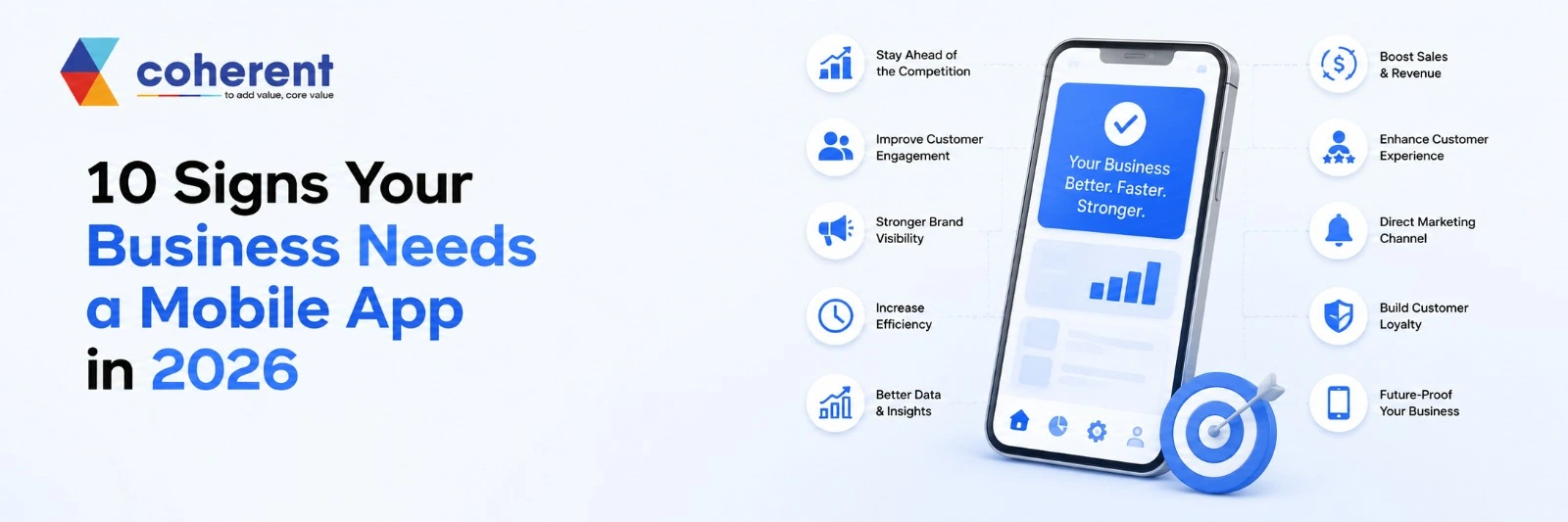
In 2026, mobile apps are no longer a luxury reserved for large enterprises. They have become a critical business tool for companies of all sizes. Consumers now expect brands to offer fast, personalized, and seamless digital experiences directly from their smartphones.
Whether you run a startup, retail store, healthcare business, logistics company, educational platform, or service-based company, investing in business mobile app development can significantly improve customer engagement, increase revenue, and strengthen your brand presence.
But how do you know when it's time to invest?
If your business is experiencing any of these signs, it may be time to partner with a custom mobile app development company.
Why Mobile Apps Matter More Than Ever in 2026
Smartphones have become essential in everyday life, enabling users to shop, book services, order food, manage finances, communicate, and consume content anytime. Businesses that don’t adapt to this mobile-first trend and invest in mobile app development risk falling behind, as customers increasingly prefer brands that offer fast, seamless, and user-friendly mobile experiences over traditional methods.
- Improve customer experience
- Increase customer retention
- Generate additional revenue
- Build stronger brand loyalty
- Automate business operations
- Gather valuable customer insights
|
|
|
|
|
|
|
|
|
|
|
|
|
|
|
|
|
|
|
|
|
|
|
|
|
|
|
|
|
|
|
|
|
1. Your Customers Spend Most of Their Time on Smartphones
The average consumer spends several hours every day using mobile devices.
If your customers are constantly using smartphones but your business only has a website, you are missing opportunities to connect with them.
A dedicated app allows customers to access your products and services instantly without repeatedly searching for your website.
Benefits:
- Faster accessibility
- Better user experience
- Higher customer engagement
- Increased brand visibility
2. Your Competitors Already Have Mobile Apps
Competition is becoming increasingly digital.
If competitors already offer mobile apps, customers may naturally gravitate toward businesses that provide greater convenience.
A mobile app helps you stay relevant and competitive in your industry.
Advantages:
- Meet customer expectations
- Differentiate your brand
- Prevent customer loss
- Stay ahead in the market
3. Your Website Alone Is No Longer Delivering Results
Websites remain important, but they are no longer enough.
Apps provide better speed, smoother navigation, and personalized experiences.
Customers prefer apps because they require fewer steps to complete tasks.
Mobile apps provide:
- Faster loading times
- Offline functionality
- Personalized recommendations
- Simplified purchasing experiences
4. You Want Better Customer Engagement
Businesses constantly compete for customer attention.
Mobile apps allow direct communication through push notifications, loyalty rewards, and personalized offers.
Instead of waiting for customers to visit your website, your brand can proactively engage them.
Engagement tools include:
- Push notifications
- In-app messaging
- Reward programs
- Personalized promotions
5. Your Business Depends on Repeat Customers
Customer retention is more profitable than acquiring new customers.
If your business relies heavily on repeat purchases, a mobile app can strengthen long-term relationships.
Apps make it easier for customers to return and buy again.
Retention features:
- Loyalty programs
- Subscription services
- Personalized recommendations
- Exclusive discounts
6. Your Team Is Spending Too Much Time on Manual Tasks
Many businesses waste valuable time handling repetitive processes.
Mobile apps can automate many daily operations and improve efficiency.
Employees can focus on strategic tasks instead of manual work.
Processes you can automate:
- Appointment bookings
- Order management
- Customer support
- Inventory tracking
- Internal communication
7. You Want New Revenue Opportunities
A mobile app is not just a customer tool. It can also become a revenue-generating asset.
Many businesses create entirely new income streams through their apps.
Revenue models include:
- In-app purchases
- Subscription plans
- Premium memberships
- Advertisements
- Commission-based services
8. You Need Better Customer Data and Insights
Data-driven businesses make smarter decisions.
Mobile apps provide valuable customer behavior insights that websites may not fully capture.
Businesses can understand what customers want and optimize their strategies accordingly.
Valuable insights include:
- User preferences
- Purchase behavior
- Engagement patterns
- Customer demographics
- Retention rates
9. Your Business Is Expanding Digitally
Business growth often creates operational challenges.
A mobile app helps businesses scale efficiently without sacrificing customer experience.
Whether you are opening new locations or entering international markets, mobile apps support expansion.
Growth advantages:
- Reach wider audiences
- Support multiple locations
- Improve communication
- Simplify operations
10. Customers Frequently Ask the Same Questions
If your team constantly answers repetitive customer queries, a mobile app can solve this problem.
Self-service features save time for both customers and employees.
Customers appreciate instant access to information.
Self-service features:
- FAQs
- Live chat
- Order tracking
- Appointment scheduling
- Knowledge centers
Essential Features Every Business Mobile App Should Have in 2026
A successful business mobile app in 2026 must include intuitive UI/UX, fast performance, strong security (biometric login, encryption), AI-driven personalization, seamless payment integration, real-time notifications, offline functionality, and cross-platform compatibility. Scalability, analytics tracking, and cloud integration are also essential to ensure growth, user engagement, and data-driven decision-making in a competitive digital market.
|
|
|
|
|
|
|
|
|
|
|
|
|
|
|
|
|
|
|
|
|
|
|
|
|
|
|
|
|
|
|
|
|
Must-have features:
Every business mobile app in 2026 should include user-friendly design, high-level security, fast loading speed, AI-based personalization, secure payment options, push notifications, offline access, and cloud integration.
- User-friendly interface
- Secure login authentication
- AI-powered personalization
- Push notifications
- Integrated payment gateways
- Live chat support
- Analytics dashboard
- Multi-device compatibility
- Data security protection
Which Businesses Benefit the Most From Mobile Apps?
Mobile apps are highly beneficial for eCommerce, healthcare, education, food delivery, travel, and finance businesses benefit mobile apps. Retail stores use apps for sales and loyalty programs, while healthcare apps improve patient care. EdTech platforms enhance learning experiences, and fintech apps simplify transactions. Any business aiming for customer engagement, convenience, and digital growth can gain a competitive advantage through mobile apps.
Key factors:
- Healthcare
- E-commerce
- Education
- Fintech
- Logistics
- Real estate
- Food delivery
- Travel and hospitality
Also Read: Choose a mobile app development company
How to Choose the Right Mobile App Development Company
Choose a company with proven experience, a strong portfolio, and positive client reviews. Evaluate their expertise in modern technologies, UI/UX design, and scalability. Ensure clear communication, transparent pricing, and post-launch support. A reliable partner understands your business goals and delivers a secure, high-performing app within deadlines and budget.
Key factors:
- Industry expertise
- Portfolio and case studies
- Technology stack
- Communication process
- Security standards
- Post-launch support
- Scalability capabilities
Final Thoughts
The biggest question in 2026 is no longer, "Should my business have a mobile app?"The real question is, "How much business am I losing without one?"If multiple signs mentioned above apply to your business, now is the right time to invest.
Mobile apps have evolved from optional digital tools into essential growth engines that help businesses increase customer loyalty, improve operational efficiency, and create sustainable revenue streams.The sooner you adapt, the stronger your competitive advantage will become.Get started today
Frequently Asked Questions(FAQs)
Q1. How do I know if my business needs a mobile app in 2026?
Ans.If your customers frequently use smartphones, competitors have apps, customer engagement is declining, or your business relies on repeat customers, these are strong indicators that investing in a mobile app can improve customer experience, streamline operations, and increase long-term revenue growth.
Q2. Is a mobile app better than a website for businesses?
Ans.Mobile apps and websites serve different purposes. Websites help customers discover your business, while apps improve customer retention, engagement, and personalization. Businesses achieve the best results when both work together as part of a complete digital strategy.
Q3. How much does business mobile app development cost in 2026?
Ans.The cost depends on app complexity, features, platforms, and development requirements. A simple app may cost less, while advanced apps with AI, payments, and custom integrations require larger investments. Businesses should focus on long-term ROI instead of initial costs.
Q4. Which industries benefit most from mobile app development?
Ans.Healthcare, retail, e-commerce, education, logistics, finance, real estate, travel, and food delivery industries benefit significantly. However, almost every business that serves customers digitally can gain advantages from having a dedicated mobile application.
Q5. What features should a business mobile app include in 2026?
Ans.Essential features include secure authentication, AI personalization, push notifications, analytics dashboards, payment integration, live chat support, and seamless navigation. The features should align with customer needs and business objectives.
Q6. Can small businesses benefit from having a mobile app?
Ans.Yes. Small businesses can improve customer engagement, build loyalty, automate operations, and compete effectively with larger brands. Mobile apps are no longer exclusive to enterprise organizations and are becoming affordable for smaller businesses.
Q7. How long does it take to build a custom mobile app?
Ans.Development timelines vary depending on complexity. A basic app may take three to four months, while advanced applications with custom integrations, AI features, and multiple user roles can take six months or longer.

 +91 774-202-1725
 +1 (945) 3387904
 business@coherentlab.com
 +49 15223341304
 UK
UK