
Table of Contents
Cryptocurrency Payment Gateway Integration: How It Works for Websites and Mobile Apps
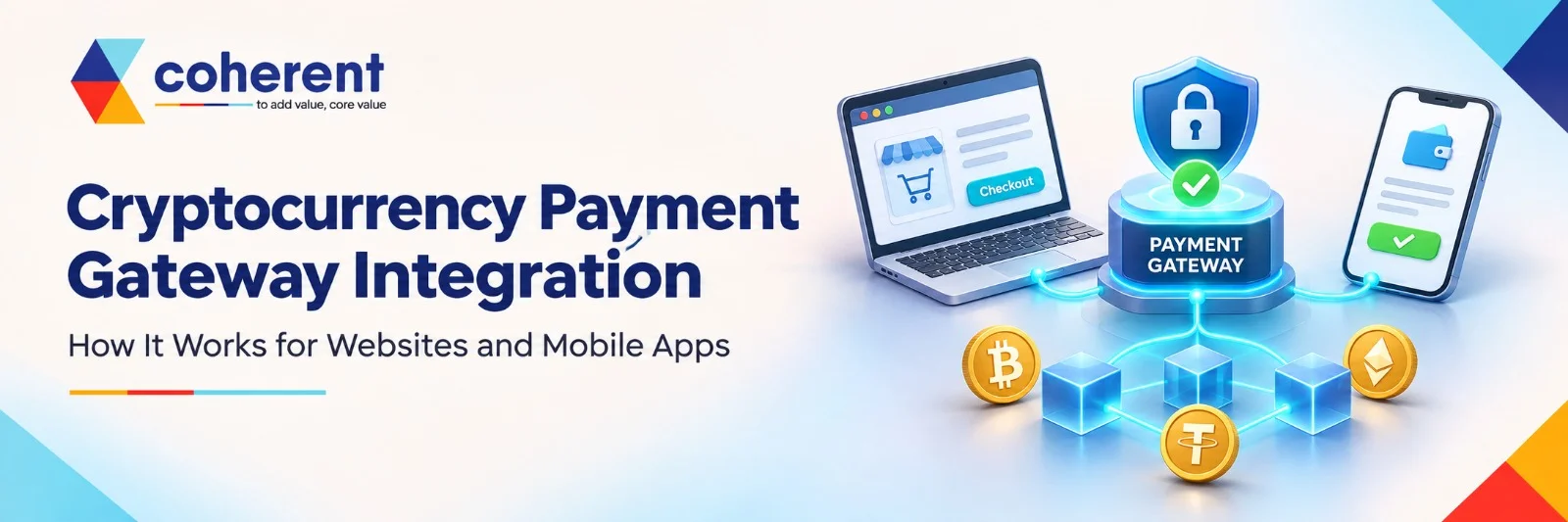
Cryptocurrency payment gateway integration allows businesses to accept digital currencies such as Bitcoin, Ethereum, and stablecoins through websites and mobile applications. It connects a business's payment system with blockchain networks, enabling customers to make digital payments without relying entirely on traditional banking methods. With the growing adoption of digital assets, businesses are exploring cryptocurrency payment solutions to support international transactions, provide flexible payment options, and improve the online checkout experience.
Integrating a cryptocurrency payment gateway requires careful planning, suitable blockchain networks, secure wallet connections, transaction monitoring, and payment confirmation mechanisms. Businesses must also consider exchange rates, transaction fees, regulatory requirements, and customer experience before selecting an integration approach. With the right development strategy, companies can build reliable cryptocurrency payment functionality for their digital platforms. Coherent Lab helps businesses understand modern application development requirements and explore technology solutions that support secure, scalable, and user-friendly digital payment experiences.
Quick Answer
Cryptocurrency payment gateway integration allows businesses to accept digital currencies such as Bitcoin, Ethereum, USDT, and USDC through websites and mobile applications. It connects payment APIs, digital wallets, and blockchain networks to process, verify, and track transactions. Businesses can use third-party payment gateways or custom integrations to provide secure and flexible cryptocurrency payment options.
Key Takeaways
- Cryptocurrency payment gateway integration enables websites and mobile apps to accept digital currency payments.
- Payment gateways connect merchants, customers, digital wallets, and blockchain networks to process transactions.
- Businesses can accept popular cryptocurrencies such as Bitcoin, Ethereum, USDT, and USDC, depending on provider support.
- API integration allows developers to connect cryptocurrency payment functionality with existing eCommerce platforms and mobile applications.
- Blockchain technology helps verify transactions and maintain transparent payment records.
- Important integration considerations include transaction fees, wallet security, network compatibility, and regulatory compliance.
What Is Cryptocurrency Payment Gateway Integration?
Cryptocurrency payment gateway integration is the process of connecting a website or mobile application with a payment service that accepts digital currencies. It allows customers to pay for products and services using supported cryptocurrencies while helping businesses process, verify, and manage transactions. A cryptocurrency payment gateway acts as an intermediary between customers, blockchain networks, and merchants. Depending on the provider, payments can be settled in cryptocurrency or converted into traditional currencies. Businesses planning to expand their digital payment capabilities should also understand How Much Does It Cost to Build a Crypto Wallet App, as development costs depend on wallet features, supported blockchain networks, security requirements, and integration complexity.
- Accepts cryptocurrency payments online.
- Connects merchants with blockchain networks.
- Supports digital wallets and crypto transactions.
- Verifies payments through blockchain confirmations.
- Integrates with websites and mobile apps.
- Enables automated payment processing.
How Does Cryptocurrency Payment Gateway Integration Work?
Cryptocurrency payment processing follows a series of technical steps involving the customer, merchant platform, payment gateway, and blockchain network. Each component works together to ensure that the payment is received and verified before the order is marked as paid. Businesses can also explore integration with a Best Cryptocurrency Exchange to support digital asset conversion, improve liquidity management, and provide customers with more flexible cryptocurrency payment options.
Step-by-Step Cryptocurrency Payment Process
- Customer selects cryptocurrency: The customer chooses a supported digital currency during checkout.
- Payment request generation: The gateway calculates the required amount using the applicable exchange rate.
- Wallet payment: The customer transfers the specified amount to the provided wallet address.
- Blockchain transaction detection: The gateway monitors the relevant blockchain network.
- Payment verification: The transaction is checked for validity and required confirmations.
- Order status update: The merchant receives a payment notification through an API or webhook.
- Payment settlement: Funds remain in cryptocurrency or are converted according to the merchant's settlement preferences.
Cryptocurrency Payment Gateway Integration for Websites and Mobile Apps
Businesses can integrate cryptocurrency payment functionality into both websites and mobile applications. Although the basic payment process remains similar, the implementation approach depends on the platform, technology stack, payment provider, and customer experience requirements. Integrating crypto apps can further help businesses provide convenient digital payment options, connect with cryptocurrency wallets, manage transactions, and offer customers a seamless experience when sending or receiving digital currencies.
How to Integrate Crypto Payments into a Website
Website integration generally uses payment gateway APIs, checkout plugins, or custom backend development. Businesses can connect their eCommerce platforms with a supported cryptocurrency processor to accept digital currency payments.
- Integrate the payment gateway API.
- Configure supported cryptocurrencies and blockchain networks.
- Add cryptocurrency payment options to checkout.
- Implement transaction status notifications.
- Test successful, pending, failed, and expired payments.
How to Integrate Crypto Payments into a Mobile App
Mobile applications require payment functionality that works smoothly across different devices and operating systems. Developers can connect the application with a payment gateway through secure backend APIs rather than exposing sensitive credentials within the mobile application.
- Add a cryptocurrency payment selection screen.
- Connect mobile checkout with backend payment APIs.
- Display wallet addresses and QR codes.
- Implement real-time transaction status updates.
- Provide payment receipts and transaction history.
Which Cryptocurrencies Can Businesses Accept?
The cryptocurrencies supported by a payment gateway depend on its provider, blockchain compatibility, and specific business requirements. Before selecting digital currencies, businesses should understand How Crypto Wallets Work, including how wallets manage private keys, authorize transactions, and connect with blockchain networks. This knowledge helps businesses evaluate suitable payment options based on customer preferences, transaction costs, network performance, liquidity, security, and settlement flexibility.
- Bitcoin (BTC): Supports decentralized digital payments and is widely used for cryptocurrency transactions.
- Ethereum (ETH): Enables digital payments and supports blockchain-based applications and smart contracts.
- Tether (USDT): A stablecoin designed to maintain a value linked to the US dollar, available across multiple blockchain networks.
- USD Coin (USDC): A dollar-linked stablecoin used for digital payments and transfers.
- Litecoin (LTC): Offers an alternative cryptocurrency payment option with relatively fast transaction processing.
- Bitcoin Cash (BCH): Designed to support peer-to-peer digital payments.
- Binance Coin (BNB): Can be used for payments within supported blockchain ecosystems and services.
- Solana (SOL): Supports digital asset transfers through the Solana blockchain network.
Benefits of Cryptocurrency Payment Gateway Integration
Cryptocurrency payment integration can provide businesses with additional payment flexibility and access to customers who prefer digital assets. It can also support international commerce and reduce dependence on certain traditional payment intermediaries. However, the actual benefits depend on the selected gateway, blockchain network, conversion arrangements, and local regulations. Coherent Lab helps businesses explore cryptocurrency payment integration solutions that align with their digital payment requirements and business objectives.
|
|
|
|
|
|
|
|
|
|
|
|
|
|
|
|
|
|
|
|
|
|
|
|
1. Global Payment Accessibility
Cryptocurrency payments can help businesses accept transactions from customers in different countries where supported digital asset services are legally available. This can expand payment options for international customers.
- International transactions
- Global customer reach
- Cross-border payments
2. Alternative Payment Methods
Customers can choose cryptocurrency instead of relying exclusively on credit cards, debit cards, or conventional banking transfers.
- Bitcoin and Ethereum payments
- Digital wallet payments
- Flexible checkout options
3. Transparent Transactions
Blockchain records can provide transaction details that help merchants track payment activity and verify transfers.
- Blockchain transaction records
- Payment verification
- Transaction tracking
4. Faster Payment Settlement Options
Some blockchain networks can process transactions relatively quickly. However, actual settlement time depends on network conditions, confirmation requirements, and gateway policies.
- Faster transaction processing
- Blockchain confirmations
- Efficient payment settlement
5. Business Payment Flexibility
Merchants can choose between retaining cryptocurrency and converting eligible payments into supported fiat currencies, depending on their provider's capabilities.
- Cryptocurrency settlements
- Fiat currency conversion
- Flexible payment management
How to Choose the Best Cryptocurrency Payment Gateway for Your Business
Choosing the best cryptocurrency payment gateway requires evaluating your business requirements, supported digital currencies, transaction fees, security features, and payment processing capabilities. Businesses should compare different providers to identify a solution that integrates smoothly with their websites, mobile applications, and existing payment systems. The right gateway should offer reliable transaction verification, flexible settlement options, strong API support, and a user-friendly checkout experience. Coherent Lab helps businesses explore suitable payment integration approaches based on their technical and operational needs.
Key Points to Consider:
- Supported cryptocurrencies and blockchain networks
- Transaction fees and processing charges
- Payment gateway security and encryption
- API and SDK integration capabilities
- Fiat currency conversion and settlement options
- Transaction speed and confirmation requirements
Conclusion
Cryptocurrency payment gateway integration provides businesses with an opportunity to accept digital currencies through websites and mobile applications. By connecting payment APIs, cryptocurrency wallets, and blockchain networks, companies can introduce alternative payment methods while improving transaction visibility and payment flexibility.
However, successful implementation requires more than connecting a payment processor. Businesses must consider security, regulatory compliance, network fees, transaction verification, and customer experience. Selecting the right integration approach can help create a reliable and scalable payment system. With appropriate technical planning and development expertise, Coherent Lab can help businesses explore cryptocurrency payment solutions aligned with their digital product requirements. Connect with our experts
Frequently Asked Questions
Q1. What is cryptocurrency payment gateway integration?
Ans. Cryptocurrency payment gateway integration is the process of connecting a website or mobile application with a payment processing service that accepts digital currencies such as Bitcoin, Ethereum, and stablecoins. It allows customers to purchase products or services using cryptocurrency instead of traditional payment methods. The gateway generates payment instructions, monitors blockchain transactions, verifies payment status, and notifies the merchant when the transaction meets the required confirmation conditions. Depending on the provider, businesses can receive payments in cryptocurrency or convert eligible transactions into supported fiat currencies.
Q2. How does a cryptocurrency payment gateway work for an online business?
Ans. A cryptocurrency payment gateway connects the customer's digital wallet with the merchant's payment system. When a customer selects cryptocurrency at checkout, the gateway calculates the payment amount and generates a wallet address or QR code. The customer transfers the required cryptocurrency, and the gateway monitors the relevant blockchain network to detect the transaction. After verifying the transaction and receiving the required confirmations, it sends a payment notification to the merchant's application. The business can then update the order status and proceed with order fulfillment.
Q3. How can I integrate cryptocurrency payments into my website?
Ans. You can integrate cryptocurrency payments into a website by selecting a suitable payment gateway and connecting its API with your existing checkout system. First, identify which cryptocurrencies and blockchain networks you want to support. Next, create a payment gateway account, obtain API credentials, and configure the payment processing environment. Developers then implement payment requests, wallet address generation, transaction monitoring, and webhook notifications. After completing integration, test different payment scenarios, including successful transactions, failed payments, expired requests, and delayed confirmations before making the feature available to customers.
Q4. Can cryptocurrency payment gateways be integrated into Android and iOS applications?
Ans. Yes, cryptocurrency payment gateways can be integrated into Android and iOS applications using payment APIs, SDKs, and secure backend services. Developers can create an in-app checkout experience where customers select a cryptocurrency, view the payment amount, and complete the transaction through a compatible wallet. The backend communicates with the payment gateway to monitor transaction status and verify confirmations. Businesses should also consider mobile application security, wallet compatibility, push notifications, and payment history. These features help create a consistent cryptocurrency payment experience across different mobile devices and operating systems.
Q5. Which cryptocurrencies can be accepted through a payment gateway?
Ans. The available cryptocurrencies depend on the selected payment gateway and its supported blockchain networks. Common payment options include Bitcoin, Ethereum, Litecoin, USDT, and USDC. Some gateways also support additional digital assets and stablecoins. Businesses should evaluate each currency based on customer demand, transaction fees, blockchain confirmation times, liquidity, and regulatory requirements. It is also important to verify the exact blockchain network supported for each asset because sending cryptocurrency through an incompatible network can result in lost funds or unsuccessful payments.
Q6. How much does cryptocurrency payment gateway integration cost?
Ans. The cost of cryptocurrency payment gateway integration depends on the development approach, payment provider, number of supported cryptocurrencies, blockchain networks, security requirements, and platform complexity. Integrating an existing third-party gateway is generally more straightforward than developing a customized payment infrastructure. Additional expenses may include API subscriptions, transaction processing fees, wallet integration, backend development, security audits, testing, and ongoing maintenance. Businesses should evaluate their functional requirements and request a customized development estimate before beginning the project. The final investment will depend on the features and technical architecture selected.
Q7. Is cryptocurrency payment gateway integration secure for websites and mobile apps?
Ans. Cryptocurrency payment gateway integration can be secure when implemented with appropriate security controls and reliable payment providers. Businesses should use encrypted communication, secure API authentication, protected wallet credentials, webhook signature verification, and blockchain transaction validation. Private keys should never be exposed in frontend code or mobile applications. Developers should also implement access controls, transaction monitoring, audit logs, and regular security testing. However, blockchain technology alone does not guarantee complete application security. The overall protection of a payment system depends on its architecture, provider security, wallet management, and operational practices.
Q8. What should businesses consider before choosing a cryptocurrency payment gateway?
Ans. Before choosing a cryptocurrency payment gateway, businesses should evaluate supported digital currencies, blockchain networks, transaction fees, settlement options, API documentation, security features, and customer support. Regulatory compliance is equally important because cryptocurrency payment requirements differ between jurisdictions. Companies should also check whether the gateway supports their website technology, Android or iOS application, and existing accounting systems. Other considerations include refund management, transaction confirmation policies, payment reporting, and scalability. Comparing these factors helps businesses select a payment solution that supports their current operations while allowing room for future growth

 +91 774-202-1725
 +1 (945) 3387904
 business@coherentlab.com
 +49 15223341304
 UK

