
Table of Contents
Global Number of Gamers in 2026: Latest Statistics, Trends & Demographics
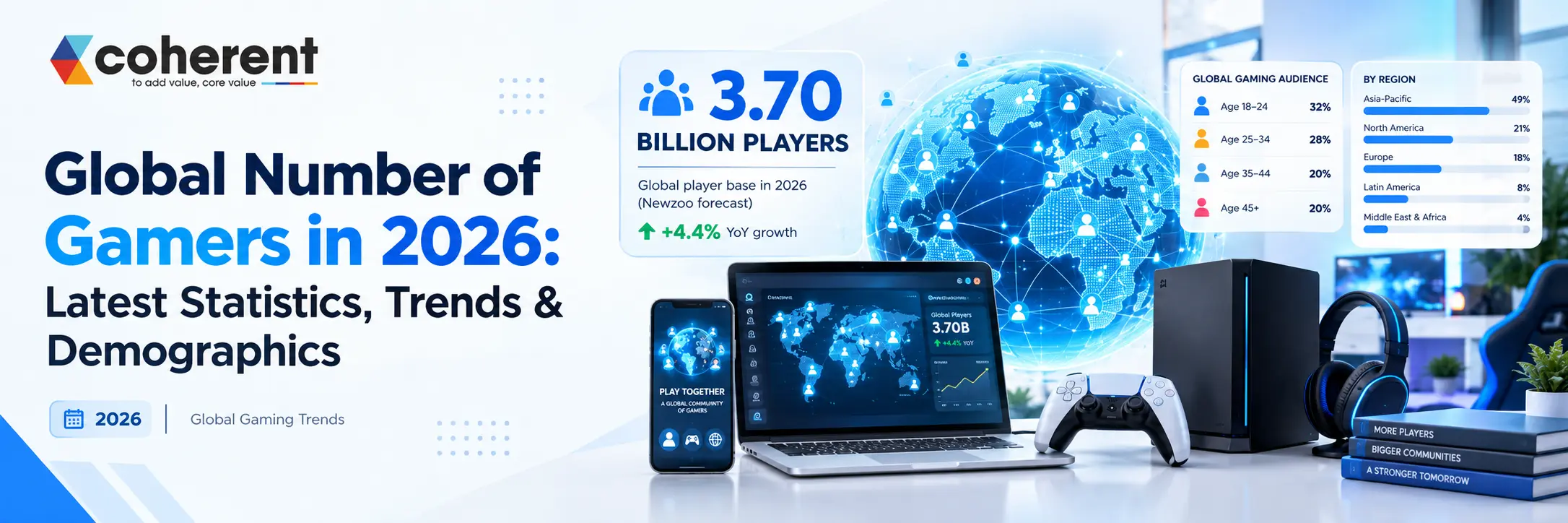
The global gaming community has grown into one of the largest digital audiences, with more than 3.5 billion gamers worldwide in 2026. This growth is being driven by widespread smartphone adoption, faster internet connectivity, affordable gaming devices, free-to-play models, and expanding access to digital entertainment. Gaming is no longer limited to a specific age group or region, making it an important market for developers, publishers, advertisers, and technology companies.
In this guide, we explore the latest global gamers statistics for 2026, including the number of players worldwide, gaming demographics, leading countries, mobile, PC, and console preferences, and emerging industry trends. Understanding these numbers helps businesses identify valuable audiences and make smarter decisions when planning gaming products and strategies.
How Many Gamers Are There in the World in 2026?
The global gaming population is expected to reach more than 3.5 billion players in 2026, making gaming one of the world's largest digital entertainment activities. The continued expansion of smartphones is also creating opportunities for businesses to build engaging gaming experiences for mobile audiences. Companies exploring this space can benefit from professional mobile app development expertise to create scalable, user-friendly, and high-performing gaming applications across supported devices.
| Metric | 2026 Estimate / Trend |
|---|---|
| Global Gamers | 3.5+ billion |
| Largest Gaming Platform by Users | Mobile |
| Major Gaming Markets | Asia-Pacific, North America, Europe |
| Fast-Growing Audiences | Emerging markets and mobile-first users |
| Core Gaming Devices | Smartphones, PCs, consoles |
| Major Business Models | Free-to-play, advertising, subscriptions, premium purchases |
| Key Growth Drivers | Mobile internet, smartphones, cloud gaming, esports, social gaming |
What Does “Gamer” Mean in 2026?
A gamer is generally a person who regularly plays digital games on a smartphone, tablet, PC, console, handheld device, or another gaming-enabled platform.The definition has become much broader than it was a decade ago.Someone who plays a casual puzzle game for 10 minutes on a smartphone may technically be included in the global gaming population, just like someone who spends several hours every day playing competitive PC games.
- Cloud gamers streaming games over the internet.
- Esports players competing professionally.
- Social gamers playing with friends.
- Kids and families playing multiplayer games together.
Also Read: How to Make a Game App: Ultimate Step-by-Step Guide
How Many Gamers Are There by Region in 2026?
Asia-Pacific represents the world's largest gaming audience, supported by its enormous population, widespread smartphone adoption, affordable mobile games, and strong gaming cultures.China, India, Japan, and Southeast Asian markets are particularly important to the global gaming ecosystem.
| Region | Approximate Position in Global Gaming Market | Key Characteristics |
|---|---|---|
| Asia-Pacific | Largest | Mobile-first, huge population, esports and multiplayer growth |
| Europe | Major | Strong PC, console, mobile, and esports markets |
| North America | Major | High spending, consoles, PC gaming, subscriptions |
| Latin America | Fast-growing | Mobile-first audiences and increasing internet access |
| Middle East & Africa | Emerging | Young populations and growing smartphone penetration |
How Many Gamers Are There in India in 2026?
India is one of the world's most important emerging gaming markets, with hundreds of millions of people playing digital games across smartphones, PCs, and other devices.The country's gaming growth is closely connected to affordable smartphones, inexpensive mobile data, a young internet population, digital payments, and the popularity of multiplayer and casual games.
- Young digital audiences.
- Increasing esports interest.
- Regional-language content.
- Social and multiplayer gaming.
Also Read: Top Game Development Companies in Los Angeles Guide List
Which Gaming Platform Has the Most Players in 2026?
Mobile is the largest gaming platform by player count in 2026. The reason is straightforward: smartphones are already owned by billions of people worldwide, while dedicated gaming hardware requires additional investment. Mobile games are also easy to download, offer free-to-play options, and support short or extended sessions. Affordable devices, improving mobile internet, and social features continue to bring new players into gaming across different age groups and regions.
| Platform | Audience Characteristics | Main Strength |
|---|---|---|
| Mobile | Largest and most diverse audience | Accessibility |
| PC | Highly engaged players | Performance and flexibility |
| Console | Strong premium audience | AAA and immersive gaming |
| Cloud | Emerging cross-device audience | Convenience |
| Handheld | Portable gaming audience | Mobility |
What Are the Biggest Gaming Trends in 2026?
The global gaming industry is moving beyond traditional PC and console experiences. In 2026, developers are focusing on accessibility, personalization, social interaction, AI-powered workflows, and cross-platform experiences. These trends are influencing how games are developed, launched, monetized, and supported. For businesses, understanding these changes can help identify new opportunities and create gaming products that better match modern player expectations.
1. Mobile Gaming Continues to Lead
Mobile gaming remains the easiest entry point for new players because smartphones are widely available and games can be downloaded instantly. Developers are increasingly prioritizing engagement and long-term retention rather than one-time downloads.
- Live-service content
- Social features
- Personalized experiences
- Free-to-play models
2. AI Is Changing Game Development
Artificial intelligence is becoming an important tool throughout the game development lifecycle. Rather than replacing creative teams, AI can automate repetitive work, support experimentation, and help developers analyze player behavior. Studios can use AI to accelerate production while keeping human designers, artists, writers, and developers responsible for creative decisions.
- NPC behavior
- Procedural content
- Game testing
- Player personalization
3. Cloud Gaming Is Expanding Access
Cloud gaming allows players to stream games without relying entirely on powerful local hardware. As internet connectivity, data centers, and streaming technologies improve, players can potentially access more demanding gaming experiences across compatible devices. This model can reduce hardware barriers and create new opportunities for developers targeting audiences that may not own dedicated gaming systems.
- Game streaming
- Remote processing
- Multi-device access
- Reduced hardware requirements
4. Social Gaming Is Becoming More Important
Games increasingly operate as interactive social spaces rather than standalone entertainment products. Players can communicate, build communities, watch competitive events, and participate in virtual experiences. Social features can strengthen engagement and encourage players to return regularly, making community building an increasingly important part of modern game design and player retention strategies.
- Chat with friends
- Join gaming communities
- Attend virtual events
- Watch esports
5. Cross-Platform Gaming Is Becoming Standard
Players increasingly expect gaming experiences to work across smartphones, PCs, consoles, and other supported platforms. Cross-platform development can provide greater flexibility while expanding a game's potential audience. Studios that design consistent experiences across devices can improve accessibility, player retention, and market reach while giving users more freedom over where and how they play.
- Cross-platform progression
- Shared accounts
- Multi-device gameplay
- Consistent user experiences
Also Read: Best HTML5 Game Engines for Developers in 2026 (Complete Comparison Guide)
What Is the Global Gaming Market Worth in 2026?
The global gaming market is worth hundreds of billions of dollars annually, although estimates differ depending on what each research firm includes. Some calculations cover game software and in-game spending, while others also consider advertising, hardware, subscriptions, esports, and related services. The industry's commercial strength comes from its enormous audience and diverse monetization opportunities.
Which Revenue Streams Drive the Gaming Market?
Modern games generate revenue through several channels, allowing developers and publishers to build different business models around their audiences. Free-to-play games may rely heavily on virtual purchases, while premium titles can generate revenue through upfront sales and downloadable content.
- Game purchases
- Downloadable content
- In-app purchases
- Virtual goods
How Much Does It Cost to Develop a Game?
Game development costs vary considerably based on the game's platform, genre, complexity, graphics quality, multiplayer functionality, backend requirements, and development team. A simple 2D mobile game can require significantly less investment than a visually intensive 3D multiplayer title. Businesses should evaluate features, technology, team requirements, testing, maintenance, and post-launch support before setting a development budget.
| Game Type | Approximate Development Cost |
|---|---|
| Basic 2D Game | $15,000–$50,000+ |
| Mobile Game | $30,000–$150,000+ |
| 3D Game | $60,000–$150,000+ |
| Multiplayer Game | $80,000–$250,000+ |
Which Countries Have the Largest Gaming Audiences?
The largest gaming audiences are generally found in countries with large populations, widespread internet access, high smartphone adoption, and established gaming ecosystems. China, India, the United States, Japan, Brazil, Germany, the United Kingdom, South Korea, France, Canada, and Mexico are important gaming markets. However, audience size does not automatically indicate market value because spending behavior differs significantly between countries.
- China
- India
- United States
- Japan
Why Does Gaming Audience Size Differ by Country?
Gaming adoption depends on several factors, including population size, disposable income, device availability, internet infrastructure, gaming culture, and payment accessibility. Emerging markets may have enormous player populations driven by mobile gaming, while mature markets can generate greater revenue through premium games, consoles, subscriptions, and in-game purchases.
- Population size
- Smartphone adoption
- Internet penetration
- Disposable income
What Is the Difference Between Number of Gamers and Gaming Revenue?
The number of gamers and gaming revenue represent two different measurements of market opportunity. Number of gamers measures audience size, while gaming revenue measures the economic value generated by that audience. A mobile-first country may have hundreds of millions of players but lower average spending, whereas a mature gaming market may have fewer players but higher revenue per user.
- Total gamers
- Active users
- Daily active users
- Monthly active users
What Does the Future of Gaming Look Like?
The future of gaming is expected to become more connected, accessible, personalized, and social. Growing internet availability, smartphones, digital payments, cloud infrastructure, and AI-assisted development are creating new opportunities for studios and businesses. Cross-platform experiences can further expand audiences, allowing players to interact with games across multiple supported devices and locations.
- More mobile-first gaming experiences
- Greater use of AI in development
- Personalized game content
- Continued cloud gaming growth
Why Does the Global Number of Gamers Matter to Businesses?
The enormous global gaming audience creates opportunities beyond traditional game development. Brands, advertisers, technology companies, entertainment businesses, and investors can use gaming to reach highly engaged digital audiences. Understanding where gamers are located, what platforms they use, and how they spend can help businesses develop more effective products, marketing strategies, and partnerships.
- Customer engagement
- Brand experiences
- Digital communities
- Advertising
Also read:Game engines modern game development
What Should Businesses Consider Before Building a Gaming App?
A large gaming audience does not guarantee that every game concept will succeed. Businesses should first identify a specific audience, validate demand, study competitors, and determine how the product will generate value. A clear development strategy can reduce unnecessary spending while helping teams prioritize features that improve usability, engagement, retention, and long-term growth.
What Is a Practical Game Development Checklist?
A structured checklist helps businesses move from an initial game concept toward a realistic development plan. Before hiring a development team or selecting a technology stack, decision-makers should understand their users, platforms, budget, monetization strategy, technical requirements, and post-launch objectives.
- Define the target audience.
- Choose the right platform.
- Research competitors.
- Validate the game concept.
Final Thoughts
The global gaming audience has grown into a massive, diverse ecosystem, with more than 3.5 billion people expected to play games in 2026.But the most interesting story is not simply the number.Gaming is becoming more accessible, more social, more mobile, and increasingly connected to emerging technologies such as artificial intelligence and cloud computing.
For developers and businesses, the opportunity in the global gaming market is enormous—but so is the competition. Successful gaming products need more than attractive graphics. If you are planning to build a gaming product and need expert guidance, Contact us today to discuss your idea, technology requirements, and development goals.
Frequently Asked Questions
Q1. How many gamers are there in the world in 2026?
Ans. The global gaming population is estimated to be more than 3.5 billion people in 2026. The exact figure can vary depending on how researchers define an active gamer and which platforms and markets they include. Mobile gaming accounts for a significant share because smartphones are widely available and many games use free-to-play models. PC and console gaming also remain highly influential, particularly among engaged players. Overall, gaming has evolved into a mainstream entertainment activity reaching people across different countries, age groups, income levels, and device categories.
Q2. Which country has the most gamers in 2026?
Ans. China and India are among the world's largest gaming audiences, largely because of their enormous populations and widespread smartphone and internet adoption. China has a mature gaming ecosystem covering mobile and PC gaming, while India has experienced rapid growth, particularly in mobile gaming. However, rankings can differ depending on whether research measures total gamers, active players, paying users, or gaming revenue. Therefore, the country with the largest player population is not necessarily the market generating the highest gaming revenue.
Q3. Is mobile gaming bigger than PC and console gaming?
Ans. Yes, mobile gaming has the largest global player base. Smartphones have made gaming accessible to billions of people without requiring dedicated gaming hardware. Mobile games also benefit from free-to-play models, app-store distribution, short gaming sessions, multiplayer features, and frequent updates. PC and console gaming remain highly important for competitive, premium, and AAA experiences. Therefore, mobile generally leads in player volume, while PC and consoles continue to attract highly engaged audiences and generate significant revenue across major gaming markets.
Q4. How many gamers are there in India?
Ans. India has a gaming audience numbering in the hundreds of millions, making it one of the world's most important emerging gaming markets. Mobile gaming dominates because affordable smartphones and internet access have lowered barriers to participation. India's young digital population, growing esports ecosystem, digital payments infrastructure, and expanding game-development community are supporting continued growth. Businesses entering the Indian gaming market should consider localization, pricing, user acquisition, monetization, device compatibility, and network performance when developing and launching games for local audiences.
Q5. What age group plays the most video games?
Ans. There is no single age group that represents every type of gamer because gaming behavior varies by platform, genre, and country. Young adults are generally highly active across mobile, PC, and console gaming, while teenagers and children frequently engage with multiplayer, social, sandbox, and casual games. Older adults are also becoming an important gaming audience, especially for puzzle, casual, and mobile titles. Game developers should therefore use audience research, engagement data, and genre-specific insights rather than assuming gaming is primarily an activity for teenagers.
Q6. Are there more male or female gamers worldwide?
Ans. The worldwide gaming audience includes a substantial number of both male and female players, although the exact distribution varies by platform, genre, country, and research methodology. Mobile and casual games can attract particularly diverse audiences, while some competitive gaming categories may show greater gender differences. For modern game developers, the important takeaway is to avoid outdated assumptions about players. Inclusive design, accessible gameplay, diverse characters, and flexible play styles can help games appeal to a broader global audience and improve overall user engagement.
Q7. What are the biggest gaming trends in 2026?
Ans. Major gaming trends in 2026 include mobile-first gaming, cross-platform experiences, cloud gaming, AI-assisted game development, social gaming, live-service content, esports, personalization, and community-driven experiences. Artificial intelligence is increasingly being explored for NPC behavior, testing, analytics, content creation, and player personalization. Players also expect better performance, faster connectivity, regular content updates, and seamless experiences across devices. As a result, game studios increasingly need strategies that extend beyond launch and focus on player retention, community building, content updates, and long-term engagement.
Q8. Why is the number of gamers important for the gaming industry?
Ans. The number of gamers provides an indication of the potential global audience available to game developers, publishers, advertisers, and gaming technology businesses. However, player volume alone does not guarantee commercial success. Companies must also evaluate engagement, retention, spending behavior, customer acquisition costs, and lifetime value. A smaller but highly engaged audience can sometimes be more valuable than a larger audience with weak retention. Understanding both player numbers and player behavior helps businesses make better decisions about platforms, monetization models, game design, marketing, and international expansion.

 +91 774-202-1725
 +1 (945) 3387904
 business@coherentlab.com
 +49 15223341304
 UK

