
Table of Contents
The Hidden Legal Risks That Can Hurt Your Business More Than Competition
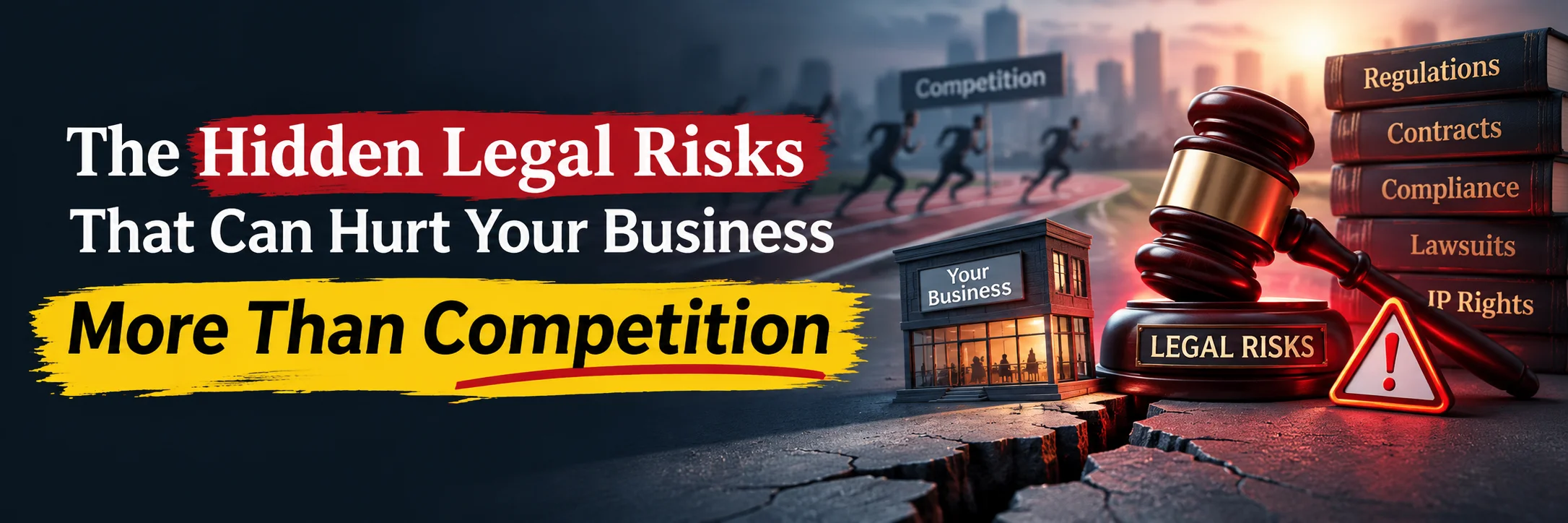
Competitor analysis is an area in which businesses invest heavily. However, there is a risk category that rarely makes its way into a business planning checklist. It is a legal liability for on-premises incidents. This costs a business dearly and arrives dangerously without any warning.
Businesses often expose themselves to legal risks from workplace injuries and accidents, mostly unknowingly. It is important to understand these risks to avoid additional expenses and penalties. Many businesses seek consultation from slip and fall lawyers for better understanding and clarification.
The Premises Liability Gap
When someone gets hurt on your property, the law doesn't care if your team was busy or understaffed. Premises liability holds property owners responsible for maintaining reasonably safe conditions for customers, vendors, and delivery drivers, based on the jurisdiction.
According to the National Floor Safety Institute, slips and falls are common in commercial settings. They account for more than 1 million emergency room visits in the USA every year. Courts find wet floors without signage, cracked parking lot pavement, loose carpeting, and dim stairwells actionable.
For businesses, that means insurance claims, legal fees, and often, litigation. In a high-foot-traffic market like San Diego, the exposure is very real. What many businesses underestimate is how quickly a minor oversight can escalate into a claim. A spill left unattended for even a short period or a missed inspection round can create liability exposure. Implementing routine safety audits, clear signage, and staff accountability systems can significantly reduce these risks.
Why "We Didn't Know" Rarely Works
Businesses often lead with "we weren't aware of the hazard." Courts have a response for that, constructive notice. For instance, if water accumulates near a beverage station for a while, it is expected to be noticed during routine checks. The burden falls on the business to prove that there were systems in place, such as inspection logs, training records, and maintenance schedules.
This is more of a documentation problem. Most businesses could protect themselves just by keeping better records, but they ignore it until something goes wrong. In many cases, the absence of documentation is interpreted as the absence of action. Digital logging systems, incident reports, and time-stamped inspection checklists can act as critical evidence in defending claims and demonstrating due diligence.
Employment Law: The Other Blind Spot
California has some of the strongest employee protections in the country. Wrongful termination claims, wage violations, discrimination allegations, and failure to accommodate disability are among the most frequently litigated employment matters. Employers operating under federal law assumptions regularly get caught off guard.
Retaliation is consistently the most-cited basis for EEOC charges nationwide, according to the U.S. Equal Employment Opportunity Commission. Worse, employment cases often include fee-shifting provisions. This means that if an employee wins, the business may need to cover their attorney's fees in addition to damages. For SMBs, a single case is too costly.
Beyond compliance, the real issue is inconsistency. Policies that are not applied uniformly across employees often trigger disputes. Businesses should invest in clear HR policies, regular compliance training, and documented performance management processes. Even simple actions like conducting structured exit interviews or maintaining written warnings can significantly strengthen a company’s legal position.
Contracts You Signed Without Reading
Vendor agreements, leases, and contractor arrangements routinely contain indemnification clauses, liability caps, and auto-renewal terms. However, most owners don't fully understand these at the time of signing. One clause could make you responsible for defending a third party in litigation unrelated to you. A vague contractor agreement could result in a worker being reclassified as an employee, leading to additional taxes and penalties.
Another overlooked issue is ambiguous language. Terms that seem standard can carry different legal interpretations depending on jurisdiction. Reviewing contracts with legal counsel before signing, even for seemingly routine agreements, can prevent long-term financial exposure. Periodic contract audits are equally important to ensure that outdated or unfavorable terms are identified and renegotiated.
Insurance Isn’t a Complete Safety Net
Many business owners assume their insurance policies will cover all risks. In reality, coverage gaps are common. Certain claims may fall outside policy limits, involve exclusions, or require strict compliance conditions. Failure to report incidents promptly or maintain proper documentation can even result in denied claims.
Businesses should regularly review their insurance policies, understand coverage limits, and align them with actual operational risks. Working closely with insurance advisors and legal professionals ensures that coverage evolves as the business grows.
Summing it Up
Legal liability builds quietly. A hazard left unaddressed, a termination undocumented, a clause unread, all land in the form of a lawsuit. Businesses that treat legal risk proactively reduce the risks.

 +91 774-202-1725
 +1 (945) 3387904
 business@coherentlab.com
 +49 15223341304
 UK

