Table of Contents
Hyper Casual vs Hybrid Casual Games: Which Is Better in 2026?
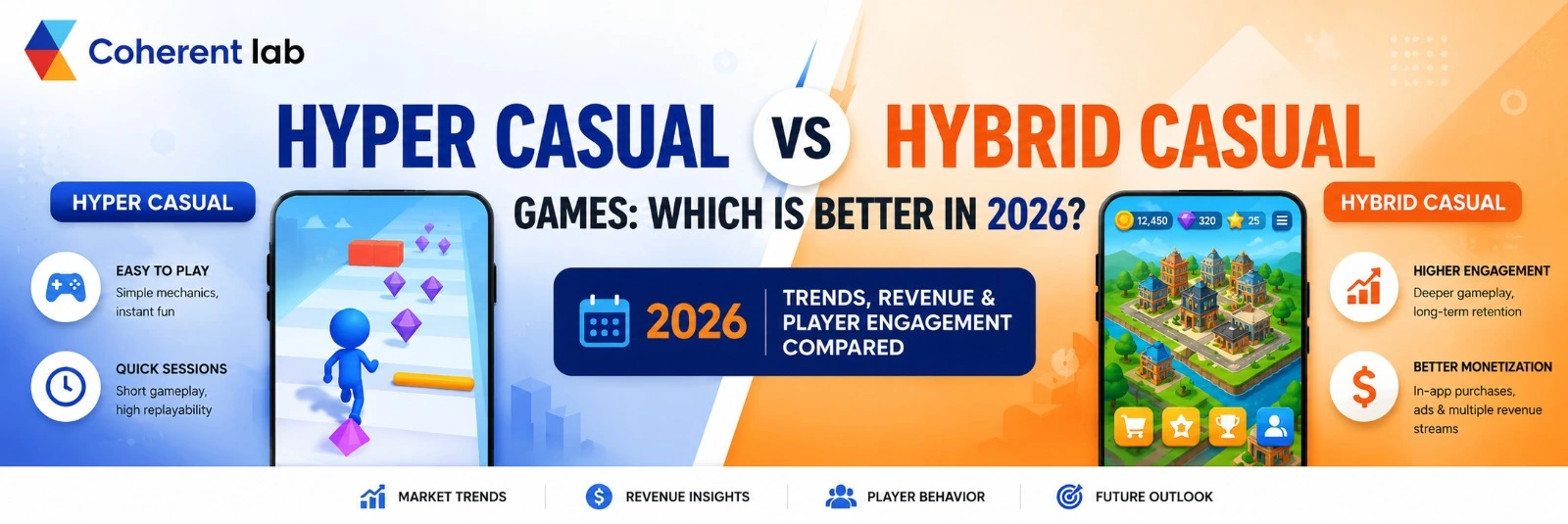
The mobile gaming industry has changed dramatically over the last few years. While Hyper Casual Games once dominated app stores with their simple gameplay and viral downloads, Hybrid Casual Games are becoming the preferred choice for developers and publishers looking for long-term revenue and better player retention.
The answer depends on your business goals, budget, target audience, and monetization strategy. Hyper casual games remain an excellent option for quickly testing ideas and acquiring users at scale, while hybrid casual games combine simple mechanics with deeper gameplay to increase engagement and lifetime value.
In this guide, we'll compare both game models in detail, including gameplay, development costs, monetization, user retention, revenue potential, and future trends. Whether you're a startup, entrepreneur, or game development company, this comparison will help you choose the right approach for your next gaming project.
Key Takeaways
- Hyper casual games focus on simple gameplay and fast development.
- Hybrid casual games combine easy mechanics with deeper progression.
- Hybrid casual games generally deliver higher player retention.
- Hyper casual games cost less to develop than hybrid casual games.
- Hybrid casual games generate stronger long-term revenue through multiple monetization models.
- In 2026, many studios are shifting from hyper casual to hybrid casual game development.
What Are Hyper Casual Games?
Hyper casual games are lightweight mobile games built around a single, easy-to-understand gameplay mechanic. Players can start playing within seconds without tutorials or complicated controls.These games are designed for short gaming sessions, making them perfect for users looking for quick entertainment while commuting, waiting in line, or taking short breaks.
Popular hyper casual titles often rely on endless gameplay loops, simple graphics, and game app development. Because they require relatively small development teams and shorter production timelines, they are a popular choice for startups and indie developers.
Key Features of Hyper Casual Games
- One-touch controls
- Simple game mechanics
- Minimal UI and design
- Fast loading speed
- Short play sessions
- Ad-driven monetization
- Rapid development cycle
- Easy onboarding
What Are Hybrid Casual Games?
Hybrid casual games combine the accessibility of hyper casual gameplay with deeper progression systems, character upgrades, missions, customization, collectibles, and in-app purchases.Instead of encouraging players to play for just a few minutes, hybrid casual games are designed to keep users engaged for weeks or even months.This model creates a better balance between user acquisition and long-term monetization, making it one of the fastest-growing segments in mobile game development.
Key Features of Hybrid Casual Games
- Easy-to-learn gameplay
- Long-term progression
- Character upgrades
- Daily rewards
- Missions and achievements
- In-app purchases
- Rewarded video ads
- Live events
- Better player retention
Hyper Casual vs Hybrid Casual Games: Quick Comparison
Hyper casual and hybrid casual games are both popular mobile gaming genres, but they differ in gameplay depth, monetization, and player retention. Hyper casual games focus on simple mechanics, instant accessibility, and ad-based revenue, while hybrid casual games combine easy-to-learn gameplay with progression systems, in-app purchases, and long-term engagement.Coherent Lab is Understanding these differences helps developers choose the right game model for their target audience and business goals.
| Feature | Hyper Casual Games | Hybrid Casual Games |
|---|---|---|
| Gameplay | Very Simple | Simple + Strategic |
| Learning Curve | Very Easy | Easy |
| Development Time | Short | Medium |
| Development Cost | Lower | Higher |
| Player Retention | Low | High |
| Monetization | Ads | Ads + In-App Purchases (IAP) + Battle Pass |
| User Engagement | Short Sessions | Long Sessions |
| Lifetime Value (LTV) | Lower | Higher |
| Content Updates | Rare | Frequent |
| Revenue Potential | Medium | High |
Hyper Casual vs Hybrid Casual Games: Monetization Strategy
Monetization is another major factor when choosing between hyper casual and hybrid casual games.Hyper casual games primarily generate revenue through advertisements such as rewarded videos, interstitial ads, and banner ads. While this approach can produce significant income with millions of downloads, revenue depends heavily on user volume.Hybrid casual games use a more diversified monetization model.
Along with advertising, they include in-app purchases, premium items, subscriptions, battle passes, cosmetic upgrades, and limited-time offers.This combination allows developers to earn more from each player while reducing dependence on advertising alone.For businesses seeking sustainable growth and higher ROI, hybrid casual game development offers greater long-term monetization opportunities.
Pros and Cons of Hyper Casual Games
Hyper casual games transformed the mobile gaming market by proving that simple ideas can attract millions of downloads. However, they also come with limitations that businesses should understand before investing.
Advantages of Hyper Casual Games
Hyper casual games offer simple gameplay, quick development, low production costs, high download potential, and easy accessibility, making them ideal for reaching a broad mobile gaming audience.
Faster Development
Hyper casual games can often be developed within a few weeks or months. Their simple mechanics reduce production time, allowing studios to test ideas quickly and launch games faster than traditional mobile games.
Lower Development Cost
Because these games require fewer features, smaller teams, and simpler artwork, the overall investment is significantly lower. This makes hyper casual games ideal for startups and independent developers.
Easy to Reach a Large Audience
Simple controls and quick gameplay appeal to players of all ages. Users can understand the game instantly, increasing download potential across global markets.
Ideal for MVP Testing
Businesses can validate gameplay concepts before investing in more advanced features. This reduces financial risk and helps identify winning ideas early.
High Viral Potential
Simple gameplay is easy to share on social media, helping successful games gain millions of organic downloads.
Limitations of Hyper Casual Games
- Lower player retention
- Heavy dependence on advertising revenue
- Short player lifetime
- Increasing user acquisition costs
- Limited long-term monetization
Pros and Cons of Hybrid Casual Games
Hybrid casual games combine simple gameplay with deeper progression systems, offering better player retention and higher monetization opportunities through in-app purchases, subscriptions, and ads. While they generate greater long-term revenue, they also require more development time, ongoing content updates, and higher production costs . Choosing this model depends on your target audience, budget, and long-term business objectives Android App Developers.
Advantages of Hybrid Casual Games
Hybrid casual games offer higher player retention, stronger monetization, deeper gameplay, progression systems, and long-term engagement, making them ideal for sustainable revenue growth and loyal player communities.
Higher Player Retention
Progression systems, unlockable content, daily rewards, and missions encourage players to return regularly, increasing engagement over time.
Multiple Revenue Streams
Instead of relying only on ads, hybrid casual games earn through:
- In-App Purchases (IAP)
- Rewarded Ads
- Battle Passes
- Cosmetic Items
- Premium Content
- Limited-Time Events
Better Lifetime Value (LTV)
Players spend more time inside hybrid casual games, increasing opportunities for purchases and advertising revenue.
Long-Term Scalability
New levels, seasonal events, multiplayer features, and live operations allow developers to grow the game continuously without starting from scratch.
Stronger Return on Investment
Although development costs are higher, hybrid casual games often generate more sustainable profits over time.
Limitations of Hybrid Casual Games
- Higher production costs
- Longer development timeline
- Requires LiveOps support
- More complex game balancing
- Frequent content updates are essential
Hyper Casual vs Hybrid Casual Game Development Cost
The development cost of hyper casual and hybrid casual games varies based on gameplay complexity, features, design, and technology. Hyper casual games are generally faster and more affordable to develop due to their simple mechanics and minimal content. Hybrid casual games require larger budgets because they include progression systems, multiplayer features, in-app purchases, analytics, and ongoing content updates, mobile app development cost resulting in higher development and maintenance costs.
| Factor | Hyper Casual | Hybrid Casual |
|---|---|---|
| Estimated Cost | $10,000–$40,000 | $40,000–$200,000+ |
| Development Time | 1–3 Months | 4–9 Months |
| Team Size | Small | Medium to Large |
| LiveOps | Usually Not Required | Essential |
| Backend Development | Minimal | Advanced |
| Content Updates | Limited | Continuous |
Factors That Affect Development Cost
Several elements influence the overall budget:
- Game mechanics
- Graphics quality
- Number of levels
- Multiplayer functionality
- Backend infrastructure
- Analytics integration
- Live events
- AI-powered personalization
- Cross-platform compatibility
- Testing and quality assurance
Which Monetization Model Generates More Revenue?
The most profitable monetization model depends on your game type and target audience. Hyper casual games primarily generate revenue through rewarded videos and interstitial ads, relying on high download volumes.
In contrast, hybrid casual games combine advertising with in-app purchases, subscriptions, and battle passes, creating multiple revenue streams. This hybrid approach often delivers higher lifetime value (LTV), better player retention, and stronger long-term profitability.
| Metric | Hyper Casual | Hybrid Casual |
|---|---|---|
| Ad Revenue | High | Medium |
| In-App Purchases | Low | Very High |
| Player Spending | Low | High |
| Average Session Time | Short | Long |
| Lifetime Value | Lower | Higher |
| Long-Term Revenue | Medium | Excellent |
Hyper Casual Monetization
Primary revenue sources include:
- Rewarded video ads
- Interstitial ads
- Banner ads
Hybrid Casual Monetization
Hybrid casual games generate income through multiple channels:
- In-App Purchases
- Rewarded Ads
- Battle Passes
- Cosmetic Skins
- Character Upgrades
- Premium Currency
- Subscription Models
- Event Passes
Which Game Model Is Better for Startups?
For startups, the ideal game model depends on budget, timeline, and business goals. Hyper casual games are a great choice for quickly entering the market with lower development costs and faster launches. Hybrid casual games require a larger investment but offer stronger player retention, diversified monetization, and higher long-term revenue potential. Startups should choose the model that best aligns with their resources and growth strategy.
Choose Hyper Casual Games If You Want:
- Lower investment
- Faster product launch
- MVP validation
- Quick market testing
- Simple development process
Choose Hybrid Casual Games If You Want:
- Higher long-term revenue
- Better player engagement
- Stronger retention
- Multiple monetization opportunities
- Scalable business growth
Which Game Model Is Better for Established Game Studios?
Established game studios often benefit more from hybrid casual games because they have the resources to develop deeper gameplay, live operations, and long-term content updates. Hybrid casual titles support multiple monetization models, improve player retention, and generate higher lifetime value. However, studios may still develop hyper casual games to test new concepts, expand their audience, or diversify their game portfolio.
- Sustainable revenue
- Community building
- Seasonal content updates
- Better analytics
- Higher player lifetime value
- Long-term scalability
Why Businesses Are Investing in Hybrid Casual Game Development in 2026
The mobile gaming industry is evolving rapidly, and businesses are looking beyond download numbers to focus on long-term profitability. While hyper casual games continue to attract large audiences, hybrid casual games have emerged as the preferred choice for companies seeking higher player retention, diversified monetization, and sustainable growth. By combining simple gameplay with engaging progression systems, hybrid casual games offer a balanced business model that delivers value to both players and developers.
Higher Retention Rates
One of the biggest advantages of hybrid casual games is their ability to keep players engaged for longer periods. Features such as daily rewards, missions, achievements, character upgrades, and seasonal events encourage users to return regularly. Higher retention not only improves player satisfaction but also creates more opportunities for monetization and long-term success.
Sustainable Revenue
Unlike traditional hyper casual games that depend mainly on advertising, hybrid casual games generate income from multiple sources. In-app purchases, rewarded ads, subscriptions, battle passes, and cosmetic items work together to create a stable and predictable revenue stream. This diversified monetization model reduces financial risk and supports consistent business growth.
Better Player Engagement
Modern gamers expect more than simple gameplay. Hybrid casual games offer meaningful progression, unlockable content, social features, and personalized experiences that keep players invested. Longer play sessions and increased engagement help build loyal communities while improving key performance metrics such as retention, session duration, and lifetime value (LTV).
Stronger ROI
Although hybrid casual games require a higher initial investment, they often deliver a stronger return on investment. Better retention, higher player spending, and continuous content updates contribute to increased revenue over time. For businesses focused on long-term profitability, hybrid casual game development offers a more scalable and rewarding investment.
Future-Proof Game Strategy
As player expectations continue to evolve, hybrid casual games are well-positioned for future growth. Developers can easily integrate AI-driven personalization, live events, multiplayer experiences, cloud gaming, and cross-platform features to keep their games competitive. This flexibility allows businesses to adapt to changing market trends and maintain relevance in the fast-growing mobile gaming industry.
Conclusion
Choosing between Hyper Casual vs Hybrid Casual Games ultimately depends on your business goals, budget, and target audience. If you want a faster launch, lower development costs, and rapid market validation, hyper casual games are an excellent choice. However, if your objective is higher player retention, stronger monetization, and long-term business growth, hybrid casual games offer greater value and a more sustainable revenue model. As mobile gaming continues to evolve in 2026, many successful studios are adopting hybrid casual strategies to maximize engagement and profitability.
Whether you're a startup, publisher, or established gaming company, partnering with an experienced Hyper Casual Game Development Company can help you build engaging, scalable, and revenue-driven mobile games tailored to your vision. From game design and development to monetization and post-launch support, the right development partner can turn your idea into a successful product that stands out in today's competitive gaming market. Contact us today to bring your next game to life.Get Started Today.
Frequently Asked Questions (FAQs)
1. What is the difference between Hyper Casual and Hybrid Casual games?
Ans.The main difference between Hyper Casual vs Hybrid Casual Games is gameplay depth and monetization. Hyper casual games focus on simple mechanics, quick sessions, and ad-based revenue, making them easy to play and develop. Hybrid casual games combine simple gameplay with progression systems, upgrades, missions, and in-app purchases, resulting in higher player retention and long-term revenue.
2. Which game type is more profitable in 2026?
Ans.In 2026, Hybrid Casual Games are generally more profitable because they generate revenue from multiple sources, including in-app purchases, rewarded ads, subscriptions, and battle passes. While hyper casual games can achieve millions of downloads, hybrid casual games typically offer higher player lifetime value (LTV), stronger retention, and better long-term return on investment (ROI).
3. Are Hyper Casual games still profitable?
Ans.Yes, Hyper Casual Games remain profitable in 2026, especially for developers targeting mass audiences with simple, addictive gameplay. However, rising user acquisition costs and increased competition have made it more challenging to rely solely on advertising revenue. Success now depends on innovative game mechanics, effective marketing, and optimized ad monetization strategies.
4. Why are developers shifting to Hybrid Casual games?
Ans.Many developers are moving toward Hybrid Casual Game Development because it offers higher player engagement, improved retention, and more sustainable revenue. By combining easy-to-learn gameplay with progression systems, daily rewards, and in-app purchases, hybrid casual games create a better user experience while increasing profitability over the long term.
5. Which game type costs less to develop?
Ans.Hyper Casual Game Development is generally more affordable than hybrid casual game development. These games require fewer features, simpler graphics, and shorter production timelines, making them ideal for startups and indie developers. Hybrid casual games involve additional systems, content updates, and backend features, resulting in a higher overall development cost.
6. Which monetization model works best for Hybrid Casual games?
Ans.The most effective monetization strategy for Hybrid Casual Games combines rewarded video ads, in-app purchases (IAP), battle passes, cosmetic items, subscriptions, and limited-time events. Using multiple revenue streams allows developers to maximize player lifetime value while maintaining a balanced and engaging gaming experience.
7. Is Unity the best engine for Hyper Casual game development?
Ans.Yes, Unity is one of the most popular engines for Hyper Casual Game Development because it offers rapid prototyping, cross-platform deployment, excellent performance, and extensive asset support. Its large developer community and built-in monetization tools make it an ideal choice for creating scalable and high-performing mobile games.
8. How do I choose the right game development company?
Ans.Choose a Game Development Company with proven experience in hyper casual and hybrid casual game development, a strong portfolio, expertise in Unity or Unreal Engine, transparent communication, and end-to-end development services. Also, evaluate their experience in game design, monetization, LiveOps, analytics, and post-launch support to ensure your game achieves long-term success.

 +91 774-202-1725
 +1 (945) 3387904
 business@coherentlab.com
 +49 15223341304
 UK
UK