
Table of Contents
How to Make a Match-3 Game? Step-by-Step Guide
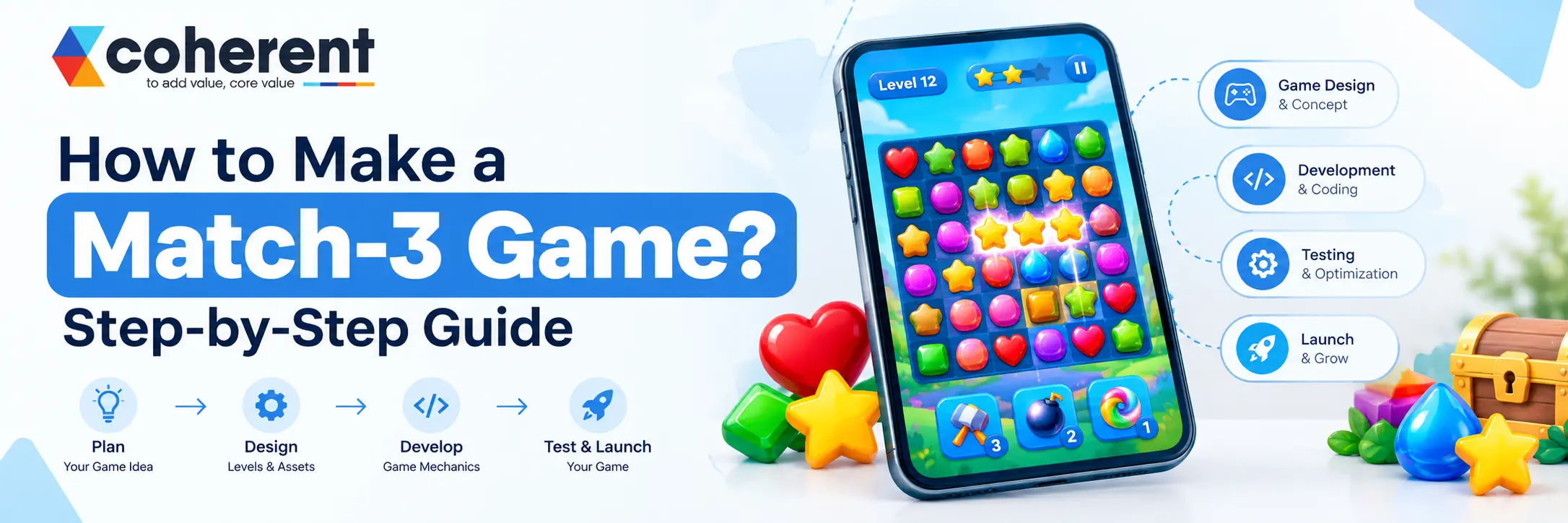
Match-3 games are easy to understand, satisfying to play, and challenging to master. From swapping colorful gems to clearing candies and completing levels, these puzzle games keep players engaged through simple mechanics, rewarding animations, and progressively harder challenges. If you want to build a mobile puzzle game, learning how to make a match-3 game is a practical starting point.
To develop a match-3 game, you need to design a game board, implement tile-swapping mechanics, detect matching pieces, remove matched tiles, refill empty spaces, create levels, and test the complete gameplay experience. You can use game engines such as Unity or Godot to build a prototype before expanding it with power-ups, animations, sound effects, and monetization features.
What Is a Match-3 Game?
A match-3 game is a puzzle game in which players align three or more identical objects horizontally or vertically to clear them from a board and earn points. The cleared spaces are usually filled with new objects, creating opportunities for additional matches. Many modern match-3 games also include storylines, limited moves, daily challenges, collectible rewards, and special tiles. If you are planning to build an engaging puzzle game, Coherent Lab can help you explore game development solutions tailored to your project requirements.
- Gravity and refill
- Scoring system
- Level objectives
- Power-ups and boosters
Also Read: NFT Game Development Checklist: A Complete Guide
How to Make a Match-3 Game Step by Step?
Developing a match-3 puzzle game requires careful planning, engaging gameplay, and reliable game mechanics. Start by defining your concept, choosing a suitable game engine, and designing the board. Then implement tile swapping, match detection, scoring, and level progression. Finally, improve visuals, test performance, and publish your game with a plan for regular updates. Explore our game app development resources to learn more about building engaging and successful games.
| Feature | Basic game | Advanced game |
|---|---|---|
| Match-3 mechanics | Essential matching and tile swapping | Advanced matching rules and chain reactions |
| Score and move counter | Essential | Essential, with additional scoring systems |
| Level progression | Simple levels | Large level map and progressive difficulty |
| Animations and sound | Basic effects | Polished animations and immersive audio |
| Power-ups | Limited boosters | Multiple boosters and combinations |
| Player accounts | Optional | May include accounts and cloud saves |
| Analytics | Basic event tracking | Detailed progression and retention tracking |
| Monetization | Optional advertisements | Ads, in-app purchases, and other suitable revenue models |
| Live operations | Usually limited | Events, challenges, and frequent content updates |
Step 1: Define Your Match-3 Game Concept
Before development begins, decide what makes your puzzle game unique. Choose a theme, target audience, platform, and gameplay style. A clear concept helps you plan features, control development costs, and create a memorable player experience.
- Theme: Candy, gems, fruits, or fantasy.
- Audience: Casual gamers or puzzle enthusiasts.
- Platform: Android, iOS, or PC.
- Unique feature: Special tiles, rewards, or story progression.
Step 2: Choose the Right Game Development Engine
Selecting the right game engine influences development speed, performance, and future scalability. Unity is suitable for commercial mobile games, while Godot offers an open-source option for 2D puzzle projects. Compare available tools, platform support, scripting languages, and your team's experience before making a decision.
- Unity: Flexible mobile game development.
- Godot: Lightweight 2D game creation.
- Unreal Engine: Advanced visual capabilities.
- Selection tip: Match the engine to your project requirements.
Step 3: Design the Game Board and Tiles
Create a grid that allows players to identify and match tiles easily. An 8 × 8 board is a practical starting point for a prototype. Define tile types, positions, colors, and special properties while ensuring the interface remains clear and responsive across different mobile screen sizes.
- Choose appropriate grid dimensions.
- Design recognizable tiles and symbols.
- Maintain consistent spacing.
- Ensure touch-friendly controls.
- Plan obstacles and special tiles.
Step 4: Develop the Tile-Swapping Mechanic
Tile swapping allows players to exchange adjacent pieces to create matches. Implement input handling, adjacency checks, and swap validation before updating the board. If a swap creates no valid match, return the tiles to their original positions. Prevent additional input while animations and board updates are running.
- Select two adjacent tiles.
- Validate the proposed swap.
- Check for matching combinations.
- Keep valid swaps.
- Reverse invalid swaps.
Step 5: Implement Match Detection
Match detection identifies three or more identical tiles connected horizontally or vertically. Your algorithm should support longer matches, simultaneous combinations, and intersecting patterns. Once matches are identified, collect their positions and clear them together. Reliable detection prevents inconsistent gameplay and provides a foundation for advanced puzzle mechanics.
- Detect horizontal matches.
- Detect vertical matches.
- Support matches of four or more tiles.
- Handle overlapping combinations.
- Test different board arrangements.
Step 6: Clear Tiles and Refill the Board
After a successful match, remove the matched tiles and move remaining pieces downward to fill empty spaces. Generate new tiles at the top, then check whether the updated board creates additional matches. This cascading process adds excitement and keeps gameplay dynamic while requiring consistent board-state management.
- Identify and remove matched tiles.
- Apply gravity to remaining tiles.
- Generate replacement tiles.
- Resolve automatic matches.
- Reshuffle when no valid moves remain.
Step 7: Add Scoring, Levels, and Objectives
Scoring and level progression give players clear goals and encourage continued play. Introduce objectives such as collecting specific tiles, reaching target scores, or clearing obstacles within limited moves. Gradually increase difficulty so beginners can learn the mechanics before encountering more challenging puzzles.
- Award points for successful matches.
- Add combo and cascade bonuses.
- Create achievable level objectives.
- Introduce obstacles progressively.
- Balance difficulty through playtesting.
Step 8: Add Power-Ups, Boosters, and Special Tiles
Power-ups make match-3 gameplay more varied by helping players clear difficult boards. Create special tiles through longer matches or specific combinations. Give every booster a clear visual identity and understandable effect, introducing features gradually so players can learn how to use them strategically.
- Line clear: Removes a row or column.
- Bomb: Clears surrounding tiles.
- Color clear: Removes tiles of one color.
- Extra moves: Extends the available moves.
- Explain booster effects through simple tutorials.
Step 9: Design the User Interface and Game Experience
A clear user interface helps players understand objectives, track progress, and interact comfortably with the puzzle board. Include essential information without overcrowding the screen. Use readable typography, accessible controls, and consistent visual feedback to make the game enjoyable across different devices.
- Design menus and level selection.
- Display scores and remaining moves.
- Show objectives clearly.
- Add victory and failure screens.
- Optimize controls for mobile screens.
Step 10: Integrate Sound, Animations, and Visual Effects
Animations and sound effects make successful matches more satisfying and help communicate gameplay changes. Add smooth transitions, tile-clearing effects, falling animations, and subtle rewards for combos. Keep effects lightweight and responsive to avoid interrupting gameplay or reducing performance on lower-powered devices.
- Animate tile swaps and matches.
- Add falling and refill effects.
- Use particles for special combinations.
- Include background music and sound controls.
- Optimize effects for mobile performance.
Step 11: Test and Optimize the Match-3 Game
Thorough testing helps identify bugs, unbalanced levels, and performance issues before release. Test the matching algorithm, board generation, cascades, device compatibility, and user experience. Combine automated logic tests with real-player feedback to ensure the game feels fair, responsive, and enjoyable.
- Test valid and invalid swaps.
- Check boards with no possible moves.
- Verify cascade behavior.
- Measure loading times and frame rates.
- Track completion rates and player retention.
Step 12: Publish and Maintain Your Game
Publishing involves preparing store listings, testing release builds, and meeting applicable platform requirements. After launch, monitor crashes, collect player feedback, and release improvements. Regular level updates, seasonal events, and new challenges can maintain interest when they complement the core gameplay experience.
- Prepare store icons and screenshots.
- Review privacy and platform policies.
- Configure analytics and crash reporting.
- Fix bugs and optimize performance.
Also Read: Top Game App Development Companies in India 2026
How Much Does It Cost to Make a Match-3 Game?
The cost of developing a match-3 game depends on its complexity, art style, number of levels, target platforms, team location, and post-launch requirements.A small prototype costs less than a polished commercial game with hundreds of levels, custom animation, analytics, live events, and monetization systems.The following are illustrative planning estimates in USD, not verified market averages or vendor quotations.
| Development scope | Estimated cost (USD) | Typical scope |
|---|---|---|
| Basic prototype | $5,000–$15,000 | Core board, tile swapping, match detection, and simple scoring |
| Standard mobile game | $15,000–$50,000 | Polished gameplay, initial levels, UI, audio, and testing |
| Advanced puzzle game | $50,000–$120,000+ | More content, boosters, progression, analytics, and monetization |
| Large-scale commercial game | $120,000–$250,000+ | Extensive content, custom artwork, backend features, live operations, and ongoing support |
How Can You Monetize a Match-3 Game?
A match-3 game can generate revenue through different monetization strategies, depending on its gameplay, target audience, and business goals. Developers should choose models that improve the player experience without making the game feel unfair or interrupting the fun. Combining optional purchases, advertisements, and fresh content can create sustainable revenue while encouraging players to return.
1. In-App Purchases
In-app purchases allow players to buy optional items that enhance their gameplay experience. Developers can offer boosters, extra moves, additional lives, cosmetic upgrades, and special bundles. These purchases should provide value without forcing players to spend money to progress.
- Offer useful boosters and extra moves.
- Create optional bundles with clear pricing.
- Keep free gameplay enjoyable and balanced.
2. In-Game Advertising
In-game advertising generates revenue by displaying ads during gameplay. Rewarded video ads are particularly useful because players can voluntarily watch an advertisement to receive extra moves, additional lives, or other benefits.
- Use rewarded ads for optional rewards.
- Place interstitial ads at natural breaks.
- Avoid excessive ads that disrupt gameplay.
3. Premium Downloads
Premium downloads require players to pay an upfront price to access the game. This model works well for developers who want to deliver an ad-free puzzle experience with polished gameplay, creative levels, and substantial content.
- Offer a complete and engaging game experience.
- Highlight unique mechanics and level designs.
- Provide value that justifies the purchase price.
4. Seasonal Events and Content Packs
Seasonal events and content packs encourage players to return by introducing new challenges, themed levels, and exclusive cosmetic rewards. Regular updates can maintain interest and create additional revenue opportunities without changing the core gameplay.
- Introduce limited-time puzzle challenges.
- Release themed levels and cosmetic items.
- Keep event rewards fair and accessible.
Also Read: The Ultimate Guide to Board Game App Development in 2026
What Are the Best Practices for Building a Successful Match-3 Game?
Building a successful match-3 game requires more than attractive graphics and simple matching mechanics. Developers must focus on intuitive controls, balanced difficulty, satisfying animations, and engaging level progression. Testing different board situations and analyzing player feedback can help identify problems early. These practices create a smoother gameplay experience, encourage repeat sessions, and support long-term player retention.
- Prioritize simple gameplay: Make the first level easy to understand.
- Improve responsiveness: Ensure swaps, matches, and cascades feel smooth.
- Balance difficulty: Introduce new mechanics gradually.
- Reward strategic thinking: Encourage players to plan their moves.
1. Focus on User Experience
A smooth user experience helps players understand the rules and enjoy every move. Responsive controls, readable elements, and satisfying animations make gameplay more engaging. Avoid unnecessary tutorials and complicated menus, especially during the first few levels.
- Keep navigation simple and intuitive.
- Use consistent animations and visual effects.
- Make objectives and available moves clear.
2. Test Match Mechanics Thoroughly
Testing helps developers identify logic errors before releasing the game. Create test levels that cover simultaneous matches, intersecting matches, cascading combinations, invalid swaps, and boards without legal moves. These scenarios help ensure that the game behaves consistently.
- Test horizontal and vertical combinations.
- Verify cascading matches and special tiles.
- Check board reshuffling when no moves remain.
3. Balance Levels and Progression
Level design should gradually introduce new challenges without making the game frustrating. Start with simple objectives, then combine obstacles, limited moves, and special tiles as players become more experienced.
- Introduce one new mechanic at a time.
- Test difficulty across multiple player skill levels.
- Use completion data to identify frustrating stages.
4. Use Analytics and Player Feedback
Analytics can reveal where players struggle, which levels they enjoy, and when they stop playing. Combine these insights with player reviews and feedback to make informed improvements while respecting user privacy.
- Monitor retention and level completion rates.
- Identify common exit points and technical issues.
- Prioritize updates that improve the overall experience.
Conclusion
Making a match-3 game involves much more than placing colorful tiles on a grid. You need reliable matching logic, smooth swapping and refill mechanics, balanced levels, appealing visual feedback, thorough testing, and a clear plan for launch and maintenance.
The best way to begin is to build a small playable prototype. Choose an engine such as Unity or Godot, implement the core board mechanics, create a handful of levels, and test them with real players. Once the puzzle loop feels satisfying, expand the game with boosters, progression, monetization, and additional content. If you need expert support to bring your puzzle game idea to life, Contact Coherent Lab Today to discuss your game development requirements.
Frequently Asked Questions
1. How long does it take to make a match-3 game?
Ans.A simple match-3 prototype may take a few weeks to a couple of months, depending on the developer's experience and the required polish. A commercial mobile game can take several months or longer when it includes custom art, numerous levels, boosters, monetization, analytics, and device testing. The timeline also depends on team size, design changes, and whether the project needs backend services. Starting with a minimum viable product and testing the core gameplay early can help identify risks before they affect the full production schedule.
2. Which game engine is best for match-3 game development?
Ans.Unity and Godot are both suitable for match-3 game development. Unity offers an established mobile workflow, a broad ecosystem, and tools for animation and monetization integrations. Godot is an attractive open-source option for developers building lightweight 2D puzzle games. The best engine depends on your team's skills, target platforms, required integrations, and maintenance plans. Before making a final choice, build a small prototype in your preferred engine and check how easily it handles tile swapping, match detection, cascades, animations, and mobile deployment.
3. Can I make a match-3 game without coding?
Ans.Yes, you can create a simple match-3 prototype using visual scripting tools or game development platforms that reduce the amount of manual coding. However, advanced mechanics such as complex cascades, special tile interactions, large level systems, analytics, and backend integrations may still require programming knowledge or specialist assistance. No-code tools can be useful for validating an idea, but you should assess their performance, export options, platform support, and licensing before choosing them for a commercial product. Start with a small prototype to understand the tool's limitations.
4. How much does it cost to develop a match-3 mobile game?
Ans.A basic prototype might cost around 5,000–15,000, while a more polished mobile game could require 15,000–50,000 or more. Advanced games with extensive content, original artwork, backend services, analytics, and live events can cost substantially more. These figures are indicative planning ranges rather than fixed market prices. The actual budget depends on the development team's rates, feature requirements, asset complexity, testing needs, and ongoing support. Request a feature-based estimate before development and reserve a separate budget for updates and maintenance.
5. What programming language is used to create a match-3 game?
Ans.The programming language depends on the engine you choose. Unity primarily uses C#, while Godot supports GDScript and C#. Other technologies may be suitable for browser-based or specialized implementations. Regardless of the language, the important concepts include grid data structures, tile swapping, match detection, gravity, refill logic, input handling, animation states, and level management. Keep the game rules separate from visual effects where possible. This structure makes it easier to test gameplay logic, fix bugs, and add features without rewriting the entire project.
6. How do match-3 games generate new tiles?
Ans.When a match is cleared, the game removes the matched tiles, moves the remaining tiles into empty spaces, and generates replacement tiles to fill the board. The game then checks for automatic matches created by the refill process. If new matches occur, it resolves them before allowing another player move. Good board-generation logic should also consider whether the starting board contains unwanted matches and whether the player has any legal moves. If no legal move exists, the game can reshuffle the board or use another clearly defined recovery rule.
7. How can I make my match-3 game more engaging?
Ans.Focus on satisfying gameplay, understandable goals, fair difficulty, and meaningful progression. Start with intuitive controls and introduce new mechanics gradually. Use animations and sound to reinforce successful matches without making players wait too long. Add objectives, boosters, achievements, or optional challenges when they improve the experience. Playtest levels with people who have not seen the design before, and observe where they become confused or frustrated. Analytics can help identify difficult stages and early drop-off, but player feedback is essential for understanding why those patterns occur.
8. How can I publish and earn money from a match-3 game?
Ans.You can publish a mobile match-3 game through platforms such as the Google Play Store and Apple App Store, provided it meets their applicable requirements. Potential revenue models include optional in-app purchases, rewarded ads, premium downloads, and additional level packs. Before release, test the game on target devices, prepare store assets, configure analytics, review privacy obligations, and verify platform billing and advertising policies. After launch, monitor crashes, retention, level completion, and player feedback. Regular updates can help maintain interest, but monetization should remain transparent and should not compromise the core puzzle experience.

 +91 774-202-1725
 +1 (945) 3387904
 business@coherentlab.com
 +49 15223341304
 UK

