
Table of Contents
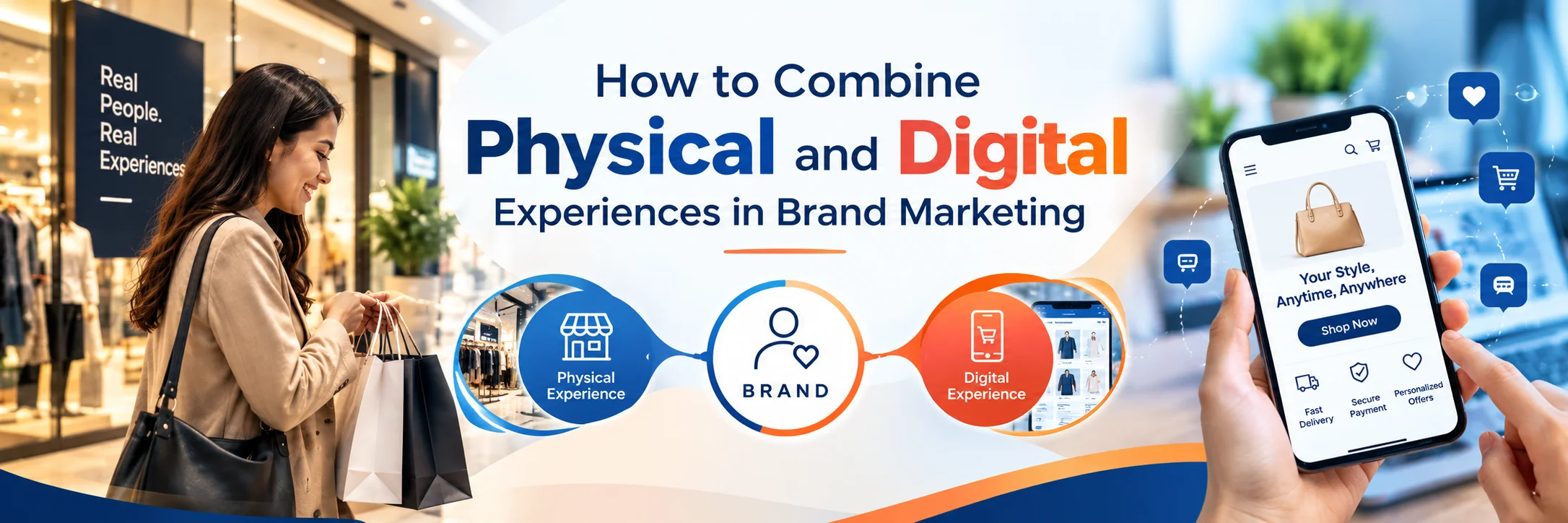
How to Combine Physical and Digital Experiences in Brand Marketing
Open your mailbox and your inbox on the same day and you'll notice something odd. One is nearly empty. The other is overflowing.
That gap is an opportunity. Brands that still show up in the mailbox, thoughtfully and rarely, get a kind of attention that a crowded inbox can no longer deliver. The brands winning right now aren't choosing between physical and digital. They're using each channel for what it does best, then connecting the two so the customer experiences one story, not two disconnected touchpoints.
Here's how that actually works in practice.
Why Physical and Digital Shouldn't Compete
Marketing teams often treat channels as a budget fight. Digital gets the lion's share because it's measurable in real time, and physical gets whatever is left over.
That framing misses the point. Digital is fast, cheap to test, and easy to scale. Physical is slow, tactile, and hard to ignore. Put them in competition and you lose what each one is actually good at.
Put them in sequence instead. A customer sees a retargeting ad, forgets about it within the hour, and keeps scrolling. A customer receives something tangible in the mail, and it sits on a counter or a desk for days. The physical piece buys attention. The digital layer is what the customer acts on once they're paying attention.
Think of the two channels as playing different roles in the same conversation rather than competing for the same budget line. Digital shows up constantly and cheaply, so it's suited to reminders and retargeting. Physical shows up rarely and deliberately, so it's suited to the moment you actually want someone to stop and pay attention.
Start With a Format That Earns Attention
Not every physical touchpoint deserves the same investment. A flat postcard blends into the rest of the mail stack. Something with texture, shape, or movement does not.
This is where format choice matters more than most marketers assume. A piece that unfolds, lifts, or takes a different shape than a standard envelope changes how long someone spends with it before they decide whether to keep reading or toss it. Dimensional formats like 3D pop up mailers work well here precisely because the physical surprise does the job a subject line would do in email: it earns the next five seconds of attention.
Once you've earned that attention, the format's only remaining job is to point somewhere. That's where the digital half of the campaign takes over.
Build the Bridge With Trackable Digital Triggers
A physical piece that doesn't connect to a measurable digital action is a creative exercise, not a campaign. The bridge is usually one of a few simple mechanisms.
A QR code is the most direct option. It costs nothing to add, works on nearly every phone camera by default, and takes the customer straight from the mailbox to a landing page built for that specific audience.
A personalized URL does something similar but allows the destination page to already know who the visitor is, which lets you skip a form field and get to the offer faster.
Augmented reality overlays are a heavier lift, but for the right product category, they let a static physical object come alive on screen. That's a strong fit for anything where seeing the product in motion or in context changes the decision, apparel, furniture, and packaging-dependent goods among them.
Whichever mechanism you choose, the destination matters as much as the trigger. A QR code that dumps a customer onto the generic homepage wastes the curiosity the physical piece just created.
The right choice also depends on who's receiving the piece. A younger, mobile-first audience will scan a QR code without a second thought. An older or less tech-forward list may respond better to a short, memorable URL printed clearly on the page, since it doesn't require them to trust an unfamiliar scanning step.
Keep the Message Consistent Across Channels
The handoff between physical and digital fails most often on tone, not technology. A playful, tactile mail piece that leads to a stiff, corporate landing page creates a jolt the customer notices, even if they can't name it.
Treat the physical piece and its digital destination as one creative asset split across two surfaces. The headline on the landing page should feel like a continuation of what the mailer promised, not a new pitch.
This also applies to timing. If the mailer references a deadline or a specific offer, the landing page needs to reflect that same offer the moment it loads. Customers who click through and find something different than what they were promised rarely convert, and they remember the mismatch the next time something from that brand shows up.
Read More: How Businesses Use Mini Games to Increase User Engagement
Measure What Actually Moves Customers
One advantage of this pairing is that it solves direct mail's oldest problem: attribution. A unique QR code or personalized URL tied to a specific mail drop tells you exactly how many people acted, not just how many pieces were delivered.
The USPS Informed Delivery program adds another layer worth testing, since it lets a brand show a digital preview of the physical piece before it even arrives, effectively giving the campaign two impressions instead of one.
Track response by segment, not just in aggregate. A format or offer that performs well with one list can underperform with another, and the only way to know is to look at the data broken out rather than blended into a single conversion number.
Treat the first campaign as a baseline, not a verdict. Format, offer, and digital destination are all variables worth testing independently before deciding what the channel pairing is actually capable of for your brand.
Where to Start This Quarter
Pick one campaign already on the calendar; a product launch, a seasonal push, a win-back sequence for lapsed customers, and build it as a single experience from the start rather than bolting a QR code onto an existing mail piece after the fact.
Decide what the physical piece needs to do (get opened, get noticed, get kept on a desk) and what the digital layer needs to do (convert, inform, or simply track) before you touch either production or design.
Then give it one full cycle before judging the pairing. Channel integration tends to look unremarkable on the first attempt and meaningfully better on the second, once the tone, timing, and destination are actually working together instead of being assembled separately.
Final Thoughts
When used in conjunction with digital marketing, physical marketing can enhance the ability for businesses to develop a relationship with their customers and convey a consistent brand message through multiple channels. Brands can weave in-store interactions, events, product demo, social media, mobile apps and personalized web campaigns to create more memorable, interesting and valuable customer journeys.
The basis is knowing what customers need and making all interactions easy, relevant and worthwhile. By integrating human touch with a touch of convenience, businesses can create a more engaging customer experience, enhance brand loyalty and foster repeat sales. Overall, the integration of an omnichannel approach is a tool that enables brands to stay competitive in the changing landscape of today's market.

 +91 774-202-1725
 +1 (945) 3387904
 business@coherentlab.com
 +49 15223341304
 UK

