Table of Contents
Running App Development Cost in 2026: Features, Timeline & Pricing Guide
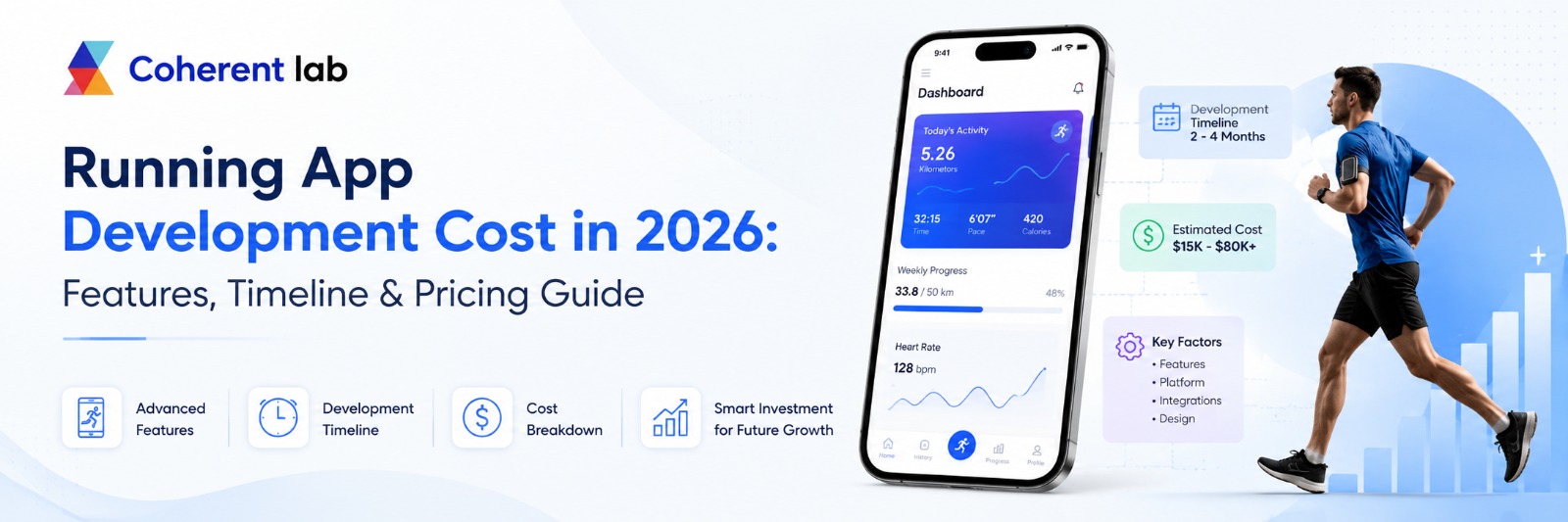
The demand for running apps continues to grow as more people embrace digital fitness, wearable technology, and AI-powered coaching. Whether you're a startup, fitness brand, or healthcare company, understanding the running app development cost in 2026 is essential for planning your budget and achieving a successful launch. Development costs vary depending on app complexity, platform selection, features, technology stack, and third-party integrations. From basic GPS tracking to advanced AI coaching and smartwatch connectivity, every feature influences the overall investment. This comprehensive guide explores the factors that impact pricing, estimated development timelines, essential and premium features, and practical budgeting tips. By the end, you'll have a clear understanding of what it takes to build a competitive running app that delivers exceptional user experiences while staying within your development budget.
How Much Does It Cost to Develop a Running App in 2026?
Develop a running app in 2026 can cost anywhere from $15,000 to $250,000+, depending on its functionality, platform, and development approach. A simple MVP with basic GPS tracking and activity monitoring is significantly more affordable than an enterprise-grade app featuring AI coaching, wearable integrations, and real-time analytics. Businesses should prioritize essential features first and scale gradually to optimize both cost and time-to-market.
Basic Running App Cost
A basic running app focuses on core functionality required for tracking workouts and user progress. It is an ideal option for startups validating an idea or businesses launching an MVP before investing in advanced capabilities.
- User registration and profile management
- GPS route and distance tracking
- Workout history and basic performance analytics
- Goal setting with push notifications
Advanced Running App Cost
An advanced running app delivers a premium fitness experience through AI-powered personalization, wearable integrations, and community-driven engagement. These features require additional development time, backend infrastructure, and ongoing maintenance, increasing the overall project cost.
- AI-powered running coach and personalized training plans
- Smartwatch, Apple Health, and Google Fit integration
- Social challenges, leaderboards, and achievements
- Real-time performance insights and subscription features
Running App Development Cost Breakdown
Understand the complete running app development cost breakdown, including UI/UX design, frontend and backend development, APIs, wearable integration, testing, deployment, and maintenance. This guide explains the key cost factors that influence budgeting for a running app in 2026. Learn how features, platforms, technology stack, and development timelines impact the overall investment required for a successful fitness application.
Development Stage Cost Distribution
Each phase of app development requires specialized expertise, making cost allocation an important part of project planning.
- UI/UX design and user journey planning
- Frontend and backend application development
- Quality assurance and performance testing
- Deployment, updates, and ongoing maintenance
Estimated Cost Breakdown
|
|
|
|
|
|
|
|
|
|
|
|
|
|
|
|
|
|
|
|
|
|
|
|
|
|
|
|
Key Features That Affect Running App Development Cost
The cost of running app development depends on features such as GPS tracking, workout planning, AI coaching, wearable integration, social sharing, and real-time analytics. Advanced functions like offline mode, voice guidance, health monitoring, and cloud synchronization increase development complexity and overall budget. Understanding these key features helps businesses plan costs effectively and build a scalable running app that meets user expectations.
Essential Features
Essential features provide the core experience users expect from a modern running app and are recommended for every MVP.
- User authentication and profile management
- GPS tracking with route mapping
- Distance, pace, calories, and speed monitoring
- Workout history and progress tracking
Premium Features
Premium features differentiate your app in a competitive market and create opportunities for subscription-based revenue. Although they increase development costs, they also enhance user engagement and long-term retention.
- AI-powered running coach and personalized recommendations
- Wearable device integration and health data synchronization
- Gamification with badges, challenges, and leaderboards
- Subscription plans, in-app purchases, and premium content
Running App Development Timeline
The time required to develop a running app depends on its complexity, feature set, and development methodology. A basic MVP can typically be completed within 3-4 months, while a feature-rich running app with AI capabilities, wearable integrations, and cloud infrastructure may take 6-9 months or longer. Following an agile development approach allows businesses to release an initial version quickly and improve it continuously based on user feedback.
Discovery and Design Phase
The first stage focuses on defining project requirements, identifying the target audience, creating wireframes, and designing an intuitive user experience. A strong foundation reduces development risks and ensures the app meets business goals.
- Market research and competitor analysis
- Feature planning and project roadmap
- UI/UX wireframing and prototyping
- Technical architecture and development planning
Development, Testing, and Launch
Once the design is finalized, developers begin the mobile app development process by building the frontend and backend, integrating APIs, conducting thorough testing, and preparing the application for launch. Continuous testing throughout the development cycle helps ensure the app remains stable, secure, and high-performing across different devices and platforms, while also supporting a smooth user experience from development to deployment.
- Frontend and backend development
- GPS, maps, and wearable integrations
- Quality assurance and bug fixing
- App Store and Google Play deployment
Factors That Influence Running App Development Cost
Running app development cost depends on app features, platform choice, UI/UX design, AI integration, wearable device support, backend infrastructure, security measures, offline functionality, testing, and maintenance requirements. Advanced features such as real-time GPS tracking, voice coaching, analytics, and cloud synchronization increase development time and budget. Understanding these factors helps businesses plan a realistic investment and build a scalable fitness application.
Technical and Functional Factors
Technical complexity plays a major role in determining development costs. Apps with advanced functionality require more development hours, testing, and maintenance compared to basic fitness tracking applications.
- App complexity and feature requirements
- Android, iOS, or cross-platform development
- AI-powered recommendations and analytics
- Third-party API and cloud integrations
Business and Operational Factors
Beyond technical requirements, business decisions also influence the overall budget. Hiring experienced developers, ensuring regulatory compliance, and planning for future scalability all contribute to long-term project costs.
- Development team size and expertise
- Geographic location of the development company
- Security, data privacy, and compliance requirements
- Ongoing maintenance and feature updates
Technology Stack for Running App Development
A modern running app requires a reliable technology stack to deliver accurate tracking, real-time analytics, and smooth performance across devices. Developers typically use Flutter or React Native for mobile apps, Node.js or Python for backend services, and cloud platforms such as AWS or Firebase for scalability. GPS APIs, wearable integrations, AI analytics, and secure databases help create a feature-rich and user-friendly running experience.
Frontend and Backend Technologies
The frontend delivers a smooth user experience, while the backend manages user data, authentication, GPS tracking, and analytics. Selecting reliable technologies ensures better performance and easier future upgrades.
- Flutter or React Native for cross-platform apps
- Swift for iOS and Kotlin for Android
- Node.js or Python for backend development
- PostgreSQL or MongoDB for database management
Cloud Services and Third-Party Integrations
Cloud platforms and APIs enable essential features such as location tracking, secure payments, notifications, and health data synchronization. Reliable integrations improve app functionality without requiring custom-built solutions.
- Google Maps API for route tracking
- Firebase for authentication and push notifications
- AWS or Google Cloud for hosting and scalability
- Apple Health, Google Fit, and smartwatch integrations
Also Read :-
Running App Development Cost by Platform
Running app development costs depend on the chosen platform, feature set, and technology stack. Android apps are generally more affordable to launch, while iOS apps often require additional design and testing. Cross-platform development can lower costs and accelerate deployment. Modern AI App Development features such as personalized coaching, smart analytics, GPS tracking, wearable integration, offline functionality, and advanced security significantly influence the final budget and long-term maintenance requirements.
Native App Development
Native development creates separate applications for Android and iOS using platform-specific technologies. This approach offers superior performance, smoother GPS tracking, and seamless integration with wearable devices, making it ideal for premium fitness applications.
- Excellent performance and responsiveness
- Better integration with device hardware
- Enhanced security and reliability
- Superior user experience for each platform
Cross-Platform App Development
Cross-platform frameworks allow developers to build a single codebase for multiple platforms, reducing costs and speeding up launches. This makes Cross-Platform App Development a smart choice for startups and growing businesses seeking faster delivery and a consistent user experience across devices.
- Lower development and maintenance costs
- Faster development and deployment
- Consistent user experience across devices
- Easier updates with a shared codebase
Monetization Models for Running Apps
Running apps use multiple monetization models to generate revenue while enhancing user experience. Common strategies include subscription plans, in-app purchases, premium coaching, advertising, brand partnerships, wearable integrations, and corporate wellness programs. Choosing the right monetization model depends on target users, app features, and business goals. A balanced revenue strategy helps fitness app businesses achieve long-term growth and sustainable profitability.
Subscription and Freemium Model
The subscription model has become the preferred revenue strategy for fitness applications. Users access basic features for free while paying a monthly or annual fee for premium coaching, advanced analytics, and personalized workout plans.
- Monthly and yearly premium subscriptions
- Free trial with premium upgrades
- Exclusive workout programs
- AI-powered personalized coaching
Additional Revenue Streams
Beyond subscriptions, businesses can increase revenue through partnerships, in-app purchases, and advertising. Choosing the right combination depends on your target audience and long-term business objectives.
- In-app purchases for premium content
- Brand partnerships and affiliate marketing
- Sponsored fitness challenges
- Non-intrusive in-app advertising
Also Read :- How to create a Marathon Training App
Hidden Costs of Running App Deevelopment
Hidden costs in running app development often include third-party API fees, cloud hosting, wearable integrations, app store charges, security updates, performance optimization, and ongoing maintenance. Many businesses budget for design and coding but overlook testing, analytics tools, customer support, and future feature upgrades. Understanding these expenses early helps avoid budget overruns and ensures a scalable, high-performing running app in the long term.
Operational and Maintenance Costs
Regular maintenance keeps the app compatible with new operating systems, fixes bugs, improves performance, and introduces new features based on user feedback. Ignoring maintenance can negatively affect user experience and app ratings.
- Regular bug fixes and software updates
- Cloud hosting and server infrastructure
- Performance optimization and monitoring
- Security patches and compliance updates
Third-Party and Business Expenses
Many advanced features rely on external services that charge recurring fees. Businesses should include these costs in their annual budget to maintain uninterrupted functionality and provide a high-quality user experience.
- Google Maps and location service APIs
- Payment gateway transaction fees
- App Store and Google Play developer accounts
- Marketing, customer support, and analytics tools
Conclusion
Building a successful running app in 2026 requires balancing user expectations, advanced technology, and a realistic development budget. Costs vary based on features, platform selection, design complexity, and third-party integrations, but careful planning can help maximize your return on investment. Starting with an MVP, choosing the right technology stack, and working with an experienced development team allows businesses to launch faster while maintaining quality. By understanding these factors, you can confidently estimate costs, prioritize essential features, and create a scalable running app that supports long-term growth. If you are planning your own running app and want expert guidance, get in touch with a trusted development team to discuss your goals, budget, and launch strategy in a practical and cost-effective way.
Frequently Asked Questions
Q1. How much does it cost to develop a running app in 2026?
Ans. The cost of developing a running app in 2026 typically ranges from $15,000 to $250,000 or more. A basic MVP with GPS tracking and workout monitoring costs less, while advanced apps with AI coaching, wearable integration, and subscription features require a larger investment. The final price depends on app complexity, technology stack, platform selection, and the expertise of the development team.
Q2. How long does it take to build a running app?
Ans. A basic running app usually takes 3–4 months to develop, while a feature-rich application may require 6–9 months. The timeline depends on project requirements, UI/UX design, backend development, third-party integrations, testing, and deployment. Using agile development allows businesses to launch an MVP faster and add advanced features through regular updates.
Q3. Which features increase running app development costs the most?
Ans. Advanced features such as AI-powered coaching, real-time GPS tracking, smartwatch integration, personalized workout plans, social challenges, and detailed performance analytics significantly increase development costs. These capabilities require additional backend infrastructure, API integrations, cloud services, and extensive testing. Businesses should prioritize essential features first and expand functionality based on user demand and business goals.
Q4. Should I build a running app for Android, iOS, or both?
Ans. The best platform depends on your target audience and budget. If you need maximum market reach, cross-platform development using Flutter or React Native is a cost-effective option. Native development provides better performance and deeper hardware integration but requires separate applications for Android and iOS, resulting in higher development and maintenance costs.
Q5. What technologies are commonly used to build running apps?
Ans. Modern running apps are typically built using Flutter, React Native, Swift, or Kotlin for frontend development. Backend technologies often include Node.js or Python with databases like PostgreSQL or MongoDB. Cloud platforms such as AWS, Google Cloud, or Firebase provide hosting, authentication, push notifications, analytics, and scalable infrastructure for handling growing user bases.
Q6. How do running apps generate revenue?
Ans. Running apps commonly generate revenue through premium subscriptions, freemium plans, in-app purchases, advertising, affiliate partnerships, and branded fitness programs. Many successful apps offer free core features while charging users for personalized coaching, advanced analytics, exclusive training plans, and additional premium content, creating recurring revenue and improving long-term profitability.
Q7. What is the annual maintenance cost for a running app?
Ans. Annual maintenance generally costs 15% to 25% of the initial development budget. These expenses include bug fixes, security updates, cloud hosting, API subscriptions, operating system compatibility, performance improvements, and feature enhancements. Regular maintenance ensures the app remains secure, reliable, and competitive while providing users with a consistent experience across devices.
Q8. How can businesses reduce running app development costs?
Ans. Businesses can reduce development costs by starting with a Minimum Viable Product (MVP), prioritizing essential features, using cross-platform frameworks, leveraging trusted third-party APIs, and partnering with an experienced development company. An agile development approach also helps control expenses by delivering features in phases, validating ideas early, and minimizing unnecessary development efforts.

 +91 774-202-1725
 +1 (945) 3387904
 business@coherentlab.com
 +49 15223341304
 UK
UK