
Table of Contents
Why Text-Heavy Collection Pages Are Killing Your Shopify Conversions
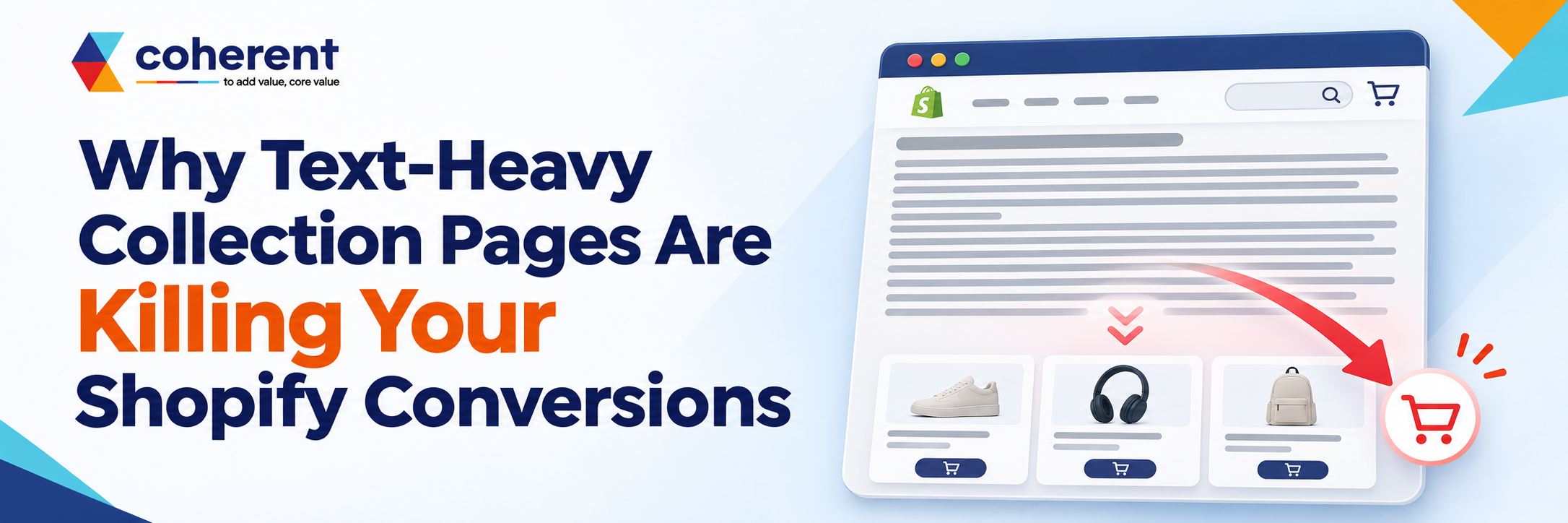
Your last SEO agency handed you a "content strategy." It was 900 words of keyword soup dumped at the bottom of every collection page. Your rankings barely moved and your conversion rate dropped. That's not a coincidence. It's a symptom of an outdated playbook that treats collection pages like blog posts instead of storefronts.
What You Need to Know
- Collection pages (PLPs) convert on product visibility, not paragraph count. Shoppers scan for filters, images, and prices first.
- Google doesn't require a fixed word count to rank a category page. It rewards pages that clearly serve the searcher's goal, not pages stuffed with filler.
- Thin content and bloated content cause different problems. One risks a ranking penalty. The other risks a lost sale.
- The fix isn't zero copy. It's placing the right amount of copy in the right spot, without blocking the shopping experience.
- A wall of text below the fold rarely gets read by shoppers. It exists for search engines, not people, and Google can tell the difference.
- Your internal linking strategy matters more than word count for collection page authority. Strong linking from blog and product pages carries more weight than filler paragraphs.
- Break the Web builds collection pages that convert and rank. No 1,000-word walls of text required.
The Wall of Text Problem on Shopify Collection Pages
Open any Shopify collection page built by a volume SEO agency and you'll see the same pattern. A short product grid sits at the top. Below it, a dense block of text stretches for 500 to 1,000 words.
That block usually repeats the same keyword five different ways. It rarely tells the shopper anything they need to make a decision. Your customer scrolls past it, or never sees it at all.
This isn't a design flaw. It's a strategy flaw. The agency optimized for a crawler, not for the person holding a credit card.
Why Agencies Default to Text-Heavy Collection Pages
Most agencies work at volume. They manage dozens of clients and need a repeatable process that scales fast.
Writing 800 words of generic copy and dropping it below the product grid is fast. It hits a keyword density target without requiring real strategic thinking about your specific brand or shoppers.
The problem is that this approach treats every Shopify store the same. Your beauty brand and a hardware store don't share the same buyer journey, so they shouldn't share the same content formula.
Get a second opinion on your current SEO setup if your collection pages read like they were written for a template instead of your customers.
What Google Actually Wants From Your Collection Pages
Google's own quality guidelines focus on whether a page serves its stated purpose, not on hitting a specific word count. Raters are asked to determine a page's goal and then judge whether the content actually achieves it. A collection page's goal is to help someone find and choose a product.
Google's guidance is clear that the most helpful information should sit near the top of the page where visitors can find it immediately, not buried under filler. A page can still rank well with a short, useful introduction and strong product data, as long as it clearly serves the shopper's intent.
This means the fix isn't deleting all your collection page copy. It means moving the right copy to the right place and cutting what doesn't earn its spot.
Think of Your Collection Page Like a Store Shelf
Here's the analogy that makes this click for most marketing directors. Your Shopify collection page is a store shelf, not a brochure rack.
When someone walks into a physical store, they don't want to read a paragraph before they can see the products. They want the shelf organized, labeled, and easy to scan. A short sign at eye level helps them find the right aisle. A stack of pamphlets blocking the shelf does not.
Your collection page copy should work the same way. A few helpful sentences up top orient the shopper. The product grid does the actual selling.
How to Balance SEO Copy With Conversion-Focused UX
You don't have to choose between rankings and revenue. You need a structure that gives both the crawler and the shopper what they came for.
Start with a short, keyword-relevant intro above the product grid. Keep it to two or three sentences that explain what the category is and who it's for. This gives Google clear context without slowing the shopper down.
Move deeper content, like buying guides, FAQs, and comparison details, below the product grid. Shoppers who want more information will scroll for it. Shoppers who already know what they want won't have to wade through it first.
Use headers, bullet points, and short paragraphs throughout. This helps both crawlers and skimming shoppers find what they need fast.
A Better Structure for High-Converting Collection Pages
Here's the order that works for most Shopify brands we support:
- A one-sentence H1 that matches search intent and buyer language.
- A two to three sentence intro above the grid, written for humans first.
- A clean, filterable product grid with strong imagery and clear pricing.
- Optional trust signals, like reviews or shipping info, near the grid.
- A short buying guide or FAQ block below the fold for shoppers who want more.
- Internal links to related collections and relevant blog content.
This structure protects your conversion rate while still giving Google the signals it needs. It also scales across your catalog without forcing every category into the same rigid word count.
When Content Length Becomes a Different Problem
Sometimes the issue isn't too much text. It's thin, duplicate, or copy-pasted category descriptions across similar collections.
Category pages sitting at the middle of the purchase funnel carry strong commercial intent, and Google's ranking systems reward pages that satisfy that intent with depth and clear structure. That doesn't mean piling on words. It means each collection page needs its own clear purpose, even if the copy stays short.
If your collections all read the same, that's a differentiation problem, not a word count problem. Fixing it usually means better keyword mapping, not more filler.
Why This Matters for Your Sales Targets
Every extra second a shopper spends scrolling past text is a second they could leave your site instead. Conversion rate and organic traffic should move together, not against each other.
We've seen brands recover lost revenue simply by restructuring collection pages, without touching the keyword strategy at all. The words were already ranking. The layout was costing them the sale.
Explore our approach to technical SEO if you want a team that thinks about your funnel, not just your keyword list.
The Bottom Line for In-House Marketing Teams
You don't need more words on your collection pages. You need the right words in the right place, backed by a team that understands both search and shoppers.
If your current setup feels like it was built for a checklist instead of your customers, it's worth a second look. A Shopify SEO agency for DTC brands should build collection pages around your buyers, not around a generic template.
Schedule a strategy chat, no sales pitch, and we'll show you what a conversion-first collection page structure looks like for your catalo

 +91 774-202-1725
 +1 (945) 3387904
 business@coherentlab.com
 +49 15223341304
 UK

