
Table of Contents
How Agentic AI Is Changing the Way Small Businesses Handle Daily Operations
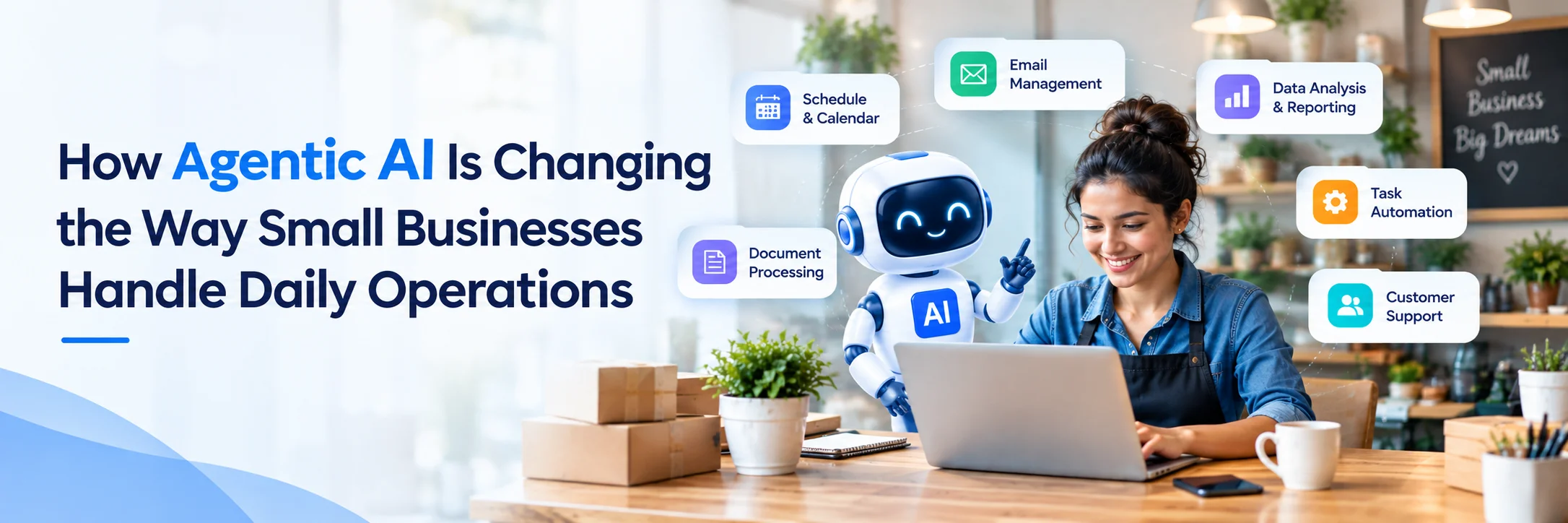
Agentic AI is starting to show up in places most small business owners never expected: the overflowing inbox, the appointment book, the stack of unpaid invoices. Unlike the chat tools that became popular a few years ago, these systems do more than answer questions. They take a goal, break it into steps, use the software you already pay for, and carry the work through to the end.
For a five person landscaping company or a family run dental office, that shift matters. The owner is usually the salesperson, the scheduler, the bookkeeper, and the person who remembers to call back the customer from Tuesday. Handing even a slice of that load to software changes how the whole day feels.
Here is a practical look at what is changing, where the value is real, and where caution still makes sense.
What Makes an AI Agent Different From a Chatbot?
A chatbot waits for a question and replies. An AI agent is given an objective and works out how to reach it.
Picture a plumbing business where a technician calls in sick. A chatbot could draft a polite message if you asked for one. An agent connected to your calendar, customer list, and texting tool can find the affected jobs, check which customers are flexible, offer them new time slots, update the dispatch board, and flag the one urgent leak that needs a human decision.
Three abilities make this possible. The agent can use tools, meaning it can open and act inside connected apps such as email, calendars, accounting software, and customer databases. It can plan, deciding what to do first, second, and third instead of producing a single reply. And a well built agent checks its own progress, confirming each step worked before moving on and pausing when something looks off.
Where Are Small Businesses Seeing the Biggest Changes?
Inbox and Customer Messages
Email is often where owners feel relief first. An agent can sort incoming messages, answer routine questions about hours or pricing using approved information, and draft replies for anything sensitive. A bakery owner might start her morning with twenty messages already grouped: six catering inquiries with draft quotes, ten order confirmations handled, and four that need her personal attention.
Scheduling and Appointments
Back and forth booking eats hours every week. Agents can read availability, propose times, send reminders, and fill cancellations from a waitlist. For service businesses, a slot that would otherwise sit empty goes straight to revenue.
Invoicing and Payment Follow Ups
Chasing late payments is uncomfortable, so it tends to slide. An agent connected to accounting software can send polite reminders on a schedule, match incoming payments to open invoices, and prepare a weekly summary of who still owes money. The owner decides when a firmer conversation is needed.
Inventory and Reordering
Retailers and restaurants can set simple rules, such as reordering an item from the usual supplier when stock drops below a certain level and staying within a set budget. The agent watches the numbers, prepares the purchase order, and either submits it or waits for approval, depending on the limits you choose.
Lead Follow Up
Plenty of small businesses lose leads simply because nobody replied quickly. An agent can respond to a web form within minutes, ask a few qualifying questions, and book a call on the owner's calendar while the prospect is still interested.
| Daily Task | What the Agent Can Handle | Where the Owner Stays Involved |
|---|---|---|
| Customer Email | Sorting, routine replies, drafting responses | Complaints, refunds, sensitive conversations |
| Scheduling | Booking, reminders, filling cancellations | Exceptions and priority customers |
| Invoicing | Reminders, payment matching, weekly summaries | Disputes and payment plans |
| Inventory | Monitoring stock, preparing purchase orders | Supplier changes and large orders |
| New Leads | Fast first reply, basic qualification, booking calls | Pricing decisions and closing the sale |
How Much Freedom Should You Give an Agent?
This question separates useful projects from expensive experiments. In June 2025, Gartner predicted that over 40% of agentic AI projects would be canceled by the end of 2027, pointing to escalating costs, unclear business value, and inadequate risk controls. Those same problems can hit a small business, just on a smaller budget.
A sensible approach is to think about autonomy in three levels. At the first level, the agent only suggests actions. At the second, it drafts the work and waits for your approval. At the third, it acts on its own within firm limits, such as a maximum refund amount or a list of approved suppliers.
Most small businesses do well starting at level two and moving specific, low risk tasks to level three once the results have earned their trust.
What Does a Good First Project Look Like?
Pick one workflow that is repetitive, rule based, and mildly annoying. Appointment reminders and invoice follow ups are common winners because mistakes are easy to spot and cheap to fix.
Before switching anything on, write down how you handle that task today, including the exceptions. That short document becomes the agent's instructions, and writing it often reveals steps you had stopped noticing.
Connect only the tools the task requires. An agent that sends payment reminders needs your invoicing software, and it has no reason to see your entire file storage.
Then run it in approval mode for two to four weeks and track how many drafts you accept without edits. When that number stays consistently high, you have evidence, and not just hope, that the agent is ready for more independence.
What Are the Limits Today?
AI agents still make mistakes. They can misread an unusual request, apply a rule too literally, or act on outdated information sitting in your systems. Older or niche software may connect poorly or require workarounds. Subscription costs can also stack up when several tools each charge separately for their own AI features.
There is a people side as well. Staff may worry the technology is there to replace them. In most small businesses, the realistic outcome looks different: the tedious parts of each job shrink, and people spend more time with customers, on their craft, and on decisions that need judgment. Being open with your team about what you are automating, and why, goes a long way.
Frequently Asked Questions
Can a business with only a few employees afford this?
Often, yes. Many accounting, scheduling, and email platforms now include agent features in existing plans or as paid add-ons. The more useful question is whether the hours saved are worth more than the monthly cost, and a short trial usually answers it.
Will AI agents replace my staff?
For most small businesses, agents take over repetitive tasks rather than entire roles. Customer relationships, judgment calls, and skilled work still depend on people.
What information should stay out of an agent's reach?
Give each agent access only to what its task requires. Payroll records, sensitive health or financial details, and passwords should remain restricted unless there is a clear purpose and strong security around them.
Final Thoughts
The real story of agentic AI in small business is less about futuristic robots and more about getting hours back every week. Owners who start with one well defined task, keep a human in the approval loop, and expand only when the results hold up tend to see steady gains without unpleasant surprises. Choose the chore that drains you most this month, map out how you handle it today, and test whether an agent can take it off your plate.
About the Author
Derek Iwasiuk has more than 20 years of experience as a strategist and SEO for organizations in highly competitive industries. He helps businesses improve their visibility and optimize their presence on search engines and AI systems at Searchtides.com.

 +91 774-202-1725
 +1 (945) 3387904
 business@coherentlab.com
 +49 15223341304
 UK

