Table of Contents
Aggregator app development : Meaning of Aggregator, Type of Aggregator
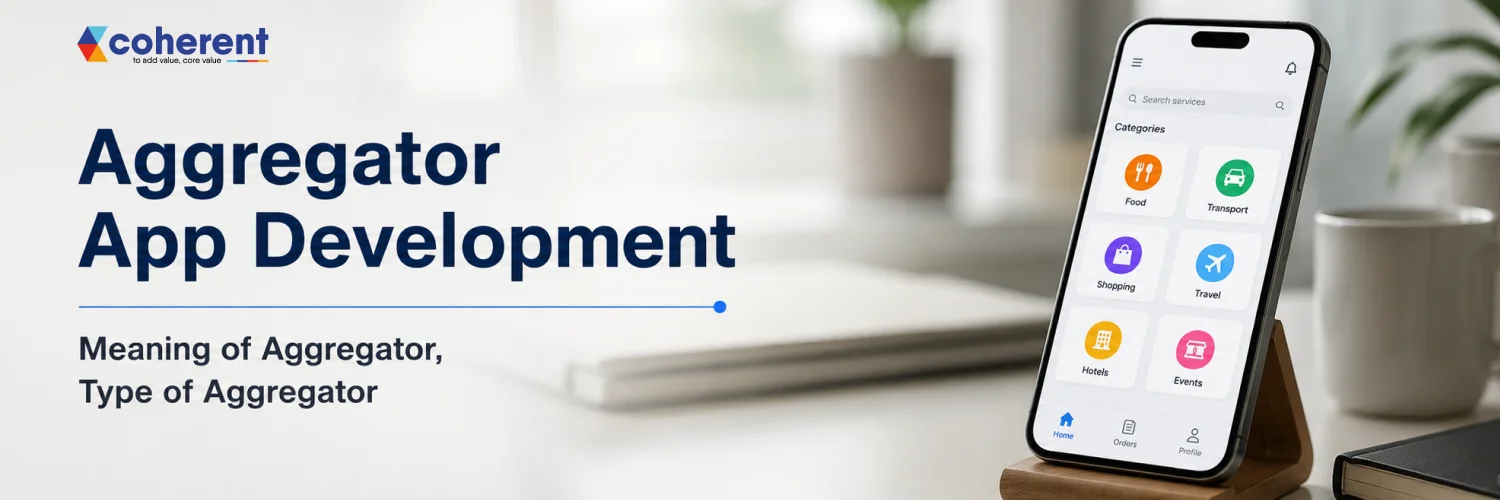
In today’s digital-first world, aggregator apps are transforming industries by connecting users with multiple service providers on a single platform. From food delivery and taxi booking to healthcare and e-commerce, aggregator business models have become one of the most profitable and scalable digital solutions. Businesses across industries are investing heavily in aggregator app development to improve customer convenience, streamline services, and generate recurring revenue. If you are planning to build a successful digital platform, understanding aggregator apps, their types, features, and development process is essential.
What is an Aggregator?
An aggregator is a business model or digital platform that gathers services, products, or information from multiple providers and presents them to users through a single application or website. Coherent Lab LLP. The aggregator company does not usually own the inventory or services directly. Instead, it acts as a bridge between customers and service providers while earning revenue through commissions, subscriptions, or advertisements. Popular examples of aggregator platforms include ride-sharing apps, food delivery apps, hotel booking apps, and online marketplaces.
How Does an Aggregator App Work?
- Service providers register on the platform
- Customers browse and compare available services
- Users place orders or bookings through the app
- The aggregator manages payments and transactions
- The platform earns commission from every transaction
Types of Aggregator Apps
Aggregator apps are the ones that aggregate multiple service providers, sellers or platforms into a single digital marketplace, making it convenient for the users to compare, book, buy or access services all in one place. Some of the famous types of aggregator apps are food delivery, taxi booking, travel, e-commerce, healthcare, real estate, and financial service apps. These platforms bring enhanced convenience, improved customer experience and new business opportunities across all sectors.
1. Taxi Aggregator Apps
Taxi aggregator apps connect passengers with nearby drivers using GPS technology. These apps provide real-time tracking, online payments, and ride scheduling features.
Key Features
- Live GPS tracking
- Ride scheduling
- Fare estimation
- Driver ratings
- Secure payments
Popular Examples
- Uber
- Ola
- Lyft
2. Food Delivery Aggregator Apps
Food delivery platforms aggregate restaurants and allow users to order food online from multiple vendors.
Key Features
- Restaurant listings
- Online ordering
- Delivery tracking
- Coupons and offers
- Ratings and reviews
Popular Examples
- Zomato
- Swiggy
- Uber Eats
3. Healthcare Aggregator Apps
Healthcare aggregator apps allow users to book doctor appointments, consult online, and access medical services from a single platform.
Key Features
- Doctor appointment booking
- Telemedicine integration
- Digital prescriptions
- Patient management
- Secure medical records
4. E-commerce Aggregator Apps
E-commerce aggregator platforms combine multiple sellers under one marketplace where customers can compare products and prices.
Key Features
- Product comparison
- Multi-vendor management
- Inventory tracking
- Secure checkout
- Customer reviews
Popular Examples
- Amazon
- Flipkart
- eBay
5. Travel Aggregator Apps
Travel aggregator apps help users compare flights, hotels, vacation packages, and transportation services.
Key Features
- Hotel booking
- Flight comparison
- Travel recommendations
- Dynamic pricing
- Real-time availability
Popular Examples
- MakeMyTrip
- Booking.com
- Expedia
6. Real Estate Aggregator Apps
Real estate apps aggregate property listings from multiple owners and agents in one platform.
Key Features
- Property search filters
- Virtual property tours
- Agent management
- Lead generation
- Mortgage calculator
Benefits of Aggregator App Development
Aggregate App Development Aggregator app development offers organisations an opportunity to bring several service providers and clients to one place. It opens up opportunities for ease, scale and revenue.” These apps facilitate processes, improve the customer experience and allow quick access to products or services. Aggregator apps can be used for travel booking, food delivery, e-commerce etc. They help organisations to extend market reach, enhance customer engagement and accelerate digital growth in competitive marketplaces.
Wider Market Reach
Businesses can connect with a larger audience through a centralized platform.
Low Operational Costs
Since aggregators do not maintain inventory, operational expenses remain lower compared to traditional business models.
Better Customer Experience
Users can compare options, prices, and reviews easily in one place.
High Revenue Potential
- Commission fees
- Advertisements
- Subscription plans
- Featured listings
Scalability
Aggregator platforms can easily expand into new cities, services, and industries.
Essential Features of an Aggregator App
Discover the essential features of an aggregator app, including user-friendly interfaces, real-time tracking, secure payment gateways, push notifications, advanced search filters, reviews and ratings, and seamless third-party integrations. These features help businesses improve customer experience, streamline operations, and build scalable on-demand platforms across industries like food delivery, travel, healthcare, and eCommerce.
Customer Features
- Easy registration and login
- Smart search and filters
- Secure payment gateway
- Push notifications
- Live tracking
- Ratings and reviews
Vendor Features
- Vendor profile management
- Order tracking
- Earnings dashboard
- Service management
- Availability control
Admin Features
- User management
- Vendor approval
- Analytics dashboard
- Revenue management
- Customer support tools
Aggregator App Development Process
Aggregator App Development Market Research Complete Process UI/UX design, app development, API integration, testing, deployment, and maintenance. Discover how aggregator applications provide as a bridge for customers to many service providers on a single platform, enabling companies improve customer experience, increase engagement and make more income. Ideal for startups & organisations to build scalable & feature-rich aggregator apps.
1. Market Research
Analyze competitors, target audience, and business opportunities.
2. Business Model Planning
Choose the right monetization strategy and platform structure.
3. UI/UX Design
Create a user-friendly and engaging interface.
4. App Development
Develop frontend, backend, APIs, and integrations.
5. Testing and Quality Assurance
Ensure the app is bug-free, secure, and optimized.
6. Launch and Maintenance
Deploy the app and provide ongoing updates and support.
Best Technologies for Aggregator App Development
Know the finest technologies to develop aggregator apps including AI, Cloud Computing, APIs, Flutter, React Native, and scalable backends. Discover how choosing the correct tech stack may improve your app’s performance, security, user experience, real-time data processing, and company success. This guide will assist startups and companies choose modern technologies to construct fast, secure and feature-rich aggregator apps for diverse industries.
Frontend Technologies
- Flutter
- React Native
Backend Technologies
- Node.js
- Laravel
- Django
Database Solutions
- MongoDB
- PostgreSQL
- Firebase
Cloud Platforms
- AWS
- Google Cloud
- Microsoft Azure
Cost of Aggregator App Development
Learn the price of aggregator Mobile app development based on features, platform, technological stack, UI/UX design and third party integrations. The price of aggregator app creation varies depending on the app’s complexity and scalability, e.g., food delivery, taxi booking, eCommerce, service marketplace. Understand the primary drivers of the development cost and how organisations may design a secure, user-friendly, and high-performing aggregator app within budget.
- App complexity
- Number of features
- Platform selection
- Third-party integrations
- Design requirements
- Development team location
Estimated Cost Range
- Basic App: $10,000 – $25,000
- Medium Complexity App: $25,000 – $60,000
- Advanced AI-Based App: $60,000+
Latest Trends in Aggregator App Development
Explore the latest innovations in aggregator app development including AI, real-time tracking, customised user experiences, safe payment mechanisms and multi-service platforms. Companies are adopting sophisticated aggregator applications to better reach customers, improve processes and increase revenue development. Modern aggregator solutions enable startups and companies remain competitive in the fast-paced digital marketplace and provide users with a seamless and simple experience.
|
|
|
|
|
|
|
|
|
|
|
|
|
|
|
|
|
|
|
|
|
|
|
Building an aggregator app also has its own set of issues – real-time data integration, third-party API management, user experience optimisation, scalability, data security and competition in the marketplace. Businesses need to provide smooth performance, proper content sync and seamless transactions across multiple platforms. These are the difficulties that require the right technology stack, strong backend architecture, and regular app maintenance to provide the experience of a reliable, fast, and user-friendly aggregator platform.
Vendor Management
Managing multiple vendors and maintaining service quality can be difficult.
Customer Retention
High competition makes customer retention challenging.
Data Security
Protecting customer data and payment information is essential.
Scalability Issues
Platforms must handle increasing traffic and transactions efficiently.
How to Choose the Right Aggregator App Development Company
The appropriate aggregator app development firm is the key to establishing scalable safe and user-friendly platform. Before making a decision, companies should examine corporate experience, technology competence, portfolio, development process and post-launch assistance. What you need is a trustworthy development partner to build high-performance aggregator apps that improve user experience, optimise operations, and drive business growth in competitive digital marketplaces.
Consider These Factors
- Industry experience
- Technical expertise
- Portfolio quality
- Client reviews
- Post-launch support
- Scalability solutions
Future of Aggregator Apps
The future of aggregator apps looks highly promising as digital transformation continues across industries. AI, automation, blockchain, and hyperlocal services will further revolutionize aggregator business models. Businesses investing in aggregator app development today can gain a strong competitive advantage and build long-term, scalable revenue streams.
Conclusion
Aggregator apps have become one of the most successful digital business models in the modern economy. Whether it is transportation, healthcare, food delivery, or eCommerce, aggregator platforms simplify customer experiences while creating profitable opportunities for businesses. With the right strategy, advanced technology, and user-focused features, businesses can build scalable aggregator apps that drive growth, customer engagement, and Long-term success. Contact us today to build a scalable and user-friendly aggregator app for your business.
Frequently Asked Questions
Q1. What is an aggregator app?
Ans. An aggregator app is a software application that brings together users and different service providers or sellers on one place. They aggregate service, products or information from multiple companies and offer them on one platform, making comparisons and bookings simple. e.g. food delivery, taxi booking, hotel booking and e-commerce applications.
Q2. Aggregator applications: What are they and how do they work? What do they do?”
Ans. The aggregator app is built on the concept of associating with various vendors or service providers and offering their products to users in one app. Customers can browse, compare prices, order, pay and track services all within the app. The platform usually makes money through fees, subscriptions or advertising.
Q3. What types of aggregator application are there?
Ans. Major Types of Aggregator Apps 1. Food Delivery Apps 2. Taxi Booking Apps 3. Hotel & Travel Booking Apps 4. Healthcare Aggregator Apps 5. Grocery Delivery Apps 6. Home Service Apps 7. eCommerce Marketplace Apps 8. Real Estate Aggregator Apps They are all created to assist customers to find products and services in a particular industry.
Q4. What are the important features of an aggregator application?
Ans. Aggregator App User Registration Features: • Powerful Search and filters • Payments Integration Vendor Management Admin Dashboard Live Tracking Ratings & Reviews Alert Help These features give much facility to users and make the business work smoothly.
Q5. What technologies are used for development of aggregator apps?
Ans. The aggregator app is developed with Flutter, React Native, Kotlin, Swift, Node.js, Laravel, Firebase and AWS technologies. Many companies are also embracing AI-powered analytics and cloud services for better scalability, personalisation and performance.
Q6. Why would a business opt for an aggregator app?
Ans. The aggregator app development helps the business in reaching wider audience, improving user engagement, generating more revenue streams and ease the operations. The apps are a one stop shop platform to the users to get one stop access to multiple services and the business model is scalable and profitable in the competitive industrie.

 +91 774-202-1725
 +1 (945) 3387904
 business@coherentlab.com
 +49 15223341304
 UK
UK