Table of Contents
How AI-Powered Skin Analysis is Transforming Beauty Apps in 2026
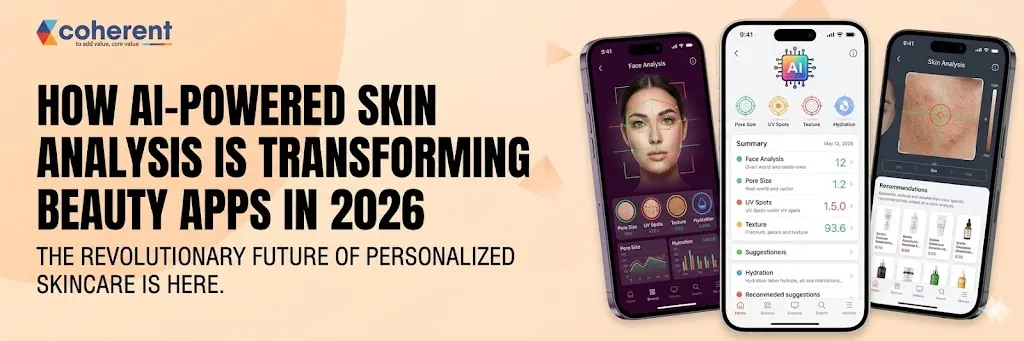
The beauty industry is transforming promptly. In 2026, users want smart and personalized skincare experiences. This is where AI-powered skin analysis is making a huge impact. From detecting acne to suggesting skincare routines, AI is supporting beauty apps to become smarter than ever. Nowadays, many brands are including AI in beauty apps to optimize user experience and boost customer engagement. With machine learning and advanced cameras, users can now get skin reports in seconds. At Coherent Lab LLP, we believe AI-driven beauty technology is becoming the future of skincare apps.
What is AI-Powered Skin Analysis?
AI-powered skin analysis is a technology that analyzes the user’s skin using AI. It identifies issues like acne, wrinkles, dark spots, oil levels, and skin texture. Most skin analysis app technology works through smartphone cameras. Users simply upload a selfie, and the AI engine generates a detailed skin report instantly. The best part? It offers highly personalized skincare AI suggestions based on the user’s skin condition. This technology is now largely used in skincare apps, beauty brands, and dermatology platforms.
Key Features of AI Skin Analysis in Beauty Apps
AI skin analysis in beauty apps uses advanced technology to scan, detect, and evaluate skin conditions in real time. These smart features help users identify acne, wrinkles, dark spots, dryness, and skin tone issues with personalized skincare recommendations. With accurate analysis, virtual consultations, progress tracking, and customized beauty routines, AI-powered beauty apps deliver a smarter, faster, and more personalized skincare experience for modern users.
- Real-Time Skin Detection – AI scans the skin instantly and detects concerns like acne, pigmentation, redness, and dark spots.
- Customized Recommendations – Personalized AI suggests skincare products and routines based on individual skin type and concerns.
- Skin Progress Tracking – Users can monitor and compare their skin improvements weekly or monthly with visual reports.
- Virtual Skin Consultation – AI-powered skincare apps provide virtual consultations without the need to visit a clinic.
- Smart Product Matching – Advanced AI skincare solutions recommend products that perfectly match the user’s specific skin needs.
Top Benefits of AI-Powered Skin Analysis
AI-powered skin analysis helps users understand their skin more accurately and deliver personalized care. It can detect acne, pigmentation, wrinkles, hydration levels, and other skin concerns in seconds. These smart solutions provide customized skincare recommendations, track skin progress over time, and improve beauty routines. With fast results, better precision, and enhanced user experience, AI technology is transforming the future of skincare and beauty Mobile apps development and many apps .
-
Better User Experience - Users get fast and accurate skin reports within seconds.
-
Stronger Customer Engagement - People spend more time on apps that provide personalized skincare awareness.
-
Better Product Sales - Smart recommendations help brands sell the right products to the right users.
-
Data Driven Insights - Businesses can understand customer skin concerns better.
-
Cost-Effective Solution - AI minimizes the need for manual skin consultations.
How AI is Transforming the Beauty App Industry in 2026
In 2026, AI is not only a trend. It is now crucial for beauty brands. Today’s users expect personalized experiences. This is why AI in beauty apps is growing rapidly across the market. The rise of skin analysis app technology is also helping small beauty startups compete with larger brands. Companies like Coherent Lab LLP are helping businesses integrate smart AI systems into beauty applications for better customer experiences.
- Optimize customer retention
- Offer virtual skincare experiences
- Increase product recommendations
- Deliver smart skincare routines
Use Cases of AI Skin Analysis in Beauty Apps
AI skin analysis in beauty apps is used for personalized skincare recommendations, acne and blemish detection, anti-aging assessments, and hydration tracking. It also supports virtual skincare consultations, product matching, and routine planning based on skin type. Brands use it for virtual try-ons and customer engagement, while users benefit from real-time skin monitoring and smarter, data-driven beauty decisions for healthier skin outcomes.
-
Skincare Recommendation Apps - Apps suggest skincare products based on skin condition and age.
-
Virtual Beauty Assistants - AI chatbots guide users with the best skincare routines.
-
Dermatology Apps - Doctors use AI reports for faster skin assessments.
-
E-Commerce Beauty Platforms - Beauty stores use beauty app AI features to recommend products before purchase.
-
Anti-Aging Analysis - AI tracks wrinkles, fine lines, and skin aging issues.
How to Integrate AI Skin Analysis in Your Beauty App
To integrate AI skin analysis in a beauty app, start by selecting a reliable AI/ML skin detection API or building a model trained on diverse skin datasets. Add image capture and real-time scanning features, then connect the AI engine for condition detection, like acne or pigmentation. Ensure data privacy, optimize accuracy, and provide personalized skincare recommendations for a smooth user experience.
-
Pick the appropriate AI Model
Select AI tools that can detect multiple skin conditions accurately.
-
Use High-Quality Image Processing
Clear image analysis improves skin detection accuracy.
-
Focus on User Experience
Keep the app simple and easy to use.
-
Add Personalized Features
Use personalized skincare AI to deliver custom skincare advice.
-
Ensure Data Privacy
Protect user selfies and skincare data securely.
Conclusion
The future of beauty apps is more personalized and AI-based. In 2026, AI-based skin analysis is helping brands deliver the best skincare experiences. Even with the high speed and best accuracy. From online consultations to personalized skincare advice, beauty apps are making it easier for users to take care of their skin. As the demand for smart skincare continues to rise, businesses have started investing in skin analysis app technology. Coherent Lab LLP helps brands build innovative beauty apps that users truly love. Contact us Today.
Frequently Asked Questions
Q1. Why are FAQs important for websites?
Ans. FAQs help users quickly find answers to common questions. They improve user experience, reduce customer support requests, and increase trust. Well-written FAQs also support SEO by targeting search-based queries and improving content visibility in search engines and AI-powered search results.
Q2. How many FAQs should a webpage include?
Ans. A webpage should ideally include 5 to 10 FAQs based on the topic and user intent. Adding relevant questions improves engagement and helps visitors understand services, products, or processes more clearly without overwhelming them with unnecessary information.
Q3. Can FAQs improve SEO rankings?
Ans. Yes, FAQs can improve SEO by targeting long-tail keywords and conversational search queries. Search engines often use FAQ content for featured snippets and voice search results. Properly optimized FAQs also increase page relevance and user engagement.
Q4. What makes a good FAQ answer?
Ans. A good FAQ answer is clear, concise, and informative. It directly addresses the user’s question using simple language. Including relevant keywords naturally while maintaining readability helps improve both user understanding and search engine performance.
Q5. Should FAQs be added to every webpage?
Ans. Not every page needs FAQs, but they are highly useful for service pages, product pages, blogs, and landing pages. FAQs help answer user concerns, provide additional details, and encourage visitors to take action confidently.
Q6. How long should FAQ answers be?
Ans. FAQ answers should usually be between 40 and 80 words. This length provides enough information without making the content too lengthy. Short and direct answers are easier for users to read and preferred by search engines.
Q7. What keywords should be used in FAQs?
Ans. Use keywords related to user search intent, services, products, and common customer questions. Long-tail keywords and conversational phrases work best because they match how people search online and interact with AI-driven search platforms.
Q8. How often should FAQs be updated?
Ans. FAQs should be updated regularly to reflect changes in services, products, pricing, or customer concerns. Keeping FAQs current ensures accurate information, improves SEO performance, and helps maintain trust with website visitors.

 +91 774-202-1725
 +1 (945) 3387904
 business@coherentlab.com
 +49 15223341304
 UK
UK