Table of Contents
How Much Does a Warehouse Management System Cost? (Complete Pricing Guide 2026)
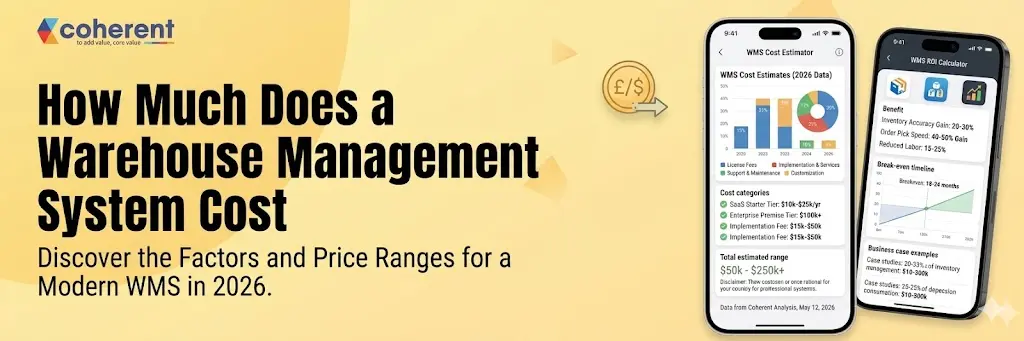
A Warehouse Management System (WMS) is an application that assists in managing the operations of a warehouse, such as inventory tracking, receiving, picking, packing, etc., and generating reports. There are many warehouse management software pricing options, including server, network hardware, software licensing and implementation, integration with existing systems, training employees on how to use the WMS, maintenance, and ongoing support for the WMS.
As of 2026, due to the increase in availability and popularity of cloud technology, as well as an increase in the number of SaaS-based applications that are available, the cost of warehouse management systems is becoming more flexible. There are now different types of WMS pricing guides for 2026 available, so companies can choose from the following:
- A cloud-based warehouse management system that can be paid for by subscription.
- An installation-based warehouse management system.
- Hybrid deployment models.
Average Cost of a Warehouse Management System
Warehouse management system costs vary based on business size, operational complexity, and specific requirements. Factors such as deployment type, number of users, integrations, and customization needs significantly influence pricing. Small warehouses typically incur lower costs, while larger enterprises with advanced automation and multiple locations require higher investment for implementation, maintenance, and ongoing system support. For warehouses that use automated storage, solutions from providers such as Modula USA can work alongside a WMS to coordinate picking and inventory movement, so integration planning should cover this equipment from the start.
|
|
|
|
|
|
|
|
|
|
|
|
These prices consist:
- Software License
- Software implementation
- Employee training related to using the software
- Hardware required to operate the software
- Integrating your ERP or eCommerce with the software you purchase
- Transferring data from current systems to new systems
Recent research shows that costs for small businesses using cloud-based warehouse management software start at approximately $200 - $600 per month, while large enterprise SaaS solutions can cost over $10,000/month.
Also Read: "How to Build Custom Software for Your Business in 2026”
Key Factors Warehouse Management System Cost
Warehouse management system costs depend on key factors such as deployment type, warehouse size, number of users, integration requirements, and customization needs. Cloud solutions cost less upfront, while larger warehouses, more users, complex integrations, and advanced custom features increase overall implementation, operational expenses, and long-term system costs.
Deployment Type
The WMS deployment type is one of the most important factors in the overall cost of warehouse management system implementation. For instance, deploying a cloud WMS requires far less investment (installation, hardware, staffing) than does an on-premise WMS. Willing to scale or not, the need for an organization depends on its operational requirements and budget allocation, followed by assessing which type of deployment would suit best.
Warehouse Size
Larger warehouses often demand advanced WMS functions, a greater need for inventory control systems, and more skilled employees to manage the warehouse operations. Consequently, as the size of a facility expands, businesses may need more software modules, hardware devices, and user licenses, thereby increasing the warehouse management software pricing for implementation and operation of the larger facility.
Number of Users
Most providers of warehouse management software use the number of active users accessing their platforms as a basis for charging businesses for their software usage. This means warehouses that employ more workers must purchase additional user licenses and role-based access permissions. Provide additional training resources to support their increased workforce. Therefore, this can lead to an increase in monthly subscription fees and the long-term cost of warehouse management system implementation.
Integration Requirements
Various modern warehouse management systems (WMS) connect to other existing systems such as ERP, e-commerce, accounting, shipping, and automated systems. This connection allows for more efficient use of facilities, but it does add costs, including those for custom development and testing, as well as support after the system is set up.
Customization Needs
When customizing an existing WMS, developers may also create custom processes such as workflows, dashboards, reports, and automation rules to improve both operational efficiency and UX. However, the inverse is also true; creating custom processes can increase the complexity of developing a unique WMS, prolong implementation time, and adversely impact ongoing support for an adapted WMS.
Types of Warehouse Management Systems & Their Costs
Warehouse management systems include standalone, cloud-based, ERP-integrated, custom-built, open-source, and enterprise solutions. Each type varies in cost based on features, scalability, and deployment. Cloud systems offer lower upfront costs, while enterprise and custom solutions require higher investment due to advanced functionality, integrations, and complex implementation requirements.
Standalone WMS
A standalone warehouse management system is created especially for managing warehouse operations like tracking inventory, picking and packing, and moving goods out of a warehouse facility via shipping. In comparison to other WMS systems, standalone warehouse management systems (WMSs) cost less and can be installed more easily than other WMSs.
Overall Pricing:
•From $50,000 to $150,000
Cloud-Based WMS
Cloud-based WMS uses a subscription-based pricing model and is hosted online, with cloud-based warehouse management system costs generally involving lower upfront expenses and predictable monthly or annual fees. These software provide flexibility, are quicker to adopt, have automatic updates, and lower initial investment. Making them widely used by companies expanding or growing, e-commerce businesses require a scalable WMS solution.
Overall Pricing:
• From $200 to $10,000/month
ERP-Integrated WMS
The Warehouse Management Systems (WMS) with the Enterprise Resource Planning (ERP) are designed to seamlessly integrate your existing warehousing operation with all of the other key business functions finance, purchasing, inventory planning, etc. The result is improved organizational visibility and operational efficiency.
Overall Pricing:
• From $50,000 to more than $500,000
Custom-Built WMS
Customized warehouse management systems are designed specifically to fit a company’s own operational processes, reporting needs, and automated solutions. The benefits of these solutions include the highest degree of flexibility and customized functionality. It also typically requires higher development of warehouse management software pricing, longer time frames for implementation, and continuing customization.
Overall Pricing:
• From $20,000 to more than $500,000
Open-Source WMS
Open-source warehouse management systems that are open-source give companies the ability to create their own software infrastructure and adapt that software to meet their operating needs. While the software itself may be less expensive in terms of license cost.
Overall Pricing:
• $5,000 – $100,000+
Enterprise WMS
On the other hand, enterprise warehouse management systems are created for large enterprises operating multiple warehouses across the world with global supply chains and sophisticated automated systems. They offer a wide range of customization, scalability, and integration options, with the cost of warehouse management system implementation typically requiring significant investment due to their complexity and enterprise-scale deployment.
Overall Pricing:
• $250,000 – $3 Million+
Also Read: Inventory Management Software to Boost Business Efficiency
Hidden Costs of WMS Implementation
|
|
|
|
|
|
|
|
|
|
|
|
|
|
|
|
|
|
|
|
ROI of Warehouse Management System
While it can be costly to implement WMS, the long-term return on investment is frequently larger than expected.Many companies that install a state-of-the-art WMS see the following benefits:
- 20 to 30% decrease in labor costs
- Improved accuracy of inventory
- Reduced shipping mistakes
- Increased visibility within the warehouse
- Enhanced customer satisfaction
Industry studies indicate most companies will realize their ROI within 12 to 24 months of installing their new system.
|
|
|
|
|
|
|
|
|
|
|
|
|
|
|
|
|
|
|
|
|
|
|
|
How to Choose the Right WMS for Your Business
In this section, we'll explore how you can find the right WMS for your business that fits with your operational needs, future growth plans, and pricing:
Determine Business Needs
Before choosing a WMS, every organization needs to assess its current operational requirements, which include warehouse size, volume of order processing, amount of order complexity, inventory volume, and expected growth, as these factors directly influence the cost of warehouse management system implementation. With the help of these operational needs, your company can find a WMS that fits with your existing organization and will also grow as the company grows.
Create an Exact Budget
Establishing an exact budget for a possible warehouse management system requires considering more than just the cost of software licenses for the warehouse management system. There are additional costs, such as implementation costs, equipment purchases, and training, involved. Having an accurate amount that your company can expect to spend on its warehouse management system before you buy it will ensure that you will not incur any additional unexpected expenses related to the use of your new warehouse management system after you buy it.
Empowering the User Experience
WMS supports businesses with efficiency and seamlessly helps employees become more productive, requiring less training time. When choosing a WMS for your organization, look for a system that is easy to use, mobile-compatible, includes visual dashboards, and has individual workflows that will help new employees be successful as they learn their jobs in the new environment.
Request a Demo Before Purchase
Before launching, you should request live demos or trial versions of your warehouse management system. Before making a long-term software investment, you can test a variety of software platforms to assess your capability for use, compatibility, ability to produce reports, and performance level.
Final Thoughts
Cloud-based warehouse management system cost range, depending on a corporation's size, complexity, and requirements for implementation from 2020 to 2026. Selecting the right WMS not only increases productivity and allows for future growth but also lowers the chances of making costly mistakes while doing so. Reach out to Coherent Lab if you require help in handling your warehouse processes or are looking for the top warehouse management system. Our team is always there for you from planning to development. Suggest WMS software solutions that best suit your needs based on what you need today and in the future so that they fit within your budget, grow with your business, and compete well in this digital era.
Conclusion
Investing in a Warehouse Management System (WMS) in 2026 is no longer just an operational upgrade; it’s a strategic move for businesses aiming to scale efficiently and stay competitive. While the total cost of a warehouse management system varies based on deployment type, customization, integrations, and warehouse size, the long-term benefits far outweigh the initial investment. From improved inventory accuracy and reduced labor costs to faster order fulfillment and enhanced customer satisfaction, a WMS delivers measurable ROI within a short period.
Get in touch with us today to optimize your warehouse operations and choose a cost-effective WMS solution that grows with your business.
Frequently Asked Questions
Q1. Could you provide a more detailed description of the WMS development budget estimates in 2026?
Ans. The estimated budget for WMS (Warehouse Management System) development can be significantly different depending on several criteria. The ranges for WMS development budgets will start from around $50,000 to over $2 million, depending on the facility size, type of deployment (cloud-based or on-premise), and whether customizations are needed for the system.
Q2. What elements influence the cost of WMS?
Ans. Factors such as warehouse dimensions, quantity of SKUs, integration needs, complexity level, hardware components, automation needs, and training requirements, as well as the need for customizations and a deployment method, all influence WMS prices.
Q3. In how much time will Coherent Lab develop WMS?
Ans. The development duration of WMS depends on many factors, such as how complex a company is and what resources they have available for customization. Mostly, it takes 3 to 12 months.
Q4. Is investment in WMS worth it?
Ans. Absolutely! WMS enhances accuracy, reduces labor, increases efficiency, and speeds fulfillment. ROI achieved within 12–24 months through automation, productivity, and error reduction

 +91 774-202-1725
 +1 (945) 3387904
 business@coherentlab.com
 +49 15223341304
 UK
UK