Table of Contents
Top 10 Apps Like Grab in 2026
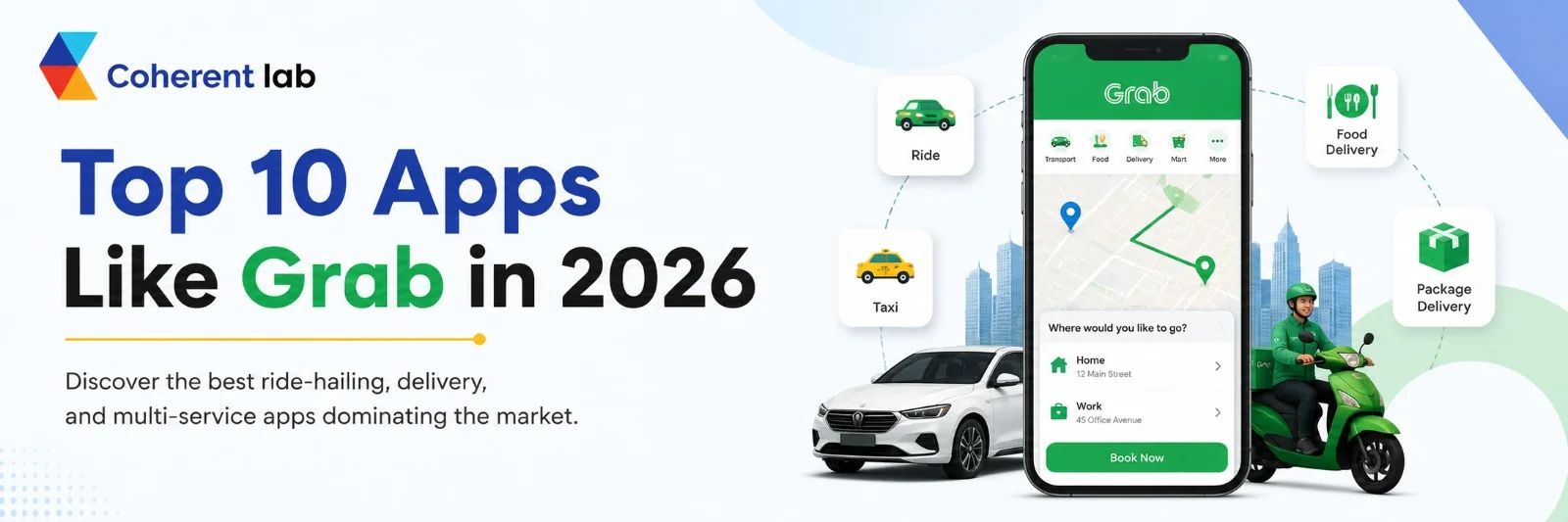
Grab has become one of Southeast Asia’s most recognizable super apps, combining ride-hailing, food delivery, parcel services, digital payments, and other everyday services in one platform. However, users increasingly search for apps like Grab because availability, pricing, services, and local preferences differ from one country to another. In 2026, alternatives such as Gojek, Bolt, inDrive, Uber, Foodpanda, DiDi, Careem, Lyft, Zomato, and Rapido offer different advantages.
Some focus on affordable rides, while others specialize in food delivery, bike taxis, or regional super-app services. This guide compares the top Grab alternatives in 2026, explaining what each app is best for, where it works, and why users may choose it instead of Grab.
What Makes Grab So Popular?
Grab's biggest advantage isn't simply ride booking. It's the convenience of having several frequently used services available through one application. Its ecosystem includes mobility, food and grocery delivery, parcel delivery, payments, and financial services, making it a strong example of the super app business model. Some of the features that make Grab attractive include:
- Ride-hailing and taxi booking
- Real-time GPS tracking
- Food and grocery delivery
- Parcel and courier delivery
Top 10 Apps Like Grab in 2026
Looking for the best apps like Grab in 2026? Explore top Grab alternatives for ride-hailing, food delivery, courier services, and everyday transportation. From Gojek and Bolt to inDrive and Foodpanda, compare features, pricing, availability, and benefits across regions. For businesses planning a similar platform, partnering with an experienced travel app development company can help create reliable, scalable, and user-friendly transportation solutions.
| App | Best For | Main Strength | Primary Market / Use |
|---|---|---|---|
| Gojek | Super-app services | Rides, food, and delivery | Indonesia |
| Bolt | Affordable rides | Competitive pricing | Selected global markets |
| inDrive | Flexible fares | Fare negotiation | Selected global markets |
| Uber | International rides | Global recognition | Multiple countries |
| Foodpanda | Food delivery | Restaurants and groceries | Asia and selected markets |
| DiDi | Ride-hailing | Strong regional networks | China and selected markets |
| Careem | Regional services | Strong Middle East presence | Middle East |
| Lyft | Ride-hailing | North American network | US & Canada |
| Zomato | Food delivery | Extensive restaurant ecosystem | India |
| Rapido | Bike rides | Fast urban mobility | India |
1. Gojek
Gojek is one of the closest alternatives to Grab because it follows a similar super-app model. It combines transportation, food delivery, courier services, and digital payments, making it especially useful for everyday services in Indonesia. Gojek remains particularly strong in Indonesia, where its local ecosystem and motorcycle transportation network make it a major competitor to Grab.
- Best for: Rides, food delivery, courier services, and everyday digital services.
- Key advantage: A broad super-app ecosystem designed around local Indonesian needs.
- Why choose it: Users can access multiple services without switching between several apps.
- Best market: Indonesia, where Gojek has particularly strong local adoption and coverage.
2. Bolt
Bolt is a popular ride-hailing alternative known for competing on price in many markets. Its availability varies by country, so users should check their local city before relying on it. Where Bolt operates, it can be a useful second app for comparing fares and finding transportation alternatives. Current 2026 comparisons frequently position Bolt as a cost-focused competitor in markets where it has strong driver supply.
- Best for: Budget-conscious ride-hailing users.
- Key advantage: Competitive pricing in many supported cities.
- Why choose it: Comparing Bolt with another ride-hailing app can help users find better value for a specific trip.
- Best market: Europe, Africa, and selected international markets where Bolt operates.
3. inDrive
inDrive stands apart from traditional ride-hailing apps because passengers can propose a fare and receive responses from available drivers. This gives users more control over pricing instead of relying entirely on an automatically calculated fare. The model can be particularly attractive to price-sensitive passengers, although availability and response times vary by city.
- Best for: Users who want more control over ride prices.
- Key advantage: Passenger-led fare negotiation.
- Why choose it: Riders can propose a price and select from driver responses where the service is available.
- Best market: Selected cities across Asia, Latin America, Africa, and other supported regions.
4. Uber
Uber is one of the world's best-known ride-hailing platforms and is a strong Grab alternative for international travelers. Its major advantage is broad international recognition and availability across many markets, although the exact services differ by country. Travelers can benefit from using Uber alongside local apps when moving between countries where Grab is not available.
- Best for: International travelers and global ride-hailing.
- Key advantage: Broad international presence and familiar booking experience.
- Why choose it: Travelers may already have an Uber account and payment method configured.
- Best market: Countries and cities where Uber officially operates.
5. Foodpanda
Foodpanda is a strong choice for people primarily interested in food and grocery delivery rather than transportation. Its presence across Asian markets makes it a relevant
GrabFood alternative , particularly where consumers want restaurant discovery, meal delivery, groceries, and promotional offers. Food delivery availability can vary significantly between cities, so users should confirm local coverage.
- Best for: Food, grocery, and everyday delivery.
- Key advantage: Delivery-focused experience with restaurants and grocery options.
- Why choose it: Users who do not need ride-hailing may prefer a specialized delivery platform.
- Best market: Selected Asian markets, with availability depending on location.
6. DiDi
DiDi is a major mobility platform with particularly strong relevance in China and selected international markets. It can be a useful alternative for travelers whose destination is better served by DiDi than Grab or other global platforms. Because its international availability differs by country, checking the destination city before travel is important.
- Best for: Ride-hailing in supported international markets.
- Key advantage: Strong presence in China and selected overseas markets.
- Why choose it: It can provide an important local alternative where its driver network is established.
- Best market: China and selected markets in Latin America, Asia, and Australia.
7. Careem
Careem is a major regional technology platform with strong recognition in the Middle East. Its ride-hailing services make it a relevant Grab alternative for travelers and residents in supported markets. Like Grab, Careem has expanded beyond simple transportation, offering additional everyday services depending on the country.
- Best for: Transportation and everyday services in supported Middle Eastern markets.
- Key advantage: Strong regional presence and local-market focus.
- Why choose it: It can be more relevant than Grab in markets where Grab does not operate.
- Best market: Middle East and selected nearby markets.
8. Lyft
Lyft is one of the most recognized ride-hailing competitors to Uber in North America. It is not a direct Southeast Asian replacement for Grab, but it becomes highly relevant when users want a Grab-like ride-booking experience in the United States or Canada. For travelers moving from Southeast Asia to North America, having Lyft as an additional transportation app can be useful.
- Best for: Ride-hailing in the United States and Canada.
- Key advantage: Strong North American ride-hailing network.
- Why choose it: It provides an established alternative to Uber in its core markets.
- Best market: United States and Canada.
9. Zomato
Zomato is primarily a food delivery and restaurant discovery platform rather than a direct Grab-style super app. However, for users searching for a GrabFood alternative in India, it is one of the most relevant choices. Its restaurant discovery, ordering, delivery, and dining-related ecosystem make it particularly useful for food-focused users.
- Best for: Food delivery and restaurant discovery in India.
- Key advantage: Strong food-focused ecosystem.
- Why choose it: Users looking specifically for restaurant ordering do not need a transportation-focused super app.
- Best market: India.
10. Rapido
Rapido is an India-focused mobility platform that became known for bike taxis and has expanded its transportation offering. It is particularly relevant for users who want quick urban mobility and short-distance transportation. For Indian users searching for an alternative to ride-hailing platforms, Rapido can be especially useful in cities where its services are available.
- Best for: Bike rides and urban transportation in India.
- Key advantage: Bike-focused mobility for quick city trips.
- Why choose it: Two-wheel transportation can be practical in congested urban areas.
- Best market: India and supported cities.
Also Read :- 10 Best Rideshare Apps: Your All Time Go-to Travel Partner
Which Grab Alternative Is Best for You?
Choosing the right Grab alternative depends on your location, audience, and specific use case. Grab is widely used across Southeast Asia, while Gojek is a strong choice in Indonesia. Foodpanda and Zomato may work better for food delivery needs. For businesses planning a similar platform, Android app development can help create reliable, scalable apps with location tracking, payments, bookings, and seamless user experiences.
Best App for Southeast Asia
- Gojek: Best overall alternative in Indonesia.
- inDrive: Useful when flexible fare negotiation matters.
- Foodpanda: Strong option for food and grocery delivery.
- Grab: Still the most broadly useful option across much of Southeast Asia.
Grab vs Gojek: Which Is Better?
Grab and Gojek are frequently compared because both combine multiple everyday services into a single application. However, their geographic strengths are different. Grab has a broader Southeast Asian footprint, while Gojek has a particularly strong position in Indonesia. For a multi-country Southeast Asian trip, Grab may be more convenient, while travelers spending substantial time in Indonesia may benefit from installing both apps and comparing availability.
Grab vs Bolt vs inDrive
The comparison between Grab, Bolt, and inDrive is primarily about availability, price, and booking flexibility. Grab generally benefits from strong regional coverage in Southeast Asia. Bolt can be attractive for price-conscious users in its supported markets, while inDrive provides a distinctive fare-negotiation model. The best option can therefore change by city, route, time, and driver availability.
How to Choose the Best App Like Grab in 2026
Before choosing an alternative, consider the destination, service availability, pricing model, payment options, driver availability, and the type of service you actually need. Whether you are comparing ride-hailing or delivery solutions, understanding these factors helps you choose wisely. Businesses such as Coherent Lab LLP can also help build customized apps that combine transportation, delivery, and other on-demand services in one platform.
Check Local Availability
- Search for the app in your destination city before traveling.
- Verify whether airport pickup is supported.
- Check whether cars, bikes, taxis, or delivery services are available.
- Keep a second app installed for backup transportation.
Also Read :- On-Demand App Services 2026: Build Scalable, Solutions
Why Are People Searching for Apps Like Grab in 2026?
The search for Grab alternatives is growing as users look for platforms tailored to their needs, from affordable rides and reliable driver availability to food delivery and flexible payments. This growing competition also creates opportunities for businesses investing in mobile app development services to build location-focused mobility and delivery solutions that offer better user experiences, localized features, and greater flexibility across different markets.
Benefits of Using Grab Alternatives
Using Grab alternatives can offer more flexibility, competitive pricing, and access to specialized services based on location. Many alternatives provide unique features such as better driver availability, local payment options, loyalty rewards, faster delivery, or lower service fees. Comparing different platforms also helps users choose an app that matches their transportation, food delivery, payment, and everyday convenience needs.
More Choice
Having multiple ride-hailing and delivery apps allows users to compare services rather than depending on one platform. This can be particularly useful when prices or driver availability change throughout the day.
Better Local Coverage
Local or regional apps can sometimes provide services specifically designed around a particular country's transportation habits, payment systems, and consumer preferences.
Flexible Pricing Options
Platforms such as inDrive introduce a different pricing approach by allowing passengers to propose fares. This can appeal to users who prefer greater control over the booking process.
Specialized Services
Not every user needs a super app. Foodpanda and Zomato, for example, are more focused on food delivery, while Rapido specializes strongly in urban two-wheel mobility.
Also Read :- Top Ride-Sharing Apps in India: Best Apps to Book Rides.
Conclusion
The best apps like Grab in 2026 depend on where you live or travel and which services you use most. Gojek is a strong alternative in Indonesia, while Bolt and inDrive offer convenient ride-hailing options. Foodpanda and Zomato are better choices for food delivery, whereas Uber, DiDi, Careem, Lyft, and Rapido serve different regional markets. Before choosing an app, compare local availability, pricing, payment methods, and service quality.
If you need help developing a similar on-demand app, Contact Us Today to discuss your idea, required features, technology, and business goals with our experienced development team.
Frequently Asked Questions
Q.1. What are the best apps like Grab in 2026?
Ans. The best apps like Grab in 2026 include Gojek, Bolt, inDrive, Uber, Foodpanda, DiDi, Careem, Lyft, Zomato, and Rapido. However, the right choice depends on your country and service requirement. Gojek is especially relevant in Indonesia, while Bolt and inDrive can be useful for ride-hailing in supported markets. Foodpanda and Zomato are stronger choices when food delivery is your main requirement.
Q.2. What is the closest alternative to Grab?
Ans. Gojek is generally one of the closest alternatives to Grab because both operate as broader super apps combining transportation with services such as food delivery and other everyday functions. Gojek's strongest market is Indonesia, while Grab has broader coverage across Southeast Asia. For users traveling through multiple Southeast Asian countries, Grab may be more convenient because of its wider regional footprint.
Q.3. Is Gojek better than Grab?
Ans. Neither app is universally better. Gojek is particularly strong in Indonesia, where its local ecosystem and transportation services are deeply established. Grab has a wider Southeast Asian footprint, making it potentially more convenient for travelers visiting several countries. The best choice depends on location, price, driver availability, preferred services, and whether you need transportation, food delivery, courier services, or multiple features within one application.
Q.4. Which Grab alternative is cheapest?
Ans. There is no single cheapest Grab alternative because prices change by city, distance, demand, time, and available drivers. Bolt is often positioned as a competitive-price option where it operates, while inDrive gives passengers more control by allowing them to propose a fare. The smartest approach is to compare the final fare across available apps before booking, particularly during peak hours or busy travel periods.
Q.5. Is there an app like Grab in India?
Ans. India has several apps that cover parts of the services associated with Grab. Rapido is particularly relevant for bike-based urban transportation, while Zomato is a major food-delivery and restaurant-discovery platform. Uber also operates in Indian markets. Because Grab itself is not the standard ride-hailing option in India, travelers should choose apps based on their city, transportation requirements, and preferred delivery services.
Q.6. What is the best Grab alternative in Southeast Asia?
Ans. Gojek is one of the strongest Grab alternatives in Indonesia, while inDrive and other regional services may be useful depending on the country. Grab itself remains widely available across eight Southeast Asian countries, including Singapore, Malaysia, Thailand, Indonesia, Vietnam, the Philippines, Cambodia, and Myanmar. Therefore, travelers should check the specific country rather than assuming one alternative works everywhere.
Q.7. Is inDrive better than Grab?
Ans. inDrive can be better for users who value fare flexibility because its model allows passengers to propose a price and receive driver responses. Grab can be better when users prioritize established regional coverage, convenience, or a broader super-app ecosystem. Neither platform is always cheaper or faster. Availability, demand, route, time, and local driver supply can significantly influence the experience on a particular trip.
Q.8. What should I consider when choosing a Grab alternative?
Ans. Consider five main factors: local availability, ride or delivery pricing, driver supply, payment methods, and the services you need. Also check airport availability if you are traveling, cancellation policies, estimated pickup time, and whether the app supports your preferred payment method. Installing two compatible apps can provide a useful backup when prices increase or driver availability becomes limited.

 +91 774-202-1725
 +1 (945) 3387904
 business@coherentlab.com
 +49 15223341304
 UK
UK