Table of Contents
White Label Ludo Game Development: Complete Business Guide
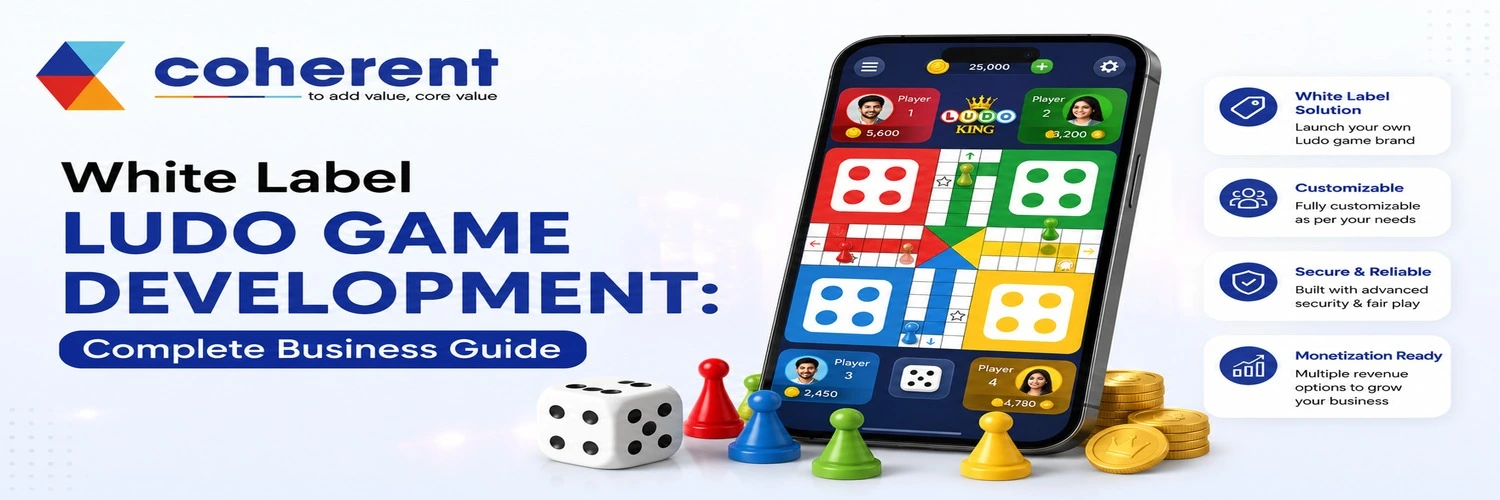
The online gaming industry has changed dramatically in recent years, and Ludo games have become one of the most recognizable casual multiplayer gaming formats across markets such as India, the UAE, the USA, the UK, and other regions. For entrepreneurs, startups, gaming operators, and established businesses, launching a Ludo platform can be an attractive opportunity—but building everything from scratch can take significant time, money, and technical expertise.
A white label Ludo solution gives businesses access to a ready-made and customizable Ludo gaming platform that can be launched under their own brand. Instead of spending months developing every component from the ground up, businesses can customize the platform, integrate required services, and focus more on marketing, user acquisition, and business growth.
What Is White Label Ludo Game Development?
White label Ludo game development refers to the process of using a pre-built Ludo gaming platform developed by a technology provider and launching it under a business's own brand.The core gaming infrastructure is already developed, tested, and optimized. For example, a startup planning to launch a multiplayer Ludo platform in India does not necessarily need to build the complete gaming engine, backend architecture, wallet system, and administration panel from zero. A white label solution can provide the foundation while allowing the business to create a branded gaming experience.
- Game rules and configurations
- User interface
- Payment options
- Admin dashboard
- Game modes
Why Is White Label Ludo Game Development Popular?
The popularity of Ludo is not limited to traditional board-game enthusiasts. Mobile gaming has transformed Ludo into an easily accessible multiplayer entertainment experience. Players can now enjoy Ludo on smartphones and tablets, compete with friends, participate in tournaments, and interact with other players online. This makes white label Ludo game software particularly useful for startups and businesses that want to test a gaming concept without taking on the entire burden of custom development. Businesses looking for professional game development services can also explore the solutions offered by Coherent Lab, which provides mobile, multiplayer, and custom game development services.
- Launch faster
- Reduce initial development investment
- Build a recognizable gaming brand
- Support multiplayer gameplay
Also read: Fantasy Sports Betting App Development
White Label Ludo Game vs Custom Ludo Game Development
Choosing between white label Ludo game development and custom development depends on your budget, launch timeline, customization needs, and long-term business goals. White label Ludo software offers a faster and more cost-effective way to enter the market with ready-made features. Custom Ludo development, however, provides complete control over design, functionality, technology, and future scalability, making it suitable for businesses with unique requirements.
| Factor | White Label Ludo Game | Custom Ludo Game Development |
|---|---|---|
| Development Time | Faster | Longer |
| Initial Cost | Generally lower | Generally higher |
| Customization | Moderate to high | Complete |
| Branding | Supported | Full control |
| Scalability | Depends on provider and architecture | Fully controlled |
| Maintenance | Usually handled by provider | Business/development team responsibility |
| Launch Speed | Fast | Comparatively slower |
| Advanced Custom Features | May require additional development | Fully possible |
| Technical Ownership | Depends on agreement | Greater ownership |
| Best For | Startups and fast market entry | Businesses needing unique platforms |
Key Features of White Label Ludo Game Software
A successful white label Ludo game software needs more than basic board-game functionality. Players expect smooth gameplay, quick matchmaking, social interaction, secure accounts, and reliable performance across devices. For businesses, powerful administration, analytics, notifications, and scalable infrastructure are equally important. Combining these capabilities helps create an engaging online Ludo gaming platform that supports user retention, brand growth, and long-term business expansion.
1. User Registration and Profiles
A simple registration process helps players join an online Ludo platform without unnecessary friction. Secure account creation also gives businesses a reliable foundation for managing users, preferences, gameplay history, achievements, and personalized experiences across different devices and sessions.
- Email and mobile registration
- OTP and secure verification
- Social login options
- Profiles with statistics and achievements
2. Multiplayer Ludo Game
Multiplayer functionality is essential for an engaging online Ludo game because it allows players to compete and interact in real time. A reliable multiplayer system should maintain synchronized gameplay, quick matchmaking, stable connections, and consistent game states throughout every match.
- 1 vs 1 multiplayer matches
- Two-player and four-player games
- Private and public rooms
- Tournament-based multiplayer matches
3. Multiple Game Modes
Offering multiple game modes gives players more reasons to explore the platform and return regularly. A flexible Ludo game development solution can support different playing preferences, from casual practice sessions to competitive multiplayer experiences, depending on business requirements.
- Classic and quick Ludo
- Private multiplayer mode
- Tournament gameplay
- Practice and AI-based modes
4. Private Rooms
Private rooms create a more social Ludo gaming experience by allowing users to invite friends, family members, or selected players. Businesses can configure room settings and access controls to provide flexible gameplay while encouraging social interaction and repeat participation.
- Unique room identification
- Player invitation functionality
- Configurable player limits
- In-game communication options
5. Real-Time Gameplay
Real-time gameplay is critical for delivering a smooth multiplayer Ludo game experience. Low-latency communication between players and servers helps ensure that moves, game states, matchmaking, and results remain synchronized, even when multiple users participate simultaneously from different locations.
- Fast player movements
- Synchronized game states
- Reliable matchmaking
- Reduced connection interruptions
6. In-Game Chat and Emojis
Social features can make an online Ludo platform more interactive and enjoyable. In-game communication allows players to express reactions during matches while creating a stronger community experience. Moderation tools should also be included to maintain a safe environment.
- Text-based in-game chat
- Quick message options
- Emojis and stickers
- Reporting and moderation features
7. Leaderboards and Rankings
Leaderboards introduce healthy competition and give players measurable goals. A well-designed ranking system can display performance across matches, tournaments, and achievements. These Ludo game features can improve engagement by encouraging players to compete, improve their skills, and return frequently.
- Player ranking systems
- Wins and losses tracking
- Achievement displays
- Tournament performance statistics
8. Notifications
Push notifications help businesses communicate important updates without requiring users to continuously open the application. When implemented thoughtfully, notifications can increase engagement and keep players informed about matches, tournaments, rewards, promotions, and important platform updates.
- Match and game invitations
- Tournament announcements
- Rewards and promotional alerts
- New feature notifications
How Does White Label Ludo Game Development Work?
The white label Ludo game development process generally follows a structured approach, beginning with business planning and provider selection and continuing through customization, integration, testing, deployment, and optimization. Each stage helps ensure the gaming platform matches the target market, brand identity, technical requirements, scalability expectations, and applicable compliance considerations while reducing unnecessary development risks and improving the overall launch experience. Businesses can also work with an experienced Fantasy Sports App Development Company to leverage expertise in scalable gaming platforms, mobile applications, real-time functionality, and secure integrations.
Step 1: Define Your Business Model
Defining your business model before development helps establish clear product requirements. Businesses should understand their target audience, market, monetization strategy, platform requirements, branding expectations, expected traffic, and compliance needs before selecting a white label Ludo software provider.
- Identify your target audience
- Select target countries or markets
- Define monetization strategy
- Estimate expected user volume
Step 2: Select a White Label Ludo Provider
Selecting the right Ludo game development company can significantly affect product quality, scalability, security, and long-term costs. Businesses should compare providers carefully instead of choosing solely according to price, focusing on technical capabilities and support quality.
- Review product quality and experience
- Check customization capabilities
- Evaluate security and scalability
- Compare support and pricing
Step 3: Customize the Platform
Customization transforms ready-made white label Ludo software into a branded gaming platform. Businesses can personalize visual elements, interfaces, game settings, administrative features, and supported integrations to create an experience that aligns with their brand and audience.
- Add logo and brand identity
- Customize colors and typography
- Modify user interface
- Configure game settings
Step 4: Integrate Required Services
Third-party integrations can expand the functionality of a Ludo gaming platform. Depending on the business model, integrations may support payments, communication, analytics, customer service, identity verification, notifications, and cloud-based infrastructure for a smoother overall user experience.
- Payment gateway integration
- SMS and email services
- Analytics and tracking tools
- Customer support integrations
Step 5: Testing and Quality Assurance
Comprehensive testing helps identify technical problems before users access the platform. A professional Ludo game development company should test gameplay, multiplayer synchronization, performance, security, APIs, payments, device compatibility, and server behavior under different network conditions.
- Test multiplayer gameplay
- Check security and payments
- Perform performance and load testing
- Verify device compatibility
Step 6: Launch
After customization, testing, deployment, and applicable compliance checks, the Ludo platform can be launched for its target audience. A coordinated launch strategy can combine technology with marketing, onboarding, support, and user acquisition activities to build initial traction.
- Prepare marketing campaigns
- Optimize app-store listings
- Implement user onboarding
- Provide customer support
Step 7: Continuous Improvement
Launching an online Ludo platform is only the beginning of the business journey. Continuous monitoring helps identify user preferences, technical issues, retention opportunities, and monetization improvements, allowing businesses to refine features and maintain a competitive gaming experience.
- Monitor user retention
- Analyze session duration
- Track revenue and acquisition
- Collect player feedback
Technology Stack for Ludo Game Development
A reliable Ludo game development technology stack should be selected according to gameplay requirements, expected traffic, platform compatibility, security, and scalability. Modern solutions can combine cross-platform or native mobile technologies with scalable backend frameworks, databases, real-time communication protocols, cloud infrastructure, and security tools to deliver consistent performance as the number of users and concurrent games increases over time. Businesses can also leverage professional Mobile App Development Services to build high-performance, secure, and scalable gaming applications across Android and iOS platforms.
Frontend / Mobile App
The frontend determines how players interact with the Ludo platform, making responsiveness, visual quality, and usability important considerations. Businesses can choose native or cross-platform technologies depending on performance expectations, development requirements, budget, and desired Android and iOS coverage.
- Flutter for cross-platform apps
- React Native development
- Native Android development
- Native iOS development
Backend
The backend manages core gaming operations, user accounts, APIs, matchmaking, game logic, transactions, notifications, and administrative functionality. The selected backend technology should provide reliable performance and scalability for supporting increasing numbers of concurrent users.
- Node.js
- Python
- Java
- .NET
Databases
Databases store essential platform information such as user profiles, game records, transactions, rankings, and application data. The appropriate database depends on data structure, performance requirements, scalability, and the specific architecture selected for the Ludo gaming platform.
- PostgreSQL
- MySQL
- MongoDB
- Redis
Real-Time Communication
Real-time communication enables players to receive game updates with minimal delay. It is especially important for multiplayer Ludo because every move and game-state change must remain synchronized between players and the backend throughout an active match.
- WebSockets
- Socket-based communication
- Real-time APIs
- Event-driven communication
Cloud Infrastructure
Cloud infrastructure provides the flexibility required to operate and scale an online Ludo platform. Businesses can select cloud services according to expected traffic, geographic coverage, performance requirements, storage needs, security standards, and long-term scalability objectives.
- Amazon Web Services
- Microsoft Azure
- Google Cloud
- Cloud-based load balancing
Security and Infrastructure
Security should be integrated throughout Ludo game development rather than added after launch. Strong infrastructure controls can help protect accounts, APIs, application data, administrative systems, and platform operations while supporting reliable performance and responsible data management.
- SSL/TLS encryption
- API authentication
- Cloud firewalls
- Automated backups
How Much Does White Label Ludo Game Development Cost?
The white label Ludo game development cost depends on several factors, including software capabilities, customization, mobile platforms, integrations, security, infrastructure, and business requirements. A basic ready-made solution generally requires less investment, while advanced platforms with custom features, scalable architecture, multiple integrations, and extensive branding can cost considerably more. Businesses should evaluate both initial development expenses and ongoing maintenance, hosting, support, and upgrade costs. Partnering with an experienced provider of Game Development Services can also help businesses select the right technology, optimize development costs, and build a scalable Ludo gaming platform aligned with their long-term goals.
| Solution Type | Approximate Cost Range | Development Scope |
|---|---|---|
| Basic White Label Ludo | $10,000–$20,000 | Ready-made platform, basic customization, core Ludo features |
| Customized Ludo Platform | $20,000–$40,000 | Custom branding, UI/UX, integrations, and additional features |
| Advanced Ludo Gaming Platform | $40,000–$75,000+ | Advanced gameplay, multiplayer, analytics, security, and scalability |
| Enterprise-Level Solution | $75,000+ | Highly customized architecture, advanced integrations, scalability, and dedicated support |
White Label Ludo Game Development for Different Markets
The requirements for white label Ludo game development can vary significantly across different countries. Businesses entering India, the UAE, the USA, or the UK need to consider local regulations, payment systems, user preferences, localization, advertising rules, and platform policies. Understanding each target market before launching an online Ludo gaming platform helps businesses create a compliant, relevant, and scalable product while reducing potential legal and operational challenges.
Ludo Game Development in India
India has a large mobile gaming audience and strong familiarity with Ludo. Businesses planning Ludo game development in India should evaluate applicable central and state regulations, payment requirements, advertising standards, platform policies, and the specific structure of their gaming model before launching.
- Understand applicable gaming regulations
- Support preferred local payment options
- Follow advertising and platform policies
- Consider regional user preferences
Ludo Game Development in the UAE
Businesses targeting the UAE should carefully evaluate local legal requirements and consumer expectations before launching a Ludo gaming platform. Localization, language support, payment preferences, advertising practices, and the treatment of gaming-related business models should all be considered during planning and development.
- Review applicable UAE regulations
- Consider Arabic and English support
- Integrate suitable payment methods
- Adapt the platform for local users
Ludo Game Development in the USA
The United States has a complex and state-specific regulatory environment for gaming. Companies planning Ludo game development in the USA should evaluate requirements according to each intended state, especially when the platform includes monetization, contests, or real-money gaming elements.
- Research individual state requirements
- Review applicable gaming regulations
- Consider state-specific payment rules
- Obtain appropriate legal guidance
Ludo Game Development in the UK
Businesses entering the UK market should consider applicable gaming regulations, age requirements, responsible gaming expectations, advertising standards, and licensing obligations where relevant. A well-planned online Ludo game should be designed around the applicable legal framework rather than adapting compliance requirements after the platform has already launched.
- Review applicable UK regulations
- Consider age and user protections
- Follow advertising requirements
- Evaluate licensing obligations where applicable
How to Choose the Best Ludo Game Development Company
Choosing the right Ludo game development company can directly affect your platform's performance, security, scalability, customization, and long-term operating costs. Instead of selecting a provider only because of a low development quote, businesses should evaluate technical expertise, white label capabilities, infrastructure, integrations, support, maintenance, and pricing transparency. A reliable technology partner should understand both multiplayer gaming requirements and the commercial objectives behind launching an online Ludo platform.
Technical Expertise
A capable Ludo game development company should have strong experience with multiplayer architecture, real-time communication, mobile applications, backend development, cloud infrastructure, security, and gaming APIs. Technical expertise helps ensure that your platform remains reliable while supporting smooth gameplay and future feature expansion.
- Check multiplayer development experience
- Review real-time gaming expertise
- Evaluate mobile development capabilities
- Assess backend architecture knowledge
Customization
Customization allows businesses to transform ready-made white label Ludo game software into a platform that reflects their brand and business requirements. Before selecting a provider, confirm how deeply the software can be customized and whether additional features can be developed when required.
- Customize branding and visual identity
- Modify UI/UX elements
- Add required game features
- Support future customization needs
Scalability
A Ludo platform should be capable of handling growing users, concurrent matches, increasing transactions, and expanding geographic coverage. Ask providers how their architecture manages traffic spikes and whether cloud infrastructure, load balancing, caching, and database optimization are available for future growth.
- Check concurrent user capacity
- Evaluate cloud infrastructure
- Review load-balancing capabilities
- Understand future scaling options
Security
Security is essential when developing an online Ludo gaming platform, particularly when user accounts, personal information, payments, and administrative systems are involved. Ask the provider how authentication, APIs, databases, transactions, and privileged access are protected against unauthorized activity and common security threats.
- Review authentication mechanisms
- Check data encryption practices
- Evaluate API security
- Understand administrative access controls
Support and Maintenance
Post-launch support is important because gaming platforms require continuous monitoring, updates, bug fixes, performance improvements, and technical assistance. Before signing an agreement, clearly understand what maintenance services are included, response times, upgrade policies, and whether ongoing technical support carries additional charges.
- Confirm technical support availability
- Understand maintenance coverage
- Check update policies
- Review support response times
Integration Capabilities
Your Ludo game development company should be capable of integrating essential third-party services according to your business requirements. These may include payment gateways, analytics platforms, communication services, identity verification tools, cloud services, and customer support systems needed for smooth platform operations.
- Payment gateway integrations
- Analytics and reporting tools
- SMS and email services
- Identity verification solutions
Transparent Pricing
Transparent pricing helps businesses understand the actual Ludo game development cost before starting the project. Request a detailed proposal covering development, customization, deployment, integrations, hosting, maintenance, updates, and other recurring expenses so there are fewer unexpected costs later.
- Development and customization costs
- Deployment and integration charges
- Hosting and maintenance expenses
- Future update costs
Final Thoughts
Launching a Ludo gaming platform is no longer only about recreating the traditional board game on a smartphone. Today's players expect smooth multiplayer gameplay, attractive interfaces, reliable performance, social interaction, personalization, and secure experiences.For businesses, white label Ludo game development offers a way to bring these capabilities together while reducing the complexity of building an entire platform from scratch.
The real advantage, however, comes from choosing the right technology partner and having a clear business strategy. A well-built platform combined with strong branding, responsible monetization, scalable infrastructure, and market-specific compliance can create a much stronger foundation for long-term growth. If you are planning to launch a white label Ludo gaming platform, Get in Touch with the Coherent Lab team to discuss your project requirements and development goals.
Frequently Asked Questions
Q1: What is white label Ludo game development?
Ans: White label Ludo game development involves using a ready-made Ludo gaming platform that can be customized with your brand, logo, design, and selected features. Instead of developing the entire game from scratch, businesses can use existing technology to launch faster. It is a practical option for startups and gaming businesses looking for cost-effective online Ludo game development.
Q2: How much does white label Ludo game development cost?
Ans: White label Ludo game development can cost approximately $10,000 to $75,000+, depending on the platform, customization, features, integrations, security, and scalability requirements. A basic solution costs less, while advanced platforms with multiplayer functionality, admin panels, payment integrations, analytics, and custom features require a higher investment. The final price depends on your business requirements.
Q3: How long does it take to launch a white label Ludo game?
Ans: A white label Ludo game can usually be launched faster than a custom-built platform because the core software is already developed. The timeline depends on branding, UI/UX customization, feature requirements, third-party integrations, testing, deployment, and compliance checks. A simple platform may require weeks, while a highly customized Ludo gaming solution can take longer.
Q4: Can I customize white label Ludo software?
Ans: Yes, most white label Ludo game software can be customized according to business requirements. Businesses can modify branding, logos, colors, UI/UX, game settings, player features, admin dashboards, notifications, and integrations. Depending on the provider, advanced customization may also include unique game modes, analytics, payment systems, and additional functionality to create a more personalized gaming platform.
Q5: Can I launch a multiplayer Ludo game?
Ans: Yes, multiplayer functionality is a core feature of modern online Ludo game platforms. Businesses can offer different multiplayer formats, including two-player games, four-player matches, private rooms, friend challenges, and tournaments where legally appropriate. Real-time communication technology helps synchronize player actions and game states, providing users with a smooth and interactive multiplayer Ludo gaming experience.
Q6: Is real-money Ludo legal?
Ans: The legality of real-money Ludo depends on the country, state, game structure, licensing requirements, and applicable gaming regulations. Laws can differ significantly between jurisdictions and may change over time. Businesses planning to launch a real-money Ludo platform should conduct a legal and compliance review before launch and obtain professional advice specific to their target market.
Q7: Can I launch a Ludo app on Android and iOS?
Ans: Yes, a white label Ludo platform can be launched for both Android and iOS. Depending on the project requirements, businesses can choose native development or cross-platform technologies such as Flutter or React Native. Supporting both platforms can help reach a wider mobile audience. The final technology choice depends on performance, customization, budget, maintenance, and scalability requirements.
Q8: How do I choose a Ludo game development company?
Ans: Choose a Ludo game development company by evaluating its gaming expertise, technology stack, customization capabilities, security practices, scalability, integrations, pricing, and post-launch support. Review previous projects and understand exactly what is included in the package. Also ask about maintenance, updates, deployment, ownership, licensing, and technical support before signing an agreement with the provider.

 +91 774-202-1725
 +1 (945) 3387904
 business@coherentlab.com
 +49 15223341304
 UK
UK