Table of Contents
Fantasy Football App Development in USA
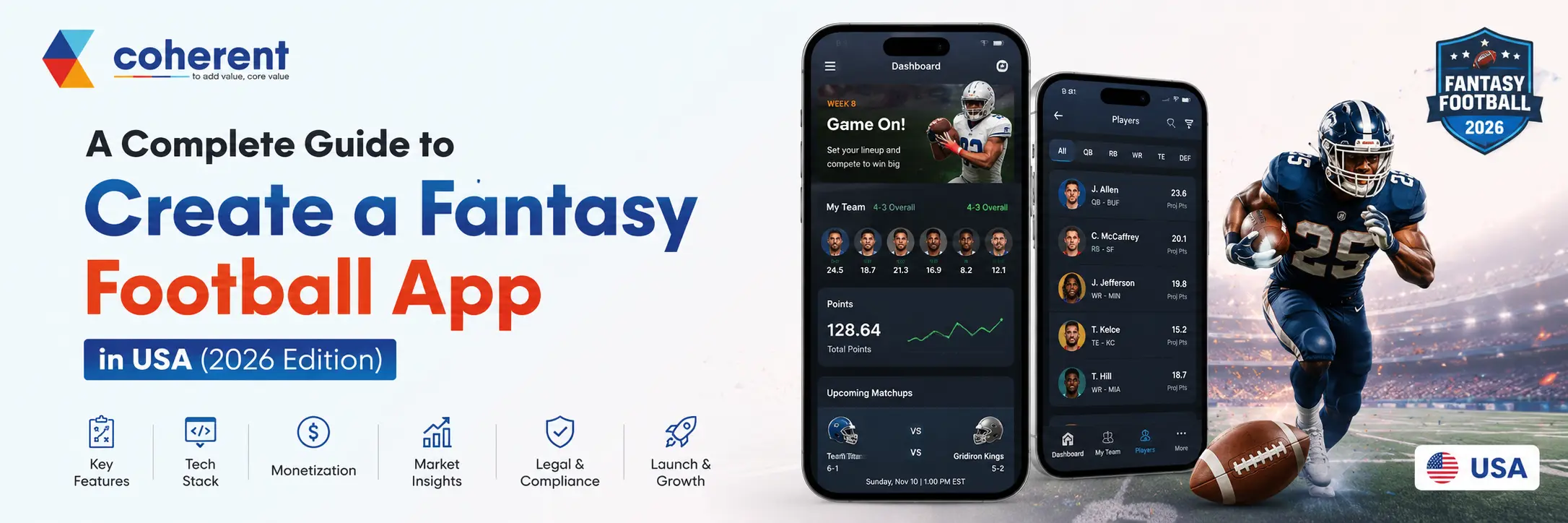
Fantasy football has become one of the most popular digital entertainment segments in the United States. Millions of sports enthusiasts actively participate in fantasy leagues every NFL season, creating a massive opportunity for entrepreneurs, startups, and sports businesses. With increasing smartphone usage, real-time analytics, and AI-driven player insights, investing in Fantasy Football App Development has become a profitable business model in 2026.
Whether you're a startup looking to launch a new fantasy sports platform or an established business planning to enter the fantasy gaming market, this guide will walk you through everything you need to know about creating a successful fantasy football app in the USA.
What is a Fantasy Football App?
A fantasy football app is a digital platform that allows users to create virtual teams composed of real NFL players. Users earn points based on the actual performance of those players during live games.
- Team creation and management
- Live player statistics
- Real-time scoring
- League competitions
- Prize contests
- Social engagement features
Why Fantasy Football Apps Are Booming in the USA
The fantasy sports industry has experienced tremendous growth over the last decade. Football remains the most popular fantasy sport in the United States, attracting millions of active participants each season.
Key Growth Drivers
Massive NFL Fan Base
The NFL remains America's most-watched sports league, providing a huge audience for fantasy football platforms.
Mobile-First User Behavior
Most fantasy sports users now manage their teams directly from smartphones.
Real-Time Data Availability
Advanced sports APIs enable instant updates, player statistics, and live scoring.
AI and Predictive Analytics
Modern fantasy football apps use artificial intelligence to provide lineup recommendations and player performance predictions.
Increased Monetization Opportunities
Premium subscriptions, contest entry fees, and sponsorships have created sustainable revenue models.
Benefits of Investing in Fantasy Football App Development
Investing in fantasy football app development offers strong revenue potential through subscriptions, in-app purchases, and ads. It boosts user engagement with real-time gameplay, social interaction, and competitive features. With growing sports enthusiasm, especially in mobile gaming, businesses can build loyal communities, enhance brand visibility, and leverage data-driven insights to deliver personalized user experiences and long-term growth.
High User Engagement
Fantasy players interact with apps daily during the NFL season, leading to strong retention rates.
Recurring Revenue
Revenue can be generated through:
- Paid contests
- Membership plans
- Advertising
- Sponsorship deals
- Premium analytics tools
Scalable Business Model
Once developed, a fantasy football platform can easily expand across states and even international markets.
Strong Community Building
Fantasy sports naturally encourage competition, social sharing, and community engagement.
Essential Features of a Fantasy Football App
A successful fantasy football app should include user registration, team creation, and player drafting features to ensure smooth onboarding. Real-time match updates, live scores, and performance tracking are essential for engagement. Secure payment integration, leaderboards, and social sharing enhance competition. Push notifications, analytics dashboards, and intuitive UI/UX design ensure seamless user experience, retention, and long-term user satisfaction.
User Registration and Authentication
A secure onboarding process is critical.
Features Include:
- Email registration
- Mobile OTP verification
- Social media login
- Two-factor authentication
User Dashboard
The dashboard acts as the command center for players.
Key Components:
- Team overview
- Current rankings
- Contest participation
- Wallet balance
- Performance statistics
Team Creation and Draft System
The drafting process is one of the most exciting aspects of fantasy football.
Draft Features:
- Live player selection
- Auto draft options
- Salary cap management
- Player comparison tools
Real-Time Live Scoring
Users expect instant score updates during live NFL games.
Important Functions:
- Live match tracking
- Player performance updates
- Dynamic leaderboard changes
- Match alerts
League Management
Users should have flexibility in creating and joining leagues.
League Options:
- Public leagues
- Private leagues
- Paid contests
- Custom scoring systems
Wallet and Payment Integration
A secure wallet system is essential for contest-based fantasy apps.
Payment Features:
- Deposits
- Withdrawals
- Bonus credits
- Transaction history
Push Notifications
Push notifications significantly improve engagement.
Notification Types:
- Draft reminders
- Injury updates
- Score alerts
- Contest announcements
Advanced Features for Competitive Advantage
Advanced features like AI-powered player insights, predictive analytics, and personalized recommendations give fantasy football apps a competitive edge. Integrating live streaming, voice assistants, and AR experiences enhances engagement. Blockchain for secure transactions, multi-language support, and smart notifications improve usability. Gamification elements like rewards, badges, and tournaments further boost retention, user loyalty, and overall platform differentiation.
AI-Powered Team Recommendations
Artificial intelligence helps users make better decisions.
AI Features:
- Player performance predictions
- Injury risk analysis
- Team optimization suggestions
- Smart lineup recommendations
Gamification Elements
Gamification improves retention and engagement.
Examples:
- Achievement badges
- Reward points
- Referral programs
- Weekly challenges
Social Features
Users enjoy sharing achievements and interacting with other players.
Popular Social Features:
- In-app chat
- League discussions
- Social media sharing
- Friend invitations
Advanced Analytics
Providing detailed insights creates a premium user experience.
Analytics Include:
- Player trends
- Historical performance
- Match projections
- Winning probability calculations
Technology Stack for Fantasy Football App Development
A robust fantasy football app requires a scalable technology stack including front-end frameworks like React or Flutter, and back-end technologies such as Node.js or Python. Real-time data integration via APIs, cloud services like AWS, and databases like MongoDB ensure performance. Secure payment gateways, AI modules, and analytics tools further enhance functionality, delivering seamless, fast, and engaging user experiences.
Frontend Development
Frontend development focuses on creating responsive, user-friendly interfaces using technologies like HTML, CSS, JavaScript, and frameworks such as React or Flutter, ensuring smooth navigation, fast performance, and engaging user experiences.
Recommended Technologies:
- Flutter
- React Native
- Swift (iOS)
- Kotlin (Android)
Backend Development
Backend development handles server logic, databases, and APIs using technologies like Node.js, Python, or PHP, ensuring secure data processing, real-time updates, scalability, and seamless app performance.
Popular Backend Frameworks:
- Node.js
- Python
- Java
- .NET
Database Solutions
Database solutions ensure efficient data storage and retrieval using systems like MongoDB or MySQL, supporting scalability, real-time access, data security, and seamless performance for fantasy football applications.
Common Choices:
- PostgreSQL
- MongoDB
- MySQL
Cloud Infrastructure
Cloud infrastructure enables scalable hosting, data storage, and real-time processing using platforms like Amazon Web Services or Google Cloud, ensuring high availability, security, and seamless performance for fantasy football applications.
Leading Cloud Providers:
- AWS
- Google Cloud
- Microsoft Azure
Sports Data APIs
Sports APIs provide live scores and player statistics.
API Requirements:
- Real-time player data
- Team statistics
- Match schedules
- Injury reports
Step-by-Step Fantasy Football App Development Process
The development process starts with market research and requirement analysis, followed by UI/UX design and feature planning. Next comes frontend and backend development, API integration, and database setup. After development, rigorous testing ensures performance and security. Finally, deployment, user onboarding, and continuous updates help improve functionality, fix bugs, and enhance user engagement over time.
Step 1: Market Research
Before development begins, understand your target audience.
Research Areas:
- Competitor analysis
- User demographics
- Revenue opportunities
- Market trends
Step 2: Define Your Business Model
Choose how your app will generate revenue.
Popular Models:
- Entry fee contests
- Subscription plans
- Advertising
- Sponsorships
Step 3: UI/UX Design
User experience plays a major role in app adoption.
Design Focus Areas:
- Simple navigation
- Fast onboarding
- Easy team management
- Mobile responsiveness
Step 4: App Development
Development usually involves:
Frontend Development
Creating the user-facing interface.
Backend Development
Building server-side functionality.
API Integration
Connecting sports data providers and payment systems.
Step 5: Testing and Quality Assurance
Testing ensures a smooth user experience.
Testing Types:
- Functional testing
- Performance testing
- Security testing
- Device compatibility testing
Step 6: Launch and Marketing
A successful launch strategy is just as important as development.
Marketing Channels:
- SEO
- App Store Optimization (ASO)
- Social media marketing
- Influencer partnerships
- NFL fan communities
Legal Requirements for Fantasy Football Apps in the USA
Fantasy football apps in the USA must comply with federal laws like the Unlawful Internet Gambling Enforcement Act, ensuring games are skill-based, not gambling. They must follow state-specific regulations, age restrictions, and licensing requirements. Data privacy laws, secure payment processing, and clear terms of service are essential to maintain legal compliance and protect users.
State-Specific Regulations
Fantasy sports laws vary across US states.
Areas to Review:
- Contest legality
- Licensing requirements
- Tax obligations
- Age restrictions
KYC and AML Compliance
Platforms handling financial transactions must verify user identities.
Compliance Requirements:
- Identity verification
- Fraud detection
- Secure payment processing
Data Protection
User privacy must be protected.
Standards Include:
- CCPA compliance
- GDPR compliance
- Secure encryption protocols
Fantasy Football App Monetization Strategies
Fantasy football apps generate revenue through entry fees for contests, in-app purchases, and subscription plans for premium features. Advertising, brand partnerships, and sponsorships further boost income. Offering exclusive leagues, virtual goods, and data-driven insights also creates monetization opportunities, helping businesses build sustainable revenue streams while enhancing user engagement and long-term platform profitability.
Entry Fee Contests
Users pay to enter competitions and win prizes.
Subscription Plans
Premium users gain access to advanced analytics and exclusive features.
Advertising Revenue
Brands targeting sports audiences often advertise within fantasy apps.
Sponsorship Opportunities
NFL-related businesses frequently sponsor contests and events.
Affiliate Partnerships
Promote sports products and earn referral commissions.
How Much Does It Cost to Create a Fantasy Football App in the USA?
The cost of creating a fantasy football app in the USA typically ranges from $30,000 to $150,000 or more, depending on features, complexity, and platform choice. Basic apps cost less, while advanced apps with AI, real-time analytics, and high scalability require higher investment. Development time, team expertise, and ongoing maintenance also significantly impact the overall budget.
|
|
|
|
|
|
|
|
|
|
|
|
Factors Affecting Cost
Key cost factors include app complexity, feature set, UI/UX design, platform choice, development team expertise, third-party integrations, real-time data APIs, security requirements, and ongoing maintenance and updates.
App Complexity
More features require more development time.
Platform Selection
iOS, Android, or cross-platform development.
Third-Party Integrations
Sports APIs and payment gateways increase costs.
Design Requirements
Custom UI/UX design impacts overall budgets.
Common Challenges in Fantasy Football App Development
Developing a fantasy football app involves challenges like real-time data integration, ensuring scalability during peak usage, and maintaining low latency. Legal compliance across regions, especially distinguishing skill-based gaming, can be complex. Securing user data and payments is critical. Additionally, creating engaging UI/UX, retaining users, and managing continuous updates and server performance require constant effort and technical expertise.
Real-Time Data Processing
Live updates must be delivered instantly.
User Retention
Keeping users engaged beyond the NFL season can be difficult.
Security Risks
Financial transactions require advanced security measures.
Scalability
Apps must handle traffic spikes during major NFL events.
Future Trends in Fantasy Football Apps
Future trends in fantasy football apps include AI-driven player insights, real-time data analytics, and personalized recommendations. Integration of AR/VR for immersive experiences and blockchain for secure transactions is rising. Social gaming features, voice assistants, and multi-device compatibility will enhance engagement, while advanced analytics and automation will improve user retention and overall app performance.
AI-Powered Fantasy Sports
AI will increasingly guide lineup decisions and player analysis.
Blockchain-Based Rewards
Digital assets and tokenized rewards are gaining popularity.
Personalized User Experiences
Apps will offer customized content and recommendations.
Voice Assistant Integration
Voice-enabled fantasy team management is expected to grow.
Predictive Analytics
Advanced machine learning models will improve player forecasting.
Why Choose a Professional Fantasy Sports App Development Company?
Choosing a professional fantasy sports app development company ensures high-quality design, scalable architecture, and secure performance. Experts deliver advanced features like real-time updates, AI insights, and seamless UI/UX. They follow industry best practices, reduce development risks, and ensure faster time-to-market. With ongoing support and maintenance, businesses can focus on growth while delivering a reliable and engaging user experience.
- Reduce development risks
- Accelerate time-to-market
- Ensure scalability
- Maintain security standards
- Deliver a superior user experience
Conclusion
The demand for Fantasy Football App Development in the USA continues to grow as NFL fans seek more engaging and interactive sports experiences. From real-time scoring and AI-powered recommendations to secure payment systems and advanced analytics, a successful fantasy football app requires the right combination of technology, strategy, and user-focused design.
Businesses entering the fantasy sports market in 2026 have a significant opportunity to build profitable platforms that attract loyal users and generate recurring revenue. By investing in high-quality development, regulatory compliance, and innovative features, you can create a fantasy football app that stands out in a competitive industry.
Ready to build your Fantasy Football App? Contact us today to discuss your Fantasy Sports App Development project and turn your idea into a successful platform.
Q1. How long does it take to develop a Fantasy Football app in the USA?
Ans.The development timeline for a Fantasy Football app depends on the complexity of features and platform requirements. A basic app can take 3–4 months, while a feature-rich fantasy sports platform with real-time scoring, AI recommendations, and payment integrations may require 6–12 months. Proper planning, testing, and compliance checks are also essential for a successful launch.
Q2. What are the must-have features in a Fantasy Football app?
Ans.A successful Fantasy Football app should include user registration, team creation, live player statistics, real-time scoring, league management, secure payment gateways, push notifications, and an admin dashboard. Advanced features like AI-powered player recommendations, social sharing, leaderboards, and detailed analytics can further improve user engagement and help your fantasy sports platform stand out from competitors.
Q3. How much does Fantasy Football app development cost in the USA?
Ans.The cost of Fantasy Football app development typically ranges from $20,000 to $200,000 or more, depending on app complexity, features, technology stack, and development team location. Basic applications cost less, while advanced fantasy sports apps with AI, live data integration, payment systems, and custom user experiences require a larger investment and longer development timeline.
Q4. Is Fantasy Football legal in the United States?
Ans.Fantasy Football is generally legal in many US states because it is considered a game of skill rather than chance. However, regulations vary by state, and businesses must comply with local laws, licensing requirements, tax regulations, and user verification standards. Consulting legal experts before launching a Fantasy Sports App in the USA is highly recommended.
Q5. How do Fantasy Football apps make money?
Ans.Fantasy Football apps generate revenue through multiple monetization models, including contest entry fees, premium subscriptions, in-app advertising, sponsorship partnerships, affiliate marketing, and paid analytics tools. Many successful fantasy sports platforms combine several revenue streams to maximize profitability while providing users with valuable features, contests, and engaging gameplay experiences throughout the season.
Q6. Why should I hire a Fantasy Sports App Development Company?
Ans.An experienced Fantasy Sports App Development Company can help you build a secure, scalable, and feature-rich platform while reducing development risks. Professional developers understand sports data integrations, payment gateways, legal compliance, and user engagement strategies. Their expertise ensures faster project delivery, better app performance, and a higher chance of success in the competitive fantasy sports market.

 +91 774-202-1725
 +1 (945) 3387904
 business@coherentlab.com
 +49 15223341304
 UK
UK