Table of Contents
Fantasy Football Algorithm Software Cost & Features: Complete 2026 Development Guide
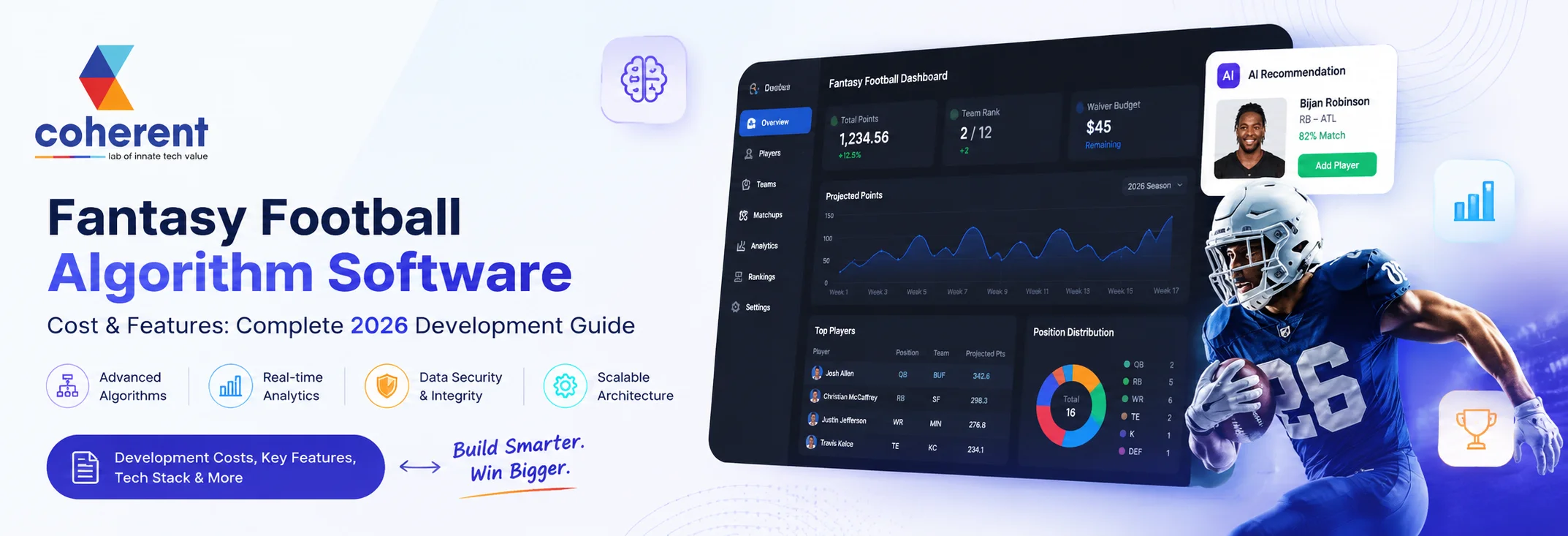
Fantasy football has evolved far beyond simple player selection and score tracking. In 2026, successful fantasy football platforms rely on advanced algorithms, artificial intelligence, predictive analytics, and real-time data processing to deliver engaging user experiences and accurate recommendations. Whether you're launching a fantasy sports startup, building a Daily Fantasy Sports (DFS) platform, or upgrading an existing fantasy football application, understanding the cost and features of fantasy football algorithm software is essential. This guide explains everything you need to know about fantasy football algorithm development, key features, development costs, technology stack, and future trends.
What Is Fantasy Football Algorithm Software?
Fantasy football algorithm software is the technology engine that powers player rankings, team recommendations, score calculations, match predictions, and user engagement features within a fantasy sports platform.The goal is to provide users with data-driven insights that help them build stronger fantasy teams and improve their chances of winning contests.
These algorithms analyze large volumes of data, including:
- Historical player performance
- Team statistics
- Injury reports
- Weather conditions
- Match schedules
- Real-time game data
Why Fantasy Football Algorithms Matter in 2026
In 2026, fantasy football algorithms will be essential in assessing player performance, anticipating results, and refining team choices. These tools are intended to improve user engagement and increase the chances of winning. AI-based models enhance accuracy and real-time decision making and customisation for fantasy platforms. Fantasy Sports App Development helps organisations to design smarter, data-driven apps that give immersive experiences and increased user retention in competitive marketplaces.
Advanced fantasy football algorithms help platforms:
- Increase user engagement
- Improve retention rates
- Deliver personalized experiences
- Boost contest participation
- Generate higher revenue
How Fantasy Football Algorithms Work
Fantasy football algorithms analyze player statistics, match conditions, historical performance, and real-time data to predict outcomes and generate points. They use machine learning models, probability scoring, and ranking systems to optimize user performance. Fantasy Sports App Development integrates these algorithms to deliver accurate predictions, fair gameplay, and engaging user experiences across fantasy sports platforms worldwide for better insights today now.
Data Collection
The algorithm gathers data from multiple sources, including NFL statistics, live sports feeds, injury updates, and historical match records.
Data Processing
The software cleans and organizes data for analysis.
Predictive Analytics
Machine learning models evaluate player trends and predict future performances.
Recommendation Engine
- Best players
- Team combinations
- Captain selections
- Trade opportunities
Real-Time Updates
The algorithm continuously updates rankings and projections as new information becomes available.
Essential Features of Fantasy Football Algorithm Software
Fantasy Football Main Features Real time data processing Player stats Software Algorithm Predictive score models Injury monitoring Automated team optimisation These technologies help increase user engagement and accuracy in fantasy sports systems by delivering intelligent insights and dynamic updates. Build Fantasy Sports App Like Dream11 2026 to Leverage Innovative Technologies & Improved User Experience and Revenue Growth
Real-Time Player Performance Tracking
Users expect instant updates during live games.
- Live scoring updates
- Player statistics
- Dynamic rankings
- Match performance analysis
AI-Powered Team Recommendations
Artificial intelligence can suggest optimal team combinations based on current conditions and player performance.
- Better lineup decisions
- Automated player suggestions
- Smart captain recommendations
- Improved winning potential
Smart Scoring Engine
A flexible scoring system allows fantasy operators to create customized leagues and contests.
- Automated score calculations
- League-specific scoring rules
- Bonus point management
- Custom contest configurations
Predictive Analytics Dashboard
This feature provides detailed insights for fantasy players.
- Win probability estimates
- Weekly projections
- Player performance forecasts
- Risk analysis
League Management System
League administration tools help manage contests efficiently.
- Private leagues
- Public tournaments
- Team management
- User administration
Push Notifications and Alerts
Real-time notifications increase user engagement.
- Injury alerts
- Match reminders
- Trade suggestions
- Lineup deadlines
Advanced Features for Competitive Fantasy Football Platforms
The sophisticated capabilities include AI based player projections, real-time match data integration and comprehensive analytics dashboards for smarter decision making for competitive fantasy football systems. They also provide dynamic scoring, injury and lineup warnings, social leagues and head-to-head battles. Features like tailored recommendations, drafting assistance, automatic team optimisation etc. help to boost user engagement and provide a very competitive and engaging fantasy sports experience.
AI Chatbot Assistant
AI-powered chatbots can answer user questions and provide fantasy football advice.
- Draft support
- Player recommendations
- Strategy suggestions
- Contest guidance
Blockchain Integration
Some fantasy sports platforms are exploring blockchain technology for transparency and secure transactions.
- Fraud prevention
- Transparent scoring
- Secure payments
- NFT rewards
Social Features
Community engagement drives platform growth.
- Leaderboards
- Discussion forums
- Friend leagues
- In-app chat
Multi-League Support
Advanced platforms allow users to manage multiple contests simultaneously.
Fantasy Football Algorithm Software Development Cost in 2026
Fantasy Football Algorithm Software Development Cost in 2026 Fantasy Football algorithm software development cost in 2026 depends on AI complexity and real-time data integration, analytics engine, UI/UX and scalability. Advanced predictive models and live sports APIs drive the budget up considerably. Typical cost. Mid-level to enterprise solutions, depending on features and infrastructure. Coherent Lab LLP provides scalable and efficient fantasy sports solutions for global clients in modern global markets.
|
|
|
|
|
|
|
|
|
|
|
|
AI and Machine Learning Features
Advanced predictive analytics increase development complexity and cost.
Real-Time Data Integration
Live sports data feeds often require premium API subscriptions.
Platform Choice
- iOS applications
- Android applications
- Web platforms
- Cross-platform solutions
UI/UX Design
Premium user experiences require significant design investment.
Security Requirements
Fantasy sports platforms handling payments require strong security measures.
Technology Stack for Fantasy Football Algorithm Development
The common technology stack used to develop a fantasy football algorithm is Python, JavaScript and R for data processing and modelling. Machine learning frameworks such as TensorFlow, PyTorch and Scikit-learn can be used to build predictive models of player performance. Databases such as PostgreSQL or MongoDB are used to store large sports datasets. Real-time match data is available via APIs. Cloud platforms offer scalability, fast and reliable deployment of algorithms.
Frontend Technologies
- React.js
- Next.js
- Flutter
- React Native
Backend Technologies
- Node.js
- Python
- .NET Core
AI and Machine Learning
- TensorFlow
- PyTorch
- Scikit-learn
Cloud Infrastructure
- AWS
- Google Cloud
- Microsoft Azure
Database Solutions
- PostgreSQL
- MongoDB
- Redis
Fantasy Football API Integration Requirements
Fantasy Football API integration requirements explain how external data sources connect to fantasy sports systems to deliver real-time player stats, match updates, and scoring logic. It features secure authentication, rate limitations, data formats like JSON, endpoints architecture, error handling and caching techniques. Proper integration ensures accurate live updates, seamless user experience, scalability and consistent performance across systems of fantasy football software.
Sports Data APIs
- NFL statistics APIs
- Live score feeds
- Player analytics APIs
Payment Gateway Integration
- Stripe
- PayPal
- Apple Pay
- Google Pay
Analytics Platforms
- Google Analytics
- Firebase
- Mixpanel
Benefits of Investing in Fantasy Football Algorithm Software
Investing in fantasy football algorithm software helps businesses improve prediction accuracy, enhance user engagement, and boost revenue. Advanced algorithms analyze player performance, injuries, and match data in real time, enabling smarter team selection. It also supports personalized insights, better decision-making, and competitive advantage in the growing fantasy sports market, making platforms more profitable and scalable for long-term growth success outcomes.
Improved User Retention
Personalized recommendations encourage users to stay active.
Increased Revenue
Better engagement often results in more contest participation and subscriptions.
Competitive Advantage
Advanced AI-powered insights help platforms stand out from competitors.
Better Decision-Making
Users gain valuable information for team selection and strategy development.
Challenges in Fantasy Football Algorithm Development
“Developing fantasy football algorithms involves challenges like real-time data integration, accurate player performance prediction, handling large-scale user traffic, and ensuring fair scoring systems. Data inconsistency, API limitations and changing match conditions make model optimisation difficult. Striking the right balance between accuracy and latency is the key in machine learning. mobile App Development . These systems need to be tested constantly, updated, and supported with scalable cloud infrastructure efficiently.
Data Accuracy
Maintaining accurate real-time data is critical.
Scalability
Platforms must support traffic spikes during NFL games and tournaments.
Security Compliance
Protecting user information and payment data is essential.
Regulatory Considerations
Fantasy sports operators must comply with local gaming regulations.
Future Trends in Fantasy Football Software
Future of Fantasy Football Software aligned to AI based analytics, real-time data and immersive user experience. Apps are getting smarter with tailored forecasts, live match analytics and interesting gameplay elements. To meet the increasing user demand and deliver a seamless and scalable performance on devices, a mobile app development solution is the need of the hour. The future of fantasy football will be more engaging, more data-driven and more competitive.
The future of fantasy football development will be shaped by:
- Artificial Intelligence
- Machine Learning
- Predictive Analytics
- Generative AI
- Blockchain Technology
- Hyper-Personalized Experiences
Conclusion
Fantasy football algorithm software has become the foundation of modern fantasy sports platforms. From AI-powered recommendations and predictive analytics to real-time scoring and personalized experiences, advanced algorithms create significant value for users and operators alike. Development costs can range from $15,000 for basic platforms to over $200,000 for enterprise-grade fantasy sports solutions. Businesses that invest in innovative fantasy football technology today will be better positioned to capitalize on the rapidly growing fantasy sports market in 2026 and beyond.If you're planning to build a fantasy football app or fantasy sports platform, partnering with an experienced fantasy sports software development company can help you create a scalable, feature-rich, and profitable solution. Contact us today to get started and turn your idea into a powerful fantasy sports app.
frequently asked questions
Q. 1. What is fantasy football algorithm software?
Ans. Fantasy football algorithm software is a system that uses data analytics, machine learning, and predictive modeling to analyze player performance, calculate scores, and provide recommendations for fantasy football users. It helps players make informed decisions by processing large amounts of real-time and historical sports data. Modern fantasy sports platforms use these algorithms to improve user engagement and provide more accurate insights.
Q. 2. How much does fantasy football algorithm software development cost?
Ans.The cost typically ranges from $15,000 to $200,000 or more depending on the platform's complexity, AI capabilities, real-time data integrations, design requirements, and security features. Basic solutions are suitable for startups, while enterprise-level fantasy sports software includes advanced predictive analytics, AI-powered recommendations, and large-scale infrastructure capable of handling thousands of concurrent users.
Q. 3. Which technologies are used in fantasy football software development?
Ans.Popular technologies include React.js, Flutter, Node.js, Python, PostgreSQL, MongoDB, TensorFlow, PyTorch, AWS, and Google Cloud. These technologies support real-time data processing, AI-powered recommendations, secure payments, scalable infrastructure, and seamless user experiences. The final technology stack depends on the project's requirements, target audience, and expected growth.
Q. 4. Why is AI important in fantasy football applications?
Ans.Artificial intelligence helps analyze player statistics, predict outcomes, recommend lineups, identify trends, and personalize user experiences. AI improves prediction accuracy by continuously learning from historical and real-time data. This results in smarter recommendations and greater user engagement. As fantasy sports competition increases, AI-driven insights have become a major differentiator for successful platforms.
Q. 5. What features should a fantasy football platform include?
Ans.Essential features include real-time scoring, player tracking, AI recommendations, league management, predictive analytics, push notifications, payment integration, leaderboards, and user profiles. Advanced platforms may also include AI chatbots, blockchain functionality, social features, and multi-league management. These features help improve engagement, retention, and monetization opportunities while creating a better overall user experience.
Q. 6. How long does it take to develop fantasy football algorithm software?
Ans.Development timelines generally range from 3 to 12 months depending on project complexity. A basic fantasy football platform may take three to four months, while enterprise-level solutions with advanced AI, machine learning, and real-time analytics can require six to twelve months. Proper planning, experienced developers, and clear requirements can significantly improve development speed and project success

 +91 774-202-1725
 +1 (945) 3387904
 business@coherentlab.com
 +49 15223341304
 UK
UK