Table of Contents
Different Types of NFTs: Complete Guide for Beginners & Investors
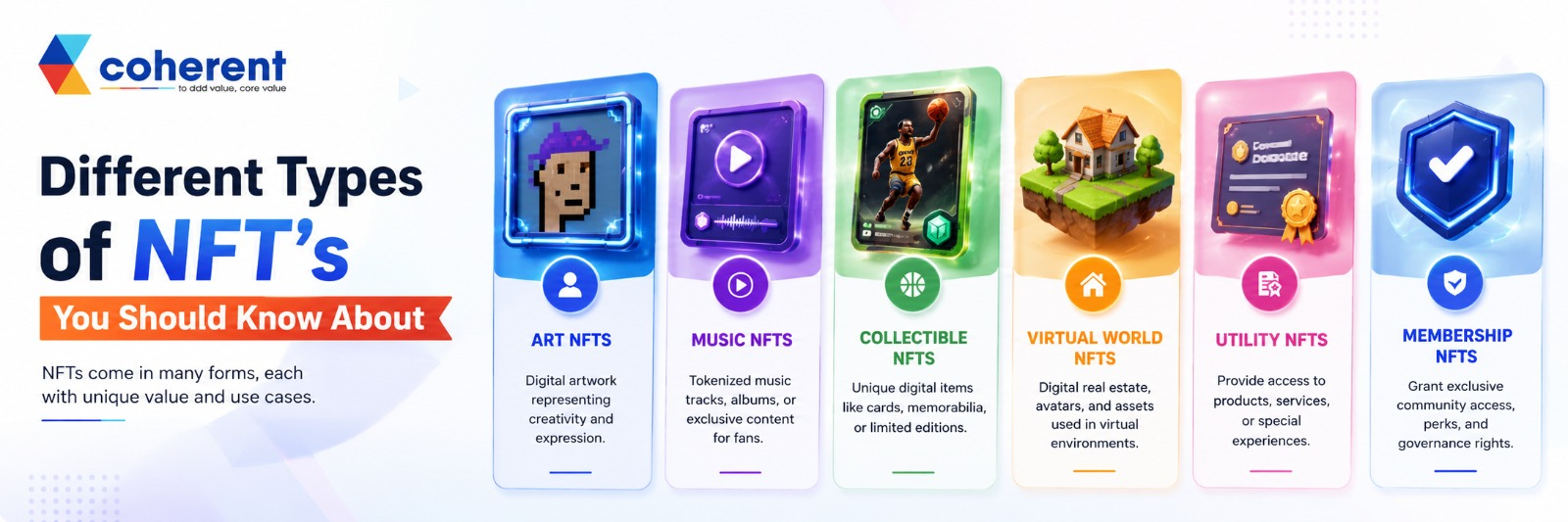
Non-Fungible Tokens (NFTs) have become one of the most significant innovations in the blockchain and Web3 ecosystem. While many people associate NFTs with digital artwork, the technology extends far beyond collectibles and images. NFTs are transforming industries such as gaming, music, real estate, ticketing, identity verification, and digital commerce. As businesses, creators, and investors continue exploring blockchain opportunities, understanding the different types of NFTs is essential. Whether you are looking to invest, create digital assets, or launch a blockchain-based project, knowing how various NFT categories work can help you make smarter decisions. In this guide, we explore the most important NFT types, their benefits, challenges, future potential, and how businesses can leverage them in 2026 and beyond.
What Are the Different Types of NFTs?
NFTs are unique digital assets stored on a blockchain that represent ownership of specific items or content. Common NFT categories include digital art NFTs, collectible NFTs, gaming NFTs, music NFTs, virtual real estate NFTs, utility NFTs, domain NFTs, fashion NFTs, ticketing NFTs, and identity NFTs. Each serves different purposes and offers unique value to creators, investors, businesses, and consumers.
Key Takeaways
- NFTs represent unique digital ownership secured by blockchain technology.
- Digital art remains the most popular NFT category.
- Gaming NFTs are driving growth in the Web3 gaming industry.
- Utility NFTs provide real-world benefits and memberships.
- Virtual real estate NFTs are expanding within metaverse platforms.
- NFT applications now extend beyond collectibles and artwork.
- Businesses are increasingly using NFTs for customer engagement and loyalty programs.
- NFT adoption is expected to grow significantly between 2026 and 2027.
What Are NFTs and How Do They Work?
NFT stands for Non-Fungible Token. Unlike cryptocurrencies such as Bitcoin or Ethereum, NFTs are unique assets that cannot be exchanged on a one-to-one basis because each token has distinct characteristics.NFTs are powered by blockchain technology and smart contracts, which record ownership, authenticity, and transaction history. This provides transparency and security while allowing digital assets to be bought, sold, and traded globally.
Key Characteristics of NFTs
- Unique digital identity
- Verified ownership
- Scarcity and rarity
- Blockchain security
- Transferable assets
- Programmable functionality through smart contracts
Different Types of NFTs You Should Know About
Explore the different types of NFTs transforming digital ownership across industries. From digital art and gaming assets to music, virtual real estate, collectibles, and utility NFTs, this guide explains how each category works, its unique value, and why NFTs continue to shape the future of blockchain-powered ecosystems.
| NFT Type | Description | Examples / Use Cases | |
|---|---|---|---|
| 1 | Digital Art NFTs | Artists tokenize digital artwork and sell it via NFT marketplaces. | Digital illustrations, AI-generated art, generative art, animated graphics |
| 2 | Collectible NFTs | Digital version of trading cards and memorabilia. | Sports collectibles, celebrity collectibles, trading cards, limited editions |
| 3 | Gaming NFTs | In-game assets owned permanently by players. | Characters, weapons, skins, virtual pets, game currencies |
| 4 | Music NFTs | Helps musicians monetize directly without relying fully on streaming platforms. | Exclusive songs, albums, concert access, fan memberships, royalties |
| 5 | Virtual Real Estate NFTs | Ownership of land or property in metaverse platforms. | Virtual storefronts, event venues, ads spaces, digital offices |
| 6 | Utility NFTs | NFTs that provide real functional benefits. | VIP memberships, event access, discounts, governance rights |
| 7 | Domain Name NFTs | Blockchain-based domains for decentralized identity. | Crypto transactions, Web3 websites, branding, identity management |
| 8 | Fashion & Wearable NFTs | Digital clothing and accessories for avatars. | Avatar outfits, digital sneakers, luxury fashion, virtual accessories |
| 9 | Ticketing NFTs | NFT-based event tickets with transparency and security. | Fraud prevention, verification, resale tracking, event experiences |
| 10 | Identity & Certification NFTs | Store credentials and certificates on blockchain. | Academic certificates, licenses, ID verification, employment records |
Statistics & Market Insights
NFT market statistics and insights reveal the rapid growth, adoption trends, and evolving use cases of digital assets worldwide. From trading volumes and user engagement to gaming, art, and metaverse applications, these key figures help businesses, investors, and creators understand the current NFT landscape and future opportunities.
Key trends include:
- Growing adoption in gaming and entertainment sectors.
- Increased enterprise blockchain integration.
- Expansion of utility-based NFT ecosystems.
- Rising investment in metaverse infrastructure.
- Greater focus on real-world asset tokenization.
Benefits of Different NFT Types
Different NFT types offer unique benefits across industries, from proving digital ownership and enhancing gaming experiences to enabling music monetization and virtual real estate investments. Understanding these advantages helps creators, businesses, and users choose the right NFT category, maximize value, and unlock new opportunities within blockchain ecosystems.
For Creators
- Direct monetization opportunities
- Royalty income from secondary sales
- Global audience access
- Enhanced ownership control
For Investors
- Portfolio diversification
- Access to emerging digital assets
- Potential appreciation opportunities
- Participation in Web3 ecosystems
For Businesses
- Innovative customer engagement
- New revenue streams
- Improved brand loyalty
- Digital product offerings
Challenges and Risks Associated with NFTs
NFTs offer exciting opportunities, but they also come with challenges and risks. Market volatility, regulatory uncertainty, security threats, copyright issues, and liquidity concerns can impact investors and creators. Understanding these potential drawbacks helps users make informed decisions, reduce risks, and navigate the evolving NFT ecosystem more effectively.
Common Risks
- Market volatility
- Fraud and scams
- Regulatory uncertainty
- Security vulnerabilities
- Liquidity concerns
NFT Costs and Pricing Explained
NFT costs and pricing depend on several factors, including blockchain network fees, rarity, creator reputation, utility, and market demand. Understanding how NFTs are valued helps buyers, investors, and creators make informed decisions, estimate expenses, and identify opportunities within the rapidly growing digital asset and blockchain marketplace.
NFT Cost Factors
- Blockchain gas fees
- Marketplace commissions
- Marketing expenses
- Creator royalties
- Community demand
Step-by-Step Guide to Choosing the Right NFT Type
Choosing the right NFT type requires understanding your goals, budget, and intended use case. This step-by-step guide helps you evaluate digital art, gaming assets, collectibles, utility NFTs, virtual real estate, and more, enabling informed decisions that align with your investment strategy, business objectives, or personal interests.
| Step | Title | Description |
|---|---|---|
| Step 1 | Define Your Objective | Determine whether your goal is investing, collecting, gaming, branding, or business development. |
| Step 2 | Research NFT Categories | Understand how each NFT type functions and generates value. |
| Step 3 | Evaluate Utility | Focus on NFTs that provide practical benefits rather than hype-driven demand. |
| Step 4 | Review Community Strength | Strong communities often indicate long-term project sustainability. |
| Step 5 | Analyze Market Demand | Study transaction volumes, user adoption, and project roadmaps. |
| Step 6 | Secure Your Assets | Use trusted wallets and security practices to protect NFT investments. |
Best Practices for NFT Buyers and Investors
Successful NFT investing requires careful research, risk management, and strategic decision-making. By evaluating project credibility, utility, market demand, and security measures, buyers can reduce risks and improve outcomes. Following proven NFT investment best practices helps investors make informed choices and navigate the evolving digital asset market confidently.
- Conduct extensive research before investing.
- Verify NFT authenticity.
- Diversify NFT holdings.
- Monitor market trends regularly.
- Use secure blockchain wallets.
- Focus on long-term value rather than short-term hype.
Common Mistakes People Make with NFTs
Many NFT buyers make costly mistakes by following hype, neglecting research, overlooking security, or misunderstanding project utility. Recognizing these common pitfalls can help investors and collectors reduce risks, protect digital assets, and make smarter decisions. A well-informed approach increases the chances of long-term value and success.
| Common NFT Mistake | Explanation | Impact / Risk |
|---|
| 1 | Buying Based Solely on Hype | Investors buy NFTs just because they are trending without checking real value or utility. | High risk of loss when hype fades and prices drop |
| 2 | Ignoring Project Fundamentals | Not evaluating team, roadmap, utility, or long-term vision of the NFT project. | Poor investment decisions in weak or unsustainable projects |
| 3 | Overlooking Security | Using unsafe wallets, sharing keys, or not following basic security practices. | Risk of hacking, scams, and permanent loss of assets |
| 4 | Following Influencers Blindly | Making decisions based only on influencer promotions without personal research. | Exposure to pump-and-dump schemes and misleading projects |
Future Trends in NFTs (2026–2027)
NFTs are expected to evolve beyond digital collectibles, with growing adoption in gaming, real-world asset tokenization, digital identity, ticketing, and brand engagement. Emerging technologies, improved scalability, and regulatory developments will shape the NFT landscape in 2026–2027, creating new opportunities for businesses, creators, and investors worldwide.
Emerging NFT Trends
- AI-generated NFT ecosystems
- Real-world asset tokenization
- Enterprise NFT adoption
- Cross-chain NFT interoperability
- NFT-powered loyalty programs
- Decentralized identity solutions
- Virtual commerce expansion
Why Choose Coherent Lab LLP for Blockchain and NFT Development?
Businesses planning to develop NFT solutions need reliable and experienced blockchain technology partners. Coherent Lab LLP helps organizations discover and connect with trusted development companies through a verified business marketplace. By simplifying partner selection, businesses can compare expertise, evaluate capabilities, and find the right blockchain development provider for their NFT projects.
Why Businesses Choose Coherent Lab LLP
- Access to verified blockchain development companies
- Transparent company profiles
- Easy service comparison
- Industry-specific expertise
- Global technology network
- Reliable partner discovery process
Conclusion
NFTs have evolved far beyond digital artwork and collectibles. Today, they power gaming economies, music ownership, virtual real estate, loyalty programs, digital identities, and numerous other blockchain applications. Understanding the different types of NFTs helps investors, creators, and businesses identify opportunities while reducing risks. As Web3 technology continues to mature, NFTs are expected to play an increasingly important role in digital ownership and online experiences. If your organization is exploring blockchain innovation, NFT development, or Web3 solutions, Contact Coherent Lab LLP today to connect with trusted blockchain development companies and experienced NFT experts.
Frequently Asked Questions
Q1. What are the main types of NFTs?
Ans. The most common NFT categories include digital art, collectibles, gaming assets, music, virtual real estate, utility NFTs, domain NFTs, fashion NFTs, ticketing NFTs, and identity NFTs.
Q2. Which NFT type is best for beginners?
Ans. Digital art NFTs and utility NFTs are often easier for beginners to understand and evaluate.
Q3. What are gaming NFTs used for?
Ans. Gaming NFTs represent in-game assets such as characters, skins, weapons, and collectibles that players can own and trade.
Q4. Are NFTs a good investment in 2026?
Ans. NFTs can offer opportunities, but investors should research carefully due to market volatility and project-specific risks.
Q5. How much does it cost to create an NFT?
Ans. Costs vary depending on the blockchain, gas fees, marketplace fees, and marketing requirements.
Q6. What is a utility NFT?
Ans. A utility NFT provides practical benefits such as memberships, discounts, event access, or governance rights.
Q7. Can businesses use NFTs?
Ans. Yes. Businesses use NFTs for loyalty programs, customer engagement, digital collectibles, and exclusive access initiatives.
Q8. What is the future of NFTs?
Ans. The future includes broader adoption across gaming, identity verification, tokenized assets, enterprise applications, and metaverse ecosystems

 +91 774-202-1725
 +1 (945) 3387904
 business@coherentlab.com
 +49 15223341304
 UK
UK