Table of Contents
Play-To-Own vs Play-To-Earn: Key Differences in Blockchain Gaming
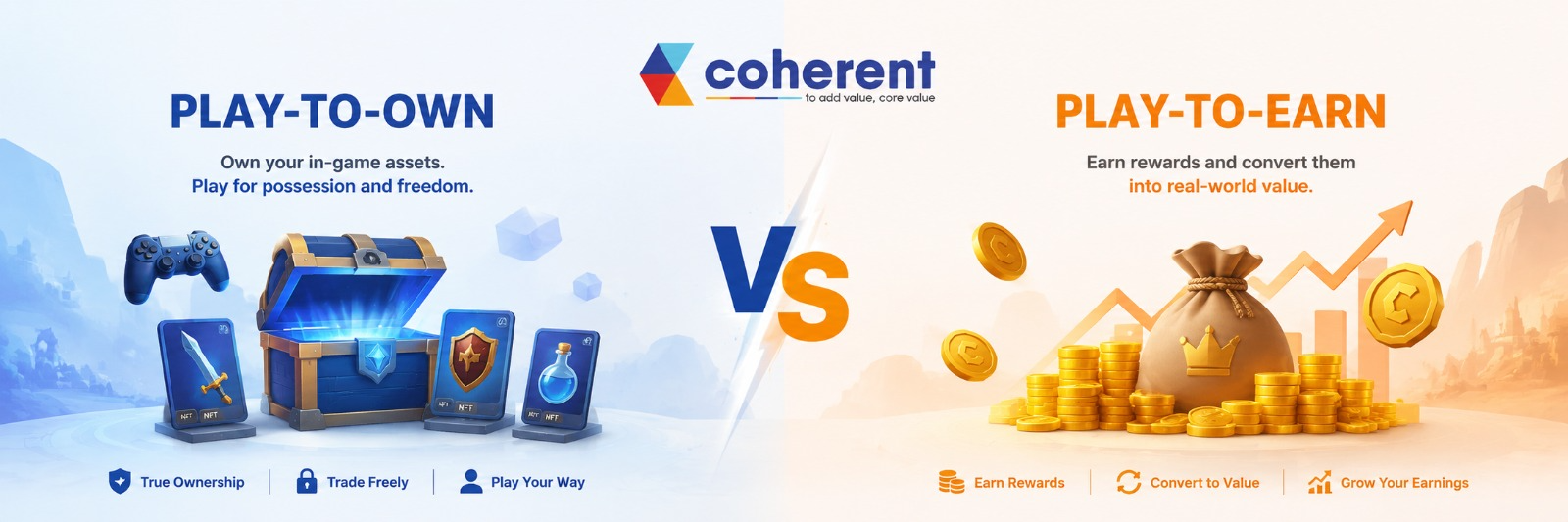
Blockchain gaming has transformed the way players interact with digital worlds. Unlike traditional games, where in-game assets remain under the control of developers, Web3 gaming introduces true ownership through blockchain technology, NFTs, and decentralized economies. Two of the most popular gaming models in the blockchain ecosystem are Play-To-Earn (P2E) and Play-To-Own (P2O). While both leverage blockchain technology, they differ significantly in how players generate value and interact with digital assets. Understanding the difference between Play-To-Own and Play-To-Earn is essential for gamers, investors, and developers looking to participate in the future of Web3 gaming.
Play-To-Own vs Play-To-Earn Explained
Play-To-Earn games reward players with cryptocurrency, tokens, or NFTs for completing activities and achieving milestones. Play-To-Own games focus on giving players permanent ownership of digital assets that can be used, traded, or transferred across gaming ecosystems. While P2E emphasizes earning rewards, P2O emphasizes ownership, utility, and long-term value creation.
Key Takeaways
- Play-To-Earn focuses on generating rewards through gameplay.
- Play-To-Own provides players with true ownership of digital assets.
- NFTs are central to most Play-To-Own ecosystems.
- P2O models are generally considered more sustainable.
- P2E economies can face inflation challenges.
- Ownership-based gaming increases player engagement.
- Hybrid gaming models are becoming increasingly popular.
- Blockchain technology enables transparency and asset security.
Understanding the Rise of Blockchain Gaming
Blockchain gaming is reshaping the gaming industry by combining decentralized technology, Game Development, and player-driven economies. Through digital ownership, NFTs, and cryptocurrency rewards, players gain greater control over in-game assets, creating new opportunities for engagement, value creation, and long-term participation in virtual gaming ecosystems.
Key technologies driving this transformation include:
- Non-Fungible Tokens (NFTs)
- Smart Contracts
- Cryptocurrency Rewards
- Decentralized Marketplaces
- Digital Asset Ownership
What Is Play-To-Earn (P2E)?
Play-to-Earn (P2E) is a blockchain-based gaming model that rewards players with cryptocurrency, NFTs, or digital assets for completing in-game activities. It allows gamers to earn real-world value from their time and skills while participating in decentralized
How Play-To-Earn Works
Players complete missions, battles, tournaments, or quests and earn:
- Cryptocurrency tokens
- NFT collectibles
- Governance tokens
- Marketplace rewards
Benefits of Play-To-Earn
- Opportunity to earn real-world value
- Increased player engagement
- Additional revenue streams
- Community-driven economies
Challenges of Play-To-Earn
- Unsustainable token inflation
- Dependence on new users
- Market volatility
- Reduced focus on gameplay quality
What Is Play-To-Own (P2O)?
Play-to-Own (P2O) is a blockchain gaming model that gives players true ownership of in-game assets through NFTs and decentralized technologies. Unlike traditional games, players can retain, trade, or use their digital assets across supported ecosystems, creating lasting value beyond gameplay.
How Play-To-Own Works
Play-to-Own works by granting players verifiable ownership of in-game assets, allowing them to trade, sell, or retain value
Players can own:
- Characters
- Weapons
- Skins
- Virtual Land
- Collectibles
- In-game Resources
Benefits of Play-To-Own
- True ownership rights
- Long-term asset value
- Increased player loyalty
- Greater ecosystem sustainability
- Enhanced digital identity
Challenges of Play-To-Own
- NFT market fluctuations
- Higher entry costs
- Technical learning curve
- Regulatory uncertainties
Play-To-Own vs Play-To-Earn
Play-to-Own and Play-to-Earn differ in their core focus: P2O emphasizes true ownership and long-term asset value, while P2E centers on earning rewards through gameplay. Comparing both models helps players understand their benefits, sustainability, and overall gaming experience.
| Feature | Play-To-Earn (P2E) | Play-To-Own (P2O) |
|---|---|---|
| Primary Goal | Earn Rewards | Own Assets |
| Asset Ownership | Limited | Full Ownership |
| NFT Usage | Optional | Essential |
| Long-Term Value | Depends on Token Performance | Depends on Asset Utility |
| Sustainability | Often Challenging | Generally Stronger |
| Player Motivation | Income Generation | Ownership & Utility |
| Economic Model | Reward-Based | Ownership-Based |
Benefits of Play-To-Own and Play-To-Earn Models
Both Play-to-Own and Play-to-Earn models offer unique advantages for gamers. Play-to-Own provides lasting digital ownership and asset control, while Play-to-Earn creates income opportunities through gameplay. Together, they enhance player engagement, economic participation, and the overall value of gaming experiences.
Benefits for Players
- Greater engagement
- New earning opportunities
- Ownership rights
- Flexible asset trading
Benefits for Developers
- Stronger communities
- New monetization channels
- Increased retention rates
- Long-term ecosystem growth
Benefits for Gaming Communities
- Decentralized governance
- Shared value creation
- Enhanced transparency
- Community participation
Challenges Facing Blockchain Gaming Economies
Blockchain gaming economies face challenges such as token price volatility, regulatory uncertainty, scalability limitations, security risks, and maintaining sustainable reward systems. Addressing these issues is essential for ensuring long-term growth, player trust, and the widespread adoption of blockchain-based gaming ecosystems.
Economic Inflation
Excessive token issuance can reduce asset value and harm player confidence.
Market Volatility
Cryptocurrency and NFT prices can fluctuate dramatically.
Regulatory Concerns
Governments worldwide continue developing regulations for digital assets and blockchain gaming.
User Adoption
Many gamers remain unfamiliar with wallets, NFTs, and blockchain technology.
Cost and Pricing Considerations for Players
Cost and pricing considerations in blockchain gaming include initial investment requirements, NFT purchase costs, transaction fees, and potential market fluctuations. Understanding these factors helps players evaluate affordability, manage risks, and make informed decisions when choosing Play-to-Earn or Play-to-Own games.
Common Expenses
- NFT purchases
- Marketplace fees
- Blockchain transaction fees
- Asset upgrades
- Gaming subscriptions
Factors Affecting Costs
- Blockchain network used
- NFT rarity
- Token prices
- Demand within the ecosystem
Step-by-Step Guide: Choosing Between Play-To-Earn and Play-To-Own
Choosing between Play-to-Earn and Play-to-Own depends on your gaming goals, budget, and expectations. A step-by-step approach helps players compare earning potential, asset ownership, long-term value, and overall gameplay experience to select the model that best fits their needs.
| Step | Why It Matters |
|---|---|
| Define Your Goals | Helps you choose between earning-focused or ownership-focused games. |
| Evaluate Asset Ownership | Ensures you understand your rights over digital assets. |
| Analyze Tokenomics | Identifies whether the game's economy is sustainable. |
| Check Community Strength | Strong communities support project growth and longevity. |
| Review Sustainability | Reduces the risk of economic collapse within the game. |
| Assess Risk Levels | Protects your finances and minimizes potential losses. |
Best Practices for Players and Investors
Players and investors should research project credibility, evaluate token economics, understand ownership rights, and assess long-term sustainability before participating in blockchain games. Following these best practices helps minimize risks, protect investments, and maximize opportunities within evolving Play-to-Earn and Play-to-Own ecosystems.
To maximize success in blockchain gaming:
- Research projects thoroughly.
- Evaluate NFT utility.
- Verify smart contract security.
- Diversify gaming investments.
- Monitor market trends.
- Focus on long-term value rather than short-term hype.
Statistics & Market Insights
Statistics and market insights reveal the rapid growth of blockchain gaming, highlighting trends in player adoption, NFT ownership, transaction volumes, and revenue generation. These data-driven insights help players, investors, and developers understand the evolving landscape and future potential of the industry.
Key Industry Trends
- Increasing NFT adoption in gaming
- Growing investment in Web3 gaming projects
- Expansion of virtual economies
- Rising demand for player-owned assets
- Greater integration of AI and blockchain technologies
Future Trends in Play-To-Own and Play-To-Earn (2026-2027)
Future trends in Play-to-Own and Play-to-Earn are expected to focus on improved asset interoperability, sustainable token economies, enhanced player ownership, AI-driven gaming experiences, and broader blockchain adoption. These developments could redefine digital ownership and value creation in gaming during 2026–2027.
Hybrid Gaming Models
Many developers are combining earning and ownership features.
Cross-Game Asset Interoperability
Players may soon use the same NFT assets across multiple games.
AI-Powered Economies
Artificial intelligence will help balance game economies and improve player experiences.
Decentralized Governance
Players will gain greater influence over game development decisions.
Metaverse Integration
Virtual worlds will increasingly connect through shared ownership ecosystems.
Common Mistakes Players Make When Choosing Blockchain Games
Many players choose blockchain games based solely on earning potential while overlooking gameplay quality, project credibility, token sustainability, and ownership benefits. Understanding these common mistakes can help players reduce risks, protect investments, and select games that offer long-term value and engagement. This is especially important for anyone exploring Everything You Need to Know About Blockchain App Development, as success depends on evaluating both the technology and the long-term viability of blockchain-based ecosystems.
Avoid these common errors:
- Investing solely for profits
- Ignoring asset utility
- Failing to research development teams
- Overlooking tokenomics
- Falling for hype-driven projects
- Neglecting security practices
Why Choose Coherent Lab LLP for Blockchain Game Development?
Coherent Lab LLP delivers innovative blockchain solutions with expertise in NFTs, smart contracts, Play-to-Earn, and Play-to-Own ecosystems. Their focus on security, scalability, engaging gameplay, and customized development helps businesses create sustainable and future-ready blockchain gaming platforms.
Why Coherent Lab LLP?
- Expertise in Web3 game development
- Secure smart contract development
- NFT marketplace integration
- Custom tokenomics design
- Scalable blockchain architecture
- End-to-end development support
Conclusion
The debate between Play-To-Own and Play-To-Earn reflects the broader evolution of blockchain gaming. While Play-To-Earn introduced financial incentives to gaming, Play-To-Own takes the concept further by giving players true ownership of digital assets. As Web3 gaming continues to mature, ownership-focused ecosystems are expected to play a central role in creating sustainable digital economies. Many future games will likely combine both approaches, allowing players to earn rewards while maintaining full ownership of their assets. For businesses exploring blockchain gaming opportunities, partnering with experienced developers such as Coherent Lab LLP can help create secure, scalable, and engaging gaming experiences. Contact us today to learn how blockchain technology can transform your gaming project. Get Started Today.
Frequently asked questions
Q1. What is the main difference between Play-To-Own and Play-To-Earn?
Ans. Play-To-Earn focuses on rewarding players with tokens or cryptocurrency, while Play-To-Own emphasizes true ownership of digital assets through blockchain technology and NFTs.
Q2. Is Play-To-Own more sustainable than Play-To-Earn?
Ans. Many experts believe Play-To-Own offers better long-term sustainability because value is tied to asset ownership and utility rather than constant token distribution.
Q3. Can players still earn money in Play-To-Own games?
Ans. Yes. Players can generate income by trading, selling, renting, or utilizing owned digital assets within gaming ecosystems.
Q4. How do NFTs support Play-To-Own gaming?
Ans. NFTs provide verifiable ownership, scarcity, and transferability for in-game assets, enabling players to control and monetize their digital property.
Q5. What are the biggest risks of Play-To-Earn games?
Ans. Common risks include token inflation, market volatility, declining user growth, and unsustainable reward structures.
Q6. Which blockchain games use Play-To-Own mechanics?
Ans. Many modern Web3 games are adopting ownership-focused systems that prioritize NFT utility, asset permanence, and player-controlled economies.
Q7. Should investors prefer Play-To-Own games?
Ans. Investors often view Play-To-Own ecosystems as more sustainable because value comes from ownership and utility rather than purely speculative rewards.
Q8. What is the future of Play-To-Own and Play-To-Earn gaming?
Ans. The future is likely to include hybrid models combining ownership, earning opportunities, decentralized governance, AI-powered economies, and metaverse integration.

 +91 774-202-1725
 +1 (945) 3387904
 business@coherentlab.com
 +49 15223341304
 UK
UK