Table of Contents
Best Healthcare Website Designs to Use for Inspiration in 2026
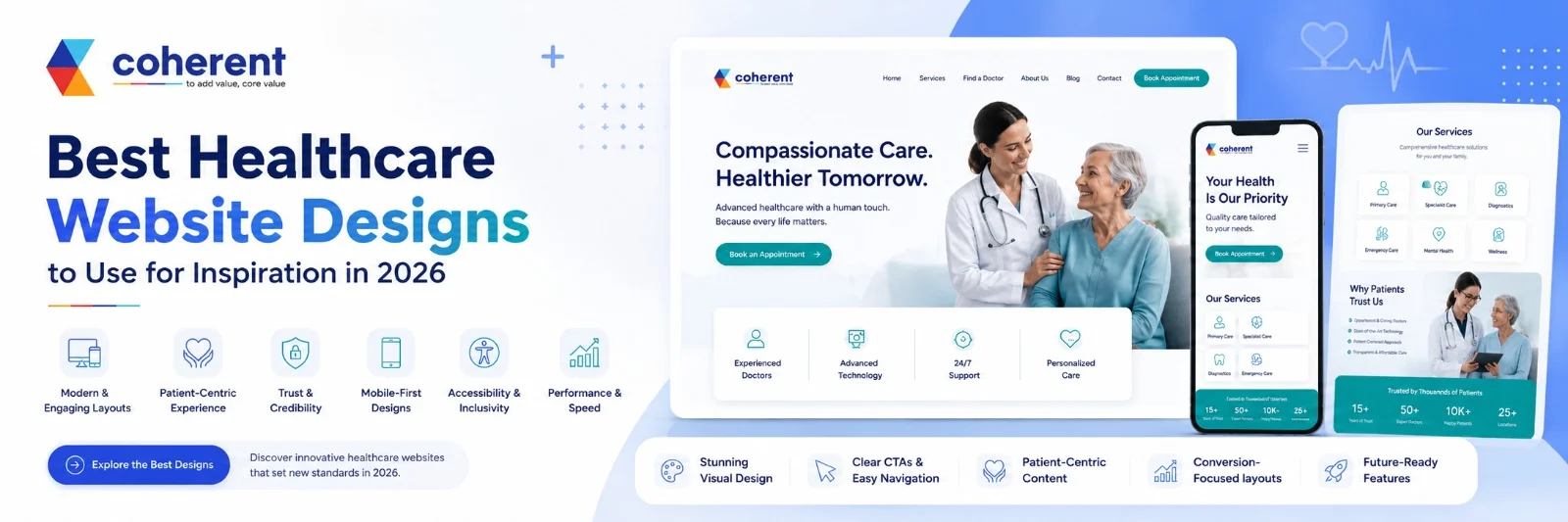
In 2026, healthcare website design is evolving rapidly, focusing on user experience, accessibility, and trust-building elements. Modern healthcare websites are no longer just informational platforms; they are interactive digital experiences that connect patients with doctors, services, and medical resources in real time. The best healthcare website designs prioritize clean layouts, fast loading speed, mobile responsiveness, and easy navigation to ensure users can quickly find critical information. They also integrate features like online appointment booking, telemedicine support, AI chatbots, and patient portals. By studying top healthcare website designs, businesses and developers can gain valuable inspiration to create platforms that improve patient engagement, enhance credibility, and deliver seamless digital healthcare experiences. In this guide, we explore some of the best healthcare website design inspirations that set new standards for innovation in 2026.
Healthcare Website Design Consultant's Insight
Successful healthcare websites combine trust, usability, accessibility, and conversion-focused design. The best-performing websites guide patients effortlessly from information discovery to appointment booking while maintaining compliance and credibility. In 2026, organizations that invest in patient-centered experiences, AI-driven personalization, and mobile-first design will gain a significant competitive advantage in both search visibility and patient acquisition. Coherent Lab LLP also focuses on delivering modern, patient-centric healthcare web solutions aligned with these best practices.
Why Healthcare Website Design Matters in 2026
Healthcare websites are often the first point of interaction between patients and providers. A professional and user-friendly website builds trust, improves patient engagement, and supports business growth. As patient expectations continue to evolve, healthcare organizations must prioritize digital experiences that are accessible, informative, and optimized for all devices.
The Growing Importance of Digital Healthcare Experiences
- Patient-first digital interactions
- Online healthcare decision-making
- Trust-building through design
Impact on Patient Acquisition and Retention
- Higher engagement rates
- Better appointment conversions
- Improved patient satisfaction
What Makes a Great Healthcare Website Design?
A great healthcare website design combines user-friendly navigation, fast loading speed, mobile responsiveness, and strong security to deliver an exceptional patient experience. It should feature clear service information, online appointment booking, doctor profiles, patient testimonials, and SEO-optimized content. An accessible, trustworthy, and visually appealing website helps healthcare providers attract more patients, build credibility, and improve engagement.
User Experience (UX) Fundamentals
- Simple navigation
- Fast-loading pages
- Mobile responsiveness
- Clear calls-to-action
Essential Trust Signals
- Patient testimonials
- Provider credentials
- Certifications and awards
- Secure browsing features
15 Best Healthcare Website Designs for Inspiration in 2026
Discover the 15 Best Healthcare Website Designs for Inspiration in 2026 that combine modern UI/UX, patient-focused experiences, and advanced digital features. Explore inspiring websites from hospitals, clinics, telemedicine platforms, and healthcare startups to learn the latest design trends, improve user engagement, build trust, and create a high-performing healthcare website that delivers exceptional patient experiences.
Best Hospital Website Examples
- Modern homepage designs
- Department navigation systems
- Physician directories
Best Clinic Website Examples
- Local healthcare practices
- Specialty clinics
- Multi-location providers
Best Telehealth Website Examples
- Virtual consultation platforms
- Digital patient onboarding
- Remote care experiences
Top Healthcare Website Design Trends in 2026
Healthcare website design trends in 2026 focus on AI-powered experiences, patient-first navigation, mobile responsiveness, accessibility, telemedicine integration, and secure digital interactions. Modern healthcare websites prioritize faster performance, personalized patient journeys, online appointment scheduling, and HIPAA-compliant features. By adopting these innovative design trends, healthcare providers can improve patient engagement, build trust, enhance user experience, and increase online conversions.
AI-Powered Patient Experiences
- Smart recommendations
- AI chat assistants
- Personalized content delivery
Accessibility-First Design
- WCAG compliance
- Inclusive interfaces
- Enhanced readability
Minimalist and Modern UI
- Clean layouts
- Improved visual hierarchy
- Reduced cognitive load
Best UX Features Used by Leading Healthcare Websites
Leading healthcare websites prioritize user experience with intuitive navigation, mobile responsiveness, fast loading speeds, secure patient portals, online appointment booking, telemedicine integration, accessible design, and personalized content. These UX features improve patient engagement, build trust, simplify healthcare access, and enhance overall satisfaction. A well-designed healthcare website helps providers deliver seamless digital experiences while increasing conversions and patient retention.
Online Appointment Scheduling
- Streamlined booking flows
- Real-time availability
- Automated confirmations
Patient Portal Integration
- Secure access
- Medical record management
- Online communication tools
Interactive Health Resources
- Symptom checkers
- Health assessments
- Educational content hubs
Healthcare Website SEO and GEO Best Practices
Optimizing a healthcare website for SEO and GEO improves online visibility, builds patient trust, and attracts high-intent visitors. By using accurate medical content, local SEO strategies, structured data, fast page speed, E-E-A-T principles, and AI-friendly content optimization, healthcare providers can rank higher in search engines while delivering reliable, accessible, and user-focused healthcare information.
Healthcare SEO Essentials
- Medical keyword optimization
- Technical SEO implementation
- Local SEO strategies
- Structured data markup
Generative Engine Optimization (GEO)
- AI-friendly content structure
- Entity optimization
- Question-based content
- Expert-driven information
E-E-A-T for Healthcare Websites
- Experience
- Expertise
- Authoritativeness
- Trustworthiness
Common Healthcare Website Design Mistakes to Avoid
A well-designed healthcare website builds trust, improves patient engagement, and increases appointment bookings. However, common design mistakes like slow loading speeds, poor mobile responsiveness, confusing navigation, outdated content, weak security, and unclear calls-to-action can harm user experience. Learn the most common healthcare website design mistakes to avoid and create a secure, user-friendly, and high-converting medical website.
Poor User Experience Issues
- Complex navigation
- Slow loading times
- Cluttered layouts
Trust and Compliance Problems
- Outdated content
- Missing privacy information
- Weak security indicators
SEO and GEO Errors
- Thin content
- Poor keyword targeting
- Lack of schema markup
How to Choose the Right Healthcare Website Design
Choosing the right healthcare website design is essential for building trust, improving patient engagement, and increasing appointment bookings. A modern, responsive, and HIPAA-compliant website should offer intuitive navigation, fast loading speeds, accessible content, secure patient portals, and SEO optimization. Prioritize user experience, mobile compatibility, and clear calls-to-action to create a professional healthcare website that drives long-term growth.
For Hospitals
- Enterprise-level architecture
- Department-focused navigation
- Large-scale content management
For Clinics
- Lead generation optimization
- Local search visibility
- Appointment conversion focus
For Healthcare Startups
- Brand storytelling
- Product-focused experiences
- Investor credibility
Future of Healthcare Website Design Beyond 2026
The future of healthcare website design beyond 2026 will focus on AI-powered personalization, voice search, accessibility, telemedicine integration, and seamless patient experiences, along with mobile app development to extend services beyond websites. Modern healthcare websites will prioritize security, fast performance, and mobile-first design while leveraging predictive analytics, chatbots, and immersive technologies to improve patient engagement, streamline appointments, build trust, and deliver personalized digital healthcare services across every device.
Voice Search Optimization
- Conversational search experiences
- Voice-enabled navigation
- AI assistants
Predictive Personalization
- Dynamic content experiences
- Behavioral recommendations
- Patient-specific journeys
Immersive Healthcare Experiences
- Augmented reality education
- Interactive health visualization
- Advanced digital engagement
Conclusion
In conclusion, the best healthcare website designs in 2026 focus on user-friendly navigation, mobile responsiveness, fast loading speed, and patient-centered experiences. Clean layouts, soft color palettes, and trust-building elements like testimonials and certifications help improve engagement and credibility. Modern healthcare websites also integrate AI chatbots, online appointment booking, and telemedicine features to enhance accessibility and convenience. By following these design principles, healthcare brands can build stronger digital trust and improve patient satisfaction. Contact us today to create a modern, high-performing healthcare website that inspires confidence and drives results.
Frequently Asked Questions
Q.1 What makes a healthcare website design effective in 2026?
Ans. An effective healthcare website in 2026 focuses on user-friendly navigation, fast loading speed, mobile responsiveness, and accessibility. It should offer clear information about services, doctors, and appointments. Trust-building elements like certifications, patient reviews, and secure data handling are essential. Clean UI, minimal clutter, and AI-driven features like chatbots also improve patient engagement and overall experience.
Q.2 Why is mobile responsiveness important for healthcare websites?
Ans. Mobile responsiveness is critical because most users access healthcare websites via smartphones. A responsive design ensures smooth browsing on all screen sizes, improving patient satisfaction. It allows easy appointment booking, doctor searches, and emergency access. In 2026, Google also prioritizes mobile-friendly websites for ranking, making it essential for better visibility and user engagement in the healthcare industry.
Q.3 What features should a modern healthcare website include?
Ans. A modern healthcare website should include online appointment booking, telemedicine integration, doctor profiles, service listings, and emergency contact options. It should also feature AI chat support, patient portals, and secure payment gateways. Educational blogs and health resources help build authority. These features improve convenience, trust, and communication between patients and healthcare providers effectively.
Q.4 How does UX design impact healthcare websites?
Ans. UX design plays a major role in healthcare websites by making navigation simple and intuitive. Patients should quickly find doctors, services, and contact information without confusion. Good UX reduces bounce rates and improves patient satisfaction. Clear call-to-action buttons, readable fonts, and structured layouts ensure a stress-free experience, especially for elderly users and first-time visitors seeking medical help.
Q.5 Why is trust important in healthcare website design?
Ans. Trust is essential in healthcare websites because users share sensitive personal and medical information. Design elements like SSL security, certifications, doctor credentials, and patient testimonials help build credibility. A professional layout with accurate information increases reliability. In 2026, transparency and data privacy compliance are key factors that influence patient trust and long-term engagement with healthcare platforms.
Q.6 How can AI improve healthcare website experience?
Ans. AI enhances healthcare websites by offering personalized recommendations, automated appointment scheduling, and 24/7 chatbot support. It helps patients quickly find relevant doctors and treatments. AI also assists in symptom checking and data analysis for better decision-making. These smart features reduce workload for staff and improve patient satisfaction, making healthcare services faster, more efficient, and highly accessible.
Q.7 What design trends are shaping healthcare websites in 2026?
Ans. In 2026, healthcare websites are adopting minimalistic layouts, dark mode options, voice search integration, and AI-powered assistance. Interactive dashboards and personalized patient portals are also trending. Video consultations and real-time booking systems are becoming standard. These trends focus on improving accessibility, engagement, and efficiency while ensuring a modern, professional, and patient-friendly digital healthcare experience.
Q.8 How important is SEO for healthcare websites?
Ans. SEO is extremely important for healthcare websites because it improves visibility on search engines. Patients often search for doctors, hospitals, and treatments online. Proper keyword optimization, local SEO, and quality content help attract more traffic. In 2026, SEO also includes voice search and AI-driven search optimization, ensuring healthcare providers reach the right audience effectively and consistently.

 +91 774-202-1725
 +1 (945) 3387904
 business@coherentlab.com
 +49 15223341304
 UK
UK