Table of Contents
HTML5 Games vs Native Games: Which Should You Choose? Guide
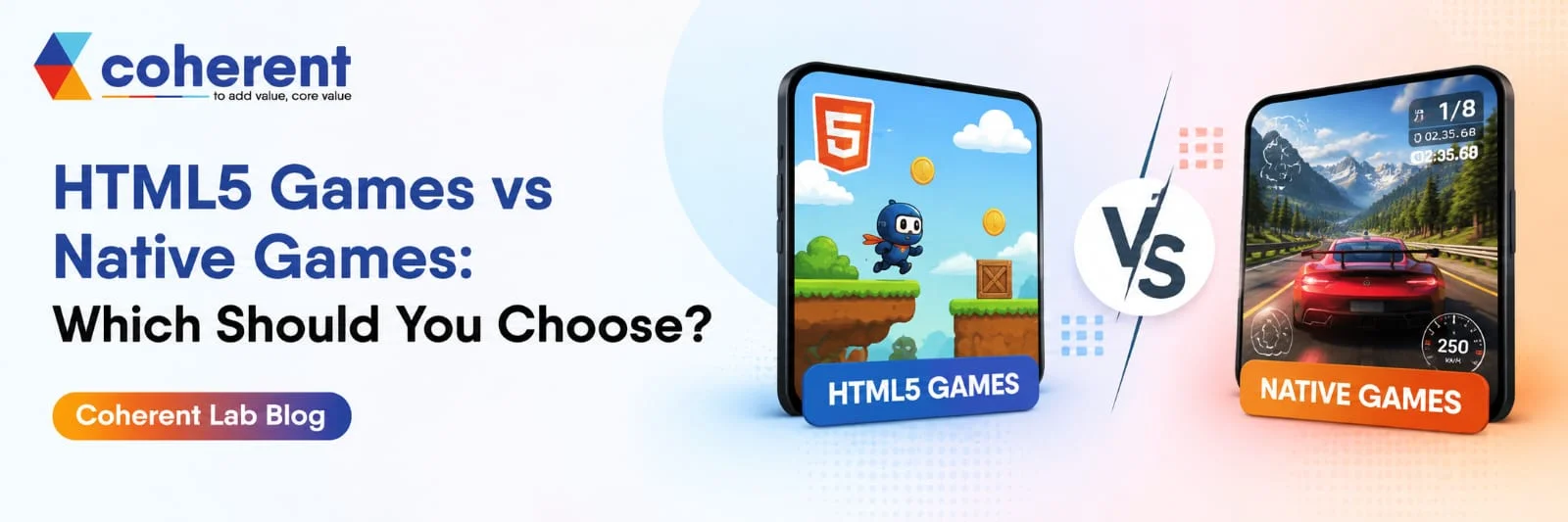
The debate between HTML5 games and native games has become increasingly important in 2026 as gaming continues to expand across mobile, desktop, cloud, and browser platforms. Developers today must carefully evaluate both options based on performance needs, development cost, user reach, and long-term scalability when planning a new gaming project.
HTML5 games offer instant browser-based access without downloads, making them ideal for quick engagement and wide distribution. In contrast, native games deliver superior performance, advanced graphics, and deeper hardware integration. Both technologies play a vital role in the modern gaming ecosystem, and the right choice depends entirely on project goals and target audience.
Key Takeaways from HTML5 vs Native Games
- HTML5 games run directly in browsers without installation
- Native games deliver higher performance and smoother gameplay
- HTML5 is ideal for casual, lightweight, and viral games
- Native development supports advanced graphics and physics engines
- HTML5 reduces time-to-market significantly
- Native games offer better long-term monetization potential
- Browser-based games have higher accessibility and reach
- The right choice depends on budget, scale, and audience strategy
HTML5 Games vs Native Games: Which Is Better?
HTML5 games are widely preferred for fast development, cross-platform compatibility, and cost-effective deployment. They run directly in browsers without installation, making them ideal for casual and hyper-casual gaming experiences. This approach allows developers to quickly launch games and reach a broader audience across mobile, desktop, and web platforms with minimal technical barriers.
Native games, however, are built for maximum performance and deliver advanced graphics, smooth gameplay, and deeper hardware optimization. They are better suited for AAA titles, competitive esports, and high-end mobile games where quality and monetization are priorities. Developers choose native technology when they need powerful features, stability, and long-term revenue potential.
| Key Takeaway | HTML5 Games | Native Games |
|---|---|---|
| Development & Deployment | Fast development with low-cost deployment and easy maintenance. | Longer development cycles with higher costs due to platform-specific requirements. |
| Accessibility | Runs directly in browsers without installation, enabling instant access. | Requires download and installation through app stores or gaming platforms. |
| Audience Reach | Offers seamless cross-platform compatibility across mobile, desktop, and web. | Reach depends on platform availability and separate builds for different devices. |
| Ideal Game Types | Best suited for casual, hyper-casual, educational, and promotional games. | Ideal for AAA titles, esports, and high-end mobile or console games. |
| Performance | Provides sufficient performance for lightweight and mid-level gaming experiences. | Delivers superior performance, advanced graphics, and optimized gameplay. |
| User Experience | Focuses on convenience, quick access, and broad availability. | Prioritizes immersive experiences, stability, and high-quality visuals. |
| Monetization Potential | Supports ads, in-game purchases, and web-based monetization models. | Offers stronger monetization opportunities through app stores, subscriptions, and premium purchases. |
| Best Choice When | Speed, affordability, and maximum audience reach are the primary goals. | Performance, scalability, graphics quality, and long-term revenue are top priorities. |
| Final Verdict | Choose HTML5 games for rapid launches and broad cross-platform reach. | Choose native games for high-performance experiences and premium gaming products. |
Understanding HTML5 Games vs Native Games
Understanding HTML5 games vs native games is essential for modern Game Development Services. Both technologies serve different purposes and target different types of audiences. HTML5 games are browser-based and focus on accessibility, while native games are installed applications designed for performance. Choosing between them depends on development goals, budget, and the expected user experience.
HTML5 games allow instant play across devices without downloads, making them ideal for quick engagement and casual gaming. Native games, however, are built using platform-specific tools to deliver high performance, advanced visuals, and smoother gameplay. Developers must evaluate scalability, monetization potential, and technical requirements before selecting the most suitable approach for their project.
| Feature | HTML5 Games | Native Games |
|---|---|---|
| Definition | Games built using HTML5, JavaScript, CSS, and WebGL that run directly in web browsers. | Games developed using platform-specific technologies such as Swift, Kotlin, C++, or engines like Unity and Unreal Engine. |
| Installation | No installation required; playable instantly through a URL. | Requires download and installation from app stores or gaming platforms. |
| Platform Compatibility | Cross-platform; works on desktops, smartphones, and tablets through browsers. | Usually developed separately for different platforms (iOS, Android, PC, consoles). |
| Development Structure | Lightweight and easier to maintain. | More complex development process with platform-specific requirements. |
| Performance | Good performance for casual and mid-level games. | Superior performance for graphics-intensive and complex games. |
| Graphics Quality | Supports modern graphics through WebGL but has browser limitations. | Delivers advanced graphics, realistic physics, and immersive experiences. |
| Hardware Access | Limited access to device hardware and system resources. | Direct access to device hardware, sensors, and advanced APIs. |
| Updates & Maintenance | Updates are deployed instantly on the server and available to all users. | Updates require app store approvals and user downloads. |
| User Accessibility | Instant play with a single click or URL. | Users must install the game before playing. |
| Best Use Cases | Casual games, browser games, educational games, and marketing campaigns. | AAA games, high-end mobile games, VR/AR experiences, and graphics-intensive applications. |
Also Read: How to Choose the Best Game App Development Company
Performance, Graphics & User Experience Comparison
Performance, graphics, and user experience are key factors that define the success of any game. Performance ensures smooth gameplay without lag or crashes, while graphics enhance visual appeal and immersion. A strong user experience keeps players engaged, offering intuitive controls, responsive design, and seamless interactions across devices and platforms for better engagement overall always matters.
Modern games balance performance, graphics, and user experience depending on platform choice. Native games usually deliver higher performance and advanced visuals due to hardware optimization, while HTML5 games focus on accessibility and cross-platform compatibility. Developers must prioritize smooth gameplay, optimized assets, and responsive UI to meet player expectations in competitive markets effectively and consistently delivered.
| Feature | HTML5 Games | Native Games |
|---|---|---|
| Graphics Quality | Browser-based rendering with limited support for advanced visual effects | High graphical fidelity with advanced shaders, real-time lighting, and complex 3D environments |
| Rendering Performance | Dependent on browser capabilities and device performance | Optimized for specific platforms, delivering superior performance |
| Frame Rates | May vary depending on browser and hardware limitations | Smoother frame rates with lower latency |
| Physics Simulation | Suitable for basic to moderate game physics | Supports advanced and highly accurate physics simulations |
| Accessibility | Play instantly through a web browser without installation | Requires download and installation before playing |
| Loading Time | Quick access and instant gameplay through browser links | Initial installation can increase setup time |
| Sharing & Distribution | Easy to share via URLs and access across devices | Distribution typically occurs through app stores or platform marketplaces |
| Offline Support | Limited offline functionality in most cases | Full offline gameplay support available |
| User Experience Focus | Prioritizes convenience, accessibility, and cross-platform reach | Focuses on immersion, performance, and premium gaming experiences |
| Best Use Cases | Casual games, marketing games, educational games, and cross-platform projects | High-performance mobile, console, and PC games with advanced graphics requirements |
Development Cost & Market Insights 2026 Perspective
Development cost in 2026 continues to vary widely based on game complexity, platform choice, and technology stack. HTML5 games remain more cost-effective due to simpler development, faster deployment, and lower maintenance requirements. In contrast, native games demand higher budgets because of advanced graphics, engine licensing, and specialized talent needs across multiple platforms.
From a market perspective, 2026 shows strong growth in both casual and high-end gaming segments. HTML5 dominates quick-access browser gaming, while native games lead in AAA and competitive markets. Businesses must balance cost efficiency with long-term revenue potential, choosing the right model based on audience targeting, monetization strategy, and global scalability for maximum success.
Cost Comparison
HTML5 game development is generally more affordable because it requires fewer resources, simpler architecture, and faster deployment cycles. Native games involve larger teams, longer development timelines, and platform-specific optimization.
Market Trends
The global gaming market shows a clear dual trend:
- Mobile-native games still generate the highest revenue worldwide
- HTML5 games are rapidly growing in the casual and browser gaming segments
- Cloud gaming is reducing the gap between HTML5 and native ecosystems
- Indie developers increasingly prefer HTML5 for rapid prototyping
Benefits of HTML5 vs Native Games
HTML5 and native games both offer unique advantages depending on development goals and target audience. HTML5 games provide instant accessibility through browsers without installation, making them ideal for quick user engagement and cross-platform reach. They are cost-efficient, easier to update, and perfect for casual gaming experiences across mobile and desktop devices with minimal technical barriers overall.
Native games, on the other hand, deliver superior performance, high-quality graphics, and deeper hardware integration. They are best suited for complex gameplay, competitive esports, and AAA-level experiences. Developers benefit from better optimization, advanced features, and monetization opportunities, while players enjoy smoother gameplay and immersive experiences tailored to specific operating systems and devices.
Benefits of HTML5 Games
HTML5 games offer several strategic advantages:
- No download friction increases user engagement
- Works across all devices with modern browsers
- Faster updates without app store approval delays
- Ideal for viral and marketing-driven campaigns
Benefits of Native Games
Native development provides:
- High-performance gaming experiences
- Better monetization through app stores
- Stronger retention due to immersive gameplay
- Access to device hardware like the GPU, camera, and sensors
When to Choose HTML5 Games vs Native Games
Choosing between HTML5 and native games depends on project goals, budget, timeline, and target audience. HTML5 games are ideal when you want fast development, easy deployment, and instant browser-based access without downloads. They work best for casual games, marketing campaigns, and a wide audience reach across multiple devices and platforms, with minimal friction for users overall.
Native games should be chosen when performance, graphics quality, and advanced gameplay mechanics are top priorities. They are suitable for AAA titles, competitive gaming, and long-term projects requiring deep hardware optimization. If the goal is high engagement, monetization, and immersive experiences, native development is the better choice for delivering premium-quality gaming experiences effectively.
Best Use Cases for HTML5 Games
HTML5 is ideal when your goal is reach and speed:
- Casual and hyper-casual games
- Educational and puzzle games
- Marketing campaigns and branded mini-games
- Browser-based multiplayer experiences
Best Use Cases for Native Games
Native is best when performance matters:
- AAA gaming titles
- Competitive esports games
- Open-world RPGs and shooters
- High-end mobile gaming applications
Step-by-Step Game Development Process
The game development process begins with ideation, where concepts, target audience, and core mechanics are defined. This is followed by pre-production, including planning, storyboarding, and selecting the right technology stack. Designers and developers then create prototypes to test gameplay ideas and ensure the concept is feasible before moving into full production stages for better clarity.
In production, assets like graphics, animations, sound, and coding are developed and integrated into the game. After that comes testing, where bugs are fixed, and performance is optimized for smooth gameplay. Finally, the game is deployed and maintained with updates, ensuring continuous improvement, user engagement, and long-term success in the competitive gaming market effectively.
HTML5 Game Development Workflow
- Define game concept and mechanics
- Design lightweight assets and UI
- Develop using JavaScript frameworks and WebGL
- Test across multiple browsers and devices
- Deploy via web hosting or gaming platforms
Native Game Development Workflow
- Create a detailed game design document
- Choose engine (Unity, Unreal Engine, etc.)
- Develop core gameplay systems and mechanics
- Optimize for performance and platform compatibility
- Publish on app stores and monitor analytics
Also Read: How to Make a Game App: Ultimate Step-by-Step Guide
Challenges in HTML5 and Native Game Development
Both HTML5 and native game development come with unique challenges that can impact time, cost, and overall quality. HTML5 games often face limitations in performance, browser compatibility issues, and restricted access to advanced hardware features. Developers may also struggle with optimizing graphics and ensuring smooth gameplay across different devices and screen sizes effectively during development stages.
Native game development, on the other hand, involves higher complexity, longer development cycles, and increased production costs. Managing multiple platforms like iOS and Android requires separate optimization efforts. Developers also face challenges in handling large codebases, advanced graphics rendering, and maintaining consistent updates. Despite these issues, proper planning and skilled teams can overcome these challenges successfully.
HTML5 Limitations
- Browser performance constraints
- Limited GPU-level control
- Dependence on internet connectivity
- Lower performance for complex 3D games
Native Game Challenges
- Higher development and maintenance costs
- Longer production timelines
- Complex platform optimization requirements
- App store compliance and approval delays
Best Practices for Game Development
Best practices in game development start with clear planning and strong documentation of game design, mechanics, and user experience goals. Developers should focus on creating a solid prototype early to validate ideas before full production. Using the right tools, engines, and frameworks ensures efficiency, while maintaining a modular structure helps in easier updates and scalability throughout the development cycle.
Testing and optimization are critical best practices to ensure smooth performance across devices and platforms. Developers should continuously gather user feedback and iterate on gameplay improvements. Prioritizing clean code, efficient asset management, and cross-platform compatibility enhances long-term success. Regular updates, bug fixes, and performance tuning help maintain engagement and deliver a high-quality gaming experience consistently over time.
HTML5 Optimization Tips
- Use compressed assets and sprites
- Minimize heavy JavaScript computations
- Optimize WebGL rendering pipelines
- Ensure responsive UI across devices
Native Optimization Tips
- Use efficient memory management techniques
- Optimize shaders and rendering pipelines
- Test across multiple devices and OS versions
- Balance visual fidelity with performance
Why Choose Coherent Lab
Coherent Lab is a trusted choice for game development because it combines innovation, technical expertise, and a strong understanding of modern gaming trends. The team focuses on delivering high-quality solutions across HTML5, mobile, and native platforms. With a client-centric approach, Coherent Lab ensures every project is designed to meet specific business goals while maintaining creativity and performance standards effectively.
The company offers end-to-end game development services, including design, development, testing, and deployment support. Coherent Lab also specializes in scalable solutions, advanced technologies, and engaging user experiences that help businesses grow in competitive markets. With a skilled team and commitment to quality, it delivers reliable, cost-effective, and future-ready gaming solutions for startups and enterprises successfully.
Key advantages:
- Expertise in HTML5, Unity, Unreal, and Web3 game development
- Strong focus on scalable and performance-driven architecture
- Experience in multiplayer, AI-powered, and cross-platform games
- End-to-end support from ideation to deployment
- Cost-effective solutions for startups and enterprises
- Focus on monetization, engagement, and long-term growth
Conclusion
Choosing between HTML5 and native games depends on your goals, budget, and target audience. Each technology offers different advantages that suit different types of game projects. HTML5 games are widely known for their accessibility, quick development process, and cost-effectiveness, making them ideal for reaching a large audience across browsers without installation barriers.
On the other hand, native games are preferred for high performance, advanced graphics, and stronger monetization potential, especially in competitive and AAA gaming markets. In 2026, the smartest approach is not choosing one blindly but strategically using both based on your gaming vision, business goals, and long-term development strategy for better success. Contact Us Today.
Frequently Asked Questions
Q1. What are HTML5 games in modern game development?
Ans. HTML5 games are browser-based games built using web technologies like HTML, CSS, and JavaScript. They run directly in web browsers without installation, making them highly accessible, lightweight, and ideal for casual gaming across multiple devices and platforms.
Q2. What are native games in game development?
Ans. Native games are built specifically for a particular platform, like Android, iOS, PC, or consoles, using platform-specific languages. They offer high performance, better graphics, and deep hardware optimization, making them suitable for advanced and AAA gaming experiences.
Q3. Which is better for performance: HTML5 or native games?
Ans. Native games generally deliver superior performance because they directly access device hardware and system resources. HTML5 games depend on browsers, which can limit speed and graphics quality, especially for complex 3D gameplay or resource-heavy gaming applications.
Q4. Are HTML5 games cheaper to develop than native games?
Ans. Yes, HTML5 games are usually more cost-effective because a single codebase works across multiple platforms. Native games require separate development for each platform, increasing time, resources, and overall production costs significantly compared to browser-based game development.
Q5. Which type of game offers better user reach?
Ans. HTML5 games offer a wider reach because they run instantly on browsers without downloads. Users can play on mobile, desktop, or tablet easily. Native games require installation, which can reduce accessibility and slow down initial user adoption rates.
Q6. When should developers choose native game development?
Ans. Developers should choose native game development when building high-end games requiring advanced graphics, smooth performance, multiplayer systems, or competitive gameplay. It is ideal for AAA titles, esports games, and applications needing deep hardware integration and optimization.
Q7. What is the future of HTML5 vs native games?
Ans. The future includes both technologies coexisting. HTML5 will dominate casual and web gaming due to accessibility, while native games will lead high-performance segments. Hybrid approaches and cloud gaming may further bridge the gap between the two platforms.

 +91 774-202-1725
 +1 (945) 3387904
 business@coherentlab.com
 +49 15223341304
 UK
UK