Table of Contents
Top HTML5 Game Trends: AI, Cloud & Browser Gaming Future
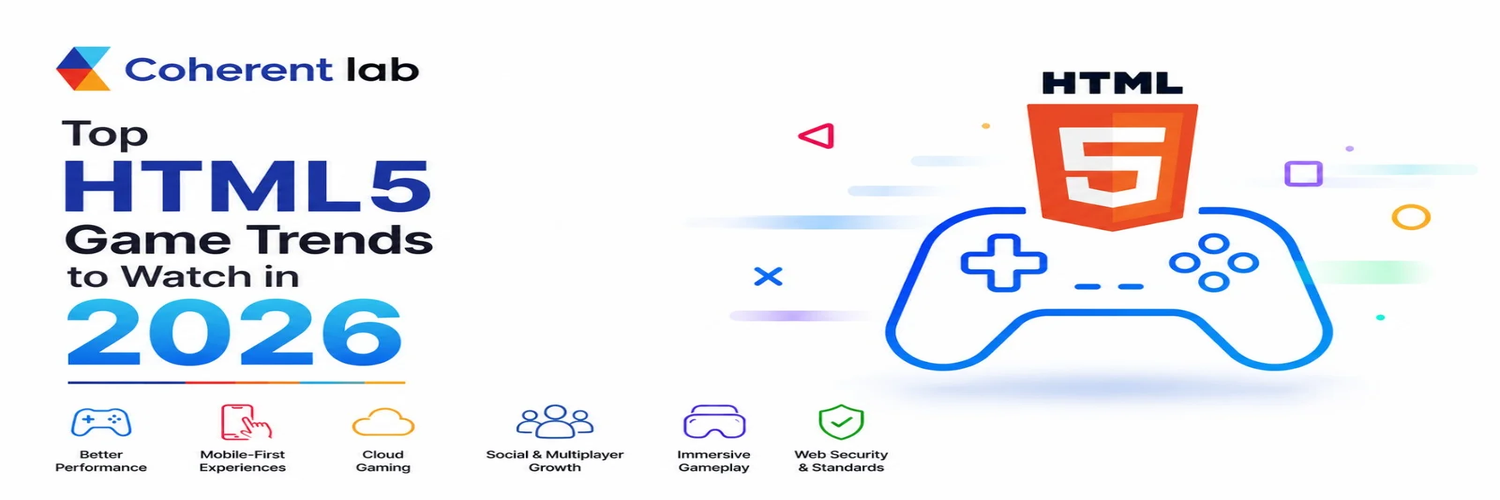
HTML5 game development has evolved from simple browser-based mini-games into a powerful ecosystem capable of delivering console-like experiences directly in the browser. In 2026, the industry is being reshaped by technologies such as WebGL 2.0, WebAssembly, artificial intelligence, and cloud gaming infrastructure. What makes HTML5 gaming especially important today is its instant accessibility.
Players no longer need downloads or installations; games load instantly across mobile, desktop, and tablets. At the same time, developers now have access to advanced tools that make HTML5 games faster, smarter, and more scalable than ever before. This blog explores the top HTML5 game trends in 2026, along with market insights, benefits, challenges, and future opportunities.
Key Takeaways
- HTML5 games are now powered by WebGL 2.0 and WebAssembly for near-native performance
- AI is transforming gameplay, personalization, and procedural content generation
- Cloud gaming reduces hardware limitations and improves accessibility
- Cross-platform development is now the industry standard
- Multiplayer browser games are rapidly expanding
- Monetization is shifting toward hybrid ad + microtransaction models
- Instant-play gaming is dominating user acquisition strategies
- Indie developers are scaling globally using HTML5 ecosystems
Statistics & Market Insights in HTML5 Gaming
Statistics and market insights in HTML5 gaming reveal how rapidly the browser-based gaming industry is expanding worldwide. Developers and publishers analyze user engagement, device distribution, revenue trends, and gameplay behavior to make data-driven decisions. With increasing mobile and web accessibility, HTML5 games are gaining strong traction across casual and hyper-casual gaming segments globally across markets.
Market insights help identify monetization opportunities, player retention patterns, and emerging regions where HTML5 gaming is growing fastest. These statistics support strategic decisions in advertising, game design, and platform optimization for better performance and higher user acquisition rates. Overall, data-driven insights are essential for effectively scaling HTML5 games in today's competitive global gaming ecosystem.
Key insights include:
- Mobile-first HTML5 games dominate casual entertainment usage
- Cloud gaming adoption is increasing accessibility across low-end devices
- AI-driven personalization significantly boosts player retention
- Web-based games are increasingly used for education and marketing campaigns
- Cross-platform engagement is now a baseline expectation for users
Also Read: How AI Is Transforming Web3 Game Development in 2026
Benefits of HTML5 Game Development
HTML5 game development offers several key benefits that make it a popular choice among developers and businesses. It allows games to run directly in web browsers without requiring downloads or installations, making them highly accessible. This cross-platform compatibility ensures smooth performance across desktops, tablets, and mobile devices, helping developers reach a wider audience efficiently and quickly.
Another major advantage of HTML5 game development is its cost-effectiveness and faster development cycle. Developers can use common web technologies like HTML, CSS, and JavaScript, reducing production time and expenses. It also supports easy updates and maintenance, allowing real-time improvements. Combined with lightweight performance and broad device support, HTML5 games are ideal for scalable and engaging gaming experiences.
Key Benefits
- No installation required: Instant play directly in browsers
- Cross-device compatibility: Works on mobile, desktop, and tablets
- Faster development cycles compared to native engines
- Lower production and maintenance costs
- Easy updates without app store approvals
- Wider audience reach due to web accessibility
Major Challenges in HTML5 Game Development
HTML5 game development faces several technical and performance-related challenges that can impact game quality and user experience. One of the major issues is limited access to device hardware compared to native games, which can restrict advanced graphics, animations, and processing power. Developers also face browser compatibility problems, as different browsers may render HTML5 games differently.
Another key challenge is performance optimization, especially for complex or graphics-heavy games that require smooth frame rates across devices. Memory management and loading speed can also become issues on low-end devices or slow networks. Additionally, monetization options and advanced engine support are often more limited than native platforms, making scaling harder for high-end gaming projects.
Technical Challenges
- Lower raw performance compared to native engines
- Browser compatibility inconsistencies
- Limited access to device hardware features
- Heavy reliance on internet connectivity for advanced features
Development Mistakes
- Poor optimization for mobile browsers
- Overuse of heavy graphics or uncompressed assets
- Ignoring memory and CPU limitations
- Weak monetization planning
Cost & Monetization Models in 2026
Cost and monetization models in 2026 for HTML5 game development are evolving rapidly with increasing demand for browser-based gaming. Development costs remain relatively lower compared to native games due to reusable web technologies like HTML5, CSS, and JavaScript. Many developers adopt flexible budgeting models based on project scope, complexity, and target platforms, making entry into the market more accessible.
Monetization strategies now include in-game ads, rewarded videos, subscriptions, and microtransactions, with a strong focus on user experience. Hyper-casual and casual HTML5 games especially benefit from ad-based revenue models. Additionally, cross-platform distribution and web-based marketplaces are helping developers maximize reach and revenue potential, making HTML5 gaming more commercially viable than ever in 2026.
| Cost Factor | Description |
|---|---|
| Game Type (Casual, Multiplayer, or 3D Immersive) | The complexity of the game directly impacts development costs. Casual games are generally more affordable, while multiplayer and 3D immersive games require additional development time, advanced features, and extensive testing. |
| Use of Advanced Engines (Phaser, Three.js, or Babylon.js) | Advanced frameworks provide enhanced functionality and performance but often require experienced developers, which can increase overall project costs due to specialized expertise and implementation efforts. |
| Backend Infrastructure & Cloud Hosting Requirements | Features such as multiplayer gameplay, real-time synchronization, leaderboards, and user accounts require scalable backend systems and cloud hosting services, adding both development and ongoing maintenance costs. |
| UI/UX Design Complexity | Custom animations, interactive elements, responsive layouts, and polished user experiences demand additional design and development resources, increasing the overall budget. |
Step-by-Step HTML5 Game Development Process
The step-by-step HTML5 game development process begins with planning and concept creation, where developers define the game idea, target audience, and core mechanics. This is followed by designing the game structure, including characters, levels, and UI/UX layouts. Prototyping helps validate gameplay ideas before full-scale development begins, ensuring a smooth production workflow.
Next comes actual development using technologies like HTML5, CSS, and JavaScript, along with frameworks such as Phaser or Three.js. After coding, testing, and debugging are performed to ensure performance, responsiveness, and cross-browser compatibility. Finally, the game is deployed on web platforms, followed by continuous updates, optimization, and performance monitoring for better user engagement.
| Development Stage | Description |
|---|---|
| 1. Concept and Planning | Define the game concept, gameplay mechanics, target audience, and genre. Popular HTML5 game genres include arcade, puzzle, idle, strategy, and multiplayer games. |
| 2. Choosing the Technology Stack | Select the right tools and technologies for development, such as WebGL 2.0 for graphics rendering, WebAssembly for performance optimization, and frameworks like Phaser.js or Three.js for game creation. |
| 3. Game Development & Prototyping | Build the core gameplay loop, implement player controls, game physics, animations, sound effects, and user interface elements while creating playable prototypes for validation. |
| 4. Testing & Optimization | Conduct cross-browser compatibility testing, mobile responsiveness checks, bug fixing, and performance optimization to ensure smooth gameplay across devices and platforms. |
| 5. Deployment & Launch | Publish the game on websites, gaming portals, app platforms, or cloud-based environments. Integrate analytics and monitoring tools to track user engagement and game performance. |
Best Practices for HTML5 Game Development
Best practices for HTML5 Game Development Services focus on building efficient, scalable, and user-friendly games. Developers should start by optimizing game assets such as images, audio, and animations to ensure fast loading times and smooth performance across all devices. Clean and modular code structure is also important for easier debugging and long-term maintenance. Prioritizing responsive design helps games adapt seamlessly to different screen sizes and browsers.
Additionally, developers should use performance optimization techniques like requestAnimationFrame, efficient memory management, and minimal DOM manipulation. Regular testing across multiple browsers ensures compatibility and stability. Implementing user feedback loops and analytics helps improve gameplay experience. Following these practices ensures high-quality, engaging, and scalable HTML5 games in a competitive market.
Performance Optimization
- Use sprite sheets instead of individual assets
- Minimize JavaScript execution overhead
- Optimize rendering with WebGL
UX Improvements
- Mobile-first responsive design
- Simple onboarding experience
- Smooth and intuitive controls
Technical Practices
- Enable caching for faster load times
- Reduce API calls and network requests
- Use modular architecture for scalability
Top HTML5 Game Trends in 2026
Top HTML5 game trends in 2026 highlight the rapid evolution of browser-based gaming driven by advanced web technologies and increasing user demand. One major trend is the rise of cloud-powered HTML5 games, enabling smoother gameplay without heavy device requirements. Another key trend is the growing popularity of hyper-casual and instant-play games, which require no installation and offer quick engagement across mobile and desktop platforms.
In addition, AI-driven game design and procedural content generation are becoming more common, enhancing personalization and replay value. Cross-platform integration is also expanding, allowing seamless gameplay across devices. Improved graphics through WebGL and WebAssembly further bridge the gap between HTML5 and native games, making 2026 a transformative year for browser-based gaming innovation.
AI-Powered Game Development
Artificial intelligence is revolutionizing gameplay by enabling:
- Adaptive difficulty systems
- Personalized player experiences
- Procedural content generation
Cloud Gaming Integration
Cloud technology is removing hardware limitations.
- Games run on remote servers
- Players can access high-quality games on low-end devices
- Instant streaming improves accessibility
WebAssembly Performance Boost
WebAssembly is one of the biggest breakthroughs in browser gaming.
- Near-native execution speed
- Better handling of complex physics and 3D rendering
- Improved multiplayer synchronization
Cross-Platform Ecosystem Growth
Modern HTML5 games now run seamlessly across:
- Mobile browsers
- Desktop browsers
- Smart TVs and tablets
Multiplayer Browser Gaming Expansion
Real-time multiplayer HTML5 games are growing rapidly.
- WebSocket-based communication
- Competitive and social gaming experiences
- Global matchmaking systems
Why Choose Coherent Lab
Choosing Coherent Lab for game development means partnering with a team that specializes in modern HTML5 and cross-platform gaming solutions. The company focuses on delivering high-quality, scalable, and performance-driven games tailored to business needs. With expertise in advanced technologies and game engines, Coherent Lab ensures smooth gameplay, engaging user experiences, and strong technical foundations for both casual and complex gaming projects.
Additionally, Coherent Lab emphasizes innovation, timely delivery, and end-to-end development support, from concept to deployment. Their approach includes strong UI/UX design, optimized performance, and continuous improvement based on analytics and user feedback. This makes them a reliable choice for businesses aiming to build competitive, engaging, and future-ready HTML5 games in a fast-evolving digital gaming industry.
- Expertise in HTML5, WebGL, and WebAssembly technologies
- Strong focus on performance optimization and scalability
- Experience in multiplayer and real-time systems
- AI-driven game design capabilities
- End-to-end development from concept to deployment
- Post-launch support and continuous updates
Conclusion
HTML5 game development in 2026 has evolved far beyond simple browser-based experiences. With advancements in AI integration, WebAssembly performance boosts, cloud gaming infrastructure, and cross-platform ecosystems, HTML5 has become a powerful and scalable foundation for modern game development. Developers can now create more immersive, responsive, and high-performing games that work seamlessly across devices without requiring downloads or installations.
As the industry continues to grow, developers who adopt these technologies early will gain a strong competitive advantage in the global gaming market. HTML5 is no longer just an alternative to native gaming; it is becoming a core pillar of the digital gaming ecosystem, shaping the future of accessible, scalable, and innovative gaming experiences worldwide. Contact Us Today.
Frequently Asked Questions
Q1. What are the top HTML5 game trends in 2026?
Ans. The top HTML5 game trends include AI-powered gameplay, cloud gaming integration, browser-based high-performance games, cross-platform compatibility, and real-time multiplayer features. These innovations are making HTML5 games more immersive, scalable, and accessible across all devices without installation.
Q2. How is AI changing HTML5 game development?
Ans. AI is transforming HTML5 games by enabling smarter NPC behavior, dynamic difficulty adjustment, procedural content generation, and personalized gaming experiences. Developers use AI tools to create more engaging, adaptive, and realistic browser games that respond to player actions in real time.
Q3. Why is cloud gaming important for HTML5 games?
Ans. Cloud gaming allows HTML5 games to run on remote servers and stream directly to browsers. This reduces device limitations, improves performance, and enables high-quality gaming on low-end devices. It also supports seamless updates and global accessibility without downloads.
Q4. How does browser gaming benefit players?
Ans. Browser gaming offers instant access without installation, making it highly convenient for users. HTML5 browser games are lightweight, cross-platform, and compatible with mobile, desktop, and tablet devices. This accessibility helps players enjoy quick gaming sessions anytime, anywhere.
Q5. What role does cross-platform play have in HTML5 games?
Ans. Cross-platform play allows users to enjoy HTML5 games across different devices with shared progress and multiplayer support. It enhances user engagement, increases player base, and ensures a smooth gaming experience whether on mobile, desktop, or browser environments.
Q6. Are HTML5 games replacing traditional native games?
Ans. HTML5 games are not fully replacing native games but are becoming strong alternatives for casual and mid-level gaming. They offer faster development, lower costs, and easier distribution, while native games still lead in high-performance graphics and AAA game experiences.
Q7. What is the future of HTML5 game development?
Ans. The future of HTML5 game development is driven by AI, cloud computing, WebAssembly, and advanced browser technologies. These improvements will make games more realistic, faster, and globally accessible, turning HTML5 into a major pillar of the gaming industry.

 +91 774-202-1725
 +1 (945) 3387904
 business@coherentlab.com
 +49 15223341304
 UK
UK