Table of Contents
How Much Does It Cost to Build a Logistics App in 2026?
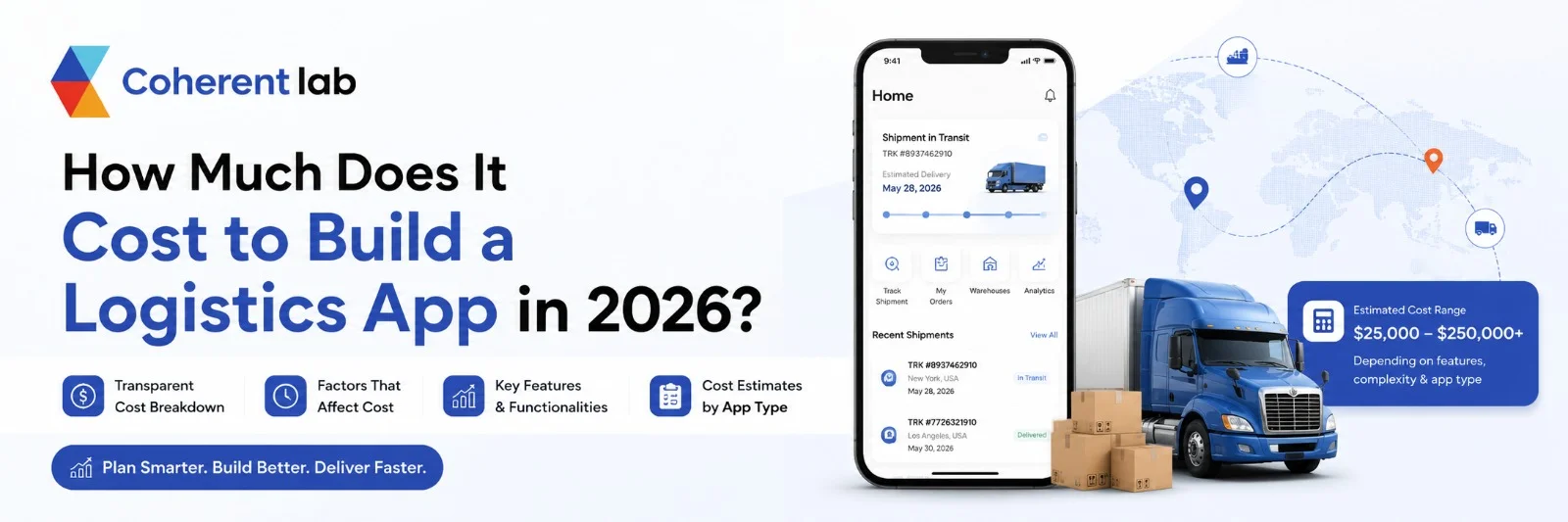
The logistics industry is rapidly evolving as businesses invest in smarter digital solutions to streamline transportation, fleet management, and delivery operations. In 2026, a logistics app is no longer a luxury but a necessity for companies looking to improve efficiency, reduce costs, and enhance customer experiences.
The cost to build a logistics app in 2026 depends on several factors, including app complexity, features, platforms, third-party integrations, and the development team's location. Whether you're building a basic delivery tracking app or a full-scale logistics management platform, understanding the overall investment helps you plan your budget effectively.
In this guide, we'll break down logistics app development costs, key features, pricing factors, and how businesses can choose the right development approach to build a scalable and future-ready logistics solution.
What Is a Logistics App
A logistics app is a digital solution designed to streamline transportation, delivery, inventory, and fleet management. It offers real-time tracking, route optimization, and seamless communication between drivers, managers, and customers. Automating operations and improving visibility, it helps businesses reduce costs, enhance efficiency, and ensure faster, more reliable logistics and supply chain performance. Logistics apps include fleet management, delivery tracking, warehouse management, and on-demand logistics solutions. These apps streamline operations, enable real-time tracking, improve route planning, enhance customer communication, and help businesses optimize supply chain efficiency while reducing costs and delivery time.
1. Fleet Management Apps
- Vehicle tracking and monitoring
- Fuel management
- Driver performance analytics
2. Delivery & Courier Apps
- Real-time order tracking
- Proof of delivery
- Customer notifications
3. Warehouse Management Apps
- Inventory tracking
- Barcode scanning
- Stock alerts
4. On-Demand Logistics Apps
- Uber-like logistics services
- Instant booking & dispatch
- Dynamic pricing
Key Features That Impact Cost
Key features that impact logistics app cost include user login, real-time GPS tracking, order management, route optimization, payment integration, and notifications. Advanced features like AI analytics, IoT integration, automated dispatch, and live dashboards increase development complexity, time, and overall cost significantly in
Basic Features (Low Cost)
- User registration & login
- Order placement
- GPS tracking
- Notifications
Advanced Features (Medium Cost)
- Route optimization
- Real-time analytics
- In-app chat
- Payment integration
Advanced AI Features (High Cost)
- AI-based demand prediction
- Smart route planning
- IoT integration
- Automated dispatch system
Logistics App Development Cost in 2026
In 2026, logistics app development costs range from $8,000 to $300,000+, depending on complexity, features, and scale. Basic apps cost $8,000–$25,000, mid-level apps $25,000–$90,000, while advanced enterprise solutions exceed $100,000. Factors like AI integration, real-time tracking, and platform choice significantly impact overall pricing.
| App Type | Estimated Cost Range (USD) |
|---|---|
| Basic Logistics App | $10,000 – $25,000 |
| Medium Complexity App | $25,000 – $60,000 |
| Advanced Logistics Platform | $60,000 – $150,000+ |
Factors Affecting Logistics App Development Cost
Several factors influence logistics app development cost, including app complexity, feature set, platform choice (Android, iOS, or both), and UI/UX design quality. Development team location and expertise also impact pricing. Integration of advanced technologies like AI, IoT, and real-time analytics increases costs, while project timeline, scalability requirements, and third-party API integrations further affect the overall budget.
1. App Complexity
The more features and integrations your app includes, the higher the cost. A simple logistics tracking app costs less, while advanced apps with AI, automation, and analytics require more development time, increasing overall expenses significantly in 2026.
2. Platform Choice
Developing for Android, iOS, or both affects pricing. Native apps cost more, while cross-platform solutions reduce costs. Choosing the right platform depends on your target audience and business goals.
3. Development Team Location
Hiring developers from different regions impacts cost. For example, development in India is more affordable compared to the US or Europe, making it a popular choice for startups and businesses looking for cost-effective solutions.
4. UI/UX Design
A user-friendly and visually appealing interface enhances user experience but increases development costs. Custom designs require more effort compared to template-based layouts.
Cost Breakdown by Development Stage
Logistics app development costs are typically divided into planning, UI/UX design, development, and testing phases. Each stage plays a crucial role in shaping the overall budget. Planning involves research and strategy, while design focuses on user experience. Development is the most expensive phase due to coding, third-party integrations, and advanced features. Testing ensures performance, security, and a smooth user experience before launch.
1. Planning & Research
- Market analysis
- Requirement gathering
- Cost: $2,000 – $5,000
2. UI/UX Design
- Wireframing
- Prototyping
- Cost: $3,000 – $10,000
3. Development
- Frontend & backend development
- API integration
- Cost: $10,000 – $80,000
4. Testing & Deployment
- QA testing
- Bug fixing
- Launch
- Cost: $2,000 – $10,000
How to Reduce Logistics App Development Cost
To reduce logistics app development costs, start with an MVP in your mobile app development strategy, focusing on core features first. Use cross-platform frameworks like Flutter or React Native to save time and budget. Outsource to cost-effective regions, leverage ready-made APIs, and avoid over-customization. Proper planning, scalable architecture, and agile development also help minimize expenses efficiently.
- Start with an MVP (Minimum Viable Product)
- Use cross-platform frameworks (Flutter, React Native)
- Outsource to cost-effective regions
- Prioritize essential features first
- Use ready-made APIs and tools
Also read:- logistics app development
Latest Trends in Logistics App Development 2026
In 2026, mobile app development trends in logistics focus on AI-powered automation, real-time IoT tracking, and blockchain for transparency. Edge AI enables instant decision-making, while hyper-personalization enhances delivery experiences. Cross-platform development, predictive analytics, and autonomous systems are transforming logistics apps into intelligent, scalable, and highly efficient digital solutions.
- AI-powered route optimization
- Blockchain for supply chain transparency
- IoT-based fleet tracking
- Real-time predictive analytics
- Autonomous delivery systems
Final Thoughts
Building a logistics app in 2026 can cost anywhere from $10,000 to $150,000+, depending on your requirements and business goals. The key is to start small, validate your idea, and scale gradually with advanced features. If you want to stay ahead in the logistics industry, investing in a scalable, feature-rich app is one of the smartest decisions you can make today. Contact us today to discuss your project and get a customized cost estimate tailored to your business needs.Frequently Asked Questions
Q.1. What is logistics app development?
Ans. Logistics app development is the process of building digital solutions that manage transportation, delivery tracking, fleet operations, and supply chain workflows. It helps businesses improve efficiency, reduce delays, and automate logistics operations. With modern mobile app development, logistics apps now include real-time GPS tracking, AI-based route optimization, and cloud integration, making operations faster, smarter, and more scalable for startups and enterprises in 2026.Q.2. How much does it cost to build a logistics app in 2026?
Ans. The cost of building a logistics app in 2026 typically ranges from $10,000 to $150,000+, depending on features, complexity, and platform. Basic apps are cheaper, while advanced apps with AI, IoT, and real-time tracking cost more. Factors like design, backend architecture, and development team location also impact pricing. Investing in scalable mobile app development ensures long-term ROI and better logistics performance.Q.3. How long does logistics app development take?
Ans. Logistics app development usually takes 2 to 8 months, depending on project complexity. A simple MVP can be built in 6–10 weeks, while advanced enterprise-level apps require more time for AI integration, testing, and deployment. The timeline also depends on UI/UX design, backend development, and third-party API integration. Efficient planning and agile mobile app development processes help reduce delivery time significantly.Q.4. What are the essential features of a logistics app?
Ans. Essential logistics app features include real-time GPS tracking, order management, route optimization, push notifications, payment integration, and driver management. Advanced features like AI analytics, IoT tracking, and automated dispatch systems improve efficiency further. These features ensure smooth supply chain operations, better customer experience, and reduced operational costs. Modern mobile app development focuses on building scalable and user-friendly logistics solutions.Q.5. Which technologies are used in logistics app development?
Ans. Logistics app development uses technologies like Flutter, React Native, Node.js, AI, IoT, cloud computing, and GPS APIs. These technologies enable real-time tracking, automation, and data-driven decision-making. Blockchain is also used for transparency in supply chain management. Choosing the right tech stack in mobile app development ensures scalability, security, and high performance for logistics businesses in 2026.Q.6. Can the logistics app development cost be reduced?
Ans. Yes, logistics app development cost can be reduced by starting with an MVP, using cross-platform frameworks like Flutter, and outsourcing development to cost-effective regions. Reusing APIs and avoiding unnecessary features also helps control the budget. Smart planning and agile mobile app development strategies ensure faster delivery and lower costs while maintaining quality and scalability for future upgrades.Q.7. Why is logistics app development important for businesses?
Ans. Logistics app development is important because it improves delivery speed, reduces operational costs, and increases supply chain efficiency. It allows businesses to track shipments in real time, manage fleets, and enhance customer satisfaction. In 2026, digital transformation through mobile app development is essential for staying competitive, improving automation, and scaling logistics operations globally.Q.8. What are the latest trends in logistics app development?
Ans. Latest trends in logistics app development include AI-powered route optimization, IoT-based tracking, blockchain transparency, and predictive analytics. Autonomous delivery systems and real-time data processing are also growing rapidly. These innovations are shaping the future of logistics, making operations faster and smarter. Modern mobile app development trends focus on automation, scalability, and enhanced user experience for global logistics businesses.

 +91 774-202-1725
 +1 (945) 3387904
 business@coherentlab.com
 +49 15223341304
 UK
UK