Table of Contents
Mobile Game Development Process: From Idea to App Store
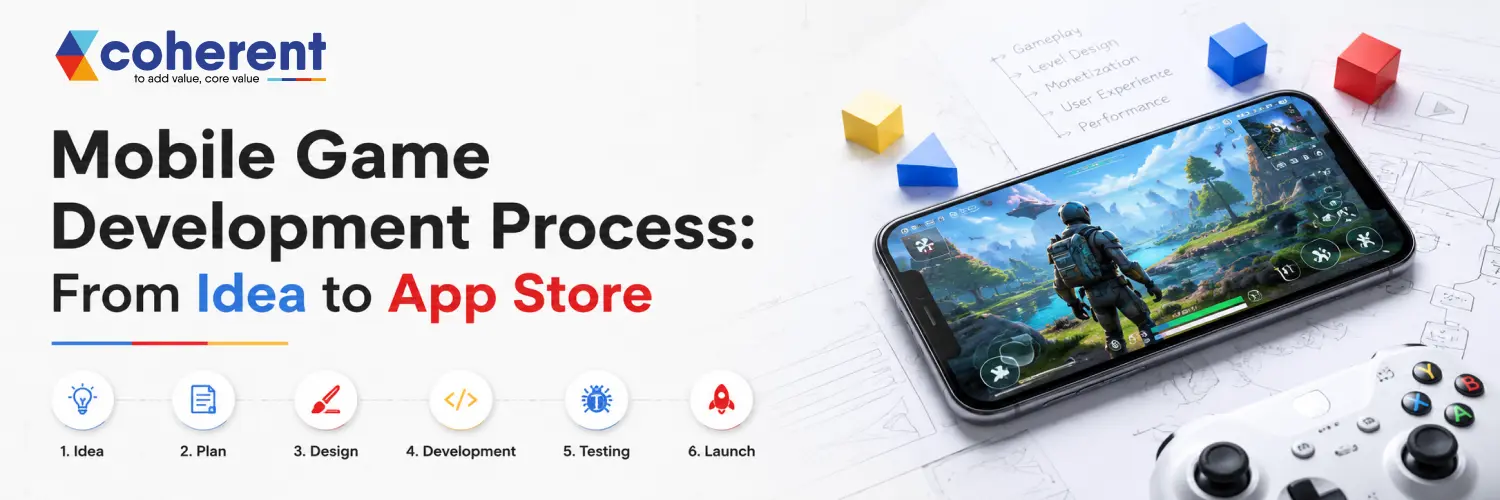
The mobile gaming industry continues to grow at an incredible pace, creating exciting opportunities for startups, businesses, and independent developers. However, building a successful mobile game requires much more than a creative idea. From validating your concept and designing engaging gameplay to development, testing, publishing, and post-launch support, every stage plays a vital role in your game's success.
Understanding the mobile game development process helps you plan your project efficiently, manage costs, reduce development risks, and deliver a seamless player experience. Whether you're creating a simple casual game or a feature-rich multiplayer title, following a structured development roadmap can significantly improve your chances of success. In this guide, we'll walk you through each stage of the mobile game development journey—from idea to App Store—along with costs, best practices, common challenges, and future trends to help you launch a game players love.
Key Takeaways
- Mobile game development involves planning, design, development, testing, launch, and post-release updates.
- Validating your game idea early reduces development risks.
- Choosing the right game engine impacts cost, performance, and scalability.
- Testing across multiple devices is essential for a successful launch.
- App Store Optimization (ASO) helps improve visibility and downloads.
- Continuous updates and player feedback drive long-term success.
- AI and cloud technologies are reshaping mobile game development.
- A structured process improves quality while reducing time and budget overruns.
How Does the Mobile Game Development Process Work?
The mobile game development process transforms a game idea into a fully functional app available on Google Play and the Apple App Store. It begins with market research and planning, followed by game design, development, testing, and App Store Optimization (ASO). After launch, continuous updates, bug fixes, and player feedback help improve performance, engagement, and long-term success in the competitive mobile gaming market.
Understanding the Mobile Game Development Journey
Building a successful mobile game is more than writing code—it involves a strategic journey from concept to launch. The process includes idea validation, game planning, UI/UX design, development, testing, deployment, and post-launch support. Following a structured mobile game development journey helps reduce risks, improve user experience, optimize costs, and create engaging games that perform well on both Android and iOS platforms.
- Casual games
- Hyper-casual games
- Puzzle games
- Strategy games
- RPG and adventure games
- Multiplayer and online games
- AR and VR mobile games
Also Read: How to Make a Game App: Ultimate Step-by-Step Guide
Designing a Game Players Will Love
Great game design combines engaging gameplay, intuitive controls, appealing visuals, and immersive storytelling. Prioritizing user experience, balanced mechanics, and rewarding progression keeps players entertained, increases retention, and encourages long-term engagement.
- 2D artwork
- 3D graphics
- Pixel art
- Minimalist visuals
Bringing Your Game to Life Through Development
Once the planning and design phases are complete, development turns your game concept into a playable experience. Developers build core gameplay mechanics, integrate graphics, animations, sound, and backend systems while optimizing performance for Android and iOS devices. Using the right game engine and following best coding practices ensures your mobile game is scalable, engaging, secure, and ready for thorough testing before launch.
- Unity
- Unreal Engine
- Godot
- Cocos Creator
Testing Before Launch:
Testing is a critical phase that ensures your mobile game delivers a seamless experience before reaching players. Developers evaluate gameplay, performance, security, compatibility, and usability across various Android and iOS devices. Identifying and fixing bugs early reduces crashes, improves player satisfaction, and increases the chances of receiving positive reviews, higher ratings, and a successful App Store launch.
- Gameplay balance
- Crash reports
- Performance issues
- User experience feedback
- Monetization performance
Also Read: Top Game App Development Companies in India
Publishing Your Mobile Game on the App Stores
Publishing your mobile game is the final step before reaching players worldwide. This process includes preparing store assets, meeting platform guidelines, completing App Store Optimization (ASO), and submitting your game to Google Play and the Apple App Store. After approval, monitoring analytics, responding to user feedback, and releasing regular updates are essential for improving visibility, downloads, and long-term player engagement.
- App title
- Description
- Keywords
- Screenshots
- Promotional video
- Ratings and reviews
What Does Mobile Game Development Cost?
The cost of mobile game development varies depending on the game's complexity, features, graphics, platform, and development team. Simple games may require a modest budget, while multiplayer or 3D games with advanced functionality demand higher investment. Factors such as UI/UX design, testing, backend infrastructure, and post-launch maintenance also influence the total cost. Careful planning helps optimize your budget and maximize ROI.
- Game genre
- Features and functionality
- Graphics quality
- Multiplayer support
- Development team size
- Third-party integrations
- Testing requirements
Also Read: Top 20+ Companies to Outsource Mobile Game Development in the USA
Benefits of Following a Structured Mobile Game Development Process
A structured mobile game development process that is in Coherent Lab helps transform ideas into high-quality games with fewer delays and unexpected costs. It improves project planning, enhances collaboration, reduces development risks, and ensures consistent quality throughout each stage. By following a clear roadmap, developers can create better user experiences, optimize performance, accelerate time to market, and deliver games that achieve long-term success and higher player retention.
| Benefit | How It Helps |
|---|---|
| Better Project Planning | Establishes clear goals, timelines, and development milestones to keep the project organized and on track. |
| Reduced Development Risks | Identifies potential challenges early, reducing costly mistakes, delays, and technical issues. |
| Improved User Experience | Ensures smooth gameplay, intuitive design, optimized performance, and higher user satisfaction. |
| Cost & Time Efficiency | Maximizes resource utilization, reduces unnecessary expenses, and helps complete the project within budget and deadlines. |
| Higher App Store Success | Improves app quality through testing and optimization, increasing visibility, downloads, and user ratings. |
| Easier Maintenance & Scalability | Makes future updates, bug fixes, and feature expansions simpler and more efficient. |
Best Practices That Lead to Successful Mobile Games
Creating a successful game app development requires more than great ideas, it demands smart development practices at every stage. Focus on player-centric design, optimize performance across devices, conduct thorough testing, and use data-driven insights to refine gameplay. Regular updates, App Store Optimization (ASO), secure coding, and continuous player feedback help improve user satisfaction, increase retention, and maximize your game's long-term success.
- Define clear goals
- Prioritize user experience
- Monitor analytics
- Release regular updates
- Improve retention with fresh content
Where Mobile Game Development Is Heading (2026–2027)
The future of mobile game development is being driven by AI, cloud gaming, immersive technologies, and cross-platform experiences. Between 2026 and 2027, developers are expected to adopt generative AI for content creation, personalized gameplay, real-time multiplayer innovations, and advanced AR/VR features. These emerging trends will help studios build more engaging, scalable, and data-driven games while meeting the evolving expectations of modern mobile gamers.
Also Read: How to Build a Hyper Casual Game App in 2026: Complete Development Guide
Conclusion
Developing a successful mobile game requires more than a creative idea—it demands strategic planning, engaging design, efficient development, thorough testing, and continuous improvements after launch. By following a structured mobile game development process, you can reduce risks, optimize costs, and create a game that delivers an exceptional player experience. Whether you're building a casual game, multiplayer title, or a feature-rich mobile application, partnering with experienced developers can help turn your vision into a successful App Store release. Contact us today to discuss your mobile game idea and discover how our expert developers can help you design, build, launch, and scale a high-performing mobile game for Android and iOS.
Frequently Asked Questions
Q.1. How does the mobile game development process work from idea to App Store?
Ans. The mobile game development process begins with validating your game idea through market research and identifying your target audience. Next comes creating a game design document (GDD), designing characters, levels, and user interfaces, followed by development using a game engine like Unity or Unreal Engine. After coding, the game undergoes extensive testing for performance, security, and compatibility across devices. Once optimized, developers prepare store assets, complete App Store Optimization (ASO), and submit the game to Google Play and the Apple App Store. Post-launch updates, bug fixes, and player feedback help keep the game engaging and successful.
Q.2. How much does it cost to develop a mobile game for Android and iPhone?
Ans. The cost of developing a mobile game depends on its complexity, features, graphics, and platform requirements. A simple 2D casual game typically costs between $10,000 and $30,000, while mid-level games with multiplayer features may range from $30,000 to $100,000. Large-scale 3D or AAA-quality games can exceed $250,000. Additional costs include UI/UX design, testing, backend infrastructure, App Store fees, maintenance, and marketing. Choosing experienced developers and defining project requirements early can help control expenses while ensuring high-quality gameplay and long-term scalability.
Q.3. How long does it take to build and launch a mobile game?
Ans. The development timeline varies based on the game's scope and complexity. A basic mobile game can take 2–4 months, while feature-rich games often require 6–12 months or more. The process includes planning, game design, artwork creation, programming, testing, optimization, and App Store submission. Multiplayer functionality, advanced graphics, and custom features generally increase development time. After launch, developers continue releasing updates, fixing bugs, and introducing new content to improve player engagement. Proper planning and an experienced development team can significantly reduce delays without compromising quality.
Q.4. Which game engine is better for mobile game development: Unity or Unreal Engine?
Ans. Both Unity and Unreal Engine are excellent choices, but the best option depends on your project goals. Unity is widely preferred for Android and iOS games because it offers faster development, extensive asset libraries, and excellent cross-platform support. It's ideal for casual, indie, and multiplayer games. Unreal Engine delivers superior graphics and realistic visual effects, making it suitable for high-end 3D and AAA-quality mobile games. Consider your budget, technical requirements, team expertise, and desired game performance before selecting the right engine for your mobile game project.
Q.5. What are the most important stages of mobile game development?
Ans. Successful mobile game development follows several essential stages. These include idea validation, market research, project planning, creating a game design document, UI/UX design, artwork and animation, programming, backend integration, quality assurance testing, App Store Optimization (ASO), publishing, and post-launch maintenance. Each phase contributes to building a stable, engaging, and scalable game. Skipping any stage may lead to performance issues, poor user experience, or low downloads. Following a structured development process ensures your game meets player expectations and performs well across different mobile devices and operating systems.
Q.6. How can I publish my mobile game on Google Play and the Apple App Store?
Ans. Publishing a mobile game requires creating developer accounts for Google Play Console and Apple App Store Connect. Prepare your game by meeting platform guidelines, optimizing performance, and creating attractive store assets such as screenshots, icons, promotional videos, and descriptions. Complete App Store Optimization (ASO) using relevant keywords to improve discoverability. Submit the game for review and address any issues identified during the approval process. Once approved, monitor downloads, player reviews, crash reports, and analytics to release updates that improve gameplay, fix bugs, and increase user retention over time.
Q.7. What are the biggest challenges in mobile game development, and how can they be overcome?
Ans. Mobile game developers face challenges such as device fragmentation, performance optimization, fierce competition, player retention, monetization, and maintaining game security. Supporting hundreds of Android devices while ensuring smooth gameplay can be difficult. Thorough testing across multiple devices helps reduce compatibility issues. Conducting market research, focusing on intuitive gameplay, and implementing balanced monetization strategies improve user satisfaction. Regular content updates, bug fixes, and community engagement encourage long-term player retention. Working with an experienced development team and following an agile process helps overcome technical and business challenges more effectively.
Q.8. How do I choose the best mobile game development company for my project?
Ans. Selecting the right mobile game development company starts with evaluating its experience, portfolio, technical expertise, and client reviews. Look for a team that has successfully developed games similar to your concept and is proficient in technologies like Unity, Unreal Engine, AI integration, and multiplayer development. Discuss their development process, communication methods, pricing transparency, and post-launch support before signing a contract. A reliable company should understand your business goals, provide realistic timelines, prioritize quality assurance, and offer ongoing maintenance to ensure your game remains competitive, secure, and engaging after launch.

 +91 774-202-1725
 +1 (945) 3387904
 business@coherentlab.com
 +49 15223341304
 UK
UK