
Table of Contents
Mobile Gaming vs. Console Gaming: 7 Key Differences, Pros, and Cons Explained
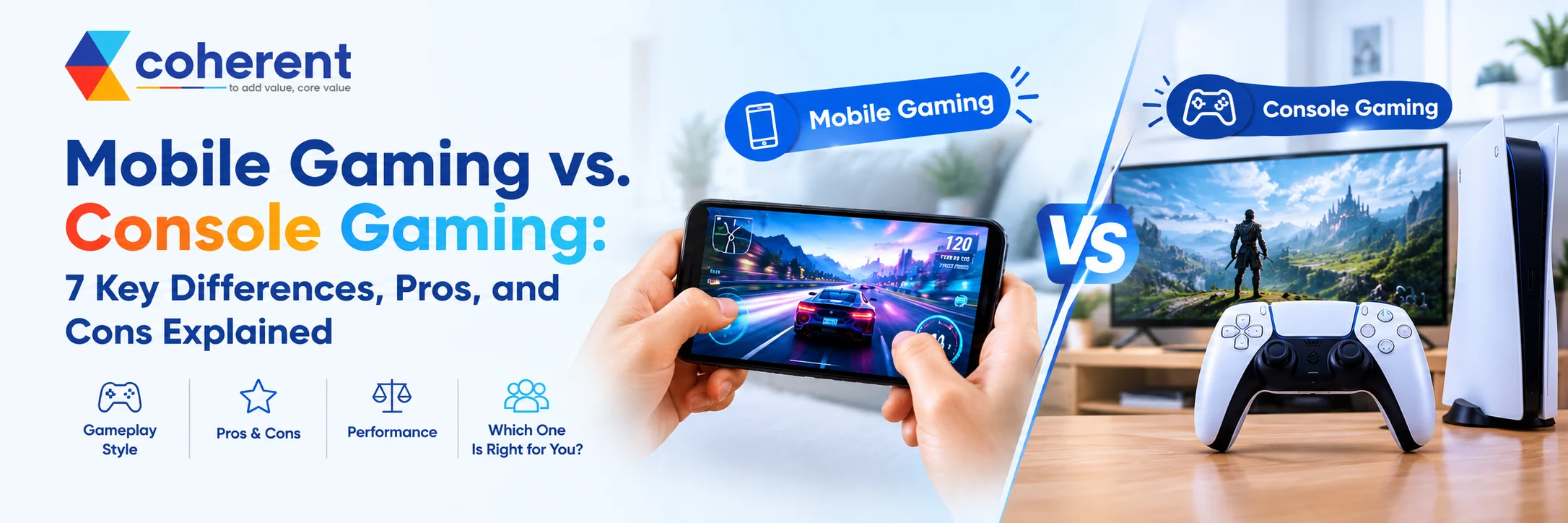
Mobile gaming and console gaming offer different ways to enjoy video games, but choosing between them depends on your budget, lifestyle, and gaming preferences. Smartphones make gaming accessible almost anywhere, while consoles deliver dedicated hardware, controller-based gameplay, and immersive experiences on larger screens. Both platforms support multiplayer experiences, competitive games, and a growing variety of genres. However, their graphics, controls, costs, portability, and game libraries can differ significantly.
Understanding mobile gaming vs. console gaming helps players identify which platform suits their needs. In this guide, we compare seven key differences, explore the advantages and disadvantages of each option, and explain which platform works best for casual players, competitive gamers, and families. We also examine emerging technologies, including cloud gaming and cross-platform play, to help you make an informed decision about your next gaming experience.
What Is the Difference Between Mobile Gaming and Console Gaming?
Mobile gaming involves playing games on smartphones and tablets, whereas console gaming uses dedicated systems like PlayStation 5 and Xbox Series X|S. Both offer single-player and multiplayer experiences, but their hardware, controls, and accessibility differ. Mobile game development company focus on creating engaging games optimized for touchscreen controls, device performance, and portability, while console development emphasizes advanced graphics, controller-based gameplay, and immersive experiences on larger screens.
Understanding Both Gaming Platforms
- Mobile gaming: Uses smartphones and tablets to run games ranging from casual puzzles to competitive multiplayer titles.
- Console gaming: Uses dedicated hardware designed for gaming, offering controller-based gameplay and support for demanding titles.
- Accessibility: Mobile games are easy to access using existing devices, while consoles require compatible hardware and accessories.
- Player experience: Mobile gaming emphasizes convenience, whereas console gaming often prioritizes immersive gameplay and consistent performance.
Mobile Gaming vs. Console Gaming: Quick Comparison Table
When comparing Mobile Gaming vs. Console Gaming, the main differences come down to cost, convenience, and performance. Mobile gaming is more accessible because most players already own a compatible smartphone. Console gaming requires a separate investment but offers dedicated controls and consistent performance. The overall experience depends on the device, game selection, accessories, subscriptions, and individual gaming preferences.
|
Feature |
Mobile Gaming |
Console Gaming |
|---|---|---|
|
Main Device |
Smartphone or tablet |
PlayStation, Xbox, or Nintendo console |
|
Initial Cost |
Often lower if you own a device |
Usually higher due to console purchase |
|
Graphics |
Vary by device and game |
Often designed for detailed visuals and larger displays |
|
Controls |
Touchscreen or compatible controller |
Dedicated gaming controller |
|
Portability |
Highly portable |
Usually less portable |
|
Game Selection |
Casual, mobile-first, and competitive games |
Console titles, exclusives, and large-scale games |
|
Multiplayer |
Online, social, and local options |
Online multiplayer and local co-op, depending on the game |
|
Additional Expenses |
Data, accessories, and optional purchases |
Games, accessories, subscriptions, and electricity |
7 Key Differences Between Mobile Gaming and Console Gaming
The biggest differences between mobile and console gaming involve hardware, visual quality, controls, game availability, spending, multiplayer features, and convenience. These factors affect how players experience games and how much they spend over time. Evaluating all seven differences provides a more realistic comparison than judging either platform by graphics or price alone.
Seven Differences Every Gamer Should Know
- Hardware and accessibility: Mobile games run on smartphones and tablets, making them convenient for everyday play. Consoles require dedicated hardware, although they are designed specifically for gaming performance.
- Graphics and performance: Consoles can support detailed environments, sophisticated lighting, and stable performance in compatible games. Mobile graphics have improved considerably, but results depend on the phone's hardware, thermal limits, and game optimization.
- Gameplay and controls: Touchscreen controls work well for casual games and many mobile action titles. Physical controllers offer tactile buttons, analog sticks, and triggers that can improve precision in racing, sports, and action games.
- Game library and genres: Mobile platforms offer puzzle games, strategy titles, battle royale experiences, and short-session entertainment. Consoles provide extensive libraries of action-adventure games, sports simulations, role-playing games, and premium releases.
- Cost and spending: Mobile gaming includes many free-to-play games, although advertisements and optional purchases may add up. Console gaming requires hardware investment, and premium games, subscriptions, and accessories can increase total spending.
- Multiplayer and social features: Mobile games often make it easy to invite friends, play quick matches, and communicate through integrated social features. Consoles support online communities, cooperative campaigns, competitive matchmaking, and local multiplayer in supported games.
- Portability and convenience: Smartphones allow gaming during travel, breaks, or downtime. Consoles are generally associated with a fixed setup, although handheld consoles and portable gaming systems provide alternatives.
Also Read :- 10 Key Factors for a Successful Mobile Game in 2026
Pros and Cons of Mobile Gaming
Mobile gaming appeals to players who want convenient entertainment without investing in a separate gaming system. With professional mobile app development, gaming experiences can offer smooth gameplay, intuitive controls, and engaging features across different devices. The wide variety of free-to-play titles suits beginners and experienced gamers alike. However, device limitations, in-app purchases, and battery consumption can affect gameplay and overall user satisfaction.
Advantages
- Convenient access: Play at home or while travelling using a compatible smartphone.
- Affordable entry: Many games are free to download, and existing devices reduce initial costs.
- Wide variety: Enjoy puzzles, strategy, racing, simulation, and competitive multiplayer games.
- Easy social play: Join friends in supported games without requiring a dedicated console setup.
Also Read :- Top Mobile Game Development Trends in 2026
Pros and Cons of Console Gaming
Console gaming provides a dedicated environment for players who enjoy immersive worlds, physical controllers, and games designed for larger displays. Modern consoles can deliver detailed graphics and sophisticated sound, depending on the title and display equipment. However, hardware costs, additional accessories, and space requirements make console gaming a larger commitment than playing on an existing smartphone.
Mobile Gaming vs. Console Gaming: Which Is Better for Different Players?
There is no universal winner in the mobile gaming vs. console gaming comparison. The right platform depends on what you play, how frequently you play, and how much you want to spend. A casual player may prefer the convenience of a smartphone, while someone interested in cinematic adventures may benefit more from a console. Individual preferences matter more than platform popularity.
Choose the Platform That Fits Your Gaming Style
- Casual gamers: Mobile gaming is ideal for short sessions, puzzle games, and quick entertainment during breaks.
- Competitive gamers: Either platform can work. Mobile titles offer accessible competitive matches, while supported console games benefit from dedicated controllers and established competitive communities.
- Families and children: Both platforms offer age-appropriate games. Parents should review ratings, privacy settings, online interactions, and purchase controls.
- Budget-conscious players: Mobile gaming can reduce initial costs if you already own a suitable phone. Console gaming may suit players willing to invest in a dedicated setup.
Also Read :- Game Development Services: Complete Guide
How to Choose Between Mobile Gaming and Console Gaming
Choosing the right gaming platform depends on your budget, favorite games, available time, and preferred controls. A powerful device may not be worthwhile if it cannot run the games you enjoy. Before investing, compare performance, compatibility, and long-term value. For gaming solutions, Coherent Lab LLP also offers expertise in game development, helping businesses create engaging gaming experiences tailored to their target audiences.
Four Factors to Consider Before Deciding
- Budget: Include the device, games, accessories, subscriptions, and optional in-game purchases when calculating total costs.
- Performance: Check whether your preferred games need high frame rates, detailed graphics, responsive controls, or specific hardware.
- Game availability: Confirm that the games you want are available on your chosen platform and in your region.
- Lifestyle: Choose mobile gaming for portability or a console for a dedicated home entertainment experience.
Also Read :- Mobile Game Development Process: From Idea to App Store
Conclusion
Mobile gaming and console gaming each offer unique benefits depending on your lifestyle, budget, and gaming preferences. Mobile games are convenient, portable, and ideal for casual entertainment, while consoles provide dedicated controls, immersive gameplay, and access to premium titles. Before choosing, compare the overall costs, game compatibility, and features that matter most to you.
If you are unsure which option suits your needs, Talk to Our Experts for guidance on gaming technology, platform selection, and development possibilities. Making an informed decision helps you choose a gaming experience that matches your expectations without unnecessary expenses.
Frequently Asked Questions
Q1. Is mobile gaming better than console gaming?
Ans. Mobile gaming is better for players who prioritize portability, convenience, and quick access to games. Console gaming may be better for those who prefer dedicated controllers, larger screens, and immersive experiences. Neither platform is universally superior. The best choice depends on your budget, favourite game genres, playing habits, and whether you prefer gaming at home or on the go.
Q2. What is the main difference between mobile and console gaming?
Ans. The main difference is the hardware and playing experience. Mobile gaming uses smartphones or tablets, typically with touchscreen controls, while console gaming relies on dedicated systems and physical controllers. Mobile devices offer greater portability, whereas consoles often provide more consistent performance and support for graphically demanding games. Actual capabilities depend on the device and the specific game.
Q3. Is mobile gaming cheaper than console gaming?
Ans. Mobile gaming often has lower initial costs, especially when you already own a suitable smartphone. Many mobile games are free to download, but advertisements and in-app purchases can increase spending. Console gaming requires a hardware purchase and may involve premium games, accessories, and subscriptions. Comparing total expenses over time gives a more accurate picture than looking only at purchase prices.
Q4. Which platform offers better graphics and performance?
Ans. Consoles generally offer stronger support for detailed graphics and demanding games because their hardware is designed specifically for gaming. However, modern flagship smartphones can deliver impressive visuals in compatible titles. Performance depends on hardware specifications, optimization, resolution, frame rates, and thermal management. A fair comparison should examine the same game where available rather than assuming every console outperforms every mobile device.
Q5. Can mobile gaming compete with console gaming?
Ans. Yes, mobile gaming competes with console gaming in accessibility, social engagement, and several popular multiplayer genres. Smartphones support sophisticated games, competitive events, and online communities. However, consoles retain advantages in dedicated controls and many large-scale premium experiences. The outcome depends on the game, player preferences, and hardware. Mobile gaming does not need to replace consoles to provide an excellent experience.
Q6. Which gaming platform is better for multiplayer games?
Ans. Both platforms support multiplayer gaming, but the better option depends on the title and your friends' devices. Mobile games can make quick online matches and social connections convenient. Consoles provide controller-based multiplayer, cooperative adventures, and competitive experiences in supported titles. Check whether a game supports cross-platform play, voice chat, parental controls, and the multiplayer features you need before choosing.
Q7. Is mobile gaming suitable for serious or competitive gamers?
Ans. Mobile gaming can suit serious competitive players, particularly in games designed around touchscreen controls and mobile esports. Success depends on practice, game knowledge, device responsiveness, and network quality. Console gaming may be preferable for competitive titles that benefit from physical controllers. Players should choose the platform on which their preferred games have active competitive communities, suitable control options, and reliable matchmaking.
Q8. Will mobile gaming replace console gaming in the future?
Ans. Mobile gaming is unlikely to replace console gaming completely because the platforms serve different preferences. Smartphones offer portability and accessibility, while consoles deliver dedicated gaming experiences and support for many premium titles. Cloud gaming and cross-platform features may reduce certain differences, but internet access, game availability, and hardware requirements will remain relevant. Both platforms are likely to coexist as gaming technology develops.

 +91 774-202-1725
 +1 (945) 3387904
 business@coherentlab.com
 +49 15223341304
 UK

