Table of Contents
Multiplayer Board Game App Development: Features, Cost & Tech Stack (2026)
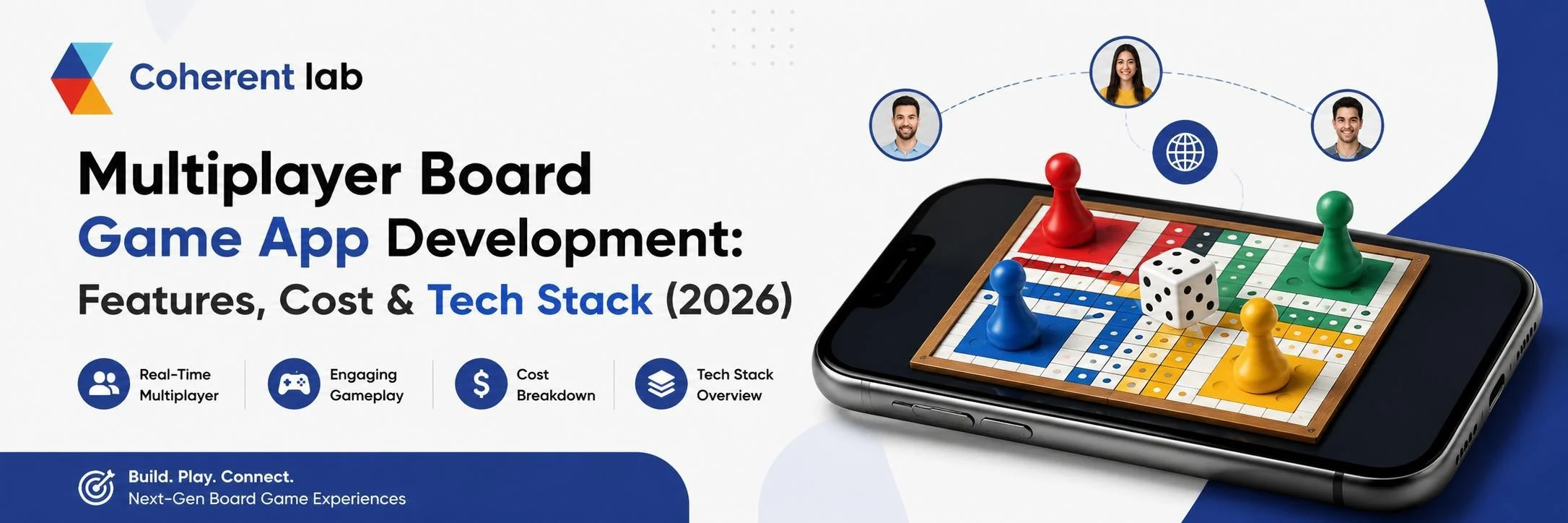
As more people demand real-time, engaging, and interactive multiplayer board game app development for their mobile and web devices, the market is expanding rapidly. Whether it's a classic such as Chess, Ludo or a game based on Monopoly, or a newer strategy or tabletop game, digital board games continue to be a favorite of millions of people around the world. Entrepreneurs, businesses, and gaming startups are developing custom board games apps to enhance users' engagement and generate continuous income from subscriptions, in-app purchases, and competitive gaming tournaments.
The advent of modern technologies like AI matchmaking, cloud infrastructure, cross-platform development, and secure multiplayer networking has reshaped the landscape of online board games. We will highlight key app features, probable app development expenses, recommended tech stack, development process, and some new trends to consider when developing a multiplayer board game app in 2026.
Types of Multiplayer Board Game Apps
There are many types of multiplayer board games designed for casual play, competitive play, families and gaming communities. Coherent Lab LLP. The selection of the right game category is crucial as it affects the features, technology stack, monetization model, and the overall success of the app. Knowing the types enables businesses to design an appealing product that will attract and keep players.
Classic Board Game Apps
Classic board games remain among the most downloaded mobile games because they are familiar, easy to learn, and enjoyable for players of all ages.
- Chess, Ludo, Checkers, and Carrom continue to dominate global downloads with competitive multiplayer gameplay.
- Private rooms and public matchmaking allow users to play with friends or challenge random opponents worldwide.
- Cross-platform compatibility enables seamless gameplay across Android, iOS, tablets, and web browsers.
- Leaderboards, rankings, and achievements encourage long-term engagement and healthy competition.
Strategy & Modern Board Game Apps
Strategy-based board games attract players who enjoy tactical decision-making, long-term planning, and competitive challenges.
- Resource management and territory control create deeper gameplay experiences that increase player retention.
- Turn-based and real-time multiplayer modes provide flexibility for casual and competitive audiences.
- Interactive maps, custom boards, and dynamic events keep gameplay fresh and engaging.
- Seasonal tournaments and ranked competitions motivate users to return regularly and improve their skills.
Essential Features of Multiplayer Board Game Apps
A successful multiplayer board game app goes beyond basic gameplay by offering smooth matchmaking, secure networking, intuitive controls, and engaging social features. The right combination of functionality enhances the player experience, improves retention, and supports long-term business growth.
Core User Features
The user experience begins with a simple onboarding process and continues with personalized features that make gameplay enjoyable and accessible.
- Quick registration with email, phone, or social login for fast and secure account creation.
- Player profiles with avatars, statistics, and achievements to personalize the gaming experience.
- Friend lists, invitations, and private game rooms for seamless multiplayer interactions.
- Push notifications and personalized game reminders to encourage regular engagement.
Multiplayer Gameplay Features
Reliable multiplayer functionality is the foundation of every successful online board game application.
- Real-time matchmaking with intelligent pairing algorithms to connect players of similar skill levels.
- Turn-based and live multiplayer modes to support different gaming preferences.
- In-game chat, emojis, and reactions to improve communication and social interaction.
- Anti-cheat systems with secure synchronization to ensure fair gameplay and maintain player trust.
Multiplayer Board Game App Development Cost (2026)
Learn the detailed Multiplayer Board Game App Development Cost (2026), AI app development,prices, essential features, tech stack, development phases and factors that impact your budget. Gain insights into the impact of game complexity, multiplayer options, user interface and experience, backend systems, and platform selection on cost. Learn how to create a long-term successful board game application with expert tips and tricks, all while estimating your investment.
|
|
|
|
|
|
|
|
|
|
|
|
|
|
|
|
|
|
|
|
Advanced Features for Multiplayer Board Game Apps
As player expectations continue to rise in 2026, modern multiplayer board game apps must deliver more than basic gameplay. Advanced technologies such as artificial intelligence, cloud computing, immersive experiences, and player engagement systems help improve retention, increase revenue, and provide a competitive advantage in the gaming market.
AI-Powered Gaming Features
Artificial intelligence is transforming multiplayer board games by making gameplay smarter, more personalized, and highly engaging for players of every skill level.
- AI-powered matchmaking pairs players based on skill level, playing style, and win rate for balanced matches.
- Intelligent game assistants provide hints, tutorials, and strategic suggestions to help new players learn faster.
- Personalized recommendations suggest games, tournaments, and challenges based on player behavior and preferences.
- Adaptive difficulty levels automatically adjust AI opponents to create a fair and enjoyable gaming experience.
Next-Generation Engagement Features
Keeping players engaged is essential for long-term success. Interactive events and rewarding progression systems encourage users to return regularly.
- Seasonal events, tournaments, and championships create excitement and strengthen community participation.
- Battle Pass and daily reward systems motivate players to complete missions and unlock exclusive content.
- Community clubs, guilds, and social groups help players build friendships and increase long-term retention.
- Cloud saves and cross-platform synchronization allow seamless gameplay across multiple devices without losing progress.
Multiplayer Game Modes
Multiplayer game modes provide opportunities for players to compete or cooperate in real-time, resulting in more fun and exciting experiences. PvP, co-op, team battle, mobile app development,tournament, battle royale, and ranked matches are all popular choices. These modes will help to build engagement, retention, social interaction and monetization opportunities through in-game events, leaderboards, rewards and the premium multiplayer.
Real-Time Multiplayer Mode
Real-time gameplay delivers instant interaction and creates an exciting competitive environment where every move matters.
- One-on-one (1v1) matches provide quick and competitive gameplay for individual players.
- Private game rooms allow friends and family to join using secure invitation codes.
- Public matchmaking instantly connects players from around the world based on ranking or skill level.
- Low-latency networking with synchronized gameplay ensures smooth performance and fair competition.
Turn-Based Multiplayer Mode
Turn-based games are ideal for players who prefer strategic decision-making without the pressure of continuous real-time action.
- Asynchronous gameplay lets players take turns at their convenience without staying online continuously.
- Timed turns and automatic reminders keep matches progressing while preventing inactive games.
- Resume-anytime functionality allows users to continue unfinished matches from any supported device.
- Game history and replay options enable players to review previous moves and improve their strategies.
Why Businesses Should Invest in Multiplayer Board Game Apps
Multiplayer board game apps are transforming digital entertainment by combining strategy, social interaction, and real-time gameplay. Businesses investing in these apps can boost user engagement, increase retention, and unlock multiple revenue streams through subscriptions, in-app purchases, and ads. With growing demand for online multiplayer experiences, board game apps offer scalable opportunities for long-term growth, global reach, and stronger brand visibility.
Business Benefits
Companies can generate sustainable revenue while building loyal gaming communities through feature-rich multiplayer experiences.
- Multiple monetization models including subscriptions, in-app purchases, advertisements, and premium memberships.
- High user retention through tournaments, leaderboards, rewards, and regular content updates.
- Global audience reach with multilingual support and cross-platform compatibility.
- Strong brand recognition by offering unique gameplay experiences and community-driven features.
Market Opportunities in 2026
Emerging technologies and changing player preferences are creating new opportunities for gaming startups and enterprises.
- AI-driven personalization enhances player engagement and increases session duration.
- Cloud gaming infrastructure reduces hardware limitations and improves accessibility.
- Cross-platform multiplayer gaming expands the potential player base across devices.
- Growing esports and competitive gaming ecosystems create additional revenue through sponsored tournaments and events.
Board Game App Development Process
Developing a successful multiplayer board game app requires careful planning, user-focused design, scalable architecture, and rigorous testing. Following a structured development process helps reduce risks, control costs, and deliver a high-quality gaming experience that keeps players engaged.
Planning & UI/UX Design
A strong foundation begins with understanding your audience and creating an intuitive interface that makes gameplay enjoyable for both beginners and experienced players.
- Conduct market research and competitor analysis to identify trends, target users, and unique selling points.
- Define game rules, monetization strategy, and feature roadmap before starting development.
- Design wireframes, prototypes, and user journeys to visualize gameplay and improve usability.
- Create responsive UI/UX with accessibility features for Android, iOS, tablets, and web platforms.
Development, Testing & Launch
Once the design is finalized, developers build the app using scalable technologies and thoroughly test every feature before deployment.
- Develop frontend, backend, multiplayer engine, and APIs for smooth real-time gameplay.
- Integrate secure authentication, payment gateways, and cloud services for reliable performance.
- Perform functional, performance, security, and multiplayer stress testing to eliminate bugs and optimize speed.
- Publish the app on Google Play, Apple App Store, and web platforms with post-launch monitoring and updates.
Best Tech Stack for Multiplayer Board Game App Development
Choosing the best tech stack for multiplayer board game app development is essential for building a fast, secure, and scalable gaming platform. From frontend frameworks and backend technologies to real-time communication, cloud hosting, and databases, the right combination ensures smooth gameplay, low latency, seamless synchronization, and an engaging user experience across Android, iOS, and web platforms.
Frontend & Backend Technologies
The frontend ensures a smooth user experience, while the backend manages game logic, user data, matchmaking, and multiplayer synchronization.
- Flutter and React Native for cross-platform mobile app development with a single codebase.
- Unity Engine for 2D and 3D multiplayer board game development with advanced animations.
- Node.js, NestJS, and Python for scalable backend services and real-time game logic.
- PostgreSQL, MongoDB, Firebase, and Redis for secure data storage and high-speed caching.
Multiplayer, Cloud & DevOps Technologies
Real-time communication and cloud infrastructure ensure uninterrupted gameplay for players worldwide.
- WebSockets, Socket.IO, and Photon Engine enable fast, low-latency multiplayer communication.
- PlayFab and Firebase Realtime Database simplify matchmaking, leaderboards, and cloud synchronization.
- AWS, Google Cloud Platform, and Microsoft Azure provide scalable hosting and global server deployment.
- Docker, Kubernetes, and CI/CD pipelines streamline deployment, monitoring, and application scaling.
Multiplayer Board Game App Development Cost Factors
Understanding multiplayer board game app development cost factors helps businesses estimate budgets accurately. Expenses depend on game complexity, platform selection, real-time multiplayer functionality, UI/UX design, backend infrastructure, security, testing, and ongoing maintenance. Careful planning and feature prioritization reduce development costs while delivering a scalable, engaging, and high-performance board game app that meets user expectations and business goals.
Technical Cost Factors
Development complexity has the greatest impact on the overall project budget.
- Game complexity and number of supported board games significantly influence development time.
- Real-time multiplayer infrastructure and server architecture require additional engineering effort.
- AI features, cloud integration, and analytics systems increase functionality and long-term value.
- Cross-platform compatibility for Android, iOS, and web adds testing and optimization requirements.
Business Cost Factors
Operational decisions also affect the final investment and ongoing maintenance expenses.
- Custom UI/UX design and animations improve engagement but require additional design resources.
- Third-party API integrations such as payment gateways, notifications, and authentication add implementation costs.
- Security, anti-cheat mechanisms, and compliance requirements protect users and business data.
- Post-launch maintenance, updates, and customer support ensure long-term app performance and user satisfaction.
Monetization Strategies for Multiplayer Board Game Apps
Discover the most effective monetization strategies for multiplayer board game apps in 2026. Learn how in-app purchases, subscriptions, rewarded ads, premium features, battle passes, virtual currencies, sponsorships, and referral programs can maximize revenue while enhancing player engagement. Explore proven business models that help developers create sustainable, profitable, and scalable board game applications for long-term success.
Primary Revenue Models
These monetization methods are widely used by successful multiplayer gaming platforms.
- In-app purchases for coins, boosters, themes, avatars, and premium game items.
- Subscription plans offering ad-free gameplay, exclusive features, and VIP benefits.
- Rewarded and display advertisements that generate revenue without disrupting gameplay.
- Tournament entry fees with prize pools for competitive players and esports events.
Advanced Monetization Opportunities
Modern gaming businesses use additional revenue channels to increase customer lifetime value.
- Battle Pass systems with seasonal missions and exclusive rewards.
- Limited-edition cosmetic items such as boards, dice, cards, and avatars.
- Brand partnerships and sponsored tournaments to attract advertisers and expand visibility.
- Referral programs and loyalty rewards that encourage user acquisition and long-term engagement.
How to Choose a Multiplayer Board Game App Development Company
Choosing the right multiplayer board game app development company is essential for creating an engaging, scalable, and secure gaming experience. Evaluate their portfolio, expertise in real-time multiplayer technologies, UI/UX design capabilities, game engine proficiency, and post-launch support. A reliable development partner helps reduce risks, speeds up delivery, and ensures your board game app stands out in the competitive gaming market.
Evaluation Criteria
A reliable development company should have both technical expertise and industry experience.
- Proven portfolio of multiplayer game development projects.
- Experience with Unity, Flutter, and real-time networking technologies.
- Transparent development process with agile project management.
- Comprehensive post-launch maintenance and technical support.
Conclusion
Now that the gaming industry is booming, and people are looking for more ways to play, multiplayer board game apps are a great option for startups and businesses to leverage. With their engaging gameplay, real-time multiplayer options, AI-driven features, cloud-based scalability, and smart monetization strategies, businesses can build a thriving gaming platform that appeals to and keeps a wide audience of players around the world. Contact us today By selecting the appropriate technology stack, emphasizing security measures, and collaborating with a skilled development team, you can guarantee that your board game application will stay competitive, worthwhile, and prepared for the future of electronic gaming in 2026 and past.
Frequently Asked Questions
Q1. How much does multiplayer board game app development cost?
Ans. The price can vary from $20,000 to $180,000+, depending on the complexity of the app, platforms supported, multiplayer architecture, UI/UX design, AI integration, cloud infrastructure and security features. A simple MVP is much more inexpensive than a high-powered matchmaking, analytics, tournament and cross-platform enterprise gaming platform.
Q2. How long does it take to develop a multiplayer board game app?
Ans.Typical development time is 2-10 months. Simple Multiplayer Games can take 2-3 months to develop, and more complex apps integrating real-time multiplayer, AI matchmaking, cloud-based infrastructure and custom game mechanics can take 6-10 months or longer based on project complexity.
Q3. Which technology stack is best for multiplayer board game development?
Ans.Some popular technologies are Flutter or React Native for cross-platform development, Unity for game development, Node.js for backend services, PostgreSQL or MongoDB for databases, WebSockets, Socket.IO (Photon Engine Multiplayer Networking) or AWS or Google Cloud for scalable hosting.
Q4. Can one board game app support Android, iOS, and the web?
Ans. Yes, cross-platform frameworks and the latest game engines allow to create apps for Android, iOS, tablets, desktop and web browsers. This cut down on the development expenses, maintenance complexities, and ensures that gamers have a constant gaming experience across different devices.
Q5. What are the most important features in a multiplayer board game app?
Ans.The key features of an ideal free-for-all include secure player registration, instant matchmaking, closed game spaces, in-game messaging, leaderboards, in-game achievements, cloud storage integration, artificial intelligence opponents, anti-cheat protection, push notifications, payment integration, and analytics. These benefits enhance the quality of the game, user engagement, and revenue generation.
Q6. How do multiplayer board game apps generate revenue?
Ans.Sources of income include in-app purchases, subscriptions, rewarded ads, premium memberships, battle passes, cosmetic improvements, tournament entry, sponsored events, and refer-a-friend. Multiple monetization models can yield long-term revenue and maintain gameplay engagement.
Q7. Why is cloud infrastructure important for multiplayer gaming?
Ans.The cloud infrastructure ensures scalability, high availability, automatic backup, global deployment, and low latency. It enables gaming platforms to manage high traffic volumes during tournaments, operate seamlessly, and provide a smooth multiplayer gaming experience for users worldwide.
Q8. Why should businesses invest in multiplayer board game app development in 2026?
Ans.The multiplayer gaming market is still growing, especially with the growing adoption of smartphones, the development of internet connectivity and the rise in demand for social aspects. By creating feature-rich multiplayer board game apps, businesses can enjoy recurring revenue as well as a higher level of user engagement, internationalization opportunities, and sustained growth.

 +91 774-202-1725
 +1 (945) 3387904
 business@coherentlab.com
 +49 15223341304
 UK
UK