Table of Contents
How Real Money Gaming Apps Make Money: Monetization Strategies
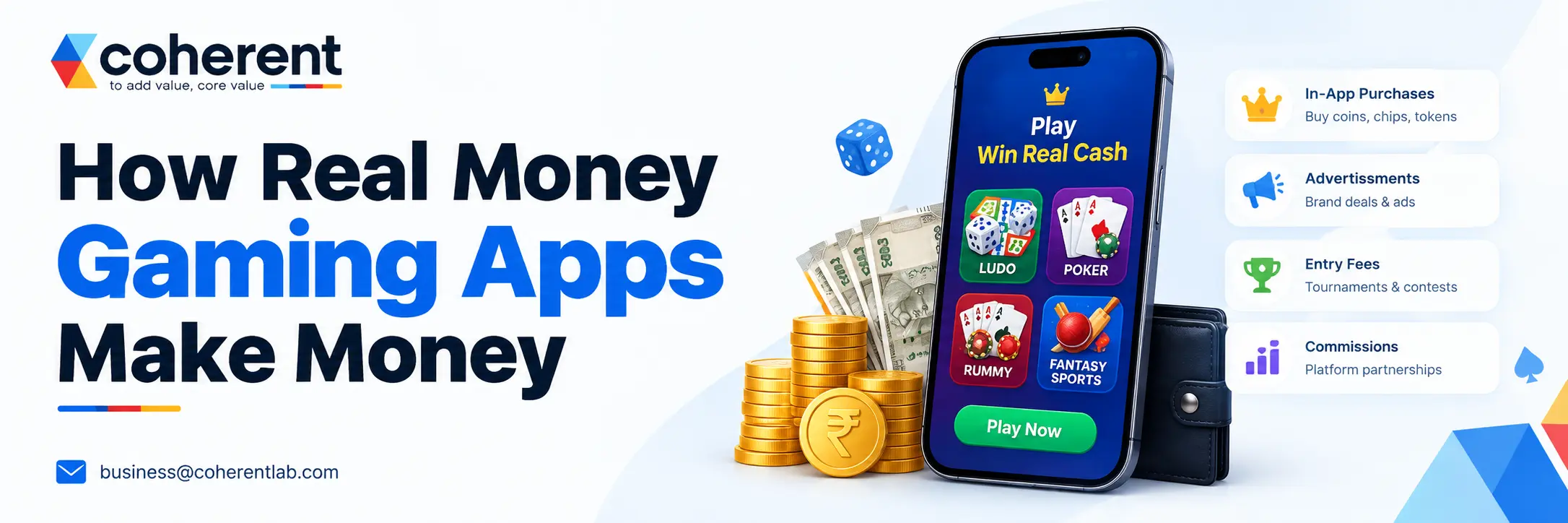
Real money gaming apps have become an important part of the digital entertainment industry, connecting interactive gaming with permitted financial transactions. From fantasy sports and skill-based games to competitive tournaments, these platforms offer users different ways to participate in engaging digital experiences. As the industry continues to evolve, businesses are exploring new technologies, secure payment systems, responsible gaming tools, and innovative monetization strategies to build sustainable gaming platforms.
The answer to how real money gaming apps make money goes beyond entry fees. Platforms can generate revenue through platform commissions, tournament or contest fees, subscriptions, advertising, sponsorships, partnerships, and permitted in-app purchases. In this guide, we explore the major real money gaming revenue streams, business models, operating costs, essential features, user acquisition strategies, AI applications, and important considerations businesses should evaluate before starting real money gaming app development.
What Is a Real Money Gaming App?
A real money gaming app is a mobile or web-based platform that allows users to participate in eligible games or contests involving monetary entry fees, deposits, prizes, or withdrawals, where legally permitted. These apps can include fantasy sports, skill-based games, poker, rummy, and competitive tournaments. For businesses exploring fantasy gaming platforms, learn more about Fantasy Sports App Like Dream11. They typically combine secure payments, user verification, digital wallets, gaming features, and responsible gaming controls.
- Fantasy sports applications
- Skill-based gaming platforms
- Poker applications
- Rummy platforms
How Do Real Money Gaming Apps Make Money?
Real money gaming apps use several monetization strategies to generate revenue while providing users with engaging gaming experiences. Instead of relying on a single income source, successful platforms may combine platform commissions, tournament fees, subscriptions, advertising, sponsorships, and permitted in-app purchases. The exact revenue model depends on the game category, target market, business structure, and applicable gaming regulations. A diversified approach can support sustainable revenue and long-term platform growth. Businesses can also explore trends around Top Play-to-Earn Mobile Games in the US to understand emerging gaming monetization models.
1. Platform Commission
Platform commission is one of the common real money gaming revenue models. Where legally permitted, the platform charges a disclosed service fee from eligible contests or transactions. The remaining amount is handled according to the published contest and prize rules, creating a recurring revenue opportunity.
- Entry fees from eligible contests
- Transparent platform charges
- Prize distribution according to published rules
- Revenue linked to platform participation
2. Tournament or Contest Fees
Gaming platforms can monetize organized tournaments and premium contests through permitted participation or service fees. Revenue can increase as more users participate in recurring competitions. This model is particularly relevant to skill-based gaming apps, fantasy gaming platforms, and competitive gaming ecosystems operating within applicable regulations.
- Tournament participation
- Premium competitions
- Recurring gaming events
- Skill-based contests
3. Subscription Plans
Subscription plans provide another gaming app monetization strategy by offering premium features for a recurring fee. Depending on the product, subscribers may receive advanced analytics, personalized dashboards, exclusive content, or an ad-free experience. Subscription pricing should remain transparent and comply with applicable consumer-protection and gaming requirements.
- Premium analytics
- Advanced statistics
- Personalized dashboards
- Exclusive content
4. Advertising Revenue
Advertising can provide an additional revenue stream for gaming platforms, particularly when they offer free-to-play content alongside permitted paid experiences. Apps may work with advertising partners to display relevant promotional content. However, gaming-related advertising is subject to platform policies and jurisdiction-specific restrictions.
- Banner advertisements
- Native advertisements
- Video advertisements
- Sponsored content
5. Sponsorships and Brand Partnerships
As a gaming application grows, brand partnerships and sponsorships can become valuable revenue opportunities. Companies may sponsor tournaments, campaigns, events, or branded challenges to reach an engaged gaming audience. These partnerships can diversify revenue while helping gaming platforms strengthen their visibility and commercial ecosystem.
- Sponsored tournaments
- Branded challenges
- Promotional campaigns
- Sports partnerships
6. In-App Purchases
Depending on the game's structure and applicable laws, in-app purchases can generate revenue from non-cash digital features. These may include cosmetic items, avatars, themes, premium content, or other virtual enhancements. Developers should clearly distinguish virtual goods from regulated real-money gaming functionality and follow applicable app-store and legal requirements.
- Cosmetic items
- Digital avatars
- Game themes
- Premium content
Real Money Gaming App Revenue Model
A real money gaming app revenue model combines multiple monetization channels to generate sustainable income. Common options include platform commissions, tournament or contest fees, subscriptions, advertising, sponsorships, partnerships, and permitted in-app purchases. The right model depends on the game type, target audience, operating costs, and applicable regulations. A diversified strategy can reduce reliance on a single revenue source while supporting long-term platform growth.
| Revenue Model | How It Works | Potential Benefit |
|---|---|---|
| Platform Commission | Fee charged on eligible contests | Recurring transaction revenue |
| Tournament Fees | Fees associated with competitions | Higher revenue during events |
| Subscription | Users pay for premium features | Predictable recurring revenue |
| Advertising | Brands pay for exposure | Additional monetization |
| Sponsorship | Brands sponsor contests/events | High-value partnerships |
| In-App Purchases | Users buy eligible digital features | Additional user monetization |
| Partnerships | Revenue from strategic partners | Expanded ecosystem |
Important Metrics for Real Money Gaming Apps
Measuring the right real money gaming app metrics helps businesses understand revenue performance, user behavior, acquisition efficiency, and long-term sustainability. Revenue is only one part of the picture. Metrics such as GGR, ARPU, CAC, LTV, retention rate, and deposit activity provide a broader view of how users interact with the platform and where improvements may be needed. Businesses planning a gaming platform can also explore game app development companies in India to evaluate development expertise and technology capabilities.
Gross Gaming Revenue
Gross Gaming Revenue is a commonly used metric for measuring gaming-related revenue. Its calculation and meaning can vary depending on the business model and jurisdiction. Tracking GGR helps operators understand financial performance and evaluate revenue trends across different games, contests, or periods.
Average Revenue Per User
Average Revenue Per User measures the average revenue generated from users during a specific period. Gaming businesses can use ARPU to understand monetization performance and compare revenue across user segments, campaigns, or time periods.
Customer Acquisition Cost
Customer Acquisition Cost shows how much a gaming business spends, on average, to acquire a customer. It can include advertising, promotional campaigns, marketing tools, and related acquisition expenses. Comparing CAC with customer value can help businesses evaluate the efficiency of their acquisition strategies.
Lifetime Value
Lifetime Value estimates the revenue or contribution a user may generate throughout their relationship with a gaming platform. Businesses can use LTV to understand long-term customer value and evaluate whether acquisition and retention strategies are economically sustainable.
User Retention Rate
User retention rate measures how effectively a real money gaming app keeps users active over a specific period. Strong retention can indicate that users continue engaging with the platform. Tracking retention by day, week, or month can help identify changes in user engagement and product experience.
Deposit and Withdrawal Activity
Deposit and withdrawal activity provides useful insights into user engagement, payment performance, and operational requirements. Monitoring transaction volumes, successful payments, failed withdrawals, and processing times can help gaming platforms identify payment issues and improve the overall financial experience.
What Makes a Real Money Gaming App Profitable?
A profitable real money gaming app needs more than high transaction volume. Businesses must balance user acquisition, retention, secure payment processing, fraud prevention, responsible gaming, technology costs, and applicable compliance requirements. A strong product combines an engaging user experience with reliable infrastructure, transparent monetization, efficient operations, and responsible gaming practices to support sustainable long-term business growth. Businesses exploring fantasy sports solutions can also consider a Fantasy Cricket App Development Company for specialized development expertise.
- User acquisition and retention
- Secure payment processing
- Responsible gaming
- Fraud prevention
Key Features of a Real Money Gaming App
A successful real money gaming app development project requires a combination of gaming functionality, security, payment infrastructure, and administrative controls. Features should be designed according to the target market and applicable regulations. From secure registration and digital wallets to game discovery and real-time notifications, every component should support usability, security, and responsible participation.
1. Secure User Registration
Secure registration establishes the foundation of a real money gaming platform. Depending on applicable regulations, the onboarding process may require identity and age verification, secure authentication, device verification, and account recovery. Strong registration controls can help protect accounts while supporting applicable compliance and security requirements.
- Secure authentication
- Identity verification
- Age verification
- Device verification
2. Digital Wallet
A digital wallet allows users to manage permitted financial transactions within the gaming platform. Depending on the jurisdiction and business model, the wallet may support deposits, withdrawals, transaction records, and balance management. Strong security and clear transaction information are essential for creating a reliable financial experience.
- Deposits
- Withdrawals
- Transaction history
- Balance management
3. Payment Gateway Integration
Reliable payment infrastructure is essential for real money gaming applications because users may need secure and convenient transaction options. Payment integrations should support applicable payment methods while incorporating transaction monitoring, verification, withdrawal processing, and fraud controls. Payment providers may also impose specific restrictions on gaming-related transactions.
- Multiple permitted payment options
- Secure payment processing
- Transaction monitoring
- Payment verification
4. Game Lobby
A well-designed gaming app lobby helps users discover available games, contests, and tournaments efficiently. Clear categories, schedules, entry information, rules, and prize details can improve navigation and transparency. Responsible-gaming information should also remain accessible so users can understand the applicable terms before participating.
- Game categories
- Featured contests
- Tournament schedules
- Entry information
5. Real-Time Notifications
Real-time notifications keep users informed about important account and platform activity. Push notifications can communicate tournament updates, transaction statuses, account alerts, and other relevant information. Gaming businesses should design notifications responsibly and avoid messaging that encourages excessive or harmful participation.
- Contest updates
- Tournament reminders
- Transaction status
- Account alerts
How Real Money Gaming Apps Attract Users
User acquisition is a major consideration for real money gaming businesses, but marketing strategies must follow applicable laws, advertising standards, and platform policies. Gaming companies can combine SEO, educational content, social media, partnerships, and permitted referral programs to build visibility. Long-term growth should focus on attracting relevant users while maintaining transparency, responsible marketing, and strong user trust. Businesses looking for reliable technology expertise can explore Coherent Lab LLP for gaming and mobile app development solutions.
Search Engine Optimization
SEO for gaming apps can help businesses reach users searching for relevant information and services. Content should focus on useful, accurate topics rather than misleading claims. Depending on the business, target keywords can include real money gaming apps, skill gaming platforms, fantasy gaming apps, and gaming software development.
- Real money gaming apps
- Skill gaming platforms
- Fantasy gaming apps
- Gaming app development
Content Marketing
Content marketing can educate audiences about gaming products, features, rules, responsible participation, and applicable requirements. Helpful articles, guides, FAQs, and explanatory resources can improve organic visibility while establishing a clearer understanding of the platform and its services.
- Game rules
- Responsible gaming
- Platform features
- Tournament formats
Social Media Marketing
Social media can help gaming brands communicate product updates, educational content, tournaments, and partnerships. However, promotional campaigns should follow the advertising policies of each platform and comply with applicable local regulations. Clear communication is particularly important when promoting products involving real-money transactions.
- New game announcements
- Tournament updates
- Product information
- Educational content
Referral Programs
Where legally permitted, referral programs can help gaming platforms acquire new users through existing customers. Programs should clearly explain eligibility, rewards, and terms. Businesses should also ensure that referral incentives do not encourage excessive participation or violate applicable advertising, gaming, or consumer-protection requirements.
- Existing-user referrals
- Clearly defined eligibility
- Transparent reward terms
- Campaign tracking
Role of AI in Real Money Gaming Apps
Artificial intelligence in gaming apps can support fraud prevention, personalization, customer service, analytics, and responsible-gaming systems. AI can process large volumes of account and transaction data to identify patterns that may require attention. Its implementation should include appropriate privacy, security, human oversight, and regulatory safeguards, particularly when automated systems affect users.
AI-Powered Fraud Detection
AI-powered fraud detection can analyze transaction and account activity to identify unusual patterns that may indicate suspicious behavior. Machine-learning systems can support risk monitoring and alert relevant teams for further investigation. Human review and appropriate controls remain important when automated systems identify potentially problematic activity.
- Transaction monitoring
- Account behavior analysis
- Suspicious-pattern detection
- Risk alerts
Personalized Recommendations
AI recommendation systems can analyze permitted behavioral signals to help users discover relevant games or content. Personalization can improve navigation and content discovery when implemented responsibly. Businesses should consider privacy requirements and avoid recommendation practices that could encourage harmful or excessive gaming behavior.
- Game recommendations
- Content personalization
- Behavioral analytics
- User preferences
AI Customer Support
AI-powered customer support can provide quick responses to common questions about accounts, game rules, payments, withdrawals, and technical issues. Chatbots can operate continuously and reduce response times for routine requests. Sensitive, complex, or disputed cases should be transferred to trained human support teams.
- Account assistance
- Game-rule information
- Payment support
- Withdrawal queries
Responsible Gaming Monitoring
AI can support responsible gaming monitoring by identifying behavioral patterns that may require appropriate intervention. Depending on applicable requirements, systems can help trigger alerts, limit-setting tools, cooling-off options, or human review. AI should complement—not replace—clear responsible-gaming policies and appropriate customer-support processes.
- Behavioral pattern monitoring
- Risk alerts
- Limit-setting support
- Cooling-off options
How to Build a Profitable Real Money Gaming App
Building a profitable real money gaming app requires more than developing an attractive gaming interface. Businesses need to validate the gaming model, understand target-market regulations, create a sustainable monetization strategy, and build secure payment and compliance systems. A structured development process can reduce technical risks, improve user experience, and create a stronger foundation for sustainable growth.
Step 1: Define the Gaming Model
Start by clearly identifying the type of gaming platform you want to build. The business model, technology requirements, monetization approach, and regulatory obligations can differ significantly depending on the game category and target market.
- Fantasy sports
- Skill-based games
- Gaming tournaments
- Competitive gaming
Step 2: Research Target Jurisdictions
Before development begins, identify the countries, states, or regions where the platform may operate. Research applicable licensing, age verification, taxation, payment, advertising, data protection, and responsible-gaming requirements for each target jurisdiction.
- Identify target markets
- Review gaming regulations
- Check licensing requirements
- Understand tax obligations
Step 3: Design the Revenue Model
Choose a monetization strategy that aligns with the gaming product and applicable regulations. A diversified revenue model can include permitted platform fees, subscriptions, advertising, sponsorships, partnerships, or non-cash digital purchases where appropriate.
- Platform fees
- Subscription plans
- Advertising
- Sponsorships
Step 4: Build the MVP
Develop a minimum viable product with the essential features needed to validate the platform. Instead of launching every planned feature immediately, prioritize core gameplay, secure registration, permitted payments, user accounts, and essential administrative functionality.
- Core gaming functionality
- User registration
- Secure authentication
- Wallet functionality
Step 5: Integrate Security and Compliance
Security and compliance should be incorporated from the beginning rather than added after development. Depending on the jurisdiction, the platform may require identity verification, transaction monitoring, fraud prevention, responsible-gaming controls, and strong data-security measures.
- Identity verification
- Age verification
- Transaction monitoring
- Fraud detection
Step 6: Test the Platform
Comprehensive testing helps identify technical, security, payment, and usability problems before launch. A real money gaming platform should undergo multiple testing stages to ensure its core functionality, integrations, performance, and applicable compliance controls operate correctly.
- Functional testing
- Security testing
- Payment testing
- Performance testing
Step 7: Launch and Optimize
After launch, continuously monitor platform performance and user behavior to identify areas for improvement. Metrics such as retention, revenue, acquisition costs, customer value, payment success, and support volume can help businesses make informed product and operational decisions.
- User retention
- Revenue performance
- Customer acquisition cost
- Lifetime value
Final Thoughts
The answer is through a combination of platform fees, contest or tournament fees, subscriptions, advertising, sponsorships, partnerships, and other legally permitted monetization methods.But revenue generation is only one part of building a successful platform. Security, payment infrastructure, user experience, responsible gaming, compliance, fraud prevention, and customer support are equally important.
For businesses planning to enter this market, the most effective approach is to build the business model, technology architecture, compliance strategy, and user experience together rather than treating them as separate projects. A well-planned real money gaming app development strategy can create a scalable digital gaming platform while keeping user trust, security, and regulatory requirements at the center. To discuss your gaming app idea and development requirements, Talk to our experts.
Frequently Asked Questions
1. How do real money gaming apps make money?
Ans. Real money gaming apps make money through multiple revenue streams, including platform fees, eligible contest commissions, tournament fees, subscriptions, advertising, sponsorships, and partnerships. The exact model depends on the game type and local regulations. A successful gaming platform usually combines monetization with strong user retention, secure payments, responsible gaming features, and a smooth overall user experience.
2. Is real money gaming profitable?
Ans. Real money gaming can generate significant revenue, but profitability depends on several factors. User acquisition, retention, transaction volume, platform fees, payment-processing costs, taxes, technology expenses, compliance requirements, and marketing budgets all affect profitability. Businesses also need effective fraud prevention, responsible gaming measures, and reliable infrastructure to build a sustainable and compliant gaming operation.
3. How much does it cost to develop a real money gaming app?
Ans. The cost of developing a real money gaming app depends on game complexity, platforms, UI/UX design, backend architecture, payment integrations, security, administration tools, and compliance requirements. A basic platform may require less investment, while an advanced gaming ecosystem can cost considerably more. Licensing, legal, certification, infrastructure, and maintenance expenses may also be separate.
4. What features does a real money gaming app need?
Ans. A real money gaming app typically requires secure registration, age and identity verification, game lobbies, user profiles, wallets, permitted payment methods, transaction history, notifications, customer support, and administrative controls. Advanced platforms may also include fraud detection, real-time analytics, responsible gaming tools, geolocation controls, promotional management, reporting dashboards, and enhanced security features.
5. Can AI be used in real money gaming apps?
Ans. Yes, AI can support several areas of real money gaming applications. Businesses can use AI for fraud detection, customer support, personalization, player analytics, security monitoring, and responsible gaming systems. Machine learning can identify unusual transaction or behavioral patterns and help platforms respond appropriately. However, AI implementations should follow applicable privacy, regulatory, and consumer-protection requirements.
6. What is the biggest challenge in real money gaming app development?
Ans. Regulatory compliance is one of the biggest challenges in real money gaming app development because laws can differ by country, state, game category, and business model. Developers must also address payment security, identity verification, fraud prevention, data protection, responsible gaming, and age restrictions. Understanding the target market's legal requirements before development can reduce significant operational risks.
7. What is the best monetization model for a gaming app?
Ans. There is no single monetization model that works for every real money gaming app. The right approach depends on the game type, target audience, jurisdiction, operating costs, and regulatory framework. Businesses can consider platform fees, subscriptions, advertising, sponsorships, partnerships, or other permitted models. A diversified revenue strategy can help reduce dependence on one income source.
8. How can real money gaming apps increase revenue?
Ans. Real money gaming apps can increase revenue by improving user retention, optimizing permitted platform fees, introducing engaging tournaments, developing subscription features, building brand partnerships, and improving the overall user experience. Data analytics can help identify product opportunities and user behavior patterns. However, revenue strategies should always prioritize legal compliance, transparent pricing, responsible gaming, security, and user trust.

 +91 774-202-1725
 +1 (945) 3387904
 business@coherentlab.com
 +49 15223341304
 UK
UK