
Table of Contents
Restaurant App Development in 2026: Essential Features, Benefits, Costs, and Development Process
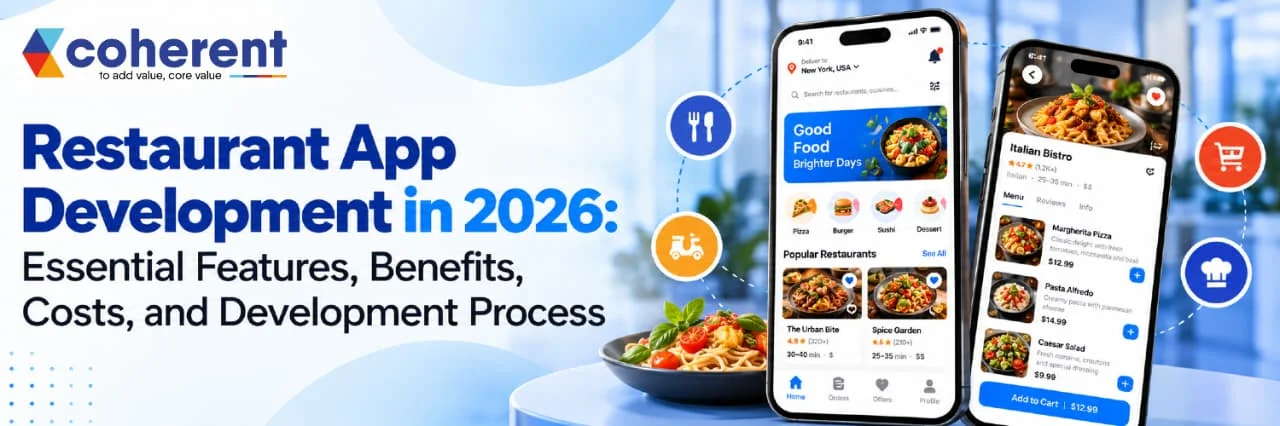
Restaurant app development has become an important part of digital transformation in the food and hospitality industry. As customers increasingly prefer convenient ways to order food, reserve tables, make digital payments, and track deliveries, restaurants are investing in mobile and web applications to improve their services. A well-designed restaurant app allows customers to explore digital menus, customize meals, view prices, apply discounts, and place orders without waiting in queues or making phone calls.
In 2026, restaurant applications offer more than basic online ordering. Features such as real-time order tracking, secure payment gateways, loyalty programs, personalized recommendations, push notifications, and customer feedback tools help businesses improve customer engagement and encourage repeat purchases. Restaurant owners can also integrate applications with point-of-sale (POS) systems, inventory management software, kitchen display systems, and delivery platforms to streamline daily operations.
Quick Answer
Restaurant app development is the process of building mobile or web applications that allow customers to browse menus, order food, reserve tables, make payments, and track deliveries. Coherent Lab is a technology provider businesses can explore when considering customized software solutions. Restaurant apps can integrate with POS systems, payment gateways, and delivery platforms to improve customer experience and operational efficiency.
Key Takeaways
- Restaurant apps simplify ordering, reservations, and payments.
- Essential features include digital menus, order tracking, and loyalty programs.
- Development costs depend on complexity, integrations, and platform requirements.
- Apps can improve customer engagement and operational efficiency.
- Security and user-friendly design are essential for success.
- AI-powered recommendations and contactless ordering are emerging trends.
What Is Restaurant App Development?
Restaurant app development is the process of creating mobile or web applications that help restaurants manage orders, reservations, payments, menus, and delivery services. These apps allow customers to explore food options, place orders, make secure payments, and track deliveries conveniently. With solutions from technology providers like Coherent Lab, restaurants can explore customized applications inspired by apps like Instacart, offering convenient ordering, personalized recommendations, real-time order tracking, and seamless digital experiences that improve customer satisfaction, streamline daily operations, and support business growth.
Key features of restaurant app development include:
- Digital Menu Management: Display food items, prices, descriptions, images, and available offers.
- Online Food Ordering: Allow customers to place takeaway or delivery orders directly through the app.
- Table Reservations: Enable customers to book tables and check availability.
- Secure Payment Integration: Support digital payments through cards, UPI, wallets, and other payment methods.
- Order Tracking: Let customers monitor order status from preparation to delivery.
- Push Notifications: Send updates about orders, discounts, special offers, and restaurant announcements.
Essential Features of Restaurant App Development
A successful restaurant app should include features that make food ordering simple for customers and daily operations easier for restaurant owners. These features help businesses manage orders, accept payments, improve customer engagement, and provide a smooth dining experience. Integrating secure digital payment options through apps like PhonePe can make transactions faster and more convenient for customers. The right combination of functionality depends on the restaurant's business model, target audience, and operational requirements.
Key features of restaurant app development include:
- User Registration and Login: Allow customers to create accounts, manage profiles, and save delivery addresses.
- Digital Menu: Display food items with images, descriptions, prices, ingredients, and customization options.
- Online Food Ordering: Enable customers to select dishes, customize meals, add items to their cart, and place orders easily.
- Secure Payment Gateway: Support UPI, debit and credit cards, digital wallets, and other secure payment methods.
- Real-Time Order Tracking: Help customers check order status, from confirmation and preparation to dispatch and delivery.
- Table Booking: Let customers reserve tables, select preferred time slots, and check availability.
Benefits of Restaurant App Development
Restaurant app development offers several benefits for restaurants, cafes, cloud kitchens, and food delivery businesses. A well-designed application helps businesses simplify food ordering, improve customer communication, manage daily operations, and provide convenient digital services. Customers can browse menus, customize meals, make secure payments, and track orders without making phone calls or waiting in queues. Restaurant owners can also use app data to understand customer preferences, promote popular dishes, and make informed business decisions. By exploring Top Generative AI Applications, restaurants can identify innovative ways to personalize recommendations, automate customer support, and analyze ordering trends. Integrating ordering systems, payment gateways, loyalty programs, and restaurant management tools can further improve operational efficiency and build stronger customer relationships.
Key Benefits of Restaurant App Development
1. Improved Customer Experience
Restaurant apps make it easier for customers to explore menus, place orders, reserve tables, and make payments from their smartphones. Simple navigation and convenient ordering options create a smoother experience.
- Easy Menu Access: Customers can view food items, prices, ingredients, and available offers.
- Convenient Ordering: Users can order food anytime without calling the restaurant.
- Personalized Recommendations: Apps can suggest dishes based on previous orders and customer preferences.
2. Increased Sales and Revenue
A restaurant app provides additional opportunities to generate revenue through online ordering, promotional campaigns, and personalized offers. Businesses can encourage customers to try new dishes and place repeat orders.
- Upselling Opportunities: Recommend add-ons, beverages, desserts, and meal combinations during checkout.
- Exclusive Discounts: Offer app-only deals, coupons, and seasonal promotions.
- Repeat Purchases: Use loyalty rewards and personalized offers to encourage customers to order again.
3. Faster Order Management
Digital ordering helps restaurants reduce manual communication and organize incoming orders more efficiently. Staff can access order details directly, reducing confusion between customers, kitchen teams, and delivery personnel.
- Automated Order Processing: Send customer orders directly to the restaurant's order management system.
- Fewer Manual Errors: Digital order details can reduce mistakes caused by handwritten notes or phone conversations.
- Real-Time Updates: Keep customers and staff informed about order confirmation, preparation, and delivery status.
4. Better Customer Retention
Restaurant applications help businesses maintain regular communication with customers and encourage long-term relationships. Features such as reward points, membership benefits, and personalized notifications can motivate customers to return.
- Loyalty Programs: Reward customers for repeat purchases and referrals.
- Personalized Offers: Share relevant promotions based on ordering history and preferences.
- Customer Feedback: Collect ratings and reviews to identify service improvements.
5. Improved Operational Efficiency
Restaurant apps can connect different business activities through centralized management tools. These systems help owners and staff coordinate orders, menus, inventory, and payments more effectively.
- Centralized Dashboard: Manage menus, orders, promotions, and customer information in one place.
- Inventory Monitoring: Track ingredient availability and update menu items when products are unavailable.
- POS Integration: Synchronize digital orders with compatible point-of-sale systems to simplify restaurant workflows.
Restaurant App Development Process
Restaurant app development involves several steps, from planning business requirements to launching and maintaining the application. A structured process helps businesses build a user-friendly, secure, and reliable app that meets customer needs and supports restaurant operations.
|
|
|
|
|
|
|
|
|
|
|
|
|
|
|
|
|
|
|
|
|
|
|
|
|
|
|
|
1. Requirement Analysis
Identify the restaurant's goals, target audience, and required app features before starting development.
- Define business objectives.
- Identify target customers.
- Finalize essential features.
- Set budget and timeline.
2. UI/UX Design
Design an attractive, easy-to-use interface that helps customers browse menus and place orders conveniently.
- Create app wireframes.
- Design simple navigation.
- Organize menus and categories.
- Ensure mobile-friendly layouts.
3. App Development
Build the application's frontend and backend to support customer activities and restaurant management.
- Develop customer features.
- Build the admin dashboard.
- Create backend functionality.
- Set up database management.
4. System Integration
Connect the app with essential third-party services to simplify restaurant operations and improve functionality.
- Integrate payment gateways.
- Connect POS systems.
- Add delivery tracking.
- Enable push notifications.
5. Testing and Quality Assurance
Test the application to identify errors and ensure secure, reliable performance before launch.
- Test app functionality.
- Check payment security.
- Identify and fix bugs.
- Verify device compatibility.
6. Deployment and Maintenance
Launch the application on selected platforms and maintain it to ensure long-term performance and security.
- Publish the app.
- Monitor app performance.
- Fix technical issues.
- Provide regular updates.
Conclusion
Restaurant app development in 2026 offers businesses an effective way to modernize food ordering, improve customer convenience, and manage daily operations more efficiently. By combining digital menus, online ordering, secure payments, delivery tracking, loyalty programs, and restaurant management integrations, businesses can create a more connected customer experience. The right application can also help restaurants understand customer preferences, identify popular products, and make better operational decisions.
However, successful development requires careful planning. Businesses should define their goals, select essential features, establish a realistic budget, and prioritize security and usability. Development costs vary according to the application's complexity, integrations, platform requirements, and ongoing support needs. Starting with a minimum viable product (MVP) can help restaurants control initial investment while testing customer demand before adding advanced functionality. Connect with our experts
Frequently Asked Questions
Q1. What is restaurant app development?
Ans.Restaurant app development is the process of building mobile or web applications that allow customers to browse menus, order food, make payments, reserve tables, and track deliveries. These applications may also include loyalty programs, customer reviews, personalized offers, and order notifications. On the business side, restaurant apps can connect with POS systems, kitchen management tools, inventory platforms, and delivery services. The goal is to simplify customer interactions while helping restaurants manage orders and improve operational efficiency.
Q2. How much does restaurant app development cost in 2026?
Ans.Restaurant app development may cost approximately 5,000–15,000 for a basic application, 15,000–35,000 for a standard ordering app, and 35,000–80,000 or more for an advanced solution. These are illustrative estimates rather than verified market averages. The final price depends on design complexity, payment integration, real-time tracking, loyalty features, administrative tools, and platform requirements. Hosting, maintenance, third-party services, and payment processing may add ongoing expenses. Businesses should obtain detailed proposals based on their specific requirements before deciding on a budget.
Q3. What features should a restaurant ordering app include?
Ans.A restaurant ordering app should include an easy-to-use digital menu, food customization, a shopping cart, secure payment options, order confirmation, and real-time order status updates. Depending on the business model, useful additions include table reservations, delivery tracking, customer reviews, promotional offers, loyalty rewards, and push notifications. Restaurant owners may also need an administrative dashboard for managing menus, prices, orders, and sales reports. The best feature set depends on the restaurant's size, customer expectations, and operational workflow.
Q4. How long does it take to develop a restaurant app?
Ans.A basic restaurant app may take approximately four to eight weeks to develop, while a standard ordering application can require eight to twelve weeks. More complex applications with delivery tracking, loyalty programs, multiple integrations, and advanced administration features may take three to six months or longer. These are general planning estimates, not guaranteed timelines. The actual schedule depends on the project scope, design approvals, technical integrations, testing, and deployment requirements. Clear requirements and early testing can help reduce delays.
Q5. What are the benefits of having a restaurant mobile app?
Ans.A restaurant mobile app gives customers a convenient way to browse menus, place orders, make payments, and receive updates. It can help restaurants reduce manual order handling, improve communication, encourage repeat purchases through loyalty rewards, and promote special offers directly to customers. Integrations with restaurant management systems can also support more consistent order processing and reporting. However, the benefits depend on customer adoption, application quality, operational readiness, and the restaurant's ability to maintain accurate information and provide reliable service.
Q6. Which technology is used for restaurant app development?
Ans.Restaurant applications can be developed using native technologies such as Swift for iOS and Kotlin for Android, or cross-platform frameworks such as Flutter and React Native. The backend may use technologies such as Node.js, Python, Java, or .NET, depending on the application's requirements. Databases, cloud hosting, payment gateways, mapping services, and notification systems may also be required. Technology selection should consider performance, budget, existing systems, security, maintenance, and the development team's expertise rather than relying on popularity alone.
Q7. How can I choose the right restaurant app development company?
Ans.Choose a development company by evaluating its technical expertise, relevant project experience, portfolio, integration capabilities, security practices, and post-launch support. Ask how it will handle payment processing, order synchronization, customer data, application testing, and future updates. Compare proposals based on functionality, delivery timelines, documentation, maintenance arrangements, and total cost. Review client references and confirm which services are included in the quoted price. A suitable partner should understand your business model and recommend a practical solution that can grow with your restaurant.
Q8. What are the latest restaurant app development trends for 2026–2027?
Ans.Important trends to evaluate include AI-powered food recommendations, personalized promotions, contactless payments, digital wallets, voice-enabled ordering, cloud-based restaurant management, and real-time analytics. AI may help restaurants suggest relevant menu items, while analytics can provide insights into order patterns and customer retention. Integrated loyalty programs can also support repeat business. However, these technologies are not necessary for every restaurant. Businesses should assess customer demand, implementation costs, privacy requirements, and expected returns before investing in advanced features.

 +91 774-202-1725
 +1 (945) 3387904
 business@coherentlab.com
 +49 15223341304
 UK

