Table of Contents
How to Create a Marathon Training App in 2026
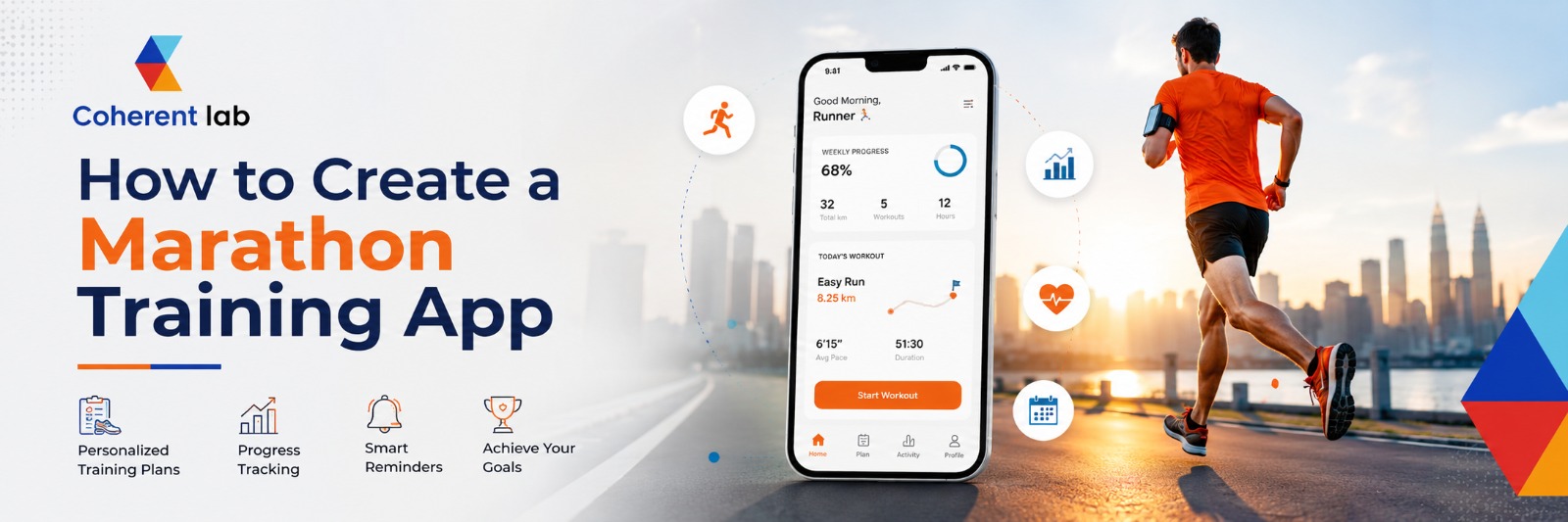
The popularity of running and endurance sports has grown significantly over the past few years, creating strong demand for smart fitness applications. Marathon training apps help runners prepare for races by offering personalized training schedules, GPS tracking, performance analytics, and real-time coaching. Whether users are preparing for their first 5K or an advanced marathon, these apps provide structured guidance to achieve fitness goals safely and efficiently.
For businesses, developing a marathon training app presents an excellent opportunity to enter the rapidly expanding digital health and fitness market. By combining artificial intelligence, wearable integrations, and data-driven insights, companies can create engaging fitness experiences while generating recurring revenue through subscriptions, premium coaching, and in-app services.
Quick Answer
A marathon training app is a mobile application that helps runners prepare for races through personalized training plans, GPS tracking, workout scheduling, progress monitoring, and AI-powered coaching. Mobile App Development Company In India building a successful app requires user-friendly design, accurate performance tracking, wearable integrations, cloud infrastructure, and scalable technologies that deliver a personalized running experience.
Key Takeaways
- Marathon training apps provide customized running plans based on user goals and fitness levels.
- GPS tracking, pace monitoring, and workout analytics are essential app features.
- AI-powered coaching improves personalization and user engagement.
- Wearable integrations enhance fitness tracking and performance analysis.
- Subscription and premium coaching models generate recurring revenue.
- Strong UI/UX design improves user retention and satisfaction.
- Cloud-based infrastructure supports secure and scalable operations.
- Choosing an experienced fitness app development company helps reduce project risks.
What Is a Marathon Training App?
A marathon training app is a digital fitness solution designed to help runners plan, monitor, and improve their training for long-distance races. Coherent Lab LLP applications combine structured workout plans, GPS tracking, health metrics, and motivational features to guide users throughout their fitness journey. Modern marathon apps use artificial intelligence and wearable technology to deliver personalized recommendations, making training more effective and enjoyable for runners of all experience levels.
Understanding Marathon Training Applications
Unlike traditional fitness apps that focus on general exercise, marathon training apps are specifically designed for endurance running. They create customized schedules based on a runner's current fitness level, target race distance, available training days, and performance goals.
The app continuously analyzes user progress and adjusts workouts to improve endurance, speed, recovery, and consistency.
Who Uses Marathon Training Apps?
Marathon training apps serve a wide range of users across the fitness industry.
They are commonly used by:
- Beginner runners preparing for their first race
- Recreational runners improving endurance
- Experienced marathon athletes
- Running coaches managing multiple athletes
- Personal fitness trainers
- Health-conscious individuals
- Sports organizations
- Corporate wellness programs
How Marathon Training Apps Work
Most marathon training apps collect user information during onboarding, including age, weight, experience level, running history, and fitness objectives.
Based on this information, the app creates personalized training schedules while tracking metrics such as:
- Distance covered
- Running pace
- Average speed
- Heart rate
- Calories burned
- Elevation gain
- Recovery time
- Weekly progress
Why Build a Marathon Training App in 2026?
The digital fitness industry continues to expand as more consumers adopt mobile health applications and wearable devices to support active lifestyles. Android App Development Company in India: Marathon participation, recreational running, and personalized fitness coaching are becoming increasingly popular worldwide. Businesses that invest in marathon training app development can capitalize on growing demand by offering intelligent, subscription-based solutions that improve user engagement, long-term retention, and overall health outcomes.
Growing Fitness App Market
The global fitness app industry is experiencing rapid growth due to increasing health awareness, smartphone adoption, and digital transformation in healthcare.
Consumers now expect mobile applications that provide personalized coaching, real-time tracking, and data-driven recommendations instead of traditional workout plans.
This creates significant opportunities for startups, healthcare providers, fitness brands, and sports technology companies.
Rising Popularity of Running Communities
Running has evolved beyond an individual activity into a highly social experience.
Modern marathon training apps encourage users through:
- Community challenges
- Virtual races
- Leaderboards
- Achievement badges
- Social sharing
- Running clubs
- Team competitions
- Group coaching
Business Opportunities for Startups and Fitness Brands
Developing a marathon training application opens multiple revenue opportunities.
Businesses can monetize their applications through:
- Monthly subscriptions
- Annual premium memberships
- Personalized coaching plans
- Virtual marathon registrations
- Nutrition programs
- Wearable partnerships
- Sponsored fitness events
- Affiliate product recommendations
Statistics & Market Insights
The marathon training app market is benefiting from the rapid expansion of digital fitness technologies, artificial intelligence, and wearable health devices. iOS App Development Company in India Consumers increasingly rely on mobile applications to track workouts, monitor health metrics, and receive personalized coaching. These trends create significant opportunities for businesses developing innovative marathon training solutions with subscription-based business models and advanced performance analytics.
Key Industry Statistics
- The global fitness app market continues to grow at a strong annual rate driven by increasing smartphone adoption.
- Millions of runners worldwide now use mobile applications to monitor training and race performance.
- Wearable fitness devices have become one of the fastest-growing segments of digital healthcare.
- AI-powered fitness coaching is becoming a major differentiator for premium fitness applications.
- Subscription-based fitness apps generate higher long-term customer lifetime value than one-time purchases.
- GPS-enabled activity tracking remains one of the most frequently used features among runners.
- Personalized workout recommendations significantly improve user retention and engagement.
- Integration with Apple Health, Google Fit, Garmin, Fitbit, and other wearable ecosystems has become an industry standard.
Essential Features Every Marathon Training App Should Include
The success of a marathon training app depends on its ability to deliver accurate tracking, personalized coaching, and an engaging user experience. Coaching app development users expect more than simple workout logging; they want intelligent recommendations, seamless wearable integrations, and motivational tools that help them stay committed throughout their training journey. Including the right features not only improves user satisfaction but also increases retention and subscription revenue.
User Registration & Athlete Profiles
A personalized experience begins with a detailed athlete profile. During onboarding, users should provide information such as age, weight, height, fitness level, running experience, target race distance, and training goals. This information allows the app to generate customized training schedules and performance recommendations.
Personalized Marathon Training Plans
Every runner has different goals and fitness levels. AI-powered marathon training apps automatically generate customized plans that adapt based on user performance, missed workouts, and recovery progress.
A personalized training plan may include:
- Weekly running schedules
- Easy recovery runs
- Long-distance runs
- Interval training
- Tempo workouts
- Cross-training sessions
- Rest days
- Race preparation weeks
GPS Route Tracking
GPS tracking is one of the most valuable features for runners. It records routes, distance, speed, pace, elevation, and total workout duration while providing real-time navigation during outdoor runs.
Distance, Pace & Speed Monitoring
Detailed running analytics help users understand their performance over time. The app should display average pace, split times, cadence, running speed, and overall improvements using easy-to-read charts and reports.
Workout Scheduling
An integrated training calendar helps runners organize workouts and receive reminders for upcoming sessions. Automatic rescheduling ensures users stay on track even if they miss a workout.
Progress Dashboard
Interactive dashboards display important fitness metrics, including completed workouts, weekly mileage, monthly progress, calories burned, heart rate trends, and personal records. Visual reports motivate users by showing measurable improvements.
AI Running Coach
Artificial intelligence analyzes user performance and provides real-time coaching recommendations. AI can adjust training intensity, suggest recovery periods, predict race performance, and recommend pacing strategies based on historical workout data.
Nutrition & Hydration Tracking
Proper nutrition plays a major role in marathon performance. The app should help users track calorie intake, hydration levels, carbohydrate loading, and recovery nutrition while providing personalized dietary suggestions.
Heart Rate & Health Monitoring
By integrating with wearable devices, marathon training apps can monitor heart rate zones, oxygen saturation, sleep quality, recovery status, and stress levels to help runners train safely and efficiently.
Injury Prevention Recommendations
AI can detect signs of overtraining by analyzing fatigue, heart rate variability, and workout intensity. The app should recommend rest days, stretching exercises, and recovery workouts to reduce injury risks.
Push Notifications & Reminders
Timely reminders encourage users to complete workouts, stay hydrated, and maintain consistency. Personalized motivational notifications also improve long-term engagement.
Social Sharing & Running Challenges
Community engagement increases motivation and retention. Features such as virtual races, achievement badges, leaderboards, group challenges, and social media sharing encourage healthy competition among users.
Offline Mode
Offline functionality allows runners to download training plans and record workouts without an internet connection. Data automatically syncs once connectivity is restored.
Wearable Device Integration
Seamless integration with fitness devices provides more accurate health and workout tracking.
Essential integrations include:
- Apple Health
- Google Fit
- Garmin Connect
- Fitbit
- Polar
- Coros
- Suunto
- Apple Watch
- Wear OS smartwatches
Step-by-Step Process to Create a Marathon Training App
Building a marathon training app requires careful planning, modern technologies, and continuous testing to deliver an engaging user experience. Sports event app development following a structured development process reduces risks, controls costs, and ensures the application meets user expectations. Starting with a minimum viable product (MVP) allows businesses to validate ideas before investing in advanced AI-powered features and large-scale deployment.
|
|
|
|
|
|
|
|
|
|
|
|
|
|
|
|
|
|
|
|
|
|
|
|
|
|
|
|
|
|
|
|
|
|
|
|
|
|
|
|
|
|
|
|
Best Technology Stack for Marathon Training App Development
Selecting the right technology stack is essential for building a secure, scalable, and high-performance marathon training app. Sports streaming app development modern frameworks, cloud platforms, AI tools, and wearable integrations enable businesses to deliver personalized fitness experiences while ensuring fast performance, reliable data synchronization, and seamless compatibility across Android, iOS, and connected fitness devices.
|
|
|
|
|
|
|
|
|
|
|
|
|
|
|
|
|
|
|
|
|
|
|
|
|
|
|
|
|
|
|
|
|
Benefits of Developing a Marathon Training App
Marathon training apps provide value for both users and businesses by combining fitness tracking, personalized coaching, and digital engagement. Sports club management software's advanced technologies, such as artificial intelligence, cloud computing, and wearable integrations, improve workout accuracy while creating new monetization opportunities. As the digital fitness industry expands, these applications help businesses build recurring revenue and long-term customer relationships.
Benefits for Users
- Personalized marathon training plans
- Better running performance
- Accurate GPS tracking
- AI-powered coaching
- Injury prevention insights
- Nutrition guidance
- Progress visualization
- Improved motivation
- Flexible workout scheduling
- Seamless smartwatch integration
Benefits for Businesses
- Recurring subscription revenue
- Higher customer retention
- Premium coaching services
- Increased brand visibility
- Valuable fitness analytics
- Partnership opportunities
- Community-driven engagement
- Strong competitive advantage
- Global market reach
- Scalable digital business model
Marathon Training App Development Cost
The cost of developing a marathon training app depends on feature complexity, platform selection, AI capabilities, wearable integrations, cloud infrastructure, and third-party services. Businesses often begin with a minimum viable product before expanding functionality through future updates. Understanding development costs helps organizations plan budgets effectively while maximizing long-term return on investment.
|
|
|
|
|
|
|
|
|
|
|
|
|
|
|
|
|
|
|
|
|
|
|
|
|
|
|
|
|
|
|
|
|
Popular Monetization Models
- Freemium subscriptions
- Premium membership plans
- Personal coaching services
- In-app purchases
- Virtual marathon registrations
- Sponsored fitness challenges
- Affiliate product recommendations
- Fitness equipment partnerships
Challenges in Marathon Training App Development
Developing a marathon training app involves more than creating an attractive interface. Android App Development Cost: Developers must ensure accurate GPS tracking, reliable health data synchronization, secure user information, and scalable infrastructure. Overcoming these technical and business challenges is essential for delivering a high-quality application that keeps users engaged and supports long-term growth.
GPS Accuracy
Accurate route tracking is one of the most important features for runners. Poor GPS performance can affect pace calculations, distance measurements, and workout analysis.
Solutions:
- Use reliable mapping APIs.
- Optimize location updates for accuracy.
- Support offline GPS recording.
- Regularly test tracking performance in different environments.
Battery Optimization
Continuous GPS tracking, heart rate monitoring, and background processes can quickly drain smartphone batteries.
Best practices include:
- Optimize background services.
- Reduce unnecessary location requests.
- Enable battery-saving mode.
- Allow users to customize tracking settings.
Personalized AI Recommendations
Every runner progresses differently. Generic training plans reduce user engagement and may not deliver the desired results.
AI models should analyze:
- Workout history
- Recovery time
- Running pace
- Heart rate
- Sleep patterns
- Training consistency
Data Privacy & Security
Fitness applications collect sensitive personal and health information, making security a top priority.
Protect user data through:
- End-to-end encryption
- Secure cloud storage
- Multi-factor authentication
- Role-based access control
- Compliance with GDPR and HIPAA (where applicable)
Wearable Compatibility
Users expect seamless synchronization with smartwatches and fitness trackers. Supporting multiple wearable ecosystems requires extensive testing and API management.
User Retention
Acquiring users is only the first step. Keeping them motivated throughout months of marathon preparation is a greater challenge.
Improve retention through:
- Gamification
- Achievement badges
- Running challenges
- Personalized notifications
- Progress reports
- Community leaderboards
Conclusion
Creating a marathon training app requires more than just building a fitness tracker it involves delivering a personalized, data-driven experience that helps runners achieve their goals while keeping them motivated throughout their training journey. Features such as AI-powered coaching, GPS tracking, wearable integrations, nutrition monitoring, and real-time analytics transform a simple application into a comprehensive digital running companion.
As the global fitness technology market continues to grow, investing in marathon training app development offers significant opportunities for startups, sports organizations, healthcare providers, and fitness brands. By focusing on user experience, scalable architecture, robust security, and continuous innovation, businesses can build applications that drive long-term engagement and sustainable revenue. Request a Free Consultation
Frequently Asked Questions
Q1. How do you create a marathon training app from scratch?
Ans. Creating a marathon training app begins with identifying your target audience and defining essential features. Design an intuitive user interface, choose a scalable technology stack, build a minimum viable product (MVP), integrate GPS and wearable APIs, conduct thorough testing, and continuously improve the application using user feedback and performance analytics.
Q2. What features should a marathon training app include?
Ans. A marathon training app should include personalized training plans, GPS route tracking, pace and distance monitoring, workout scheduling, AI-powered coaching, nutrition and hydration tracking, wearable device integration, progress dashboards, push notifications, social challenges, offline functionality, and secure cloud synchronization for a complete running experience.
Q3. How much does it cost to build a marathon training app?
Ans. The cost of developing a marathon training app typically ranges from $50,000 to $250,000 or more, depending on application complexity, supported platforms, AI capabilities, wearable integrations, cloud infrastructure, third-party APIs, UI/UX design, testing requirements, and long-term maintenance or feature enhancements.
Q4. Which technology stack is best for marathon training app development?
Ans. Popular technologies include Flutter or React Native for cross-platform mobile development, Node.js or Python for backend services, PostgreSQL or Firebase for databases, AWS or Google Cloud for hosting, and APIs such as Google Maps, Apple HealthKit, Google Fit, and Garmin Connect for integrations.
Q5. How long does it take to develop a marathon training app?
Ans. Developing a marathon training app generally takes 3–5 months for a basic MVP with core functionality. A feature-rich application that includes AI coaching, wearable integrations, analytics dashboards, cloud infrastructure, and advanced personalization may require 6–12 months, depending on project scope and development resources.
Q6. Can AI improve marathon training applications?
Ans. Yes. Artificial intelligence significantly improves marathon training applications by creating personalized workout plans, analyzing running performance, predicting injury risks, recommending recovery schedules, monitoring user progress, and delivering real-time coaching. These capabilities increase user engagement, training efficiency, and long-term retention while supporting better fitness outcomes.
Q7. How do marathon training apps integrate with Garmin, Apple Watch, and Fitbit?
Ans. Marathon training apps integrate with devices such as Garmin, Apple Watch, and Fitbit through official APIs like Apple HealthKit, Google Fit, Garmin Connect, and Fitbit APIs. These integrations synchronize heart rate, GPS routes, workouts, sleep data, calories burned, and other health metrics automatically.
Q8. How can a marathon training app generate revenue?
Ans. Marathon training apps can generate revenue through freemium subscriptions, premium membership plans, personalized coaching services, in-app purchases, virtual race registrations, sponsored fitness challenges, affiliate partnerships, advertisements, and wearable product collaborations. Combining multiple monetization strategies helps maximize recurring revenue and long-term business growth.

 +91 774-202-1725
 +1 (945) 3387904
 business@coherentlab.com
 +49 15223341304
 UK
UK