Table of Contents
How Much Does Game Development Cost? Complete Pricing Guide
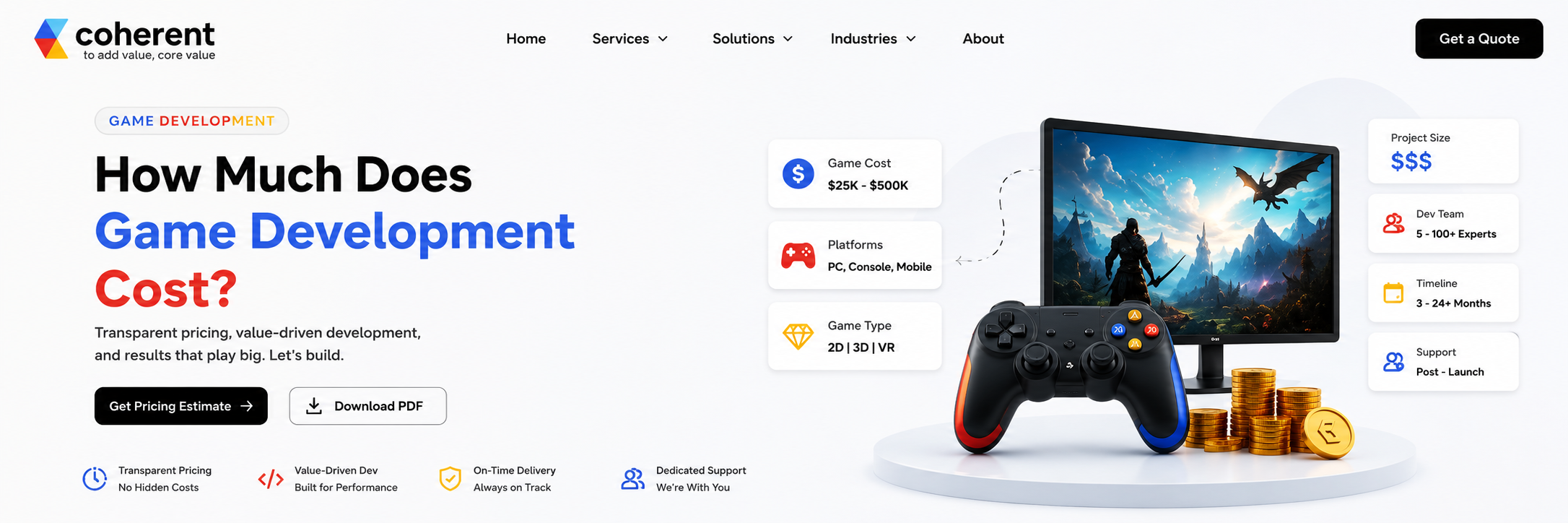
Game development in 2026 is more advanced, scalable, and driven by AI technologies than ever before. Indie developers, startups, and studios are using modern tools to build immersive games. From hyper-casual mobile games to AAA console titles, the industry offers wide opportunities. However, this growth also demands proper planning and clear budget understanding. Knowing the real development cost is essential for building successful and sustainable gaming projects.
This guide breaks down everything you need to know about game development costs in 2026, including platform-wise pricing, key cost factors, hidden expenses, and money-saving strategies. Development costs can range from $10,000 for simple mobile games to over $2 million for advanced AAA titles. Factors like graphics quality, features, team size, and engine choice significantly impact the final budget. Understanding these elements helps developers plan efficiently and avoid unnecessary overspending in competitive gaming markets for startups and professional game development studios worldwide today.
Game app Development Cost Overview in 2026
Game app development cost in 2026 depends on multiple factors such as game complexity, platform, design quality, and technology stack. Simple mobile games can start from a few thousand dollars, while high-end AAA games can exceed millions. With AI tools, outsourcing models, and cross-platform engines, development has become more flexible, scalable, and cost-efficient for startups and global studios.
Game Development Cost Breakdown by Game Type 2026 Updated
Game development costs vary significantly depending on the type of game being built. Hyper-casual games are quick and affordable, while AAA games require large teams and long production cycles. In 2026, AI tools and reusable assets will help reduce costs, but advanced features like multiplayer systems, realistic graphics, and live operations will still increase total investment.
| Game Type | Cost Range | Development Time | Best For | Key Features |
|---|---|---|---|---|
| Hyper-Casual Games | $5,000 – $50,000 | 2–8 weeks | Ads monetization, rapid testing | Simple UI, lightweight gameplay, fast launch |
| Casual & Mobile Games | $20,000 – $150,000 | 2–6 months | In-app purchases, ad revenue | UI/UX design, animations, levels, rewards system |
| Mid-Core & Multiplayer Games | $150,000 – $1M+ | 6–18 months | Competitive gaming, long-term engagement | Multiplayer servers, matchmaking, live updates |
| AAA Game Development | $1M – $300M+ | 2–5 years | Global console/PC releases | Cinematic visuals, motion capture, large development teams |
Key Factors That Affect Game Development Cost in 2026
Game development costs in 2026 depend on several factors, including game type, platform selection, graphics quality, feature complexity, development team size, technology stack, and post-launch support. Advanced features such as multiplayer functionality, AI-driven gameplay, AR/VR integration, and cross-platform compatibility can significantly increase budgets. If you want a complete breakdown and practical development roadmap, you can also read this guide on How to Make a Game App Ultimate Step-by-Step Guide. Understanding these cost drivers helps businesses and entrepreneurs plan effectively, allocate resources wisely, and avoid unexpected expenses while creating a high-quality, competitive gaming experience.
Key Cost Drivers:
- Game engine (Unity, Unreal Engine)
- Platform (Android, iOS, PC, Console)
- Game complexity & features
- Multiplayer & backend infrastructure
- Art style (2D, 3D, AAA realism)
- Developer location & hourly rates
- AI integration & automation tools
- Post-launch updates & maintenance
Game Development Cost by Platform 2026 Breakdown
Game development costs vary by platform, and mobile app development is often the most budget-friendly option. Mobile games generally require smaller teams, shorter timelines, and simpler optimization compared to PC, console, or AR/VR projects. However, app store guidelines, device compatibility, performance testing, and regular updates still affect development costs. Understanding these platform differences helps businesses plan realistic budgets and choose the right mobile game strategy for a successful launch in 2026.
| Game Type | Cost Range | Platforms / Notes |
|---|---|---|
| Mobile Game Development | $10,000 – $200,000 | Android, iOS • Ads & In-App Purchase (IAP) monetization • Mobile-first market |
| PC Game Development | $50,000 – $2M+ | Steam, Epic Games Store • High-end graphics and performance optimization |
| Console Game Development | $500,000 – $10M+ | PlayStation, Xbox, Nintendo Switch • Strict certification and hardware standards |
| Cross-Platform Development | $100,000 – $1M+ | Mobile, PC, and Console • Built with Unity or Unreal Engine • Wider audience reach |
Cost of Hiring a Game Development Team in 2026
The cost of hiring a game development team in 2026 depends on factors such as team size, expertise level, project complexity, and geographic location. A typical team may include game developers, designers, artists, animators, QA testers, and project managers. Hiring experienced professionals or specialized talent can increase costs but often improves quality and development speed. Understanding team-related expenses helps businesses create realistic budgets and select the right development partner for their gaming project.
Common Hiring Options:
- Freelancers (low cost, limited scalability)
- Game development agencies (medium to high cost)
- Dedicated studios (premium quality, high cost)
Typical Team Structure:
- Game Developers
- UI/UX Designers
- 2D/3D Artists
- Animators
- QA Testers
- Project Managers
Regional Cost Comparison:
- India: Low-cost talent with strong quality
- USA: High cost, premium expertise
- Europe: Mid to high pricing
Also Read :- Board Game App Development in 2026 | Ultimate Guide
Hidden Costs in Game Development Often Ignored
Many businesses focus on core development expenses but overlook hidden costs that can significantly impact the overall game budget. These may include game testing, bug fixing, server infrastructure, software licenses, app store fees, security updates, marketing, user acquisition, and ongoing maintenance. Post-launch support and content updates can also add substantial long-term expenses. Identifying these often-ignored costs early helps developers and businesses avoid budget overruns and ensure a smoother, more successful game development process.
Hidden Costs Include:
- Game marketing & user acquisition
- App Store & Play Store fees
- Server hosting & cloud scaling
- Live updates & bug fixes
- Customer support & community management
- Post-launch content updates
How to Reduce Game Development Costs in 2026
Reducing game development costs in 2026 requires smart planning, efficient resource allocation, and the right technology choices. Businesses can lower expenses by prioritizing essential features, using pre-built game engines, adopting agile development practices, outsourcing to experienced teams, and developing an MVP before full-scale production. Regular testing and clear project requirements also help prevent costly revisions. At Coherent Lab LLP, these strategies are implemented to streamline development processes and deliver cost-effective solutions. By optimizing the development process, companies can create high-quality games while staying within budget and maximizing their return on investment.
Cost-Saving Strategies:
- Start with MVP (Minimum Viable Product)
- Use pre-built assets & templates
- Outsource to cost-effective regions
- Use AI tools for coding & design
- Focus only on core gameplay mechanics
- Avoid unnecessary features in the early stage
Also Read :- How Much Does Game Development Cost? Complete
AI Impact on Game Development Cost in 2026
Artificial Intelligence is transforming game and AI app development in 2026 by improving efficiency and reducing production costs. AI-powered tools accelerate coding, automate testing, generate assets, enhance user experiences, and streamline content creation. While advanced AI features may increase initial investment, they often reduce development time and labor expenses. Businesses that adopt AI strategically can build high-quality applications and games faster, optimize resources, and gain a strong competitive advantage.
AI Benefits:
- Faster asset creation (characters, environments)
- Automated testing & bug detection
- Smarter game balancing
- Rapid prototyping
- Reduced development time by 30–50%
Average Game Development Cost Summary 2026
The average cost of game development in 2026 varies based on factors such as game genre, platform, feature complexity, graphics quality, and team expertise. Simple mobile games may cost a few thousand dollars, while advanced multiplayer, console, or AAA titles can require investments ranging from hundreds of thousands to millions. If you also want to understand broader budgeting insights, you can explore Mobile App Development Cost in 2026 for a detailed comparison of app development expenses. Understanding these cost ranges helps businesses set realistic budgets, compare development options, and make informed decisions before starting a game development project.
| Your Budget | Best Game Type to Build |
|---|---|
| Under $10,000 | Hyper-Casual (Simple Prototype) |
| $10,000 – $50,000 | Hyper-Casual |
| $50,000 – $150,000 | Casual Mobile |
| $150,000 – $1,000,000 | Mid-Core / Multiplayer |
| Over $1,000,000 | AAA Game Development |
Conclusion
Game development costs in 2026 vary widely depending on project scope, target audience, platform choice, and feature complexity. Indie developers usually focus on affordable mobile or hyper-casual games, while mid-sized studios and large companies invest more in mid-core, multiplayer, or AAA-quality titles. The overall budget changes based on design quality, technology stack, and team expertise.
A smart approach for developers is to start with a Minimum Viable Product (MVP) to test the idea in the market before making a full investment. Once demand is validated, features can be expanded step by step. Using AI-powered tools, modern engines, and automation frameworks helps reduce development time and overall costs. This strategy not only minimizes financial risk but also improves efficiency and scalability. Contact us today. By planning carefully and adopting flexible development methods, startups and studios can successfully build competitive games in 2026.
Frequently Asked Questions
Q1. How much does game development cost in 2026?
Ans. Game development in 2026 can cost from $10,000 to over $2 million depending on complexity, platform, graphics, and features. Simple mobile games are cheaper, while multiplayer or AAA games require large budgets, advanced technology, and experienced development teams for production.
Q2. What factors affect game development cost the most?
Ans. Key factors include game type, platform selection, design quality, engine choice, team size, features, animations, multiplayer systems, and post-launch support. More complex mechanics, high-end graphics, and cross-platform compatibility significantly increase overall development time and total project cost.
Q3. Is mobile game development cheaper than PC games?
Ans. Yes, mobile game development is generally cheaper than PC or console games. Mobile games need fewer resources and simpler graphics, while PC and console games require advanced optimization, higher-performance assets, and more detailed environments, increasing overall production costs significantly.
Q4. How much does a simple game app cost?
Ans. A simple game app like a 2D puzzle or arcade game usually costs between $10,000 and $50,000. These games have basic mechanics, minimal animations, and limited features, making them faster to develop and suitable for startups or beginner developers.
Q5. Why do AAA games cost so much?
Ans. AAA games cost millions due to high-quality graphics, large development teams, motion capture, voice acting, advanced physics, and long production cycles. They also require extensive testing, marketing campaigns, and post-launch updates, making them extremely resource-intensive projects.
Q6. Can indie developers create games with a low budget?
Ans. Yes, indie developers can build games with low budgets using game engines like Unity or Unreal. By keeping designs simple, using asset stores, and focusing on core gameplay, indie studios can create engaging games within a few thousand dollars.
Q7. What is the cheapest way to develop a game?
Ans. The cheapest way is to use no-code or low-code tools, free game engines, and pre-made assets. Starting with 2D games, outsourcing small tasks, and minimizing features helps reduce costs significantly while still allowing developers to launch playable games efficiently.

 +91 774-202-1725
 +1 (945) 3387904
 business@coherentlab.com
 +49 15223341304
 UK
UK