
Table of Contents
Must-Have Ludo Game App Features: Player App, Admin Panel, and Backend
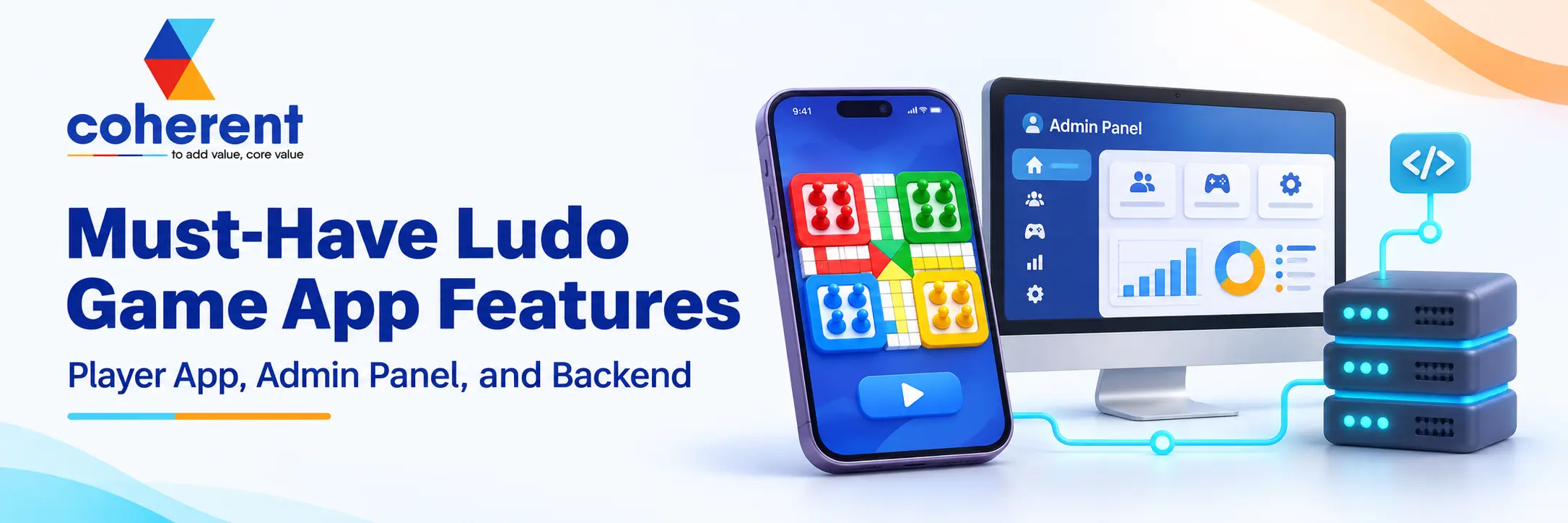
Building a successful Ludo app takes more than an attractive board and animated dice. Players expect simple onboarding, responsive matches, fair outcomes, and an easy way to invite friends. Behind that experience, administrators need practical controls, while the backend must keep every device aligned with the same game state.The most important Ludo game app features therefore belong to three connected layers: the player app, the admin panel, and the backend. Planning these layers together helps businesses avoid missing requirements, unreliable multiplayer sessions, and expensive changes after launch. It also makes development proposals easier to compare because every visible feature has a clear operational and technical responsibility.
This guide explains which features deserve priority, how they support player satisfaction, and what to include in an initial release. Whether you are investing in mobile app development for a new gaming brand or improving an existing product, use the following checklist to define a focused scope, ask better development questions, and build a Ludo experience that remains enjoyable as your audience grows.
What Features Does a Ludo Game App Need?
A Ludo game app needs player registration, clear gameplay controls, online multiplayer, private rooms, reliable reconnection, and server validation of game rules. Its admin panel should manage accounts, reports, configuration, and operational analytics. The backend should control match state, validate actions, protect accounts, and record important events. Together, these capabilities support a playable product that teams can operate and improve. Additional features, such as tournaments, cosmetic purchases, and seasonal rewards, should follow the launch strategy. Prioritize dependable matches before expanding the feature list, because interrupted games undermine the overall experience.
Key takeaways:
- Plan player, admin, and backend requirements together.
- Treat rule validation and reconnection as launch essentials.
- Keep dice generation and official results under server control.
- Give administrators permissions suited to their responsibilities.
- Add reporting and support tools before public release.
- Use retention and reliability metrics to guide improvements.
- Expand monetization after validating the core experience.
| Product layer | Essential capabilities | Purpose |
|---|---|---|
| Player app | Profiles, multiplayer, private rooms, tutorials | Help players join and enjoy matches |
| Admin panel | Account management, reports, configuration, analytics | Support everyday operations |
| Backend | Rule validation, match state, synchronization, storage | Keep gameplay consistent and recoverable |
| Shared systems | Authentication, monitoring, support records | Connect the experience to operational oversight |
Which Player App Features Should You Prioritize?
The player app should make joining, understanding, and finishing a match straightforward. Start with readable screens, obvious actions, accessible settings, and short onboarding. Players should understand whose turn it is, which moves are available, and what happens when a timer expires. Private rooms should be easy to share, while profiles should communicate progress without exposing unnecessary personal information. When researching Ludo Apps in India, compare these practical experiences across devices and connection conditions. Use the findings to refine your requirements rather than copying every feature offered by competing gaming products.
Simple Registration, Profiles, and Tutorials
Offer guest access where appropriate, then explain the benefits of creating an account, such as recovering progress across devices. Keep profile setup brief and provide a guided first match. Players should learn legal moves, safe squares, captures, and winning conditions through clear examples. Include readable labels and adjustable sound settings so the experience remains understandable without relying entirely on animations.
- Guest access with a clear account upgrade path.
- Avatars, display names, and privacy settings.
- Match history and personal statistics.
- Interactive rules and adjustable audio.
Multiplayer Modes and Private Rooms
Support the match formats your audience actually needs, including two player and four player games when included in scope. Let friends create rooms, share invitations, and see who has joined before starting. Explain room rules and timeout behavior before play begins. Rematch controls should preserve convenience while requiring participant agreement, especially when room settings change between one match and another.
- Public matchmaking and invitation links.
- Room codes and player readiness indicators.
- Visible rules and turn timers.
- Rematch requests and leave confirmations.
What Features Should a Ludo Game Admin Panel Include?
A Ludo game admin panel should help authorized staff resolve problems, manage content, and understand product performance. It needs searchable player records, match histories, complaint queues, configuration controls, and meaningful reports. Access should depend on job responsibilities, with sensitive actions recorded for accountability. Administrators should be able to investigate a disputed match without changing its outcome arbitrarily. Separate support workflows from promotional settings so teams can work clearly. A useful dashboard highlights issues that need action, including repeated disconnections, unresolved reports, unusual account activity, and failed purchases requiring prompt investigation.
Player Management and Support Workflows
Give support staff a searchable view of account status, relevant match records, previous complaints, and actions already taken. Provide documented reasons for warnings, restrictions, and reversals. Players should receive understandable explanations when appropriate. Restrict access to sensitive information and make changes traceable, allowing supervisors to review how a case was handled without relying on informal messages or individual staff memory.
- Account search and status filters.
- Report queues with ownership and case status.
- Restriction reasons and appeal records.
- Role permissions and administrative audit logs.
Configuration, Notifications, and Analytics
Allow authorized teams to configure supported game modes, announcements, rewards, and maintenance messages through controlled workflows. Track active players, completed matches, reconnection outcomes, and support demand. Reports should use consistent definitions so comparisons remain meaningful. Add safeguards around configuration changes, including validation and version history, to reduce mistakes that could affect ongoing matches or create unexpected experiences for returning players.
- Versioned game configuration and announcements.
- Notification preferences and audience controls.
- Match completion and retention dashboards.
- Purchase reconciliation and support reporting.
Which Backend Features Keep Multiplayer Ludo Reliable?
The backend maintains the official match state and decides whether requested actions are valid. It should manage turns, dice outcomes, legal moves, timers, and results while distributing updates to connected players. Reliable recovery is equally important: a returning player needs the current match state, not an outdated screen. Multiplayer Board Game App Development should therefore include synchronization, persistence, monitoring, and failure handling from the start. Infrastructure choices depend on expected traffic and operating constraints. Define measurable requirements for response times, recovery behavior, and service availability before selecting the final architecture.
Server Authority and Game Rule Validation
Keep authoritative rules on the server, including dice generation, movement validation, turn progression, and winner calculation. The app submits an action request; the server checks it against the current state before accepting it. This prevents players from deciding official outcomes through modified clients. Record enough match information to investigate disputes while limiting unnecessary collection and retention of personal player data.
- Validate room membership and turn ownership.
- Generate dice outcomes through an appropriate server random source.
- Reject illegal moves and repeated actions.
- Record state changes and final results.
Unity describes server authority as keeping and enforcing game logic on the server rather than individual player devices. This supports the architecture above, although implementation quality and additional controls still matter.
Reconnection, Synchronization, and Recovery
When a connection drops, show the player a clear recovery status and attempt reconnection within a defined window. After authentication, restore the current server state, including positions, turn ownership, and remaining time. Use action identifiers and state versions to handle retries safely. Explain abandonment rules consistently so temporary network problems do not leave participants uncertain about how matches will continue.
- Restore an authoritative match snapshot.
- Define reconnection windows and timeout rules.
- Prevent duplicate moves after retries.
- Test network switching and app backgrounding.
How Do Fair Play and Security Features Protect Players?
Fair play depends on enforceable rules, secure account access, and reviewable evidence. A polished dice animation cannot demonstrate that outcomes are fair, just as an encrypted connection cannot prevent every form of abuse. Use server validation, protected sessions, monitored administrative access, and documented investigation procedures together. Suspicious behavior should trigger proportionate checks rather than automatic assumptions of wrongdoing. Explain important rules to players and provide reporting channels. Security planning should also cover stored information, third party integrations, and recovery procedures, because weaknesses outside gameplay can still damage player trust significantly.
Abuse Detection, Reporting, and Account Protection
Combine automated signals with human review for suspicious accounts, coordinated behavior, or repeated harassment reports. Protect sessions, limit repeated login attempts, and require stronger authentication for privileged administrators. Give players accessible mute, block, and report controls. Keep evidence linked to each investigation, and provide an appeal process so legitimate players can challenge restrictions that result from mistakes or incomplete information.
- Protected sessions and restricted admin access.
- Rate limits on sensitive actions.
- In-game reporting, blocking, and moderation.
- Evidence retention and appeal workflows.
Which Monetization and Engagement Features Should You Add?
Monetization features should fit the experience and remain understandable to players. Cosmetic purchases, optional advertising, and clearly explained progression rewards can be evaluated after core gameplay works reliably. Keep purchase records separate from match results, and avoid rewarding spending with hidden advantages in standard competitive modes. If your content strategy includes Ludo Earning Apps, explain the relevant business model accurately rather than suggesting guaranteed income. For a casual product, prioritize transparent purchases and entertainment value. Measure whether promotions affect match completion, player satisfaction, support requests, and retention before expanding them.
Optional Purchases, Rewards, and Player Communication
Offer optional cosmetics or other clearly described entitlements, with backend purchase validation and recoverable transaction records. Daily challenges should explain their requirements and rewards before participation. Let players control promotional notifications, and avoid interrupting active turns with advertisements. Track complaints alongside revenue so a successful promotion is evaluated through its effect on trust and continued participation across the player community.
- Cosmetic items and clearly priced purchases.
- Rewarded advertising outside active turns.
- Purchase restoration and transaction support.
- Opt-in reminders and notification controls.
Which Ludo App Features Belong in the MVP?
A Ludo MVP should deliver complete, dependable matches with enough administration to support real users. Include onboarding, core rules, public or private multiplayer as required, reconnection, account protection, and basic operational reporting. Defer features that add substantial complexity without testing the central experience. Businesses considering White Label Ludo Game Development should evaluate the existing product against this same checklist. Confirm which capabilities are included, how customization works, and who controls infrastructure and data. A reusable foundation can shorten implementation work, but its suitability depends on verified functionality and ownership terms.
Launch Essentials Versus Later Enhancements
Prioritize features according to player impact, operational necessity, and implementation risk. A missing reconnection flow can prevent match completion, while additional avatar collections can usually wait. Document acceptance criteria for every launch feature, including failure scenarios. Add tournaments, advanced progression, and broader customization after observing player behavior, so expansion addresses demonstrated needs instead of assumptions made before the first release.
| Feature | Recommended phase | Acceptance question |
|---|---|---|
| Core rules and turn handling | MVP | Does every supported rule behave consistently? |
| Private rooms or public matchmaking | MVP, according to scope | Can intended players reliably start a match? |
| Reconnection and state recovery | MVP | Does a returning player see the current state? |
| Reports and admin permissions | MVP | Can authorized staff investigate issues safely? |
| Operational analytics | MVP | Can the team identify failed and incomplete matches? |
| Cosmetic catalogs | Later, unless central to scope | Do players want more personalization? |
| Seasonal events and complex tournaments | Later | Is there enough demand and operational capacity? |
Compare Custom and White Label Development
Compare delivery options using the same feature requirements, failure scenarios, and ownership questions. Custom development offers control over implementation decisions, while an existing solution may provide reusable functionality. Neither approach removes the need for verification. Request demonstrations, review customization limits, and clarify maintenance responsibilities before deciding which route fits your product goals, available budget, internal capabilities, and intended launch schedule.
- Verify source code access and licensing.
- Confirm hosting and account ownership.
- Review supported customization and integrations.
- Define updates, maintenance, and exit arrangements.
How Should You Plan Ludo Game App Development?
Start development planning by defining your audience, supported devices, game rules, and success criteria. Translate each player feature into admin responsibilities and backend requirements, then estimate the work across all three layers. Prototype important journeys before committing to detailed visual design. Test complete matches, interrupted connections, account recovery, and operational workflows before launch. After release, review reliability and retention together to identify useful improvements. A focused Ludo game development roadmap helps teams control scope while preserving the features players depend on most: understandable rules, responsive interaction, fair outcomes, and recovery.
Follow a Practical Development and Testing Process
Write a requirements document that connects user journeys with technical behavior and support needs. Build a playable prototype, validate the core rules, and test multiplayer failure scenarios before expanding features. Run a controlled release with observable metrics and clear support ownership. Review the findings regularly, prioritizing problems that stop players from completing matches or understanding the experience during everyday use.
- Define: Specify rules, devices, audiences, and match formats.
- Map: Connect player features to admin controls and backend services.
- Prototype: Validate onboarding, room creation, and turn interactions.
- Test: Check rules, retries, disconnections, security, and peak traffic.
- Launch: Monitor failures, gather feedback, and prioritize improvements.
Conclusion:
The strongest Ludo game app features support a complete experience, from joining a room to finishing a match and getting help when something fails. Build the player app, admin panel, and backend as connected parts of the same product. Prioritize clear rules, validated actions, reconnection, useful support tools, and measurable reliability before adding more elaborate engagement systems. Use real player feedback to guide expansion and keep operational responsibilities clear. With a focused scope and practical acceptance criteria, your team can create a dependable foundation for ongoing Ludo app product improvements.
Ready to plan your Ludo app? Contact us today to discuss your player experience, admin panel, backend requirements, and development roadmap.
Frequently Asked Questions
Q1. What are the most important Ludo game app features?
Ans. The essential features of a Ludo game app include smooth gameplay controls, player registration, multiplayer modes, private rooms, real-time synchronization, and secure match management. Players should be able to create profiles, invite friends, join matches, and track their progress. Features such as leaderboards, rewards, achievements, chat options, and customizable themes can improve engagement. Administrators also need account management, reporting tools, permissions, and analytics to monitor the platform. A reliable Ludo game app should prioritize smooth gameplay, fair rules, and a user-friendly experience before adding advanced features.
Q2. What does a Ludo game backend do?
Ans. A Ludo game backend manages the technical operations that keep multiplayer matches running correctly. It maintains the official match state, validates player moves, manages turns, generates dice outcomes, and calculates final results. It also handles user authentication, database storage, real-time communication, and reconnection after network interruptions. The mobile application displays the gameplay and sends player actions to the server, while the backend verifies whether those actions follow the game rules. A properly developed backend helps prevent inconsistent match results, unauthorized actions, and synchronization problems when multiple players participate simultaneously.
Q3. What affects Ludo game app development cost?
Ans. Ludo game app development cost depends on several factors, including the number of platforms, gameplay variations, multiplayer architecture, UI/UX design, backend complexity, and administrative features. Additional expenses may come from payment gateway integration, user authentication, social login, analytics, chat functionality, and cloud infrastructure. The expected number of concurrent players also influences server requirements and performance testing. Businesses should consider ongoing expenses such as hosting, maintenance, security updates, and technical support. Requesting a detailed development estimate based on specific features and project requirements helps avoid unexpected expenses.
Q4. Which technology is used to develop a Ludo game app?
Ans. Ludo game applications can be developed using technologies such as Unity, Flutter, React Native, Node.js, and backend frameworks. Unity is commonly used for interactive 2D and 3D game development, while Flutter and React Native can support cross-platform mobile application development. Node.js can handle backend services, APIs, and multiplayer communication. Databases such as PostgreSQL, MySQL, and MongoDB can store player profiles, match records, and other application data. The right technology stack depends on gameplay requirements, expected traffic, platform compatibility, and long-term scalability.
Q5. How does multiplayer functionality work in a Ludo game app?
Ans. Multiplayer functionality allows two or more players to participate in the same Ludo match through their mobile devices. Players can join public matches, create private rooms, or invite friends using a room code. The backend manages player turns, validates dice outcomes and movements, and synchronizes match updates across connected devices. Real-time communication technologies such as WebSockets help deliver gameplay updates with minimal delay. A reliable multiplayer system should also support network reconnection, player disconnections, and match recovery to provide a consistent experience.
Q6. How long does it take to develop a Ludo game app?
Ans. The development timeline depends on the application's complexity, number of features, platforms, and multiplayer requirements. A basic Ludo game with standard gameplay may take approximately 2–3 months to develop. A medium-complexity application with online multiplayer, private rooms, player profiles, and an admin panel may require 3–5 months. More advanced platforms with multiple game modes, tournaments, integrations, and scalable backend infrastructure can take 5–8 months or longer. Planning, UI/UX design, development, testing, and deployment should all be included in the project timeline.
Q7. Can a Ludo game app support tournaments and leaderboards?
Ans. Yes, a Ludo game app can support tournaments and leaderboards to encourage competition and improve player engagement. Tournament functionality can include scheduled matches, player registration, automated brackets, match tracking, and winner announcements. Leaderboards can display rankings based on match wins, points, completed games, or other defined performance metrics. Developers can also introduce seasonal competitions, achievement badges, and progress tracking. If tournaments involve entry fees or cash prizes, businesses must separately evaluate applicable gaming, payment, consumer protection, and regional legal requirements before launching these features.
Q8. How do I choose the right Ludo game app development company?
Ans. Choosing the right Ludo game app development company requires evaluating its experience in mobile game development, multiplayer architecture, backend engineering, and game testing. Review its previous projects, technical capabilities, development process, and client feedback. Ask whether the company can build custom gameplay rules, real-time multiplayer functionality, scalable infrastructure, and an administration dashboard. Also clarify project ownership, source code access, security practices, post-launch maintenance, and technical support. Comparing detailed proposals from multiple developers helps businesses select a development partner that matches their budget, timeline, and product goals.

 +91 774-202-1725
 +1 (945) 3387904
 business@coherentlab.com
 +49 15223341304
 UK

