
Table of Contents
MVP App Development Cost in 2027: A Complete Pricing Guide
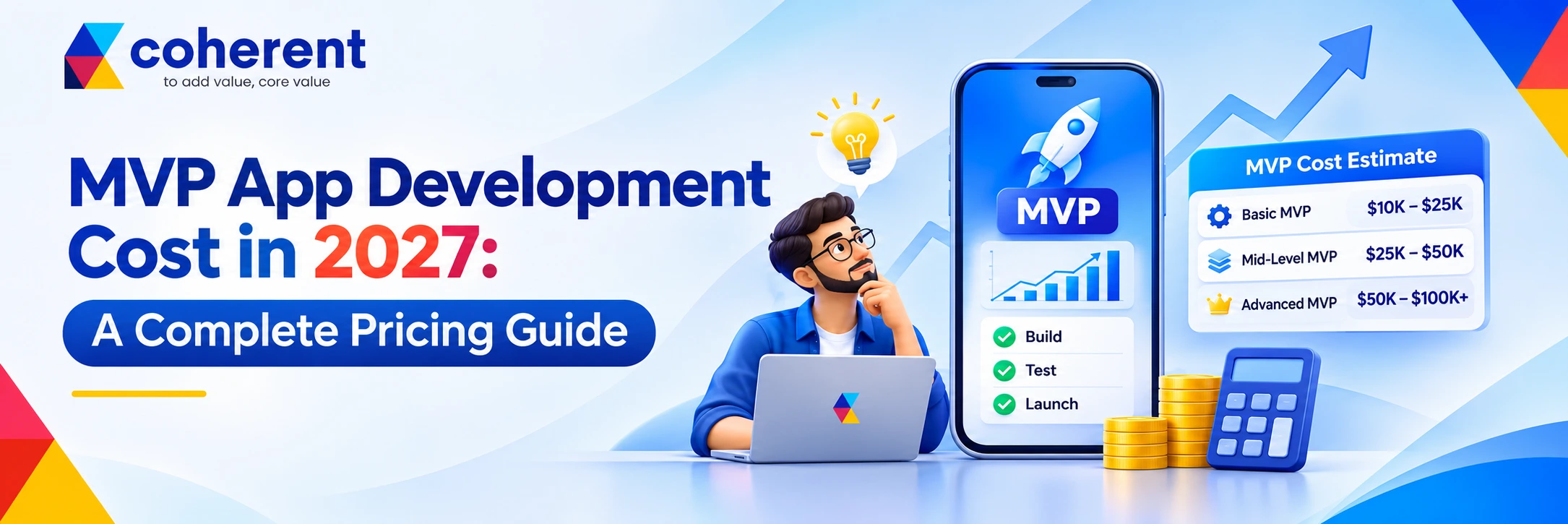
Building a mobile application is an exciting opportunity for startups, but development costs often become a major concern. Many businesses invest heavily in app development without knowing whether customers actually need their product. This is where Minimum Viable Product (MVP) development becomes valuable. It allows businesses to launch an application with essential features, test market demand, and improve the product based on real user feedback.
Understanding MVP App Development Cost in 2027 helps startups make informed financial decisions before beginning development. The total investment depends on application complexity, features, technology stack, development team location, and platform selection. A simple MVP requires fewer resources, while advanced applications involving artificial intelligence, real-time functionality, or complex integrations need larger budgets.This pricing guide explains estimated MVP development costs, platform comparisons, industry-specific expenses, development timelines, hidden charges, and practical cost-saving strategies. Whether you are launching your first startup or expanding an existing business, understanding these factors can help you build a functional application without unnecessary spending.
Key Takeaways
- Basic MVP development may cost approximately 5,000–15,000.
- Medium-complexity MVP applications may require 15,000–40,000.
- Advanced MVP applications with AI integrations can exceed $40,000.
- Cross-platform development can reduce duplicate development work.
- MVP development commonly takes 6–16 weeks, depending on scope.
- Development team location and experience significantly influence pricing.
- Prioritizing essential features helps control initial development expenses.
- Startups should budget separately for hosting, maintenance, and improvements.
How Much Does MVP App Development Cost in 2027?
The estimated MVP app development cost in 2027 ranges from $5,000 to $60,000 or more, depending on application complexity, development location, and required functionality.Build a Cross-Platform MVP Simple applications generally cost less, while advanced products involving AI, payment integrations, real-time communication, or complex backend systems require greater investment and longer development timelines.
MVP App Development Cost by Complexity
Application complexity directly influences development costs because more advanced features require additional engineering, testing, and integration work. Startups should choose a development scope that supports their primary business goals without introducing unnecessary functionality.
MVP App Development Cost by Platform
The platform selected for an MVP affects development expenses, testing requirements, and future maintenance. Businesses should consider their target audience and product requirements before choosing Android, iOS, web, or cross-platform development.
|
Development Platform |
Estimated MVP Cost (USD) |
|---|---|
|
Android MVP Development |
$8,000–$30,000 |
|
iOS MVP Development |
$10,000–$35,000 |
|
Cross-Platform MVP Development |
$12,000–$40,000 |
|
Web Application MVP Development |
$5,000–$25,000 |
MVP Development Cost Breakdown
Understanding where development money goes helps startups allocate budgets effectively. MVP development typically involves several stages, including planning, design, programming, testing, and deployment.
|
Development Stage |
Estimated Cost (USD) |
|---|---|
|
Discovery and Planning |
$500–$2,000 |
|
UI/UX Design |
$1,000–$4,000 |
|
Frontend Development |
$3,000–$10,000 |
|
Backend Development |
$3,000–$12,000 |
|
API Integration |
$500–$4,000 |
|
Testing and Quality Assurance |
$1,000–$4,000 |
|
Deployment and Configuration |
$500–$2,000 |
|
Total Estimated Cost |
$9,500–$38,000 |
MVP App Development Market Statistics
The MVP development market continues evolving as businesses adopt artificial intelligence, cloud infrastructure, and cross-platform technologies. Startups increasingly focus on faster product validation and efficient development processes.Fantasy Sports App MVP Understanding software industry trends helps businesses estimate future development requirements, evaluate emerging technologies, and identify opportunities to reduce expenses while maintaining product quality and performance.
Key MVP Development Market Insights
Several industry developments are influencing how startups approach software development.
- AI-Assisted Development: AI coding tools can assist developers with code generation, debugging, and documentation.
- Cross-Platform Applications: Flutter and React Native support code reuse across mobile platforms.
- Cloud Computing: Usage-based infrastructure helps startups avoid large upfront server investments.
- Low-Code Development: Visual development platforms can accelerate selected types of MVP projects.
- Product Analytics: Early-stage businesses increasingly use behavioral data to evaluate product assumptions.
How Market Trends Affect MVP Pricing
Technology adoption can change both the initial investment and ongoing operational costs of an MVP.
- AI development assistants may reduce time spent on repetitive programming tasks.
- Cloud-native architecture can reduce initial infrastructure requirements.
- Prebuilt integrations may shorten development schedules.
- Security and compliance requirements can increase development expenses.
- Automated testing can reduce repetitive manual testing effort.
What Factors Affect MVP App Development Cost?
Several technical and business factors determine the final cost of developing a minimum viable product.Mobile App Development Cost Application complexity, design expectations, development platforms, third-party integrations, and team experience all influence pricing. Understanding these factors allows startups to prioritize essential functionality, compare development proposals, and avoid unexpected expenses during the software development lifecycle and launch.
App Complexity and Feature Requirements
The number and sophistication of application features significantly affect development expenses. A simple app with basic registration and dashboards generally requires fewer resources than a platform offering real-time communication, advanced analytics, or artificial intelligence.
Features that commonly increase costs include:
- User registration and authentication
- Payment gateway integration
- Real-time chat and notifications
- GPS tracking and location services
- AI-powered recommendations
- Advanced analytics dashboards
- Third-party software integrations
UI/UX Design and Technology Stack
User interface design and technology selection influence development time, performance, and maintenance expenses. Custom interfaces require more design work than standard templates, while technology choices determine how efficiently developers can build and scale the application.
Popular technologies include:
- Frontend: Flutter, React Native, Swift, Kotlin
- Backend: Node.js, Python, Laravel
- Database: PostgreSQL, MongoDB, Firebase
- Cloud Infrastructure: AWS, Google Cloud, Microsoft Azure
MVP App Development Cost by App Type and Industry
MVP development costs vary across industries because applications require different features, security measures, integrations, and user experiences.Coherent Lab LLP For example, healthcare applications may require stronger privacy controls, while financial applications often need secure transactions and compliance considerations. Understanding industry-specific requirements helps businesses estimate realistic budgets and prioritize development investments before launching products.
Cost to Build Different Types of MVP Apps
Different business models require different combinations of frontend development, backend systems, user management, and third-party services.
|
MVP App Type |
Estimated Development Cost (USD) |
Key Features |
|---|---|---|
|
E-commerce MVP |
$10,000–$30,000 |
Product catalog, shopping cart, payment gateway |
|
Healthcare MVP |
$15,000–$45,000 |
Appointment booking, patient profiles, notifications |
|
Fintech MVP |
$20,000–$60,000 |
Secure transactions, authentication, payment integration |
|
Food Delivery MVP |
$15,000–$40,000 |
Food ordering, real-time tracking, online payments |
|
Social Networking MVP |
$15,000–$50,000 |
User profiles, messaging, social feeds |
|
AI-Powered MVP |
$20,000–$70,000 |
AI integration, intelligent automation, chatbots |
|
On-Demand Service MVP |
$12,000–$35,000 |
Service booking, payment processing, push notifications |
Why Industry Requirements Change Development Costs
Industry-specific functionality can significantly increase development expenses because some applications require additional security, infrastructure, and technical expertise.
Important considerations include:
- Healthcare: Patient data protection and applicable healthcare regulations.
- Fintech: Transaction security, identity verification, and regulatory requirements.
- E-commerce: Inventory management, payment gateways, and order processing.
- Social Media: Real-time messaging, content moderation, and media storage.
- AI Applications: Model integration, data processing, and ongoing API usage.
Also read:Playable Ads and Mini-Game Marketing Trends for Brands: Strategies, Benefits, and Future Opportunities
What Are the Benefits of MVP App Development?
MVP app development offers startups a practical approach to testing business ideas while controlling initial investment. However, building a successful MVP requires careful planning, feature prioritization, and realistic expectations. Understanding both benefits and challenges helps businesses balance development costs, product quality, customer feedback, and long-term scalability before committing significant financial resources.
Key Benefits of Building an MVP
An MVP helps businesses introduce their core product concept without developing every planned feature. It provides an opportunity to learn from actual users before expanding the application.
Major benefits include:
- Lower Initial Investment: Focus resources on essential functionality.
- Faster Market Entry: Launch a smaller product sooner.
- Early Customer Feedback: Understand user expectations and problems.
- Reduced Business Risk: Test assumptions before expanding investment.
- Better Product Decisions: Use real customer behavior to guide improvements.
- Investor Demonstrations: Present a functional product rather than relying only on concepts.
How to Build an MVP App: Step-by-Step Development Process
Building an MVP requires a structured process that connects business goals with technical execution. Startups should begin by validating their ideas, identifying essential features, and selecting appropriate technologies.MVP Development Guide for Startups A well-planned development process reduces unnecessary work, improves collaboration, and helps businesses launch functional applications while keeping development timelines and budgets manageable throughout execution.
Define Your Business Idea and Target Audience
The first step is identifying the specific customer problem your application will solve. Startups should conduct market research, understand user expectations, and analyze competing solutions before investing in development. Clear business objectives help teams avoid unnecessary functionality and focus on meaningful outcomes.
Important activities:
- Define the primary customer problem.
- Identify target audience segments.
- Research competing applications.
- Establish measurable product goals.
Prioritize Essential MVP Features
Feature prioritization helps businesses distinguish between essential functionality and optional enhancements. Startups should focus on features necessary to demonstrate the application's main value proposition. Additional capabilities can be introduced after collecting user feedback and validating product demand.
Recommended activities:
- Create a complete feature inventory.
- Identify must-have functionality.
- Apply the MoSCoW prioritization framework.
- Prepare a clear product requirements document.
Choose the Right Technology Stack
Technology selection influences development costs, application performance, and future maintenance requirements. Startups should evaluate their expected users, integration needs, technical complexity, and scalability goals before choosing development frameworks. Selecting suitable technologies early can reduce unnecessary rework during later development stages.
Key considerations:
- Native versus cross-platform development
- Backend frameworks and databases
- Cloud hosting requirements
- Third-party integrations
- Security and scalability
Design and Develop Your MVP
The development stage transforms product requirements into a functional application. Designers create intuitive interfaces while developers implement essential features, backend systems, and integrations. Regular reviews help identify issues early and ensure the application remains aligned with its original business objectives.
Core development activities:
- Create wireframes and prototypes.
- Develop frontend interfaces.
- Build backend functionality.
- Integrate essential APIs.
- Review development milestones.
Test, Launch, and Improve Your MVP
Testing ensures that essential application features function correctly before users access the product. After launch, startups should monitor performance, collect customer feedback, and evaluate whether the MVP solves its intended problem. These insights help determine which features deserve further investment.
Post-development activities:
- Perform functional testing.
- Conduct usability testing.
- Fix critical bugs.
- Launch to early adopters.
- Monitor engagement and retention.
- Prioritize improvements based on feedback.
How Can Startups Reduce MVP App Development Costs?
Startups can reduce MVP development expenses by prioritizing essential features, selecting suitable technologies, and avoiding unnecessary customization.On-Demand App Development Effective cost optimization focuses on delivering a functional product rather than building a complete application immediately. Clear requirements, reusable components, experienced developers, and realistic project planning help businesses control expenses without sacrificing essential quality standards.
Best Practices for Cost-Effective MVP Development
Reducing development costs requires thoughtful planning rather than simply choosing the cheapest developers. Businesses should identify opportunities to simplify technical requirements while preserving the application's main functionality.
Recommended strategies include:
- Build only essential MVP features.
- Use reusable UI components.
- Consider Flutter or React Native for suitable cross-platform projects.
- Select established third-party APIs.
- Avoid unnecessary custom integrations.
- Choose an appropriate outsourcing model.
- Use scalable cloud infrastructure.
- Establish clear project milestones.
Conclusion
Understanding MVP App Development Cost in 2027 helps startups make better decisions about product features, technology selection, and development investment. While basic MVP applications may require smaller budgets, advanced products involving AI, complex integrations, or specialized security requirements can cost considerably more.
Businesses should focus on essential functionality, realistic timelines, and long-term maintenance needs rather than simply choosing the cheapest development option. A carefully planned MVP allows startups to validate market demand before expanding their investment. If you are preparing to launch a new application, contact Coherent Lab LLP today to discuss your MVP development requirements and project budget.
Frequently Asked Questions
Q1. How much does it cost to develop an MVP app in 2027?
Ans. The estimated MVP app development cost in 2027 ranges from $5,000 to $60,000 or more, depending on complexity, features, platform selection, and development location. Basic applications with limited functionality generally require smaller budgets, while advanced MVPs involving artificial intelligence, payment processing, or real-time communication can cost significantly more.Startups should also consider design, testing, deployment, hosting, and maintenance expenses. The most reliable way to determine development costs is to prepare a clear feature list and request a detailed project estimate from an experienced development team.
Q2. What is the average MVP app development cost for startups in India?
Ans. For planning purposes, startups outsourcing MVP development to India might budget approximately 5,000–30,000 for a relatively simple or medium-complexity application. Advanced projects can cost considerably more depending on security, integrations, and technical requirements.India offers access to software development professionals working across mobile applications, cloud platforms, and AI technologies.
Q3. How long does it take to build an MVP mobile application?
Ans. MVP mobile application development commonly takes approximately 6–16 weeks for a reasonably scoped project, although simple prototypes may take less time and complex products may require several months.The timeline depends on application features, technical requirements, team availability, and third-party integrations. Planning and design typically happen first, followed by frontend development, backend implementation, testing, and deployment.Startups can reduce development time by prioritizing essential functionality, avoiding unnecessary customization, and maintaining clear communication with developers. A well-defined MVP scope helps teams deliver a functional product without spending additional time on features that are not required for initial market validation.
Q4. Is MVP app development cheaper than full-scale app development?
Ans. Yes, MVP app development generally requires a lower initial investment than building a complete application because it focuses on essential functionality rather than an extensive feature set.A full-scale application may include advanced analytics, complex integrations, extensive customization, and additional user-facing capabilities. An MVP includes only the features necessary to validate the core product concept.However, MVP development is not automatically cheaper over the entire product lifecycle. Poor architecture or repeated rebuilding can increase future expenses. Startups should balance initial cost savings with technical quality, security, and reasonable scalability to support future development.
Q5. What are the minimum features required to build an MVP app?
Ans. The minimum features required for an MVP depend on the application's business model and the problem it aims to solve. A successful MVP should include enough functionality for users to complete the primary task and provide meaningful feedback.Not every MVP requires all these features. For example, a simple utility application may not need user accounts, while an e-commerce MVP typically requires product browsing and checkout functionality. Feature selection should reflect the product's main validation objective.
Q6. How much does it cost to build an AI-powered MVP application?
Ans. An AI-powered MVP application may cost approximately 20,000–70,000 or more, depending on the complexity of its AI functionality, data requirements, integrations, and infrastructure.Applications using existing AI APIs can sometimes be developed more economically than products requiring custom machine learning models or specialized data pipelines.Startups should begin with the smallest AI feature set capable of demonstrating meaningful value to users.
Q7. Should startups hire freelancers or an MVP development company?
Ans. Startups can choose freelancers or an MVP development company depending on project complexity, available budgets, and internal technical expertise.Freelancers may be suitable for smaller applications with clearly defined requirements. They can provide flexibility and lower initial coordination costs. However, businesses may need to manage multiple specialists for design, development, testing, and deployment.An MVP development company may offer a coordinated team covering several technical disciplines. This can simplify project management for applications requiring multiple integrations or complex functionality.Before selecting either option, startups should evaluate portfolios, communication practices, development processes, security standards, and post-launch support arrangements.
Q8. How can I build an MVP app on a limited budget?
Ans. Building an MVP app on a limited budget requires prioritizing essential functionality and eliminating unnecessary development work. Startups should focus on solving one meaningful customer problem rather than launching a feature-heavy application..A clear product roadmap and realistic development milestones can help startups control expenses while creating an application that supports early customer validation.

 +91 774-202-1725
 +1 (945) 3387904
 business@coherentlab.com
 +49 15223341304
 UK

