Table of Contents
How to Choose the Right Game Development Company for Your Project
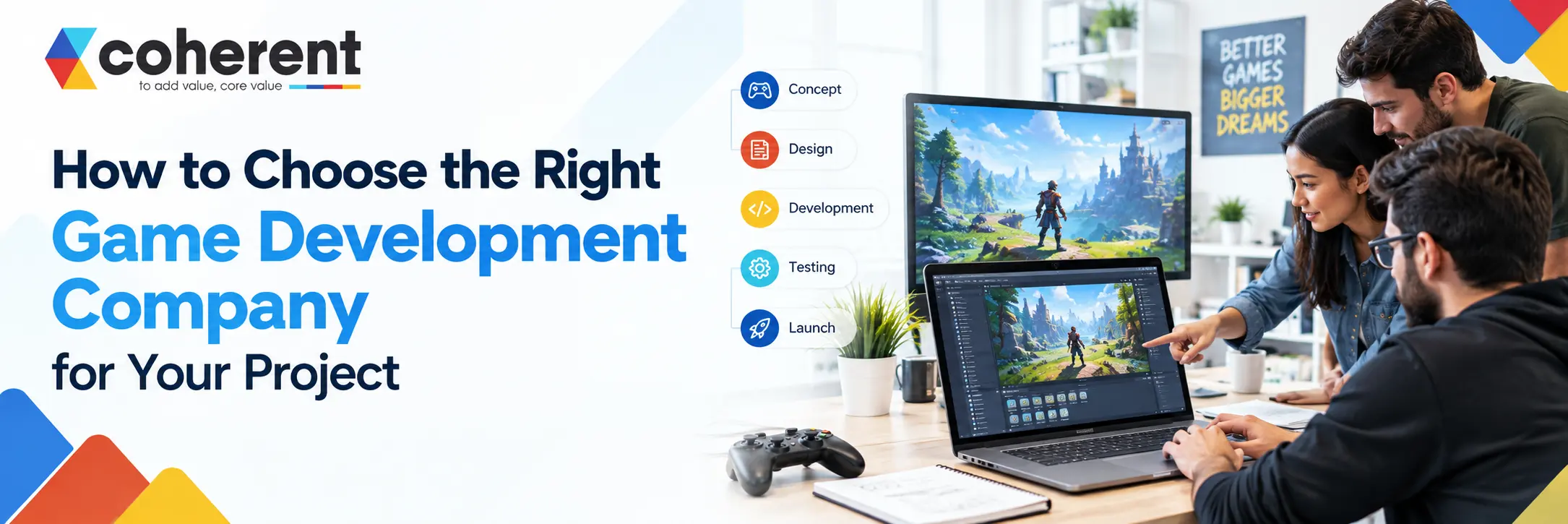
Choosing the right game development company can make a major difference to your project's quality, budget, timeline, and long-term success. Whether you are building a mobile game, PC game, console title, multiplayer experience, or an immersive 3D game, the development partner you choose should understand both your technical requirements and your business goals.
With hundreds of game development studios, outsourcing companies, and freelance teams available today, finding the right partner can feel overwhelming.The good news is that you don't need to choose based only on price or a polished website.You need to evaluate game development experience, communication, development process, scalability, security, and post-launch support.This guide explains exactly what to look for when choosing a game development company for your project.
What Is a Game Development Company?
A game app development company is a professional team that creates video games for platforms such as mobile devices, PCs, consoles, browsers, and VR systems. Depending on the project, it may handle game design, programming, 2D/3D art, animation, backend development, multiplayer functionality, testing, deployment, and maintenance. Game development companies help transform an initial concept into a playable, scalable, and market-ready gaming experience.
- Game concept development
- Game design
- 2D game development
- 3D game development
Why Choosing the Right Game Development Company Matters
Choosing the right game development company can directly affect your project's quality, development timeline, budget, performance, and long-term scalability. An experienced development partner can understand your vision, recommend suitable technologies, manage complex features, and maintain clear communication throughout the project. The wrong choice may lead to delays, unexpected costs, technical problems, or poor user experience. Careful evaluation helps create a smoother development journey and stronger foundation for future updates.
- Missed deadlines
- Unexpected development costs
- Poor game performance
- Technical debt .
Also Read :- How to Choose the Best Game App Development Company
10 Factors to Consider When Choosing a Game Development Company
Choosing a game development company requires more than comparing prices. The right partner should understand your game concept, target audience, platform, technology, budget, and long-term goals. Before signing a contract, evaluate the company's portfolio, technical capabilities, development process, team, communication, pricing, security, and support services. These factors can help you identify a development partner that can turn your gaming idea into a reliable, engaging, and scalable product.
| No. | Factor | What to Check | Why It Matters |
|---|---|---|---|
| 1 | Game Development Portfolio | Previous games, genres, platforms, case studies, and demos | Shows practical experience and development capabilities |
| 2 | Technical Expertise | Unity, Unreal Engine, Godot, C#, C++, AI, AR/VR, backend | Ensures the team can handle your technical requirements |
| 3 | Target Platform Experience | Android, iOS, PC, console, web, VR, or cross-platform | Helps ensure better compatibility and optimization |
| 4 | Development Process | Discovery, design, prototype, production, testing, and launch | Provides a structured roadmap for development |
| 5 | Team Expertise | Developers, designers, artists, animators, QA, and project managers | Ensures access to the right skills for your project |
| 6 | Communication & Management | Meetings, project tools, progress updates, and reporting | Keeps the project transparent and aligned |
| 7 | Game Development Cost | Features, platforms, development hours, testing, and support | Helps create a realistic and transparent budget |
| 8 | Client Reviews & Reputation | Reviews, testimonials, case studies, and client feedback | Provides insight into previous client experiences |
| 9 | IP & Security | Source-code ownership, assets, confidentiality, and data security | Protects your game, business information, and intellectual property |
| 10 | Post-Launch Support | Bug fixes, updates, optimization, maintenance, and server support | Helps maintain and improve the game after launch |
1. Check Their Game Development Portfolio
A company's portfolio provides a practical view of its game development experience and creative capabilities. Instead of judging a studio only by screenshots or promotional claims, explore its completed games whenever possible. Look for projects with similar genres, platforms, gameplay mechanics, graphics, and technical requirements. A relevant portfolio can give you a clearer understanding of whether the company has experience handling challenges similar to those in your project.
- 2D or 3D development experience
- Multiplayer development capabilities
- Backend and API integration experience
- Playable demos or detailed case studies
2. Evaluate Their Technical Expertise
Modern game development services require more than basic programming. Depending on your project, you may need game engines, programming languages, backend systems, cloud infrastructure, networking, databases, AI, and third-party integrations. Before hiring a game development company, evaluate whether its developers have experience with the technologies required for your project. The technology stack should support your game's performance, scalability, platform compatibility, and future development needs.
- Game APIs
- Database systems
- AI technologies
- AR/VR development
3. Choose a Company With Experience in Your Target Platform
Your target platform directly affects game development decisions, including controls, performance optimization, graphics, testing, and deployment. A mobile game has different technical requirements from a high-end PC or console title. Choose a game development company with experience building for the platforms you plan to target, especially if you want to launch across multiple devices or operating systems. For mobile-based gaming projects, experienced mobile app development expertise can also help ensure better performance, compatibility, and user experience.
- Nintendo Switch
- Web browsers
- VR headsets
- AR devices
4. Review Their Team and Expertise
Game development usually requires several specialized skills, so understanding the team behind your project is important. A company may have experienced professionals across programming, design, art, animation, backend development, QA, and project management. Ask who will actually work on your game, what their responsibilities will be, and how the team can scale if your project requirements change.
- Will you have a dedicated project manager?
- Will senior developers participate?
- Is the team in-house or outsourced?
- How many professionals will work on the project?
- Can the team scale when requirements increase?
5. Consider Communication and Project Management
Clear communication is essential for successful game development outsourcing, particularly when working with remote or offshore teams. You should know how often the company provides updates, how feedback is shared, and how project issues are documented. A structured communication process helps keep everyone aligned on requirements, milestones, changes, deadlines, and deliverables throughout the development lifecycle.
- Technical documentation
- Response-time expectations
- Issue tracking
- Dedicated communication channels
6. Compare Game Development Costs Carefully
Game development costs can vary significantly depending on the project's complexity and requirements. A basic 2D mobile game may require fewer resources than a large 3D multiplayer title with advanced graphics, real-time networking, and cloud infrastructure. Instead of comparing only the final price, review the complete scope, deliverables, milestones, technologies, testing, and support included in each proposal.
- Sound design
- Third-party integrations
- Testing requirements
- Post-launch support
7. Check Client Reviews and Reputation
Client reviews can provide useful information about a company's working style and reliability. However, don't focus only on ratings or the number of reviews. Read feedback about communication, technical expertise, project management, responsiveness, deadlines, and post-launch support. Independent review platforms, case studies, and professional references can provide additional context when evaluating a potential game development partner.
- Budget transparency
- Problem-solving
- Responsiveness
- Post-launch support
8. Ask About Intellectual Property and Security
Your game's source code, artwork, characters, designs, documentation, business information, and other assets can represent valuable intellectual property. Before development starts, make sure ownership and usage rights are clearly defined in your agreement. You should also understand how the company protects project files, source code, credentials, user data, and confidential business information throughout development.
- Confidentiality
- Intellectual property rights
- Source-code access
- Security responsibilities
9. Evaluate Post-Launch Support
Launching a game is often the beginning of its long-term lifecycle rather than the final development task. Players may expect new content, improvements, bug fixes, compatibility updates, and performance enhancements. Before hiring a game development company, understand what post-launch services it provides and whether those services are included in the initial agreement or charged separately.
- Security patches
- Server maintenance
- OS compatibility updates
- Analytics monitoring
Game Development Company vs Freelancers: Which Should You Choose?
Choosing between a game development company and freelancers depends on your project's size, complexity, budget, timeline, and long-term requirements. Freelancers can be suitable for smaller games, prototypes, or specific development tasks, while a dedicated game development company can provide developers, designers, artists, QA testers, project managers, and other specialists under one team. For a better understanding of the development workflow, explore the Mobile Game Development Process. Consider your technical requirements and support needs before making a decision.
| Factor | Game Development Company | Freelancers |
|---|---|---|
| Team Size | Larger team | Usually individual |
| Specialized Skills | Multiple specialists | Depends on freelancer |
| Project Management | Usually available | May be limited |
| Scalability | Generally easier | Can be challenging |
| Large Projects | Suitable | May require multiple freelancers |
| Small Projects | Suitable depending on budget | Often suitable |
| Long-Term Support | Usually available | Depends on agreement |
Red Flags to Watch for When Hiring a Game Development Company
Choosing a game development company requires careful research because the wrong partner can create delays, unexpected costs, technical issues, and communication problems. Before signing a contract, look for warning signs such as an unclear portfolio, unrealistic pricing, vague timelines, poor communication, unclear ownership terms, limited testing, or no post-launch support. Identifying these red flags early can help you better evaluate potential development partners.
- Unrealistically low estimates
- Guaranteed delivery without understanding requirements
- Unclear contracts
- Poor communication
How to Shortlist Game Development Companies
Shortlisting the right game development companies becomes easier when you follow a structured evaluation process. Rather than contacting many studios without clear requirements, first define your game concept, technology, platform, budget, and timeline. Then research relevant companies, request detailed proposals, compare their capabilities and terms, and consider a prototype. This approach helps you find a development partner that matches your project needs.
Step 1: Define Your Project
Before contacting a game development company, clearly document what you want to build. A well-defined project scope helps companies understand your requirements and provide more realistic estimates for development time, resources, technology, and budget.
- Game genre
- Target audience
- Target platform
- Core gameplay
Step 2: Research Companies
Research potential development partners based on their previous experience and technical capabilities. Focus on companies that have delivered projects similar to yours rather than choosing solely because of their size, pricing, or online presence. Relevant experience can make technical discussions and project planning more productive.
- Experience with your game genre
- Experience with your target platform
- Preferred technology expertise
- Similar project complexity
Step 3: Request Proposals
Once you have created a shortlist, request detailed proposals from the selected game development companies. A good proposal should explain how the company plans to approach your project, what resources are required, and how development will be organized. Detailed proposals also make it easier to understand what is included in the quoted budget.
- Technical approach
- Development timeline
- Team structure
- Cost estimate
Step 4: Compare the Proposals
Don't compare game development proposals based only on price. Examine the complete value offered by each company, including technical expertise, team experience, development methodology, communication, deliverables, support, and contractual terms. A detailed comparison can help you identify differences between proposals and determine which team aligns with your project's requirements.
- Relevant experience
- Technical approach
- Development team
- Project timeline
Step 5: Start With a Prototype
For complex game development projects, starting with a proof of concept or playable prototype can help validate important ideas before full production. A prototype allows you to test core gameplay mechanics, user interactions, technical feasibility, and overall direction. This can provide useful feedback before committing substantial resources to complete development.
- Test core gameplay mechanics
- Validate technical feasibility
- Identify usability issues
- Gather early feedback
Also Read :- How Much Does Game Development Cost? Complete Pricing Guide
How to Choose the Right Game Development Company: Quick Checklist
Choosing the right game development company becomes easier when you evaluate the most important factors before signing a contract. Review the company's portfolio, technical expertise, target-platform experience, development process, team structure, communication, pricing transparency, security practices, intellectual property terms, testing capabilities, and post-launch support. A practical checklist helps you compare potential partners and identify a team that fits your game's requirements.
- Are intellectual property rights clearly documented?
- Does the company provide testing and QA?
- Is post-launch support available?
- Can the team scale with your project?
Understand Their Game Development Process
A professional game development company should follow a clear and structured development process, from the initial idea to final launch and ongoing maintenance. Understanding each stage helps you track progress, manage expectations, control project scope, and provide timely feedback. Before hiring a development partner, ask how they handle game design, prototyping, production, testing, deployment, and post-launch support.
Step 1: Discovery
The discovery stage establishes a clear foundation for your game project. The development team evaluates your concept, target audience, business objectives, competitors, platforms, technical requirements, and expected features. This stage helps identify potential challenges and defines the overall project scope before design and development begin.
- Game concept analysis
- Target audience identification
- Competitor research
- Feature planning
Step 2: Game Design
Game design transforms your initial concept into a structured gameplay experience. Designers define the game's mechanics, characters, levels, rules, progression, user interactions, monetization, and overall player experience. A detailed design plan helps developers, artists, and designers maintain a consistent vision throughout the game development lifecycle.
- Gameplay mechanics
- Level design
- Character development
- Game rules
Step 3: Prototype
A prototype creates an early, simplified version of the game's core experience. It allows the development team to test important gameplay mechanics and interactions before investing heavily in full production. Prototyping can reveal technical limitations, usability issues, or gameplay improvements while changes are still easier and less expensive to make.
- Core gameplay testing
- Basic mechanics
- User interactions
- Technical feasibility
Step 4: Production
Production is the main development stage where the approved game concept becomes a complete product. Developers, game designers, artists, animators, backend specialists, and other team members collaborate to build the planned features. Depending on the project, production can include programming, 2D or 3D assets, animations, networking, and platform optimization.
- Game programming
- 2D/3D asset creation
- Character animation
- UI/UX development
Step 5: Testing
Game testing ensures that the product works correctly across supported platforms and devices. QA professionals check functionality, performance, usability, compatibility, security, and gameplay. Testing should take place throughout development rather than only before launch, helping the team identify bugs and performance problems earlier.
- Functional testing
- Bug detection
- Performance testing
- Device compatibility
Step 6: Launch
The launch stage prepares the completed game for release on its selected platforms. The development team may handle final builds, platform requirements, deployment configuration, store submissions, analytics, and release monitoring. A well-planned launch process helps reduce technical issues and ensures the game meets the requirements of its intended distribution platforms.
- Final build preparation
- Platform compliance
- Store submission
- Deployment
Step 7: Post-Launch Support
Post-launch support helps keep your game stable and updated after release. Players may discover bugs, compatibility issues, performance problems, or request new features. A reliable game development company can provide ongoing maintenance, updates, optimization, and technical support to improve the game's long-term performance and user experience.
- Bug fixes
- Performance optimization
- New features
Final Thoughts
Choosing a game development company is an important decision because your development partner can influence the quality, timeline, cost, and scalability of your game.Don't choose a company simply because it offers the lowest price or has the most attractive website.Instead, evaluate its portfolio, game development expertise, technology stack, team structure, communication process, development methodology, security practices, pricing transparency, and post-launch support.
Most importantly, choose a team that understands your vision and can translate that vision into an enjoyable, technically reliable gaming experience. Whether you're planning a mobile game, 2D game, 3D game, multiplayer game, Unity game, Unreal Engine game, AR/VR experience, or cross-platform title, the right development partner should be able to explain how it will turn your concept into a production-ready product. If you're ready to discuss your game development requirements, Contact us today to connect with experienced professionals.
Frequently Asked Questions
Q1: How do I choose a game development company?
Ans.Start by checking the company's portfolio, relevant game development experience, technical expertise, client reviews, and development process. Make sure the team understands your game genre, target platform, gameplay requirements, and budget. Also, discuss communication, intellectual property ownership, testing, timelines, and post-launch support before signing an agreement.
Q2: How much does it cost to hire a game development company?
Ans.The cost of hiring a game development company depends on your project's complexity, platform, graphics, gameplay mechanics, multiplayer features, backend infrastructure, and development timeline. A simple 2D mobile game generally requires fewer resources than a complex 3D multiplayer game. Request a detailed proposal that clearly explains development costs, milestones, features, and ongoing support.
Q3: What should I look for in a game development company?
Ans.Look for a company with relevant experience, a strong portfolio, skilled developers, and expertise in technologies such as Unity, Unreal Engine, or Godot. Evaluate communication, project management, quality assurance, security, and pricing transparency. The company should also clearly explain development milestones, deliverables, intellectual property ownership, and post-launch maintenance services.
Q4: Is Unity or Unreal Engine better for game development?
Ans.Unity and Unreal Engine can both support professional game development, but the right choice depends on your project. Consider your target platforms, graphics requirements, gameplay complexity, performance expectations, team expertise, and budget. Unity is commonly used for mobile and cross-platform games, while Unreal Engine is widely used for visually demanding 3D experiences.
Q5: Should I hire a game development company or freelancers?
Ans.The choice depends on your project's scope and requirements. Freelancers can be suitable for small projects, prototypes, or specific development tasks. A game development company can provide a complete team of developers, designers, artists, testers, and project managers. For complex multiplayer, 3D, or cross-platform games, a dedicated development team may provide broader capabilities.
Q6: Why is post-launch game support important?
Ans.Game development does not always end when the game is published. Post-launch support can include bug fixing, performance optimization, security updates, compatibility improvements, server maintenance, new features, and content updates. A reliable game development company can help monitor issues and release improvements after launch, helping keep the game technically stable as platforms and user expectations change.
Q7: What questions should I ask before hiring a game development company?
Ans.Ask about previous game projects, development expertise, technology stack, team structure, project methodology, estimated timeline, pricing, milestones, testing process, and communication. You should also clarify source-code ownership, intellectual property rights, confidentiality, third-party tools, and post-launch support. These questions help you understand exactly what the company will deliver and how the project will be managed.
Q8: How long does it take to develop a game?
Ans.Game development timelines vary according to the game's complexity, features, platform, art requirements, and team size. A basic mobie game or prototype may take a few months, while a complex 3D or multiplayer game can require significantly longer. A professional development company should provide a realistic timeline after reviewing your game concept, features, technical requirements, and scope.

 +91 774-202-1725
 +1 (945) 3387904
 business@coherentlab.com
 +49 15223341304
 UK
UK