
Table of Contents
Free-to-Play Fantasy Sports Apps: How They Work, Features, and How to Build One
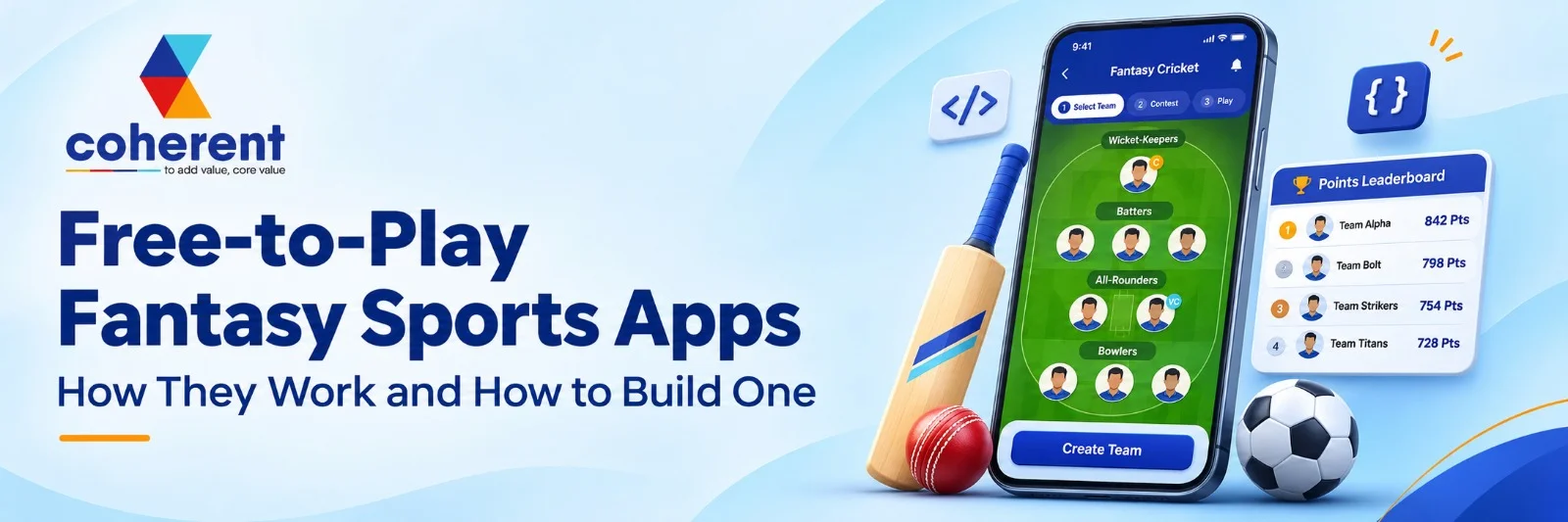
Free-to-play fantasy sports apps are transforming how sports enthusiasts engage with their favorite games by offering interactive gaming experiences without requiring entry fees. These applications allow users to create virtual teams, select real-world athletes, participate in fantasy leagues, and earn points based on actual player performances. Features such as live scores, leaderboards, player statistics, and virtual competitions make these platforms engaging for both beginners and experienced sports fans.
Unlike traditional paid fantasy platforms, free-to-play applications focus on accessibility, entertainment, and community engagement. Businesses can leverage these platforms to attract sports enthusiasts and generate revenue through advertising, sponsorships, affiliate partnerships, and optional premium features. With the right features, reliable sports data, and scalable technology, fantasy sports app development offers businesses an opportunity to build engaging digital sports platforms.
Quick Answer
Free-to-play fantasy sports apps are digital platforms where users create virtual teams using real athletes and compete in fantasy leagues without paying entry fees. Their teams earn points based on actual sports performances, while leaderboards, challenges, and achievements make the experience interactive and competitive. Businesses looking to develop such platforms can collaborate with Coherent Lab, which provides mobile app development expertise to build engaging, scalable, and feature-rich fantasy sports applications.
Key Takeaways
- Free-to-play fantasy sports apps allow users to participate in fantasy competitions without entry fees.
- Users create virtual teams using real-world athletes and earn points based on actual sporting performances.
- Essential features include team management, live scores, leaderboards, notifications, and fantasy contests.
- Advertising, sponsorships, and optional subscriptions can support platform monetization.
- Reliable sports data APIs and scalable backend infrastructure are important development requirements.
- Development costs depend on features, technology, integrations, and application complexity.
- Legal compliance, data security, and transparent scoring should be considered before launching.
Also read:Fantasy Sports App MVP: What to Build First and What Can Wait
What Are Free-to-Play Fantasy Sports Apps and How Do They Work?
Free-to-play fantasy sports applications combine real-world sporting events with virtual team management and competitive gaming. Users select athletes, create teams, and participate in leagues based on actual match performances. Understanding how fantasy sports apps work involves exploring how these platforms automatically calculate fantasy points using predefined scoring rules. Unlike entry-fee-based models, these platforms focus on accessible participation, sports entertainment, community engagement, and competition without requiring users to pay to enter contests.
Understanding the Free-to-Play Fantasy Sports Model
The free-to-play model allows sports fans to participate in fantasy competitions without purchasing an entry. Users build teams within predefined rules and earn points based on athletes' real-world performances. This model makes fantasy gaming accessible to beginners and experienced sports enthusiasts.
- Free account registration and participation.
- Virtual team selection and management.
- Performance-based fantasy scoring.
- Leaderboards, achievements, and community competitions.
How Does a Free Fantasy Sports App Work?
A fantasy sports application follows a structured process connecting user activities with live sporting events. Once a match begins, integrated sports data services provide player statistics. The scoring engine processes these updates and calculates team scores, allowing participants to monitor their performance throughout competitions.
- Users register and select a sport.
- They create virtual teams.
- They join available free contests.
- The application tracks real-world performances.
- Fantasy points and rankings update automatically.
Why Are Free-to-Play Fantasy Sports Apps Becoming Popular?
Free-to-play fantasy sports applications provide an accessible way to combine sports entertainment, strategic thinking, and digital competition. Through fantasy sports app development, businesses can create platforms where users participate without paying entry fees while building communities around popular sporting events. Increasing smartphone adoption and interactive sports experiences also create opportunities for application developers to introduce personalized features, engaging competition formats, and interactive experiences across different sports categories.
Benefits for Users
These platforms make fantasy sports more approachable by removing entry fees and simplifying participation. Users can explore team combinations, understand player statistics, and compete with friends. Regular contests and performance tracking also encourage continued participation and create an interactive sports entertainment experience.
- Participate without paying contest entry fees.
- Explore different sports and competitions.
- Improve sports knowledge through player analysis.
- Compete with friends and other enthusiasts.
Benefits for Businesses and App Owners
For businesses, free-to-play fantasy platforms provide opportunities to attract sports audiences and develop long-term digital communities. Advertising, sponsorships, and optional premium features can support revenue generation. Owners can also study user engagement patterns to improve platform functionality and introduce relevant experiences.
- Build a sports-focused user community.
- Generate advertising and sponsorship opportunities.
- Increase engagement through regular contests.
- Expand into multiple sports categories.
Which Sports Can You Include?
A fantasy sports platform can support multiple sporting categories depending on its target audience, data availability, and business strategy. Starting with one popular sport can simplify development, while additional categories can be introduced after evaluating user interest and application performance.
- Cricket and fantasy cricket.
- Football and fantasy football.
- Basketball and baseball.
- Hockey and other team sports.
- Esports and competitive gaming.
Also read:How Live Scores and Leaderboards Work in Fantasy Sports Apps
What Are the Essential Features of a Free-to-Play Fantasy Sports App?
The right features determine how easily users can participate, manage virtual teams, and follow competitions. Understanding the must have services for fantasy sports app development helps businesses identify the essential functionality required for a successful application. A well-designed platform should combine simple navigation with reliable sports information and engaging competition tools. Developers should prioritize essential functionality in the first version and introduce advanced features according to user feedback, platform performance, and long-term business objectives.
User Registration and Profile Management
Registration should be quick, secure, and easy to understand. Users need convenient account access and clear profile settings. A well-designed account experience helps participants manage preferences, receive relevant notifications, and track their fantasy gaming activities without unnecessary registration steps.
Fantasy Team Creation and Management
Team management is one of the most important application features. Users should be able to explore available athletes, review performance statistics, and select players according to predefined team restrictions. Clear selection rules make participation easier and reduce confusion during contest preparation.
Live Scores, Leaderboards, and Contests
Live sports information keeps users connected with ongoing matches. The application should automatically process verified performance updates and display fantasy scores. Leaderboards help participants understand their positions, while different contest formats create opportunities for individual, private, and community-based competitions.
How Do Free-to-Play Fantasy Sports Apps Make Money?
Although users do not pay entry fees, fantasy sports apps can generate revenue through several business models. Advertising, brand partnerships, subscriptions, and affiliate marketing offer monetization opportunities for businesses. The most suitable approach depends on audience size, user engagement, platform positioning, and applicable regulations. Businesses should prioritize user experience while implementing sustainable revenue strategies instead of introducing excessive advertisements or unnecessary paid features.
Advertising and In-App Advertisements
Advertising is a common monetization approach for free-to-play applications. Businesses can display relevant advertisements without charging users for participation. However, advertisements should appear naturally within the application to avoid interrupting team creation, match tracking, or other important activities.
- Banner advertisements.
- Rewarded video advertisements.
- Sponsored promotional placements.
- Relevant sports-related advertisements.
Sponsorships and Premium Features
Brand partnerships can provide additional revenue opportunities through sponsored contests and promotional campaigns. Applications may also offer optional subscriptions for advanced statistics, personalized insights, or customization features. These options should provide additional value without making basic participation dependent on payment.
- Sports brand collaborations.
- Sponsored tournaments and leagues.
- Advanced player analytics.
- Optional premium subscriptions.
How to Build a Free-to-Play Fantasy Sports App: Step-by-Step Process
Developing a fantasy sports application requires careful planning, technical implementation, and continuous testing. Businesses should begin by identifying their target audience and defining the application's core purpose. Understanding how fantasy sports apps make money also helps businesses establish suitable monetization strategies during the planning stage. The development process then moves through design, technology selection, backend development, sports API integration, testing, and deployment. A phased approach helps control complexity and supports future improvements.
|
Step |
Development Stage |
Key Activities |
Important Requirements |
|---|---|---|---|
|
Step 1 |
Research the Market and Define Your Business Model |
Research existing fantasy sports platforms, identify target audiences, analyze competitors, and define monetization opportunities. |
Market research, target audience, sports categories, competitor analysis, revenue model, and participation strategies. |
|
Step 2 |
Plan Essential Features and Application Requirements |
Identify core application features and prepare a roadmap that separates MVP functionality from advanced features. |
User registration, login, virtual team creation, player selection, contests, scoring, and leaderboards. |
|
Step 3 |
Design the UI/UX and Select the Technology Stack |
Create wireframes and interactive prototypes. Select technologies based on application requirements, scalability, and expected traffic. |
Frontend: Flutter, React Native. Backend: Node.js, Python, Java. Database: PostgreSQL, MongoDB, Redis. Infrastructure: Cloud hosting and monitoring. |
|
Step 4 |
Develop the Backend and Core Application Functionality |
Build the application architecture, backend services, authentication systems, database management, and fantasy scoring logic. |
Secure authentication, team management, contest management, fantasy point calculations, and backend APIs. |
|
Step 5 |
Integrate Sports Data APIs and Real-Time Features |
Integrate third-party sports APIs to retrieve match schedules, player statistics, live scores, and match results. Automate data synchronization. |
Sports data API integration, live player statistics, match schedules, automated scoring updates, and real-time leaderboards. |
|
Step 6 |
Test, Launch, and Maintain the Application |
Conduct functional, usability, security, and performance testing. Deploy the application and monitor its performance after launch. |
Functional testing, security testing, load testing, Google Play and Apple App Store deployment, performance monitoring, and ongoing maintenance. |
Step 1: Research the Market and Define Your Business Model
Start by researching existing fantasy sports platforms, target audiences, and popular sports categories. Understand user expectations, competitor features, and market opportunities. Define your free-to-play business model, identify revenue opportunities, and determine which sports and competition formats your application will initially support.
- Study existing fantasy sports platforms.
- Identify target users and sports categories.
- Analyze competitor features and functionality.
- Define monetization and participation strategies.
Step 2: Plan Essential Features and Application Requirements
Identify the core features required to deliver a smooth fantasy gaming experience. Focus on registration, team creation, player selection, contest management, live scores, and leaderboards. Prepare a feature roadmap that separates essential MVP functionality from advanced features planned for future application updates.
- Define user registration and login functionality.
- Plan virtual team creation and management.
- Include contests, scoring, and leaderboards.
- Prepare an MVP feature development roadmap.
Step 3: Design the UI/UX and Select the Technology Stack
Create wireframes and interactive prototypes to establish the application's visual structure and navigation. Focus on simple onboarding, readable player statistics, and convenient team selection. Select suitable frontend, backend, database, and cloud technologies based on project requirements, expected traffic, and scalability needs.
- Frontend: Flutter, React Native, or native development.
- Backend: Node.js, Python, or Java.
- Database: PostgreSQL, MongoDB, or Redis.
- Infrastructure: Cloud hosting and monitoring services.
Step 4: Develop the Backend and Core Application Functionality
Build the application architecture and develop essential backend services to manage users, teams, contests, and match-related information. Implement secure authentication, database management, and fantasy scoring logic. Ensure different application modules communicate efficiently to support accurate calculations and smooth user interactions.
- Develop secure user authentication.
- Implement team and contest management.
- Build fantasy point calculation functionality.
- Create database and backend API services.
Step 5: Integrate Sports Data APIs and Real-Time Features
Integrate reliable third-party sports data APIs to retrieve match schedules, player statistics, live scores, and match results. Configure automated data synchronization and scoring updates. Proper API integration helps maintain accurate fantasy points, update leaderboards, and provide users with timely information during ongoing competitions.
- Integrate live sports data APIs.
- Retrieve player statistics and match schedules.
- Automate fantasy scoring updates.
- Implement real-time leaderboard synchronization.
Step 6: Test, Launch, and Maintain the Application
Before launching, conduct comprehensive testing to identify functionality, security, and performance issues. Evaluate the application under different traffic conditions and verify scoring accuracy. After deployment, monitor user feedback, application performance, and technical issues to introduce improvements and maintain a reliable fantasy sports experience.
- Perform functional and usability testing.
- Conduct security and load testing.
- Deploy on Google Play and Apple App Store.
- Monitor performance and provide ongoing maintenance.
Conclusion
Free-to-play fantasy sports apps provide opportunities to combine sports entertainment, virtual team management, and interactive competition without requiring users to pay contest entry fees. Their success depends on reliable sports data, engaging features, transparent scoring, and a scalable technology architecture.
For businesses planning to enter this market, a clear development strategy is essential. Start with a focused MVP, understand your audience, select suitable technologies, and prioritize security and compliance. With continuous improvements and an effective monetization strategy, businesses can develop fantasy sports platforms that deliver lasting value to sports enthusiasts. Talk to Our Experts
Frequently Asked Questions
Q1. What are free-to-play fantasy sports apps, and how do they work?
Ans. Free-to-play fantasy sports apps allow users to create virtual teams using real-world athletes without paying contest entry fees. Users select players, join virtual competitions, and earn fantasy points based on actual match performances. The application automatically calculates scores using sports data and displays results through leaderboards, team dashboards, and competition updates, creating an interactive sports entertainment experience.
Q2. Can users win rewards without paying entry fees?
Ans. Yes, some free-to-play fantasy sports platforms offer rewards without requiring users to pay entry fees. These rewards may include digital badges, achievement points, recognition, merchandise, or sponsored prizes. However, businesses must carefully structure reward-based competitions and review applicable gaming regulations, consumer protection requirements, and platform policies before offering prizes to participants.
Q3. What features are essential for fantasy sports app development?
Ans. Essential fantasy sports app features include secure registration, user profiles, player selection, virtual team management, sports data integration, fantasy scoring, leaderboards, notifications, and contest management. Developers should also consider admin dashboards, performance analytics, and customer support tools. Advanced platforms can introduce AI-powered insights and personalized recommendations to improve usability and user engagement.
Q4. How do free fantasy sports apps generate revenue?
Ans. Free fantasy sports apps generate revenue through advertising, brand sponsorships, affiliate partnerships, and optional premium subscriptions. Businesses can also offer sponsored tournaments or additional analytics features while maintaining free participation. Choosing suitable monetization methods helps create sustainable revenue opportunities without making paid entry necessary for users to access the platform's core entertainment features.
Q5. How much does it cost to develop a free-to-play fantasy sports app?
Ans. The cost of developing a free-to-play fantasy sports app depends on its features, design complexity, technology stack, integrations, and infrastructure requirements. A basic MVP generally requires a smaller investment than a multi-sport platform with live scoring, advanced analytics, and scalable backend systems. Businesses should define their requirements before estimating the development budget.
Q6. How long does it take to build a fantasy sports application?
Ans. The development timeline depends on the application's complexity, feature requirements, integrations, and development team size. A basic fantasy sports MVP may take a few months, while a feature-rich platform can require additional time. The complete process includes planning, UI/UX design, frontend and backend development, sports data integration, testing, and deployment.
Q7. Which technologies are used to develop fantasy sports applications?
Ans. Fantasy sports applications use different technologies for mobile development, backend operations, databases, and cloud infrastructure. Flutter and React Native support cross-platform development, while Node.js and Python can power backend services. PostgreSQL and MongoDB manage application data, Redis supports caching, and cloud platforms provide hosting, scalability, and infrastructure management.
Q8. Are free-to-play fantasy sports apps legal?
Ans. The legality of free-to-play fantasy sports apps depends on the country, competition structure, participation requirements, and reward mechanisms. Businesses must examine applicable gaming laws, consumer protection regulations, advertising restrictions, and app marketplace policies before launching. Even platforms without entry fees may face regulatory requirements when offering prizes or other incentives, so obtaining legal advice is recommended.

 +91 774-202-1725
 +1 (945) 3387904
 business@coherentlab.com
 +49 15223341304
 UK

